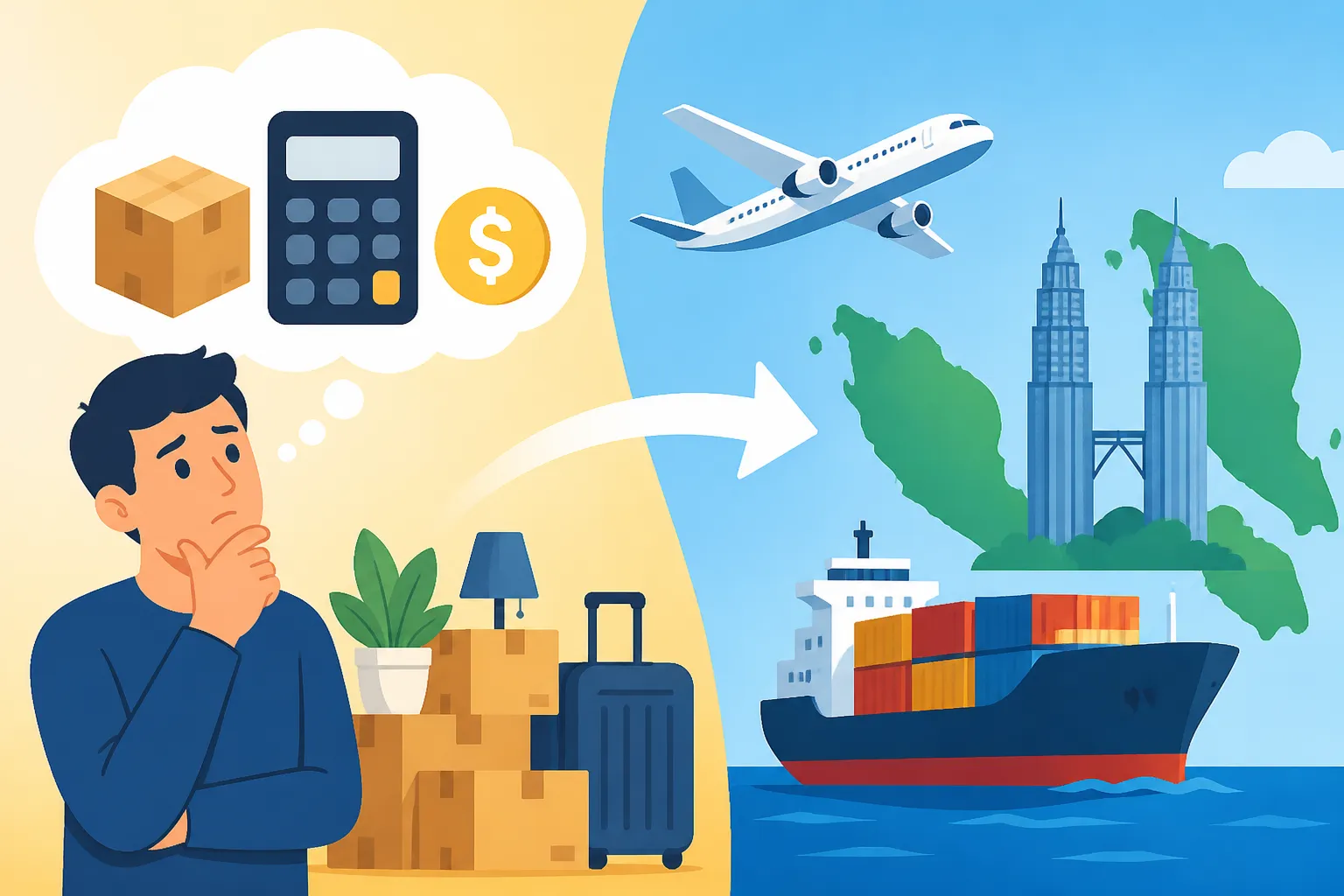
How Much Does It Cost to Ship Belongings to Malaysia?
The sheer thought of packing up your entire life and shipping it across continents to Malaysia can feel like trying to solve a Rubik's Cube blindfolded – utterly overwhelming, right? One of the biggest question marks hanging over every expat's head is always, "How much is this actually going to cost me?" This guide is here to unravel that mystery, offering you a realistic, no-nonsense look at the expenses involved in moving your precious belongings to your new Malaysian home.
Understanding the Big Picture: What Drives Shipping Costs to Malaysia?
Moving to Malaysia, especially when bringing your household goods, is a significant undertaking, and the costs can feel like a moving target. Many factors combine to determine the final price tag, making it crucial to understand each component. It’s not just about getting your stuff from point A to point B; it’s about a complex logistical dance that involves numerous players and processes.
Volume and Weight: More Stuff, More Ringgit
Let’s be honest, the more you have, the more it will cost. This isn't groundbreaking news, but understanding how volume and weight are measured and charged is key. For sea freight, which is what most expats opt for when shipping an entire household, costs are primarily calculated by cubic meters (CBM). Think of it as how much space your items take up in a shipping container. A typical small studio apartment might be around 5-10 CBM, while a three-bedroom house could easily hit 30-50 CBM, or even more if you're bringing large furniture or appliances. Every single item, from your beloved sofa to your collection of books, contributes to this volume. Moving companies will often send a surveyor to your home to provide a precise estimate of your total CBM, which is far more accurate than trying to guess yourself.
Now, if you're leaning towards air freight for smaller, more urgent items, the calculation often shifts. Air cargo is typically charged based on either the actual weight or the volumetric weight, whichever is greater. Volumetric weight is calculated using a specific formula (length x width x height / a dimensional weight factor) that converts the space your package occupies into a "weight." So, even if your box of fluffy pillows is light, its large volume might make it more expensive than a small, heavy box of books when sent by air. This distinction is vital for planning which items go by which method.
Shipping Method: Sea, Air, or a Bit of Both?
The choice of how your items travel will be the single biggest factor influencing the cost and speed of your shipment. Each method has its own set of advantages and disadvantages that you'll need to weigh carefully against your budget and timeline.
Sea Freight: The Budget-Friendly Marathon
For most expats moving their entire household, sea freight is the clear winner for cost-effectiveness. It's significantly cheaper per kilogram or cubic meter compared to air freight. However, patience is a virtue here, as transit times can range from a few weeks to a couple of months, depending on the origin and specific route.
Within sea freight, you generally have two main options:
- LCL (Less than Container Load): This is where your belongings share space in a container with other people's shipments. It's perfect if you don't have enough stuff to fill an entire container. While more economical, it can sometimes lead to slightly longer transit times due to the consolidation and deconsolidation processes at ports. Think of it like taking a shared taxi; you wait for others, but you save money.
- FCL (Full Container Load): If you're moving a large household or prefer your items to have their own dedicated space, an FCL is your choice. You get a 20-foot or 40-foot container all to yourself. This can be faster as there's no waiting for consolidation, and it often provides peace of mind knowing your items are sealed in their own unit. However, you pay for the entire container, whether you fill it completely or not, so it only makes sense if your volume is substantial.
When you're first landing in Malaysia and waiting for your container to arrive, having an Airalo eSIM already set up can really make a difference. It ensures you have immediate connectivity for navigation, communicating with your moving company, or just letting loved ones know you've arrived safely, without the hassle of hunting for a local SIM card immediately. This way, you're connected from the moment you step off the plane, a small but significant comfort while your household goods are still making their way.
Air Freight: The Express Sprint for Essentials
If you absolutely need certain items quickly – perhaps essential work documents, specific medications, or a few cherished belongings you can't live without for weeks – air freight is your fastest option. The trade-off, however, is the price. Air freight costs can be several times higher than sea freight. It's typically reserved for smaller volumes and urgent items. For instance, sending a couple of large boxes via air might be equivalent to sending several cubic meters by sea. So, plan strategically: what do you truly need now, and what can wait?
Distance and Destination: From Origin to Malaysian Doorstep
It stands to reason that shipping from, say, Singapore will be vastly different in cost and time compared to shipping from New York or London. The geographical distance between your origin country and Malaysia is a primary cost driver. Longer distances mean more fuel, more complex logistics, and higher transit insurance premiums.
Beyond the raw distance, the specific port of origin and the final destination within Malaysia also play a role. Major international shipping hubs tend to have more competitive rates due to higher shipping volumes. In Malaysia, most international shipments arrive at Port Klang, near Kuala Lumpur. If your final home is in a major city like Kuala Lumpur itself, Penang, or Johor Bahru, the "last mile" delivery costs from the port will likely be more straightforward and perhaps cheaper. However, if you're settling in a more remote area in, say, Sarawak or a smaller town in Kedah, expect additional inland transportation costs and potentially longer delivery times. Shipping companies will typically provide a door-to-door service, but understanding these internal logistics helps manage expectations. For insights into finding your ideal living space, check out our guide on The Best Places to Live in Malaysia for Expats: A Complete Guide (2027).
Deeper Dive: Hidden Costs and Practical Considerations
When planning your move, it's easy to focus solely on the "shipping fee" quoted by movers. However, the true cost of bringing your belongings to Malaysia involves several other, often overlooked, expenses. Ignoring these can lead to unpleasant surprises down the line, so let's unpack them.
Customs, Duties, and Taxes in Malaysia
This is one area where many expats get caught out. Malaysia has specific rules regarding the import of personal effects. Generally, bona fide personal effects, defined as used household goods and personal belongings that you've owned and used for at least three months, are exempt from import duties and taxes. This is a huge relief for most people moving their entire lives.
However, there are crucial caveats:
- New Items: If you’ve just bought a brand new television, a refrigerator, or even a never-worn piece of jewellery, it might be subject to duties and taxes, even if it's packed with your used items. Customs authorities may request invoices for recently purchased goods. It's always best to declare these clearly to your moving company and on customs forms. Trying to hide them can lead to significant delays, penalties, and even confiscation.
- Restricted and Prohibited Items: Certain items are restricted or outright prohibited from import. This includes, but isn't limited to, pornography, certain religious materials, weapons, drugs, and specific agricultural products. Make sure you check the Malaysian Customs website or consult your mover for an up-to-date list. Don't risk it!
- Documentation: Accurate and complete documentation is paramount. You'll need your passport copy, a valid visa (like an Employment Pass or MM2H visa), a comprehensive packing list (preferably itemized), and the bill of lading or air waybill. Missing or incorrect details can cause significant delays and incur storage charges at the port or airport. Understanding the nuances of The Complete Guide to Malaysian Visas for Expats (2027) is critical for smoother customs clearance.
Your shipping company will usually handle the customs clearance process through their local agents in Malaysia, but you remain responsible for providing all necessary information and paying any applicable duties or taxes for non-exempt items.
Insurance: Don't Skip This Step!
While it might seem like an extra expense, insuring your shipment is non-negotiable. Imagine your entire household arriving, only to find a valuable antique broken or a box of essentials missing. The emotional and financial toll would be immense. Accidents happen – containers fall overboard, forklifts have mishaps, and sometimes things just vanish.
Most reputable international movers will offer transit insurance, and it's highly advisable to take it. There are usually two main types:
- Total Loss: This only covers your shipment if the entire container or consignment is lost (e.g., container falls into the sea). It's the most basic and least comprehensive coverage.
- All-Risk: This is the gold standard and what you should aim for. It covers accidental damage, loss, or theft of individual items. While more expensive, it provides far greater peace of mind.
When taking out insurance, you'll typically need to declare the value of your items. Be realistic and accurate. Over-valuing can lead to higher premiums, while under-valuing might mean you're not adequately compensated in case of a claim. Documenting your items with photos or videos before packing can be invaluable evidence if you ever need to make a claim.
Packing, Crating, and Logistics at Both Ends
The way your items are packed significantly impacts their safety during transit and, consequently, the cost.
- DIY Packing: You can save money by packing your boxes yourself. However, be aware that most insurance policies are voided for items you pack yourself, as the mover cannot guarantee the integrity of the packing. If you do pack yourself, use sturdy boxes, quality packing materials, and label everything meticulously.
- Professional Packing: Reputable international movers have trained packers who use specialized materials and techniques to ensure your items are securely prepared for international transit. This includes custom crating for fragile or unusually shaped items like artwork, pianos, or motorcycles. Professional packing offers the best chance for your items to arrive safely and typically ensures your insurance coverage is valid. While it adds to the cost, it often prevents costly damages.
- Access at Origin and Destination: Consider the logistical challenges at both ends. Do you live in a high-rise apartment with limited elevator access? Is your new home in Malaysia on a narrow street that larger trucks can't access, requiring a smaller transfer vehicle? These "access charges" can add to the final bill. Inform your moving company about any potential access issues, such as stairs, long carries, or restricted parking, so they can plan accordingly and provide an accurate quote.
Realistic Cost Estimates for Shipping to Malaysia
Now for the part you've been waiting for: actual numbers. It's important to remember these are estimates and can fluctuate significantly based on current fuel prices, exchange rates, the specific services you choose, and the time of year. Always get multiple detailed quotes.
The cost will largely depend on your origin country, the volume of your shipment, and whether you opt for sea or air freight. Here’s a general breakdown:
Small Shipments and Personal Effects
If you're only sending a few boxes or just a couple of suitcases – perhaps you're renting a furnished apartment in Kuala Lumpur and only need clothes and personal items – then express courier services or a small LCL (Less than Container Load) sea freight shipment might be suitable.
- Express Air Courier (e.g., DHL, FedEx, UPS): For 1-3 boxes (say, 50-100 kg combined actual/volumetric weight) from Europe, North America, or Australia, you could be looking at RM 2,000 – RM 6,000+. This is the fastest, but also the most expensive per kg.
- LCL Sea Freight (small consignment, 1-3 CBM): For a few boxes or a couple of furniture pieces, LCL is more economical. From major regions like the UK or Western Europe, you might expect to pay RM 2,500 – RM 7,000. From North America, possibly RM 3,500 – RM 8,500. From Australia, perhaps RM 2,000 – RM 6,000. These prices are for door-to-door services and include basic customs clearance but might not include duties on new items or comprehensive insurance.
Mid-Sized Moves (1-2 Bedroom Apartment)
This typically involves furniture for a living room, bedroom, kitchen essentials, and numerous boxes of personal belongings, usually totalling 5-15 CBM. Sea freight is almost always the preferred option for this volume.
- LCL Sea Freight (5-10 CBM):
- From Europe (e.g., UK, Germany): Expect a range of RM 7,000 – RM 15,000.
- From North America (e.g., USA, Canada): This could be RM 8,000 – RM 18,000.
- From Australia/New Zealand: Generally more affordable, perhaps RM 6,000 – RM 13,000.
These figures usually cover professional packing, loading, sea freight, customs clearance at Port Klang, and delivery to your new home in a major Malaysian city. For advice on securing your new home, our guide on How Much Does It Cost to Rent an Apartment in Kuala Lumpur in 2026? can be very helpful.
Full Household Moves (3+ Bedroom House)
For a larger family home, you're likely looking at 15 CBM or more, often necessitating an FCL (Full Container Load) if you hit around 20 CBM and up. A 20-foot container holds approximately 30-33 CBM, while a 40-foot container can hold 60-65 CBM.
- FCL Sea Freight (20-foot container, approx. 20-30 CBM):
- From Europe: You're probably looking at RM 15,000 – RM 30,000+.
- From North America: This could range from RM 18,000 – RM 35,000+.
- From Australia/New Zealand: More likely RM 12,000 – RM 25,000+.
- FCL Sea Freight (40-foot container, approx. 40-60 CBM):
- From Europe: Costs could easily reach RM 25,000 – RM 50,000+.
- From North America: Expect RM 30,000 – RM 60,000+.
- From Australia/New Zealand: Around RM 20,000 – RM 40,000+.
These higher-end estimates for FCL typically include comprehensive door-to-door service, professional packing, specialized crating for a few items, and all port and customs formalities. Remember, these ranges are broad; a single quote could be at the lower or higher end depending on many variables.
Here’s a simplified table to give you a quick reference:
| Origin Region | Shipment Size (Approx.) | Shipping Method | Estimated Cost Range (RM) | Transit Time (Weeks) |
|---|---|---|---|---|
| Europe | Small (1-3 boxes/1 CBM) | Air Courier | 2,000 – 6,000 | 1-2 |
| Small (1-3 CBM) | LCL Sea Freight | 2,500 – 7,000 | 4-8 | |
| Mid (5-10 CBM) | LCL Sea Freight | 7,000 – 15,000 | 4-8 | |
| Full (20ft Container) | FCL Sea Freight | 15,000 – 30,000+ | 4-8 | |
| North America | Small (1-3 boxes/1 CBM) | Air Courier | 3,000 – 7,000 | 1-3 |
| Small (1-3 CBM) | LCL Sea Freight | 3,500 – 8,500 | 6-12 | |
| Mid (5-10 CBM) | LCL Sea Freight | 8,000 – 18,000 | 6-12 | |
| Full (20ft Container) | FCL Sea Freight | 18,000 – 35,000+ | 6-12 | |
| Australia/NZ | Small (1-3 boxes/1 CBM) | Air Courier | 2,000 – 5,000 | 1-2 |
| Small (1-3 CBM) | LCL Sea Freight | 2,000 – 6,000 | 3-6 | |
| Mid (5-10 CBM) | LCL Sea Freight | 6,000 – 13,000 | 3-6 | |
| Full (20ft Container) | FCL Sea Freight | 12,000 – 25,000+ | 3-6 |
Note: These are rough estimates for door-to-door services in major cities. Costs can vary significantly. Always request personalized quotes.
Navigating the Process and Choosing the Right Mover
Moving your entire life across oceans is a huge decision, and choosing the right international mover is paramount. It’s not just about the cheapest price; it's about reliability, peace of mind, and minimizing stress.
Getting Quotes and Comparing Services
This is arguably the most critical step. Do not settle for the first quote you receive. Always aim for at least three, preferably more, quotes from different international moving companies. Be transparent with each company about your inventory and specific needs.
Here’s what to look for and compare:
- Detailed Inventory and Volume Assessment: A good mover will insist on either a home survey (in-person or virtual) or a very detailed inventory list from you to accurately assess the volume (CBM). Be wary of quotes based on vague estimates.
- Inclusions and Exclusions: Carefully scrutinize what is included in the quote. Does it cover door-to-door service? Is professional packing included? Are port charges, terminal handling fees, and customs clearance fees at the destination (Malaysia) part of the price? What about unpacking services at your new home? What about insurance? You don't want to be hit with unexpected charges when your items arrive at Port Klang.
- Transit Time: Get a realistic estimate of the transit time. Some companies might offer a slightly cheaper rate but with a significantly longer transit time.
- Reputation and Reviews: Check online reviews and ask for references. Word-of-mouth recommendations from other expats can be invaluable. Look for movers with experience shipping to Malaysia specifically.
- Local Agent in Malaysia: Ask who their appointed agent in Malaysia is. A strong, reliable local partner is essential for smooth customs clearance and final delivery.
Using a platform like Sirelo can be incredibly helpful here. They allow you to easily request and compare quotes from multiple international moving companies that specialize in relocations to Malaysia. This streamlines the process and ensures you get competitive bids, helping you find a mover that matches your budget and service expectations.
Essential Documentation for Malaysian Customs
I can't stress this enough: paperwork is your friend, but only if it's accurate and complete. Malaysian customs authorities are meticulous, and any discrepancies can lead to significant delays and penalties.
Key documents you'll typically need:
- Passport Copy: A clear copy of your passport's photo page and any pages with relevant entry stamps or visas.
- Malaysian Visa/Pass: A copy of your valid Employment Pass, MM2H visa, Dependant Pass, or other long-term passes. This is crucial as it indicates your residency status, which impacts duty exemptions for personal effects. Read our guide on How to Get an Employment Pass in Malaysia (2027) for more details.
- Comprehensive Packing List/Inventory: This needs to be detailed, itemizing every box and its contents. For valuable items, you might need to list their estimated value for insurance purposes. The more specific, the better.
- Bill of Lading (for sea freight) or Air Waybill (for air freight): This is the contract between you and the carrier, acting as proof of ownership and receipt of goods.
- Customs Declaration Form: Your moving company or their local agent will guide you through this, but you are responsible for the accuracy of the information.
- Proof of Residency: This could be your Tenancy Agreement for your rental property or a Sale and Purchase Agreement if you've bought a home. Our guide on The Complete Guide to Renting an Apartment in Malaysia (2027) can help you prepare.
Gather all these documents well in advance and keep both digital and physical copies.
Post-Arrival Logistics: Receiving Your Shipment
Once your belongings are en route, the waiting game begins. Most international movers provide tracking services, allowing you to monitor your shipment's progress.
- Local Agent Liaison: Once your shipment arrives in Malaysia, the local agent of your international moving company will contact you to arrange customs clearance and final delivery. This is where having a reliable local agent, previously vetted, truly pays off. Be prepared to provide any additional documentation they might request or clarify any details for customs.
- Customs Clearance and Inspection: While personal effects are generally exempt from duties, customs may still randomly select shipments for inspection. This can add a few days to the process. Patience is key here.
- Final Delivery: Once cleared, your shipment will be loaded onto local delivery trucks and transported to your new home. Ensure clear access and inform the movers of any specific delivery instructions. Most full-service packages include unpacking and basic reassembly of furniture, as well as removal of packing debris. Confirm these services beforehand.
- Unpacking and Settling In: After weeks or months of waiting, it’s a moment of pure relief when your belongings arrive. Take your time to unpack and check for any damages or missing items. If you have insurance, report any issues immediately to your moving company and their local agent, providing photographic evidence if possible.
Moving your life to a new country like Malaysia is an adventure, and while the logistics of shipping your belongings can seem daunting, with careful planning, thorough research, and a clear understanding of the costs and processes, you can make it a smooth transition. Welcome home!
Disclaimer
The information provided in this guide regarding shipping costs and procedures for Malaysia is intended for general informational purposes only and is subject to change. While we strive to provide up-to-date and accurate information, actual costs can vary significantly based on individual circumstances, market fluctuations, fuel prices, exchange rates, and specific service providers. Customs regulations, duties, and tax policies in Malaysia are also subject to change without prior notice. We strongly recommend obtaining multiple detailed quotes from reputable international moving companies and consulting with them directly regarding your specific shipment. It is also advisable to confirm the latest customs regulations with the Malaysian Customs Department or your chosen mover before commencing your relocation. This guide does not constitute professional advice, and readers should exercise their own due diligence.