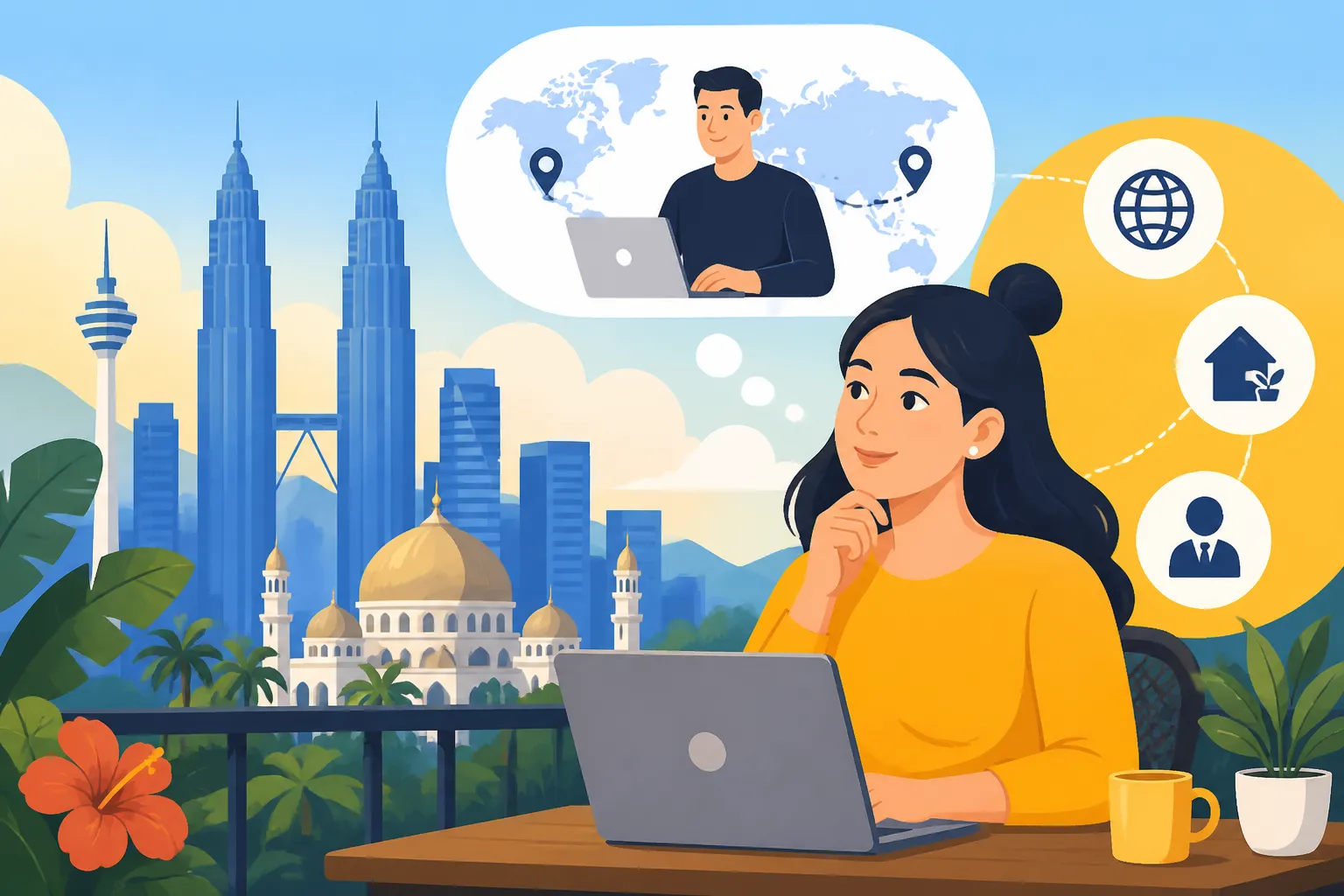
Can I Work Remotely from Malaysia for a Foreign Company?
Ah, the dream of working remotely from a tropical paradise like Malaysia! It sounds idyllic, doesn't it? Picture yourself sipping a kopi at a cafe in Penang, finishing up a few tasks before heading to the beach, or perhaps working from a stylish co-working space in Kuala Lumpur, surrounded by fellow digital nomads. Many of us expats have envisioned this exact scenario, and let me tell you, the reality can be wonderfully close to that dream. However, like most things in Malaysia, the path to making it happen is less of a straight line and more of a winding, slightly confusing jungle trek. This guide is here to untangle the complexities and clarify whether you can genuinely work remotely for a foreign company while living here, without inadvertently running afoul of the immigration or tax authorities.
Understanding the Legal Landscape for Remote Work
One of the biggest questions that swirls around the expat community is, "Can I really work for my overseas company while living in Malaysia?" The short answer is: it's complicated, but increasingly, yes, there are legitimate pathways. Historically, Malaysia's visa system wasn't really designed with the "digital nomad" in mind. It was built around traditional employment passes tied to a local Malaysian entity. But the world has changed, and Malaysia is slowly but surely catching up.
The Nuances of Visas and Work Authorisation
For a long time, the prevailing wisdom (and the letter of the law) stated that if you're earning money while physically present in Malaysia, you need a work permit. This is why many expats came here on an Employment Pass, sponsored by a Malaysian company. However, if your employer is entirely foreign and has no legal presence in Malaysia, getting a traditional Employment Pass can be a non-starter. You can't just apply for one yourself without a local sponsor.
This is where the concept of "working remotely for a foreign company" gets tricky. If you're on a Social Visit Pass (which most tourists and even long-term visitors like those on a Long-Term Social Visit Pass typically use), you are generally not permitted to undertake any form of employment or paid activity in Malaysia. Doing so could be considered a breach of your visa conditions and lead to penalties, including fines, deportation, or being blacklisted. The Malaysian Immigration Department has become more vigilant about this, especially with the rise of remote work. They want to ensure foreigners are here legitimately and contributing to the economy according to the rules. So, simply coming in on a tourist visa and hoping for the best is a very risky gamble that could have serious consequences.
The DE Rantau Digital Nomad Pass: A Game Changer
Thankfully, Malaysia has introduced a specific visa pathway for remote workers and digital nomads: the DE Rantau Pass. This initiative, spearheaded by the Malaysia Digital Economy Corporation (MDEC), is a deliberate effort to attract global digital talents and boost Malaysia's digital economy. The DE Rantau Pass essentially provides a legal framework for foreign digital nomads to reside and work in Malaysia for up to 12 months, with the option to renew for another 12 months. This is exactly what many remote workers for foreign companies have been waiting for.
To be eligible for the DE Rantau Pass, you typically need to demonstrate you're earning a certain income (currently around USD $24,000 annually or RM10,000 equivalent per month, though these figures can change, so always check the latest MDEC guidelines). You also need to be working in a digital-related field, which is broadly defined to include IT, marketing, content creation, and other tech-adjacent professions. Crucially, your employer must be based outside Malaysia, or if you're a freelancer, your clients must be primarily foreign. This pass finally provides peace of mind and legitimises your remote work status in Malaysia. It even allows you to bring dependants, making it an attractive option for expat families. If you're serious about working remotely from Malaysia legally, exploring the DE Rantau Pass is your absolute best bet. It eliminates the ambiguity and provides a clear, official path. For a deeper dive into this, you might want to read our guide on The Expat Guide to the DE Rantau Digital Nomad Pass in Malaysia (2027).
Practicalities of Remote Work in Malaysia
Once you've sorted out the legalities, the day-to-day practicalities of working remotely in Malaysia are generally quite favourable. The infrastructure is robust, the cost of living is appealing, and the lifestyle is certainly a draw. However, it's not without its own quirks and considerations.
Internet Connectivity and Co-working Spaces
A stable and fast internet connection is non-negotiable for remote work. The good news is that Malaysia generally offers excellent internet infrastructure, especially in urban centres like Kuala Lumpur, Penang, and Johor Bahru. Fibre optic broadband is widely available through providers such as Telekom Malaysia (Unifi), Maxis, and TIME dotCom. You can usually get speeds ranging from 100 Mbps to 1 Gbps at relatively affordable prices. Setting up internet in your rental unit is usually straightforward, though it might require a Malaysian guarantor or a slightly larger deposit if you're a new arrival. Mobile data is also reliable, with major carriers like Celcom, Maxis, and Digi offering competitive packages. Having a good mobile data plan is essential as a backup or for working on the go.
For those who thrive in a dedicated work environment, Malaysia boasts a flourishing co-working scene. These spaces offer stable internet, ergonomic desks, meeting rooms, and networking opportunities. From chic, minimalist spaces in trendy neighbourhoods like Bangsar and Mont Kiara in KL, to more laid-back options in Penang's heritage zone, there's something for everyone. Brands like WeWork, Common Ground, and WORQ are prominent, offering flexible membership plans. They're fantastic for separating home life from work life, and they often host events that can help you connect with other remote professionals and local entrepreneurs.
| Internet Provider | Typical Speeds Offered | Average Monthly Cost (RM) | Coverage | Key Features |
|---|---|---|---|---|
| Unifi (Telekom Malaysia) | 100 Mbps – 800 Mbps | 89 – 299 | Nationwide | Widest coverage, bundling options (TV, mobile) |
| Maxis Fibre | 100 Mbps – 1 Gbps | 89 – 399 | Urban & Suburban | Strong customer service, fast speeds |
| TIME dotCom | 100 Mbps – 1 Gbps | 99 – 199 | High-rise buildings | Ultra-fast, symmetrical speeds |
| CelcomDigi Fibre | 100 Mbps – 1 Gbps | 79 – 299 | Growing coverage | Competitive pricing, mobile integration |
Note: Prices are estimates and subject to change based on current promotions and plans.
Managing Time Zones and Work-Life Balance
Working for a foreign company often means grappling with different time zones. If your company is based in Europe or the Americas, you might find yourself working late evenings or very early mornings to align with your team. For example, if your company is on US Eastern Time (GMT-4/5), you're looking at a 12-13 hour difference from Malaysia (GMT+8). This can be a blessing or a curse, depending on your personal preferences and the nature of your job. Some expats love having their mornings free to run errands, exercise, or enjoy leisure activities before their workday begins. Others find the late-night shifts isolating or disruptive to their social life.
It's crucial to set clear boundaries and establish a routine that works for you. Communicate openly with your foreign employer about your working hours and availability. Leverage asynchronous communication tools like Slack or project management software to keep things moving even when your teams are asleep. Embracing the flexibility that remote work offers, such as scheduling meetings at times that overlap minimally, can make a huge difference. Remember, part of the appeal of working remotely from Malaysia is the lifestyle, so ensure you’re not sacrificing it entirely to time zone differences. Building a strong work-life balance is key to thriving here, not just surviving.
Tax Implications of Remote Work in Malaysia
Ah, taxes. The topic that makes even the most seasoned expat sigh deeply. When you start earning income while residing in Malaysia, regardless of where your employer is based, you enter the Malaysian tax system. This is a critical point that many remote workers overlook or misunderstand. It's not enough to just get your visa sorted; you need to understand your tax obligations.
Understanding Tax Residency and Income Tax
Malaysia operates on a territorial tax system, meaning generally, only income derived from Malaysia is taxed here. However, for resident individuals, all income, whether sourced locally or from abroad, is subject to Malaysian income tax. The key word here is "resident." You are generally considered a tax resident if you reside in Malaysia for 182 days or more in a calendar year. If you qualify as a tax resident, your worldwide income becomes potentially taxable in Malaysia.
This is where it gets interesting for remote workers for foreign companies. While your salary is paid by an overseas company, if you are performing the work from within Malaysia, the Malaysian Inland Revenue Board (LHDN) may consider that income to be derived from Malaysia. This means it could be subject to Malaysian income tax, even if your paycheque is deposited into a foreign bank account. There have been changes over the years regarding the taxation of foreign-sourced income for tax residents, so it's vital to stay updated on the latest LHDN rulings. As of recent changes, foreign-sourced income brought into Malaysia by tax residents is generally taxable, with some exceptions for certain types of income. Navigating this without professional help can be daunting, and I highly recommend consulting with a tax expert who specialises in international taxation or expat taxes in Malaysia. Services like Taxes for Expats can be incredibly helpful in this regard, ensuring you remain compliant and don't end up with unexpected tax bills.
To get started, you will need to apply for an income tax number with LHDN. You can learn more about this process in our guide, How to Register for an Income Tax Number with LHDN in Malaysia. Once you have your tax number, you'll need to understand how to file your annual tax return (e-BE or e-M) through the MyTax Portal.
Double Taxation Agreements (DTAs)
Another important aspect to consider is whether Malaysia has a Double Taxation Agreement (DTA) with your home country or the country where your employer is based. DTAs are international treaties designed to prevent individuals from being taxed twice on the same income by two different countries. If a DTA is in place, it can provide relief and clarify which country has the primary right to tax your income, or how tax paid in one country can be offset against tax due in another.
For instance, if you are a tax resident in Malaysia working for a UK company, and Malaysia has a DTA with the UK, the agreement would specify how your income from the UK company is treated. You might still have to declare your income in both countries, but the DTA would ensure you only pay the net tax once. This often involves claiming foreign tax credits. However, interpreting DTAs can be complex and depends heavily on your specific circumstances, including the duration of your stay in Malaysia, your tax residency status in both countries, and the nature of your employment contract. Again, professional tax advice is invaluable here to avoid costly mistakes. Ignoring your tax obligations in Malaysia, simply because your employer is foreign, is a serious misstep that can lead to penalties and legal issues down the line.
Leveraging Local Resources and Community for Remote Workers
Beyond the legal and practical infrastructure, one of the greatest assets for remote workers in Malaysia is the vibrant expat community and the rich local culture. This isn't just about work; it's about building a life.
Networking and Community Building
While working remotely can sometimes feel isolating, Malaysia offers ample opportunities to connect with like-minded individuals. Co-working spaces, as mentioned earlier, are fantastic hubs for meeting other digital nomads, freelancers, and remote professionals. Beyond that, numerous expat groups on social media platforms like Facebook cater specifically to remote workers, entrepreneurs, and digital nomads in cities like Kuala Lumpur, Penang, and Langkawi. These groups are invaluable for sharing tips, asking questions about everything from visa renewals to the best local makan (food), and arranging social gatherings.
Attending local meetups, workshops, and industry events can also help you expand your network. Malaysia's growing startup scene and digital economy initiatives mean there are often events happening where you can learn, collaborate, and even find new opportunities. These connections can alleviate the feeling of being cut off from a traditional office environment and help you build a supportive community around you, making your remote work experience much richer.
Integrating into Local Life and Culture
Living and working in Malaysia isn't just about the internet speed or the tax forms; it's about immersing yourself in the incredible culture. Take advantage of the flexibility your remote work schedule provides to explore the country. Weekday mornings can be spent exploring ancient temples, hiking in lush rainforests, or discovering hidden culinary gems. The diversity of Malaysia, with its Malay, Chinese, Indian, and indigenous influences, offers a constant stream of new experiences.
Learning some basic Bahasa Malaysia can significantly enhance your experience. Even a few phrases can open doors, facilitate interactions with locals, and make day-to-day life much smoother. Resources like iTalki offer fantastic opportunities to connect with local tutors for language lessons, helping you to quickly pick up conversational Malay and truly integrate. Understanding local customs and etiquette will also go a long way in building positive relationships. From navigating local markets to understanding public transport, the more you engage with the local culture, the more at home you'll feel. This unique blend of work and cultural immersion is, for many, the ultimate appeal of being a digital nomad in Malaysia.
Disclaimer
Please note that the information provided in this article is for general guidance only and does not constitute legal, immigration, or tax advice. Laws and regulations in Malaysia are subject to change. It is highly recommended that you consult with relevant Malaysian government agencies, an immigration lawyer, or a tax professional for advice tailored to your specific situation before making any decisions related to your visa, work authorisation, or tax obligations in Malaysia.