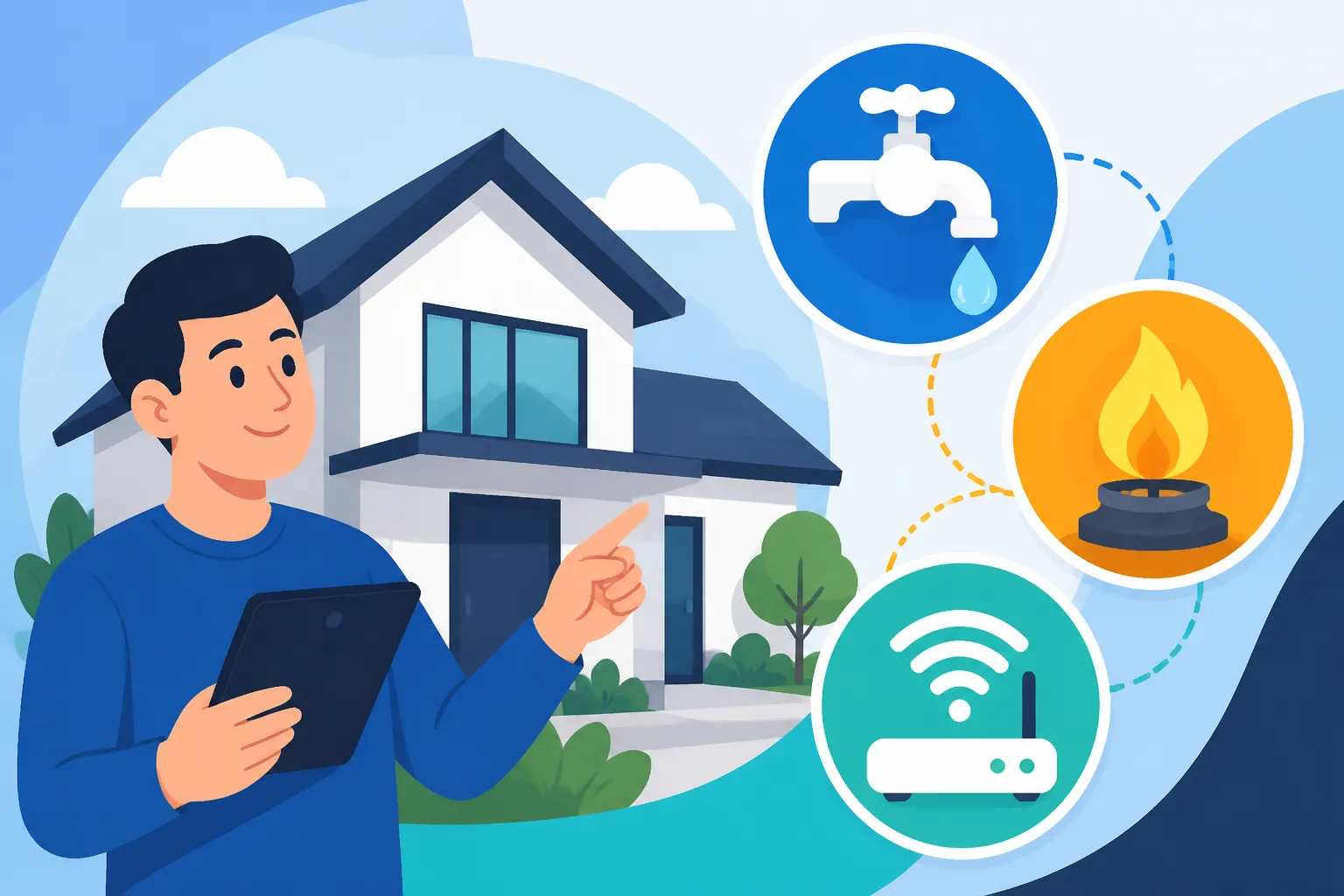
How to Set Up Water, Gas and Internet in Malaysia
Ah, setting up your home utilities in a new country. It’s one of those essential tasks that, on the surface, seems straightforward, but quickly devolves into a labyrinth of unfamiliar forms, local jargon, and sometimes, a healthy dose of confusion. Believe me, I’ve been there – standing in a queue, passport clutched in hand, trying to explain in broken Malay that I just want my water to flow and my internet to work. This guide is here to cut through that bureaucratic fog, offering you a veteran expat’s realistic roadmap to getting your water, gas, and internet up and running smoothly in Malaysia.
Understanding Malaysia's Utility Landscape: An Expat's First Steps
Moving to Malaysia is exciting, filled with new sights, sounds, and incredible food, but let's be honest, the initial administrative hurdles can feel like trying to solve a Rubik's Cube blindfolded. From housing to visas, and right down to the seemingly simple act of turning on your tap, there's a unique Malaysian way of doing things that takes some getting used to. Getting your utilities sorted is right up there with finding the perfect nasi lemak stall – utterly essential and occasionally challenging.
The Initial Shock: Navigating the Malaysian Utility Scene
When you first arrive, especially if you're coming from a country with highly integrated utility services, Malaysia's system might feel a bit fragmented. You'll likely be dealing with separate entities for electricity (TNB), water (state-specific providers like Air Selangor, SAJ Ranhill, or PBA), gas (often LPG cylinders, sometimes piped from Gas Malaysia), and, of course, a range of internet service providers. This isn't a one-stop shop like you might be used to, and each has its own application process, documentation requirements, and payment methods. The key here is patience and knowing exactly what to expect from each component.
For example, I remember my first apartment in Bukit Bintang. The electricity was already connected, but the water account was still under the previous tenant's name. It felt like I was chasing ghosts to get it sorted, all while trying to understand the nuances of a new language. This fragmented approach means you’ll be engaging with several different companies and their customer service departments, each with varying degrees of English proficiency. It’s not impossible, just requires a bit of grit and a deep breath.
Your Tenancy Agreement: The Blueprint for Utility Responsibility
Before you even think about applying for anything, your tenancy agreement is your most critical document. This isn't just a piece of paper; it's your legal bible that spells out who is responsible for what when it comes to utilities. Many landlords in Malaysia prefer that tenants transfer utility accounts (electricity, water, internet) into their own names to ensure direct billing and responsibility. Others might keep the accounts under their name, especially for shorter leases or serviced apartments, and bill you separately.
It is absolutely crucial to clarify these details before you sign on the dotted line. Make sure the agreement explicitly states whether the accounts are to be transferred, whether you are responsible for any deposits, and what the process is upon moving out. If the accounts are to remain in the landlord's name, ensure there’s a clear method for calculating and paying your usage, and insist on seeing copies of past bills to establish a baseline. Without this clarity, you could end up inadvertently paying for a previous tenant's arrears or struggling to get your security deposit back when you leave. You'll find more insights on this in our guide on How to Sign a Tenancy Agreement in Malaysia.
Essential Documents You'll Need for Utility Applications
Prepare for a bit of paper shuffling! While the exact requirements can vary slightly between providers and even individual branches, generally, you'll need a core set of documents for any utility application. Always bring originals and several photocopies, as some places still prefer hard copies.
Typically, you'll need:
- Your Passport: The original and copies of your main biodata page and your valid Malaysian visa/pass (e.g., Employment Pass, MM2H, Dependant Pass).
- Your Tenancy Agreement: The original and copies, fully stamped and signed by all parties. This proves your residential address and your right to occupy the property.
- Landlord's Identity Card (NRIC): Sometimes, especially for water or electricity transfers, the utility provider might request a copy of your landlord's Malaysian IC, along with their signature on the application form. This is to confirm their consent for the transfer.
- Previous Utility Bill (if applicable): If you're transferring an existing account, having a copy of the most recent bill can help identify the account number and meter details.
- Utility Deposit: Be prepared to pay a deposit for electricity and water, which is usually a fixed amount or equivalent to two months of average usage. This is standard practice and will be refunded upon termination of your account, provided all bills are settled.
I learned the hard way that a digital copy on my phone wasn't always enough; some counter staff absolutely insisted on physical photocopies. So, my advice is to always have a small stack of these essential documents ready to go whenever you're tackling any official business in Malaysia.
Getting Connected: Your Water Supply in Malaysia
Water is, thankfully, generally reliable and affordable in Malaysia. However, the application process for setting up your account can be a bit of a localized affair, depending on which state you reside in. Don’t expect a nationwide, centralised system; instead, each state or region has its own water authority.
Identifying Your Water Provider and the Application Process
For those living in Kuala Lumpur, Selangor, or Putrajaya, your water provider is Pengurusan Air Selangor Sdn Bhd (Air Selangor). If you're in Johor, it's SAJ Ranhill, and for Penang, it's PBA Holdings Bhd. Other states will have their respective providers. The process typically involves a visit to their local customer service centre. While some providers are slowly rolling out online applications or self-service kiosks, a face-to-face visit is often the most guaranteed way to get things done, especially for new accounts or transfers.
When you go to the centre, arm yourself with all the documents mentioned earlier. You'll fill out a form, submit your documents, and pay a deposit. The staff will then guide you on whether the account is a new connection or a transfer. If it's a transfer, ensure that the previous tenant or landlord has officially terminated their account, otherwise, you might run into issues. It sounds a bit convoluted, but once it's set up, it's usually smooth sailing.
Decoding Your Water Bill and Payment Methods
Malaysian water bills are usually issued monthly or bi-monthly. They’re generally straightforward, displaying your account number, usage in cubic metres (m³), and the corresponding charges. Residential tariffs are typically tiered, meaning you pay a lower rate for the first block of usage and higher rates as your consumption increases. This encourages water conservation, which is always a good thing!
Here’s a general breakdown of how you can typically pay your water bill:
- Online Banking: Most local banks offer bill payment services where you can directly pay Air Selangor, SAJ, PBA, or your specific provider using your account number. Look for the "JomPAY" logo on your bill, which allows payments across different banks using a unique Biller Code and Ref-1 number.
- E-Wallets: Some providers are now integrated with popular e-wallet platforms like Boost, GrabPay, or Touch 'n Go eWallet, offering a convenient way to pay.
- Physical Counters: You can still pay your bills at Pos Malaysia branches, utility provider service centres, or designated payment kiosks found in shopping malls. This is a good option if you prefer a physical receipt or need assistance.
- Direct Debit: You might be able to set up a direct debit instruction with your bank, though this often requires a physical form submission and takes some time to activate.
My own experience with Air Selangor bills became a weekly ritual to double-check, initially fearing I was missing something. But once you get used to the format and the payment channels, it's really quite easy. Just make sure to pay on time to avoid any late payment charges or, in extreme cases, service disruption, which is a hassle nobody needs.
Practical Tips for Water Management
While water is relatively inexpensive, especially compared to electricity, it’s still good practice to be mindful of your usage. Check for any leaky taps or toilets when you move in, as even a slow drip can add up over time. If you notice an unusually high bill, it could indicate a leak somewhere in your unit or even a misreading of the meter. In such cases, contact your water provider’s customer service immediately to investigate.
Maintaining good communication with your landlord about any plumbing issues is also crucial. For example, if a pipe bursts, you want to ensure prompt action to minimise damage and prevent exorbitant bills. Most landlords will be quick to address such issues as it protects their property. Remember, while you pay the bill, major infrastructure issues are typically the landlord's responsibility as per Understanding Tenant and Landlord Rights in Malaysia.
Fueling Your Home: Gas Supply Options for Expats
When it comes to gas in Malaysia, things are often a little less "piped" and a lot more "portable." Unless you're in a very specific, modern development or a commercial area, you'll likely be dealing with LPG (Liquefied Petroleum Gas) cylinders rather than natural gas piped directly into your home.
The Ubiquitous LPG Gas Cylinder: How to Get and Manage It
For most expat homes, particularly those in apartments, condominiums, or older landed houses, LPG gas cylinders are the standard for cooking. These bright yellow or red cylinders, commonly 12kg or 14kg, power your stove and sometimes your water heater. Getting one is relatively simple. You can purchase a new cylinder (which usually comes with a deposit for the cylinder itself, separate from the gas cost) from local hardware shops, larger grocery stores, or dedicated gas dealers. Once you have an empty cylinder, you simply exchange it for a full one.
Many neighbourhoods have local gas delivery services. A quick search on Facebook groups for expats in your area or asking your condo management or local guardhouse will usually yield a few contacts. They'll deliver a fresh cylinder right to your door and often help you connect it. Safety is paramount here: always ensure your gas regulator and hose are in good condition, store the cylinder in a well-ventilated area, and know how to turn off the main valve in case of an emergency. If you ever smell gas, ventilate immediately, don't switch on electrical appliances, and call for help.
Piped Natural Gas: A Niche Offering in Residential Areas
Piped natural gas, supplied by Gas Malaysia, is unfortunately not as common for residential properties as it is in many Western countries. It’s primarily found in industrial zones, some commercial complexes, and a select few newer residential developments that were specifically built with the infrastructure. If you're fortunate enough to live in a property with piped natural gas, the connection process would typically be managed by the property developer or the management office, with direct billing from Gas Malaysia.
If you are moving into a property that does have a piped gas connection, ensure you understand the existing setup. It's rare for an expat to apply for a new piped gas connection independently, as it involves significant infrastructure work. Most likely, if it's available, it's already there and just needs to be activated or transferred. This is one of those things where your landlord or property agent will be your best resource, as they'll know the specific arrangements for that particular property. For most of us, though, it’s the reliable, albeit heavy, LPG cylinder that will be powering our kitchens.
Plugging Into the Digital World: Internet and Mobile Connectivity
In Malaysia, having a stable internet connection isn't just a luxury; it's a lifeline. Whether it's for work, staying connected with family back home, or streaming your favourite shows, reliable internet is key to settling in comfortably. Thankfully, Malaysia boasts a competitive and robust internet infrastructure, particularly when it comes to fibre optic services.
Choosing Your Home Internet: Fibre Optic is King
When it comes to home internet, fibre optic broadband is the undisputed champion in Malaysia. It offers significantly faster speeds and greater stability compared to older ADSL technology. The major players in the fibre broadband market are:
- Unifi (Telekom Malaysia): Often seen as the incumbent, Unifi offers wide coverage, decent speeds, and various packages that sometimes bundle with TV services or mobile plans.
- Maxis Fibre: Known for its reliable service and competitive speeds, Maxis Fibre is a strong contender, often bundled with Maxis mobile plans.
- Time Fibre: If you live in a high-rise building, Time Fibre is often the preferred choice due to its excellent speeds and competitive pricing. Their coverage is primarily concentrated in urban high-rise residential areas.
- CelcomDigi Fibre: Arising from the merger of Celcom and Digi, this combined entity is expanding its fibre offerings, leveraging its strong mobile network presence.
When choosing, consider factors like speed (50 Mbps, 100 Mbps, 300 Mbps, or even 1 Gbps), contract length (usually 24 months), and price. Most fibre plans offer unlimited data, which is a huge plus. It’s worth checking which providers have infrastructure in your specific building or area, as not all services are available everywhere. Our guide on How to Choose a Mobile and Internet Provider in Malaysia delves deeper into making this decision.
Here's a quick comparison of popular fibre internet providers:
| Provider | Typical Speeds | Coverage Focus | Key Features | Average Monthly Cost (for 100Mbps, est. 2026) |
|---|---|---|---|---|
| Unifi (TM) | 30Mbps to 1Gbps | Nationwide, wide coverage | IPTV bundles, home phone line, smart home devices. | RM129 – RM169 |
| Maxis Fibre | 30Mbps to 800Mbps | Urban/suburban residential | Strong mobile integration, Mesh WiFi add-ons, business solutions. | RM129 – RM159 |
| Time Fibre | 100Mbps to 1Gbps | High-rise buildings (condos) | Symmetrical speeds (upload=download), highly competitive pricing for high speed. | RM99 – RM139 |
| CelcomDigi Fibre | 50Mbps to 1Gbps | Expanding, leveraging mobile network | Combines with CelcomDigi mobile plans for better value, diverse packages. | RM119 – RM149 |
Note: Prices are estimates and subject to change based on promotions and package specifics.
The Home Internet Installation Experience
Once you've chosen your provider and package, the application process is generally straightforward. You'll typically need your passport and visa copies, and your tenancy agreement. Most providers have online application portals, or you can visit one of their retail outlets. Be prepared for a standard 24-month contract.
After your application is approved, an installation appointment will be scheduled. This usually involves a technician coming to your home to run the fibre optic cable, install the modem and router, and ensure everything is working. This can take anywhere from one to three hours. It’s a good idea to ensure someone is home who can communicate effectively with the technician, as there might be discussions about cable routing or optimal router placement. While most technicians are professional, some might have limited English, so patience is key. The waiting time for installation can vary, but expect anywhere from a few days to a couple of weeks, depending on demand and your location.
Staying Connected on the Go: Mobile Broadband and SIM Cards
While you're waiting for your home internet to be installed, or for constant connectivity on the move, a local SIM card is indispensable. Malaysia has a highly competitive mobile market with excellent coverage and affordable data plans. The main players are Maxis, CelcomDigi (a merged entity), U Mobile, and Yes.
You can opt for a prepaid SIM for immediate activation and flexibility, which is perfect for tourists or those who prefer not to be tied down to a contract. Simply purchase a SIM card from a telco store, convenience store, or airport kiosk, register it with your passport, and top up credit. For more long-term residents, a postpaid plan often offers better value in terms of data bundles and sometimes comes with free calls and SMS. To get a postpaid plan, you’ll usually need your passport, visa, and proof of address.
For immediate digital connectivity the moment you land, especially useful while navigating the initial setup and awaiting home internet, consider an Airalo eSIM. It allows you to purchase local or regional data plans digitally, activate them instantly, and bypass the need for physical SIM cards, ensuring you're connected from touchdown. You can read more about setting up your phone in our detailed guide on How Do I Set Up a Mobile Phone Plan in Malaysia?.
Managing Utility Costs and Troubleshooting Common Issues
Living in Malaysia can be incredibly affordable, but like anywhere, understanding and managing your utility costs is crucial for effective budgeting. And let's be realistic, living abroad always comes with a few "only in Malaysia" moments, especially when things go awry!
Budgeting for Your Malaysian Utility Bills
The cost of living in Malaysia is generally favourable for expats, and utilities contribute a significant portion of your monthly expenses. While water and gas are typically quite affordable, electricity and internet can add up. Here's a rough breakdown of what you might expect, though these are highly dependent on usage, property size, and personal habits:
- Electricity (TNB): This will likely be your highest utility bill, especially if you rely heavily on air conditioning, which is a given in Malaysia's tropical climate. A modest apartment might see bills from RM100-300 per month, while larger units or those with heavy AC usage could easily exceed RM500-800. Our guide on How Much Does Electricity Cost per Month in Malaysia? offers more detailed insights.
- Water (Air Selangor, SAJ, PBA): Generally very low. For typical household usage in an apartment, expect RM10-30 per month.
- Gas (LPG Cylinder): A 14kg cylinder typically costs around RM25-30 and can last anywhere from 1 to 3 months for regular cooking, depending on frequency.
- Internet (Fibre): Most fibre plans start from RM99-129 for 100 Mbps, going up to RM200+ for gigabit speeds.
- Mobile Phone Plan: Prepaid top-ups can range from RM30-80 per month for decent data, while postpaid plans start from RM60-100 per month.
Factoring these into your overall The Complete Guide to Cost of Living in Malaysia for Expats (2026) budget will give you a clearer picture of your monthly expenditures. Remember that deposits for electricity and water are typically a one-off payment when you set up the account, to be refunded later.
Overcoming Language Barriers and Customer Service Challenges
One of the common frustrations for expats setting up utilities, or indeed any administrative task, is the occasional language barrier. While many Malaysians, especially in urban centres like Kuala Lumpur and Penang, are proficient in English, you might encounter customer service representatives or technicians whose English is limited. This is where patience, a friendly attitude, and a few key phrases in Bahasa Malaysia (or Google Translate) can become your best friends.
Here are some tips:
- Be Patient and Polite: A smile and a respectful tone go a long way.
- Bring a Malaysian Friend: If possible, have a local friend, colleague, or even your landlord accompany you for complex applications.
- Use Visual Aids: Pointing to account numbers, addresses, or specific items on a bill can clarify things.
- Utilise Online Portals: Many utility providers have decent English-language online portals for inquiries, bill payment, and even some application processes, which can circumvent phone call frustrations.
- Email: For non-urgent issues, an email allows you to clearly articulate your problem without real-time communication pressure.
I vividly recall trying to explain a billing discrepancy to a phone operator, and after several attempts, I finally just sent an email with screenshots. It took a few days, but it got resolved without the headache of miscommunication!
Moving In and Moving Out: Utility Transfer and Disconnection
When you move into a new place, if the utilities are still under the previous tenant's name, you’ll either need to transfer them to your name or, if the landlord prefers, have them transfer it to theirs. Always take a photo of the meter readings (water and electricity) on the day you move in and out. This provides undeniable proof of your starting and ending usage, preventing disputes over billing.
When you're preparing to leave Malaysia or move to a new property, remember to properly disconnect your utility accounts. This involves contacting each provider, settling your final bill, and arranging for the refund of your deposits. For instance, for your electricity account, you'd contact Tenaga Nasional Berhad (TNB) to arrange for final meter reading and account closure. For water, you’d contact your respective state provider. Ensure you provide your bank details for the deposit refund, as it usually takes a few weeks to process. Don't just leave without formally closing these accounts, as it could impact your landlord or even cause issues if you ever return to Malaysia. This is where comprehensive planning, perhaps with the help of a moving logistics service like Sirelo, can really help ensure no detail is overlooked, from packing to utility transfers.
Understanding Your Rights and Responsibilities as a Tenant
As an expat tenant in Malaysia, knowing your rights and responsibilities when it comes to utilities is not just good practice, it’s essential for a smooth and stress-free living experience. Your relationship with your landlord and your utility providers is largely governed by your tenancy agreement, but also by local consumer laws.
Clarifying Utility Responsibilities in Your Rental Agreement
We can't stress this enough: your tenancy agreement is paramount. It should clearly outline who is responsible for what. In most cases, the tenant is responsible for paying all utility bills (electricity, water, gas, internet) directly. However, the landlord is usually responsible for the maintenance and repair of the primary utility infrastructure within the property, such as wiring, piping, and main gas lines, unless damage is caused by the tenant's negligence.
For example, if your internet connection keeps dropping because the fibre cable leading into your unit is faulty, it's typically the ISP's responsibility to fix it, but if they determine the issue is internal wiring that's part of the building's infrastructure, the landlord might be responsible. Conversely, if you accidentally cut the internet cable while moving furniture, that repair cost would fall on you. Always clarify these scenarios and make sure they are documented, even if as an addendum to the main agreement. For more on your legal standing, see Understanding Tenant and Landlord Rights in Malaysia.
Preventing and Resolving Utility-Related Disputes
Despite your best efforts, sometimes disputes can arise. Maybe there's a shockingly high electricity bill, or the internet keeps going out, and no one seems to take responsibility. Here’s how to approach these situations:
- Document Everything: Keep records of all communication with your landlord and utility providers – emails, messages, receipts, and photos of meter readings or faulty equipment. This paper trail is invaluable.
- Communicate Clearly: Start by formally communicating the issue to your landlord or property management, ideally in writing. State the problem, what action you believe is needed, and a reasonable timeframe for resolution.
- Refer to Your Agreement: Always refer back to your tenancy agreement. If a clause clearly outlines a responsibility, use it to support your case.
- Seek Advice: If the dispute escalates and you're not getting a satisfactory resolution, you might consider seeking advice from consumer protection bodies in Malaysia or, as a last resort, legal counsel. However, most issues can be resolved through polite but firm communication.
Remember, the goal is to resolve issues amicably and efficiently. A good relationship with your landlord can make all the difference, so maintaining open and respectful communication channels is always the best first step.
Disclaimer
The information provided in this guide is intended for general informational purposes only and does not constitute professional advice. While we strive to keep the information up-to-date and accurate, utility policies, regulations, and prices in Malaysia can change frequently. It is always recommended to verify specific details with the relevant utility providers, your landlord, or a legal professional before making any decisions. We are not liable for any losses or damages arising from the use of this information.