How Do I Set Up Electricity After Moving Into a Malaysian Apartment?
Ah, the joys of moving into a new place in Malaysia! You’ve probably just wrestled with your landlord over the tenancy agreement, maybe even contemplated how on earth you're going to get your Sirelo boxes unpacked, and now you’re staring at a blank wall, wondering how to get the lights on. Trust me, every expat faces this exact moment. This guide is here to walk you through the often-baffling process of setting up electricity in your Malaysian apartment, turning what feels like a bureaucratic nightmare into a manageable checklist.
The First Step: Understanding TNB (Tenaga Nasional Berhad)
When it comes to electricity in Malaysia, there’s one name you absolutely need to know: Tenaga Nasional Berhad, or TNB. Think of them as the national powerhouse, quite literally. They are the sole integrated electricity utility in Peninsular Malaysia, handling everything from generation to transmission and distribution. Unlike some countries where you might have a choice of providers, here, TNB is your one and only stop for getting connected.
Who is TNB and Why Are They Important?
TNB is a behemoth, a government-linked company that has been the backbone of Malaysia's power supply for decades. For us expats, this means a few things. Firstly, while they have a massive infrastructure and generally reliable service, navigating their administrative processes can sometimes feel a bit like trying to solve a Rubik's Cube blindfolded. You'll encounter their brand everywhere, from the giant power stations you see while driving on the highway to the monthly bill landing in your inbox (or, more likely, a digital notification on your phone).
They are important because without them, well, no air conditioning, no fridge, no charging your phone to frantically Google "how to get Wi-Fi." Everything hinges on that TNB connection. Their customer service centres, known as Kedai Tenaga, are spread across the country, but the online services have vastly improved over the years, making things a bit smoother for the digitally inclined among us. Still, there might be times when an in-person visit is unavoidable, especially for new connections or complex issues. Expect some queues, grab a number, and be prepared for a bit of a wait; it's just part of the local charm, I suppose.
Types of Electricity Accounts and Meters
Before you dive into the application, it’s good to understand the basic types of accounts and meters you might encounter. This isn't just bureaucratic jargon; it directly impacts how you get your power and how you pay for it.
Most residential properties will have a standard postpaid meter. This means you use electricity first, and then TNB sends you a bill at the end of the billing cycle (usually monthly), detailing your consumption. The meter readings are typically taken by a TNB employee who visits your property, though smart meters are slowly being rolled out in some areas, which transmit data automatically.
Then there are prepaid meters, sometimes found in smaller apartments, student accommodations, or specific rental units. With a prepaid meter, you top up a certain amount of credit, and the electricity is deducted as you use it. Think of it like a prepaid mobile phone plan. Once your credit runs out, the power goes off until you top up again. While it gives you more control over your spending and avoids bill shock, it can be a hassle if you forget to top up and suddenly find yourself in the dark – especially if it happens late at night or during a public holiday. For most long-term expat rentals, a postpaid account is the norm, but it's worth checking with your landlord or real estate agent.
Step-by-Step Guide to Setting Up Your TNB Account
Now for the nitty-gritty. Getting your electricity connected involves a few crucial steps, and having all your ducks in a row beforehand can save you a world of headache.
Gathering Your Essential Documents
This is perhaps the most critical part. Malaysian bureaucracy loves its documents, and TNB is no exception. Make sure you have both original copies and several photocopies of everything.
Here’s what you’ll typically need:
- Your Passport: A copy of your passport (photo page) and visa/employment pass details is essential to verify your identity and legal residency status.
- Rental Agreement (Tenancy Agreement): This is proof that you are the legitimate occupant of the premises. Make sure it's stamped by the Inland Revenue Board (LHDN) if possible, as some Kedai Tenaga offices might prefer this for validity. If you're looking for more insights on what to look out for, you might want to read about Understanding Tenant and Landlord Rights in Malaysia.
- Property Owner’s Identity Document: A copy of your landlord’s Malaysian IC (MyKad) if you are renting. This verifies their ownership of the property. They might need to fill out a consent form too.
- Sales and Purchase Agreement (SPA) / Title Deed: If you're a homeowner, you'll need proof of ownership. This could be your SPA or the land title.
- Previous TNB Bill (if applicable): If you're transferring an existing account, or if the landlord can provide one from a previous tenant, it can sometimes speed things up as it identifies the account number for the property.
- Deposit: Be prepared to pay a security deposit. This varies based on the type of property and expected consumption, but it's usually equivalent to two to three months of estimated electricity usage. More on this in a bit.
Always call ahead or check the MyTNB website for the most current list of required documents, as regulations can occasionally change. Being over-prepared is always better than having to make multiple trips!
The Application Process: Online vs. In-Person
Choosing how to apply often comes down to your comfort level with online systems and your tolerance for potential delays.
Online Application (via MyTNB Portal or App)
TNB has made great strides with its MyTNB portal and mobile app. This is often the most convenient method for existing customers or simple account management. For a brand-new connection as an expat, it can be done online, but sometimes it hits a snag with foreign ID verification.
How it generally works:
- Register for MyTNB Account: If you don't have one, you'll need to register on the MyTNB portal or app using your email and mobile number.
- Navigate to New Application: Look for a section like "Apply for New Supply" or "New Account Application."
- Fill in Details: You'll need to input your personal details, property address, and select the type of supply (e.g., residential).
- Upload Documents: This is where you’ll upload clear scans or photos of your passport, visa, tenancy agreement, and landlord’s IC/SPA. Ensure the images are legible and meet the specified file size/format requirements.
- Pay Deposit: The system will calculate the required deposit, which you can pay via online banking (FPX) or credit/debit card.
- Submit and Wait: Once submitted, you'll receive a reference number. TNB will then review your application, which can take anywhere from a few days to a couple of weeks, depending on the complexity and current workload. They might contact you if they need additional information.
Pros of Online: Convenience, 24/7 access, no queuing.
Cons of Online: Potential for ID verification issues for foreigners, might still require an in-person visit if documents are unclear or extra verification is needed. You'll need reliable internet – make sure your mobile data, perhaps from an Airalo eSIM, is ready for this.
In-Person Application (at Kedai Tenaga)
If the online route seems daunting or proves difficult, a visit to a Kedai Tenaga is your best bet. While it means a trip and potentially a wait, having a human being to interact with can often smooth out any wrinkles.
How it generally works:
- Locate Your Nearest Kedai Tenaga: A quick search online will show you the closest branch. Major cities like Kuala Lumpur, Penang, or Johor Bahru will have several.
- Bring All Documents: Pack all your original documents and several photocopies. Better safe than sorry!
- Take a Queue Number: Upon arrival, grab a number for "New Application" or "Change of Tenancy."
- Submit Application: When your number is called, present your documents to the customer service officer. They will verify everything and help you fill out the application form. Don't be afraid to ask questions if something isn't clear.
- Pay Deposit: You'll be informed of the deposit amount and can pay it directly at the counter, usually via cash, card, or sometimes online bank transfer.
- Receive Reference Number: You'll get a receipt and a reference number. The officer will also give you an estimated timeframe for connection. This might be immediately, or it could take a few business days if a technician needs to visit the property to switch on the supply or install a new meter.
Pros of In-Person: Direct assistance, issues can often be resolved on the spot, higher success rate for complex applications involving foreign IDs.
Cons of In-Person: Time-consuming (travel + queuing), limited operating hours.
Paying the Deposit and Initial Connection Fees
The deposit is a standard requirement for all new electricity accounts. It acts as a security measure for TNB in case of unpaid bills. As mentioned, it's typically based on an estimated consumption for two to three months. For a standard apartment, this could range from RM200 to RM1,000 or more, depending on the size and anticipated usage. If you're moving into a larger house with multiple air-conditioning units, expect it to be on the higher end.
In addition to the deposit, there might be a small connection fee, though often this is negligible compared to the deposit itself. This fee covers the administrative cost of activating your supply. Always ask for a clear breakdown of all charges before you pay. Keep your receipt safe, as you’ll need it if you ever close your account and want to claim your deposit back when you eventually leave the country or move out. If you're trying to figure out your overall expenses, a guide on The Cost of Healthcare in Malaysia: A Complete Breakdown for Foreigners (2026) could offer some comparative insights into other financial obligations here.
Moving In and Beyond: Tips for Managing Your Electricity
Once the power is on, the next step is managing your account and understanding your bills.
Understanding Your Bill and Payment Options
TNB bills are pretty straightforward once you get used to them. They'll typically show your account number, billing period, previous and current meter readings, the units of electricity consumed (kWh), the tariff rate, and the total amount due. Malaysia uses a progressive tariff system for residential users, meaning the more electricity you use, the higher the rate you pay per kWh for those higher consumption tiers. This is designed to encourage energy conservation.
Paying your bill is thankfully much easier than setting up the account initially. Here are your common options:
- MyTNB Portal/App: The easiest way. You can view your bill history, current bill, and pay directly through online banking (FPX), credit/debit card, or even auto-debit. You might also want to explore How to Pay Your Utility Bills Online in Malaysia for broader context on digital payments.
- JomPAY: A common payment platform used in Malaysia. Each TNB bill will have a Biller Code and a Ref-1 (your account number) that you can use through your online banking portal to make payments.
- Direct Debit: You can set this up through the MyTNB portal or by filling out a form at Kedai Tenaga. This is the most hassle-free option, as your bill gets paid automatically each month.
- Banks & Post Offices: You can pay your bill in person at many local bank branches or Pos Malaysia (post office) outlets.
- Convenience Stores: Some convenience stores like 7-Eleven or petrol stations (Petronas, Shell, etc.) also accept utility bill payments. Just bring your physical bill or have your account number handy.
Troubleshooting Common Issues and Emergencies
Power outages do happen, though they are generally infrequent in urban areas. Here's what to do:
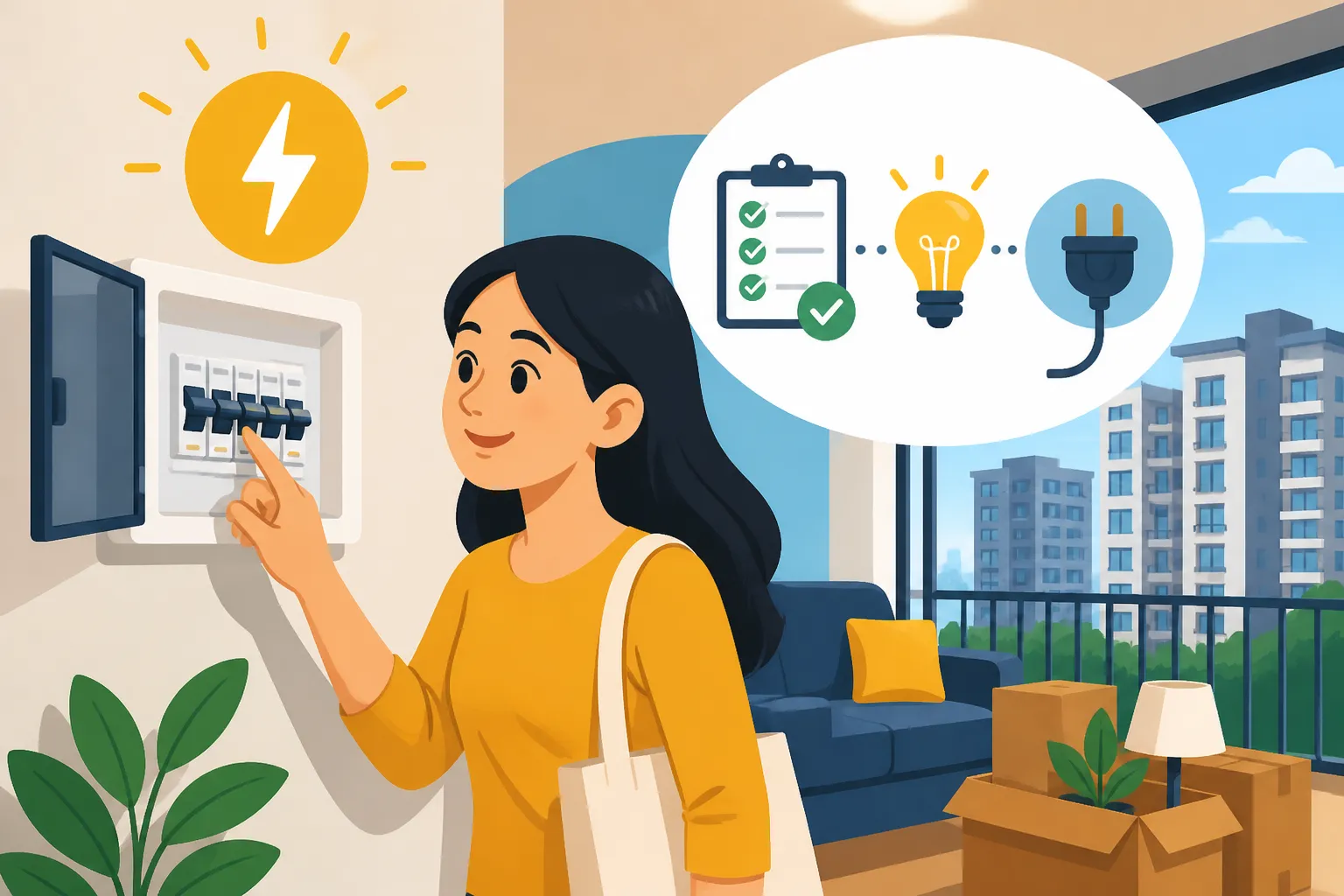
- Check Your Breaker: First, check your apartment's circuit breaker (often in a small box near the entrance or in the kitchen). A tripped breaker is a common cause of power loss in just your unit.
- Check Your Neighbourhood: Look outside. Are your neighbours’ lights on? If it's just your unit, it might be an internal issue. If the whole block is dark, it’s a TNB issue.
- Report to TNB: You can report outages or other technical issues via the MyTNB app, their careline (15454), or their social media channels (TNB CareLine on Facebook/X). Provide your account number and location.
- Emergency Contact: For genuine emergencies (e.g., sparking wires, fallen power lines), call 15454 immediately. Do not approach or touch anything that looks dangerous.
For non-emergency issues like incorrect meter readings or billing discrepancies, the MyTNB app or a call to the careline is usually sufficient. Be prepared to provide photos of your meter if disputing a reading.
Energy Saving Tips for Expats
Living in Malaysia means dealing with heat and humidity, which often translates to higher electricity bills, especially if you rely heavily on air conditioning. Here are a few tips to keep your consumption (and costs) down:
- Smart AC Use: Set your air conditioner to 24-26°C. Every degree lower significantly increases energy use. Use the timer function, and clean the filters regularly for efficiency.
- Natural Ventilation: Open windows and doors in the mornings and evenings when it’s cooler to let fresh air circulate. Use ceiling fans, which are much cheaper to run than AC, for general comfort.
- Unplug Electronics: "Vampire loads" from electronics plugged in but not in use (phone chargers, TVs on standby) can add up. Unplug them when not needed.
- LED Lighting: Switch to LED bulbs. They are far more energy-efficient and last much longer than traditional incandescent bulbs.
- Efficient Appliances: When buying new appliances, look for the energy efficiency rating (the more stars, the better).
Important Considerations for Expat Renters and Homeowners
The specific process can vary slightly depending on whether you're renting or owning, and if there was a previous occupant.
Transferring Existing Accounts vs. New Applications
If you're moving into a property that already has an electricity connection, you'll likely be dealing with a Change of Tenancy or Transfer of Ownership rather than a completely new application. This is generally simpler.
- Change of Tenancy: As a renter, you (the new tenant) and your landlord typically go to Kedai Tenaga (or apply online) to transfer the existing account into your name. You'll need your ID, tenancy agreement, and the landlord's consent/ID. The previous tenant's account will be closed, and a final bill issued to them, while a new account under your name is opened. This prevents you from being liable for the previous tenant's bills.
- Transfer of Ownership: If you're buying a property, you'll need to transfer the account from the previous owner to your name. This again involves submitting proof of ownership (SPA/title) and your ID.
It's crucial to ensure this transfer happens. Many landlords initially keep the account in their name, then ask you to pay them directly. While this can work, it's risky. If the landlord doesn't pay, TNB will cut the supply, and you'll be the one suffering. It's always best to have the account in your name where possible, so you have full control and visibility over your consumption and payments.
Prepaid Meters: A Viable Option for Some
As mentioned earlier, prepaid meters exist. They aren't as common in standard expat rentals but can be found. If your apartment has one, understanding how to manage it is key.
How they work:
- Top-Up: You purchase credit vouchers (usually 16-digit codes) from convenience stores, petrol stations, or via the MyTNB app/portal.
- Enter Code: You enter this code into a keypad device usually located near your meter or main switchboard.
- Monitor Credit: The meter will display your remaining credit. Most meters will also emit a warning beep when the credit runs low, giving you time to top up before it runs out.
Pros: No monthly bills, better budget control, no security deposit required.
Cons: Inconvenience of topping up, risk of losing power if you forget, sometimes slightly higher tariff rates compared to postpaid.
For some expats, especially those on shorter-term leases or who prefer strict budget control, a prepaid meter can be a good option. However, for most long-term residents, the convenience of a postpaid bill and auto-debit payments usually wins out.
Getting settled in a new country like Malaysia is a journey filled with small victories, and getting your electricity sorted is definitely one of them. Take your time, prepare your documents, and don't hesitate to seek clarification if you're unsure. Before you know it, you'll be basking in the glorious glow of your own Malaysian apartment lights, just like a seasoned local. And while we're talking about getting connected, don't forget to sort out your internet. You can find more details in our guide on How to Set Up Water, Gas and Internet in Malaysia to complete your utility checklist.
Disclaimer
The information provided in this guide is for general informational purposes only and does not constitute professional advice. While we strive to keep the information up-to-date and accurate, regulations and procedures in Malaysia can change. Always verify the latest requirements and processes directly with Tenaga Nasional Berhad (TNB) or relevant authorities. We recommend consulting with local experts or TNB customer service for specific guidance related to your individual situation.