How Do I Use the MRT in Kuala Lumpur?
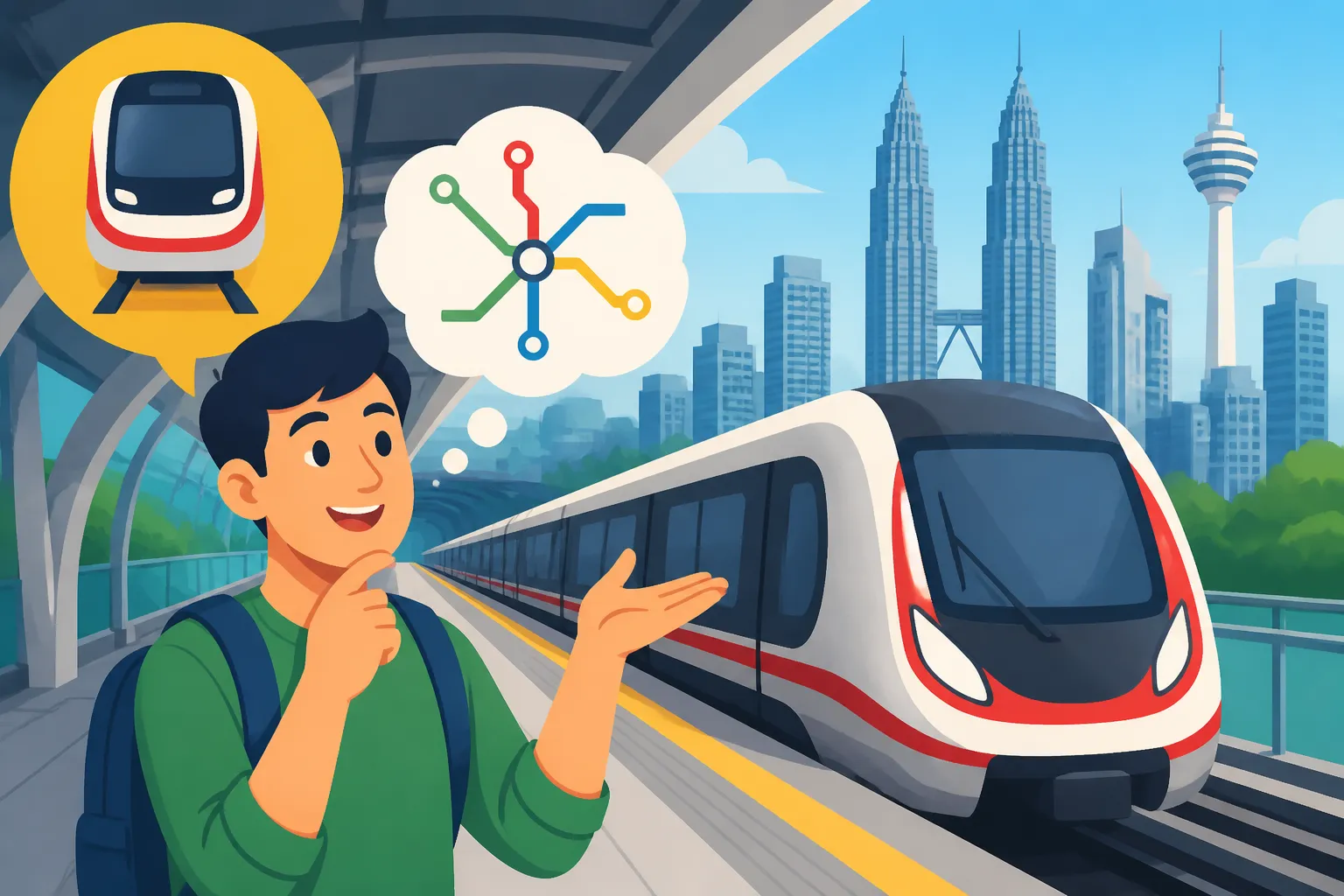
Navigating public transportation in a new city can feel like trying to decipher an ancient scroll, and Kuala Lumpur, with its sprawling network, is no exception. For many of us expats, the initial thought of figuring out the complex web of trains, buses, and taxis can be quite overwhelming. But trust me, once you get the hang of it, KL's MRT system becomes your personal magic carpet, whisking you past traffic jams and directly to some of the city's most vibrant spots. This guide is here to demystify the MRT, turning you from a bewildered newbie into a seasoned urban explorer.
Understanding the MRT System in Kuala Lumpur
The Mass Rapid Transit (MRT) system in Kuala Lumpur is a relatively new and modern addition to the city's public transport infrastructure, designed to ease traffic congestion and provide efficient travel. When I first arrived, the thought of driving in KL's infamous traffic was enough to give me a headache, so discovering the MRT was a godsend. It's clean, air-conditioned, and remarkably efficient, making it a preferred mode of transport for both locals and expats alike.
What is the MRT and Where Does it Go?
The MRT system currently consists of two operational lines: the Kajang Line (previously known as the SBK Line) and the Putrajaya Line (previously known as the SSP Line). These lines crisscross important parts of the Klang Valley, connecting residential areas to major business districts, shopping malls, and tourist attractions. The Kajang Line, for instance, runs from Kwasa Damansara all the way to Kajang, passing through key areas like Mutiara Damansara (for IKEA and The Curve), Bandar Utama (for 1 Utama Shopping Centre), Semantan, Pasar Seni, Bukit Bintang, and Maluri. It's practically a sightseeing tour in itself!
Then there's the newer Putrajaya Line, which stretches from Kwasa Damansara to Putrajaya Sentral, effectively connecting the northern and southern corridors of the Klang Valley. This line brings areas like Kepong, Mont Kiara (via feeder bus connections from stations like Segambut), TRX, and the administrative capital of Putrajaya into the fold. It's a game-changer for those living or working in these zones, drastically cutting down commute times. While it doesn't cover every nook and cranny of KL, it connects vital hubs, and from there, you can often find seamless transfers to other public transport options or Grab rides. If you're pondering which areas might be best to settle in, considering proximity to an MRT station is always a smart move. For more insights, you might want to read about The Best Places to Live in Malaysia for Expats: A Complete Guide (2027).
Operating Hours and Frequency
Generally, the MRT operates from early morning until late at night, typically from around 6:00 AM to midnight, though this can vary slightly on weekends and public holidays. During peak hours, usually 7:00 AM to 9:30 AM and 5:00 PM to 7:30 PM on weekdays, trains run more frequently, sometimes every 3-5 minutes, which is a blessing when you're trying to get to work or avoid the evening rush. Outside of peak times, you might wait a bit longer, perhaps 7-15 minutes, but it's still very reasonable.
It’s always a good idea to check the schedule, especially if you're planning a late-night outing or need to catch an early flight. The MyRapid PULSE app (which we'll discuss later) is excellent for this, providing real-time updates. I’ve personally been caught out a couple of times thinking I had more time, only to find the last train had just departed. Lesson learned: always double-check! Knowing the operating hours is a crucial part of Understanding the LRT, MRT and Monorail Systems in Kuala Lumpur.
Key Stations and Interchange Hubs
One of the beauties of KL's public transport system is its interconnectedness. The MRT lines are designed to link with other rail networks, expanding your reach across the city.
- Pasar Seni: This is a major interchange hub, connecting the MRT Kajang Line with the LRT Kelana Jaya Line and also a short walk from the KTM Komuter station. It's incredibly convenient for exploring Central Market, Chinatown, and Petaling Street. When I first visited, I spent ages trying to figure out how to get to these spots, and Pasar Seni became my go-to.
- Muzium Negara: Located right next to KL Sentral, this MRT station is a gateway to the city's main transportation hub. A well-designed, air-conditioned pedestrian linkway connects Muzium Negara MRT station directly to KL Sentral, making transfers to KTM Komuter, ETS, KLIA Express, and other LRT lines incredibly smooth. It's a lifesaver for airport runs or venturing further out of the city.
- Tun Razak Exchange (TRX): This station is a pivotal point as it's an interchange between the MRT Kajang Line and the MRT Putrajaya Line. If you need to switch between these two lines, TRX is where you'll do it. It’s also home to the new TRX financial district and the TRX Exchange Mall, making it a bustling destination in its own right.
- Bukit Bintang: A very popular station on the Kajang Line, dropping you right in the heart of KL's shopping and entertainment district. From here, you can easily walk to Pavilion Kuala Lumpur, Lot 10, Fahrenheit88, and countless restaurants and bars.
- Conlay and Persiaran KLCC: Both on the Putrajaya Line, these stations offer easy access to the KLCC park, the Kuala Lumpur Convention Centre, and a slightly longer but pleasant walk to the iconic Petronas Twin Towers.
Understanding these key hubs will dramatically improve your ability to navigate KL like a local. It also highlights why living near an MRT station can be so beneficial for your daily life in the city, especially when considering How Much It Costs to Live in Kuala Lumpur per Month?.
Getting Your Ticket and Paying for Your Ride
Okay, so you know where you want to go. Now, how do you actually get on the train? The payment system in KL's public transport is generally straightforward, but knowing the best option for your needs can save you time and hassle.
Touch 'n Go Card: The Expat's Best Friend
If you're going to be using public transport regularly in Malaysia, especially the MRT, an absolute must-have is the Touch 'n Go (TnG) card. Think of it as your all-access pass. This reloadable smart card can be used across almost all public transport networks (MRT, LRT, Monorail, KTM Komuter, buses), and even for toll payments and parking. The convenience is unparalleled; no fumbling for cash or dealing with ticket machines for every journey. When I first moved here, I relied on single-journey tokens, but the queues were often long, especially during peak hours. Getting a TnG card changed everything.
You can purchase a TnG card at any MRT or LRT station customer service counter, at most 24-hour convenience stores like 7-Eleven and MyNEWS, or at major petrol stations. The initial card cost is usually around RM10-15, and you'll need to top it up with a minimum balance. Reloading is easy too:
- MRT/LRT Station Counters: Just hand your card and cash (or sometimes card payment) to the staff.
- Self-Service Kiosks: Found at most stations, these machines allow you to top up using cash or credit/debit card.
- Convenience Stores: Many 7-Eleven, MyNEWS, and other outlets offer TnG reload services.
- Touch 'n Go eWallet: If you download the TnG eWallet app and link your physical card, you can reload it directly from your phone. This is a game-changer! You'll need a local phone number, so make sure you've sorted out How to Set Up a Mobile Phone Plan in Malaysia first.
The benefits are clear: faster entry and exit at the gantry, no need to queue for tokens, and often slightly cheaper fares compared to single-journey tokens.
Single Journey Tokens
For tourists or those who only plan to use the MRT once or twice, single-journey tokens are perfectly fine. These are physical tokens that you purchase for a specific trip. You can buy them from automated ticket vending machines located in every MRT station concourse.
Here’s how it usually works:
- Select Your Destination: The machine will display a map of the MRT lines. Simply tap on your desired destination station.
- View Fare: The fare will be calculated and displayed on the screen.
- Insert Payment: Most machines accept various denominations of Malaysian Ringgit (RM) banknotes and coins, and some also accept credit/debit card payments.
- Collect Token and Change: The machine will dispense your plastic token and any change.
- Tap and Go: At the entry gantry, tap the token on the designated reader. Hold onto your token because you'll need to insert it into a slot at the exit gantry at your destination station to open the barrier.
While simple, it can be a bit slow if you're stuck behind someone unfamiliar with the machine, and the queues can build up quickly during busy times.
Payment Options Comparison
Here's a quick rundown of the pros and cons of each primary payment method:
| Feature | Touch 'n Go Card | Single Journey Token |
|---|---|---|
| Purchase Method | Station counter, convenience stores, petrol stations | Automated vending machines at stations |
| Reloadable | Yes | No, one-time use |
| Convenience | Fast tap-and-go, no queues | Requires purchase for each trip, potential queues |
| Cost | Often slightly cheaper fares, initial card cost | Slightly higher fares, no initial card cost |
| Usage Beyond MRT | LRT, Monorail, KTM, buses, tolls, parking, retail | Only for a single MRT journey |
| Lost/Stolen Risk | Can be a hassle to replace if not linked to eWallet | Minimal risk as it's single-use |
| Expat Recommendation | Highly Recommended for regular use | Recommended for infrequent users or tourists |
Navigating the MRT Stations and Trains
Once you have your TnG card or token in hand, it's time to actually get on the train! MRT stations are generally very well-designed, clean, and equipped with clear signage in both Bahasa Malaysia and English.
Entering and Exiting Stations
Each station has multiple entrance points, usually well-marked with the MRT logo. When you enter, you'll pass through turnstile gantries.
- Entering: Tap your Touch 'n Go card on the designated reader, or tap your single-journey token. The barrier will open, allowing you to proceed. Always ensure you hear the "beep" and the green light flashes, confirming your entry has been registered.
- Finding Your Platform: Once inside, follow the overhead signs to find your platform. These signs typically indicate the line name (Kajang Line or Putrajaya Line) and the direction of travel (e.g., "To Kwasa Damansara" or "To Kajang"). It's crucial to pay attention to the end destination of the line to ensure you're heading in the correct direction.
- Exiting: Upon reaching your destination, you'll again pass through turnstile gantries. Tap your Touch 'n Go card or insert your single-journey token into the slot. The system will automatically deduct the correct fare, and the barrier will open. If your TnG card has insufficient balance, the barrier won't open, and you'll need to top up at a nearby customer service counter or kiosk.
The stations themselves are often quite impressive, with some, like Pasar Seni, incorporating local art and design. You'll find escalators and lifts at all stations, making them accessible for everyone, including those with luggage or strollers.
Platform Etiquette and Safety
Just like in any major city, there's a certain unspoken etiquette when using public transport. Adhering to these simple rules makes for a more pleasant experience for everyone.
- Queueing: When waiting for the train, stand behind the yellow safety line on the platform. There are usually marked areas indicating where the train doors will open, and people generally queue up on either side, allowing passengers to alight first.
- Alighting First: Always, always let passengers exit the train before attempting to board. It's a fundamental rule that sadly gets overlooked sometimes, leading to awkward bottlenecks.
- Priority Seats: Inside the train, look for seats designated for the elderly, pregnant women, people with disabilities (OKU), and those carrying infants. These are often clearly marked and should be given up if someone in need is standing.
- No Eating or Drinking: Food and beverages are not allowed on the trains or within the paid areas of the stations. This keeps the carriages clean and pest-free.
- Noise Levels: Try to keep your voice down, especially if you're on the phone. While KL trains aren't library-quiet, being mindful of your fellow passengers is appreciated.
- Safety: Be aware of your surroundings, especially during peak hours when trains can get very crowded. Keep your belongings secure.
The trains are generally very safe, with CCTV cameras installed both on platforms and inside carriages. In case of any emergency, there are emergency buttons and intercoms available to communicate with the control centre.
Making Connections to Other Lines
One of the greatest advantages of the MRT is its integration with KL's wider public transport network. This means you can hop from MRT to LRT, Monorail, or even KTM Komuter seamlessly. This interconnectedness is part of what makes The Expat Guide to Public Transport in Malaysia so useful.
- Integrated Stations: As mentioned earlier, stations like Pasar Seni and Muzium Negara are designed for easy transfers. At Pasar Seni, you literally walk from the MRT platform to the LRT platform without exiting the paid area.
- Pedestrian Linkways: For slightly further connections, covered and often air-conditioned pedestrian linkways are provided. The walk from Muzium Negara MRT to KL Sentral is a prime example. This comfortable walk saves you from the heat and humidity, which is a big plus for expats not yet accustomed to Malaysia's tropical climate.
- Understanding the Network: To truly master KL's transport, it's essential to understand how all the lines fit together. The MyRapid PULSE app (yes, it comes up again!) includes a comprehensive journey planner that shows you the best routes, including necessary transfers. Sometimes, a combination of MRT and a short Grab ride is the most efficient way to reach your final destination, especially if you're exploring How Do I Use Grab Instead of Owning a Car in Kuala Lumpur?. When you're considering your daily commute, remember that living near a well-connected station can make a huge difference in your quality of life. Even if you're using moving services like Sirelo to help you relocate, selecting accommodation that provides easy access to the MRT can make your transition to Malaysian life much smoother and more enjoyable.
Tips and Tricks for a Smooth MRT Experience
Even with the best maps and cards, a few insider tips can make your MRT journey even smoother. After years of riding these trains, I've picked up a few hacks that I'm happy to share.
Using the MyRapid PULSE App
This app is truly indispensable for anyone using public transport in Kuala Lumpur. Forget paper maps or squinting at station diagrams; MyRapid PULSE is your digital transport assistant. It’s available for both iOS and Android, and I highly recommend downloading it as soon as you arrive.
Here’s why it’s a game-changer:
- Journey Planner: Input your starting point and destination, and the app will provide the fastest route, including transfers between MRT, LRT, Monorail, and even buses. It calculates estimated travel times and fares.
- Real-Time Train Arrivals: This feature is a lifesaver. You can see exactly when the next train is expected to arrive at your station, allowing you to time your arrival at the platform perfectly. No more aimless waiting!
- Station Information: It provides details about each station, including facilities, exits, and nearby attractions.
- Fare Calculator: Curious about how much your journey will cost? The app can give you an estimate.
Remember, to get the most out of MyRapid PULSE, you'll need a stable internet connection on your phone. Don't get caught without data when you're trying to figure out your next connection; having a reliable eSIM like those from Airalo can be a real lifesaver, ensuring you always have access to crucial navigation info.
Understanding Announcements and Signage
Don't worry if your Bahasa Malaysia isn't perfect yet; all important announcements on the trains and at the stations are bilingual. They'll typically be made first in Bahasa Malaysia, followed by English. The visual signage is also very clear, using internationally recognised symbols and text.
- Platform Screens: On the platforms, large digital screens display the next train's destination, estimated arrival time, and sometimes even the train's unique ID.
- In-Train Displays: Inside the train carriages, overhead digital displays show the current station, the next station, and the overall route map with a glowing dot indicating your train's position. This is incredibly helpful for keeping track of your journey and knowing when to prepare to alight.
- Audio Announcements: When approaching a station, an announcement will inform you of the upcoming stop and any potential connections.
While it can be a bit fast-paced sometimes, a quick glance at the digital displays usually confirms everything you need to know.
Avoiding Peak Hour Rush
Kuala Lumpur is a bustling metropolis, and its public transport reflects that, especially during peak hours. If you have flexibility in your schedule, try to avoid travelling during these times (weekdays, roughly 7:00 AM – 9:30 AM and 5:00 PM – 7:30 PM). Trains can get incredibly crowded, sometimes standing room only, and navigating with luggage can be a challenge.
If you absolutely must travel during peak hours, here are some strategies:
- Stand at the Ends of the Platform: Sometimes the carriages at the very front or very back of the train are slightly less crowded than those in the middle.
- Be Prepared to Stand: Expect to stand for your journey. If you're travelling with children, hold their hands tightly.
- Prioritise Safety: Keep your valuables secure and close to your body.
- Consider a Different Route: For shorter distances or if you're travelling against the main flow of traffic, a Grab ride might be more comfortable, though potentially slower due to road traffic. Understanding What is the cheapest way to commute in Kuala Lumpur? can help you weigh your options.
Dealing with Lost and Found
It happens to the best of us – you leave your umbrella, your bag, or even your phone behind. If you realise you've lost something on the MRT, don't panic.
- Contact Station Staff Immediately: The quickest way to recover a lost item is often to speak to the customer service counter staff at the station where you last saw the item, or at your destination station. They can often communicate with the control centre to check the train.
- Call the Rapid KL Helpline: For items lost on MRT trains or at stations, you can contact the Rapid KL helpline. They have a centralised lost and found system. Have as much detail as possible ready: date and time of travel, train line, direction, and a detailed description of the item.
- Online Reporting: Rapid KL's website might also have an online form for reporting lost items.
While they do their best, prompt action significantly increases your chances of getting your belongings back. I once left my laptop bag on a train, and thanks to quick thinking and helpful staff, it was located at the next station's customer service counter. It was a huge relief! This level of service is something you learn to appreciate as an expat in Malaysia.
Disclaimer
The information provided in this guide is for general informational purposes only and is subject to change. While we strive to keep the content up-to-date and accurate, official policies, operating hours, and fare structures may be updated by the relevant authorities (e.g., Rapid KL, Land Public Transport Agency, Ministry of Transport) without prior notice. Expats and tourists are advised to consult the official websites or contact the service providers for the most current information.