The Expat Guide to Public Transport in Malaysia
Oh, the joys and perplexities of navigating public transport in Malaysia! When you first land here, fresh off the plane, the sheer mix of modern trains, bustling buses, and the ubiquitous Grab cars can feel like a delightful but utterly confusing puzzle. You’re trying to figure out how to get from A to B without getting lost, ripped off, or stranded, all while grappling with a new language and a completely different urban rhythm. Believe me, I’ve been there – squinting at maps, fumbling for exact change, and wondering if that bus actually goes where the sign says it does. This guide is going to strip away the mystery and give you the real lowdown on how to master Malaysia's public transport system, making your daily commute or weekend adventures a breeze.
The Public Transport Landscape in Malaysia: An Overview
Malaysia's approach to public transport is a fascinating blend of ambition and ongoing development. Especially in the Klang Valley, which encompasses Kuala Lumpur and its surrounding areas, you'll find a network that's constantly expanding and improving, though not without its quirks. For those of us who've lived here for a while, we've seen immense changes, particularly with the introduction of new rail lines, but also the enduring reliance on certain traditional modes. It’s a system that can be incredibly efficient one moment and frustratingly slow the next, a true reflection of the country's dynamic growth.
A Blend of Old and New
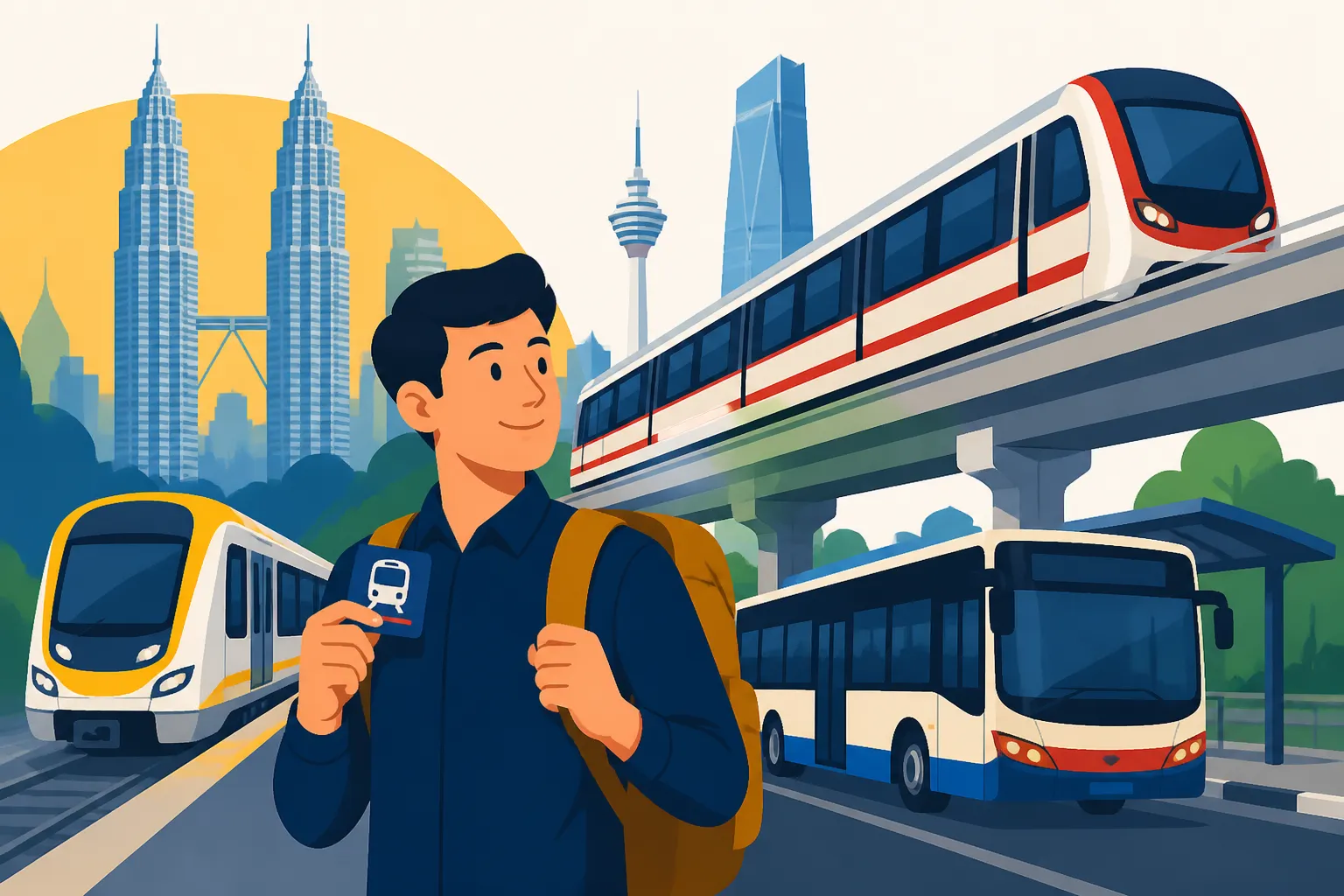
When you arrive in Malaysia, especially if you're settling in Kuala Lumpur, you'll immediately notice the gleaming, modern infrastructure of the MRT and LRT lines crisscrossing the city. These elevated and underground trains are a testament to Malaysia's rapid urban development, designed to whisk commuters across vast distances relatively quickly. They feel futuristic, air-conditioned, and mostly efficient, a stark contrast to some of the older, perhaps less polished, public transport options you might encounter in more suburban or rural areas. It's this dichotomy that can be a bit disorienting. You might step off a state-of-the-art MRT train into a neighbourhood still heavily reliant on infrequent local buses or even ancient taxi services.
This contrast is part of the Malaysian experience, where progress and tradition often sit side-by-side. The public transport system mirrors this, offering world-class services in some corridors while other areas are still playing catch-up. For new expats, this can lead to an initial sense of bewilderment. You're trying to figure out the best way to get to your new office or explore the local sights, only to find that what works perfectly in the city centre might not even exist a few kilometres out. Understanding this blend is the first step to truly navigating Malaysia without constantly relying on private vehicles, which, trust me, you'll want to avoid during peak hour traffic!
Key Operators and Governing Bodies
At the heart of Malaysia's public transport network, especially in the Klang Valley, is Prasarana Malaysia Berhad. They are essentially the powerhouse behind the majority of urban public transport. When you hear "Rapid KL," know that it's Prasarana operating the LRT (Light Rail Transit), MRT (Mass Rapid Transit), and the iconic, if somewhat limited, Monorail. These are your primary modes for getting around Kuala Lumpur swiftly and efficiently. Their omnipresence means that most of your rail journeys will fall under their umbrella, making ticketing and navigation somewhat streamlined once you get the hang of it.
Beyond the urban core, particularly for those longer commutes connecting cities or reaching the more far-flung suburbs, you'll encounter KTM (Keretapi Tanah Melayu Berhad). KTM operates the national railway system, including the crucial KTM Komuter services which are vital for daily commuters from places like Seremban or Port Klang into KL. They also run intercity services that can take you to destinations like Ipoh or Butterworth (for Penang). While the trains are a bit older and sometimes subject to delays compared to the Rapid KL services, they serve an indispensable role in connecting the country.
Regulating all of this, and ensuring some semblance of order and future planning, is the Land Public Transport Agency (APAD), formerly known as SPAD (Suruhanjaya Pengangkutan Awam Darat). APAD is the main regulatory body responsible for planning, regulating, and enforcing laws related to land public transport. While you, as an expat, won't typically interact directly with APAD, their role is crucial in shaping the future of Malaysia's transport infrastructure, influencing everything from fare structures to route expansions. Knowing these key players helps demystify the system and understand why certain services operate the way they do.
Navigating Urban Rail Systems: LRT, MRT, Monorail, and KTM Komuter
For anyone living in Kuala Lumpur, the rail network will quickly become your best friend. Seriously, it's a lifesaver, especially when you consider the notorious KL traffic. The city has invested heavily in creating a modern and interconnected rail system, and while it might look like a spaghetti map at first glance, it's actually quite intuitive once you understand the different lines and how they fit together. Forget trying to drive everywhere; these trains are the way to go, not just for convenience but often for speed.
Kuala Lumpur's Rail Network: Your Lifeline
The Light Rail Transit (LRT) lines, specifically the Kelana Jaya Line and the Ampang/Sri Petaling Line, were some of the first modern urban rail systems in KL. The Kelana Jaya Line, in particular, is a workhorse, stretching from Gombak in the north-east all the way to Putra Heights in the south-west, passing through key areas like KLCC, Masjid Jamek, and Bangsar. It’s fully automated and usually quite punctual. The Ampang/Sri Petaling Line serves a different corridor, connecting areas like Sentul Timur, Chan Sow Lin, and Puchong. These lines are crucial for daily commuters and have significantly eased traffic congestion in many areas they serve.
Then came the Mass Rapid Transit (MRT), a game-changer for many, with its modern trains and extensive coverage. The Kajang Line (MRT Line 1) connects Sungai Buloh to Kajang, traversing critical areas like TRX, Bukit Bintang, and Muzium Negara (which connects to KL Sentral). The Putrajaya Line (MRT Line 2) is even newer, extending from Kwasa Damansara to Putrajaya Sentral, bringing previously less accessible areas into the urban rail fold. These MRT lines are incredibly clean, spacious, and often preferred by expats due to their comprehensive routes through popular residential and business districts.
Not to be forgotten is the Monorail, a unique elevated railway that offers a scenic, albeit sometimes slower, ride through the heart of KL. It runs a single loop from KL Sentral to Titiwangsa, passing through bustling areas like Bukit Bintang and Chow Kit. While it has fewer stops and is not as integrated as the LRT or MRT, it's fantastic for short hops between shopping districts and tourist attractions. Getting around Kuala Lumpur can be daunting initially, but with a basic grasp of these lines, you're well on your way to mastering it. For a deeper dive into these systems, check out our guide on Understanding the LRT, MRT and Monorail Systems in Kuala Lumpur.
KTM Komuter: Beyond the City Centre
While the LRT, MRT, and Monorail dominate the inner city, the KTM Komuter network plays a vital role in connecting the wider Klang Valley and beyond. Think of it as the suburban lifeline, stretching further out to places like Seremban in Negeri Sembilan, Tanjung Malim in Perak, and Port Klang on the coast. These lines are particularly useful for those living in more residential areas outside the immediate city centre, offering a relatively affordable way to commute into KL Sentral or other central interchanges.
The two main Komuter lines are the Port Klang Line and the Seremban Line. The Port Klang Line connects stations from Tanjung Malim through KL Sentral all the way to Port Klang, an important industrial and port area. The Seremban Line runs from Batu Caves in the north, through KL Sentral, down to Pulau Sebang/Tampin or Seremban. You'll often see these trains packed during peak hours with people heading to work or school. For expats needing to access parts of Selangor or Negeri Sembilan that aren't covered by the Rapid KL network, KTM Komuter is often the only rail option.
However, it's important to set your expectations with KTM Komuter. While it's indispensable, it's generally not as punctual or frequent as the LRT or MRT. Delays can happen, especially during bad weather, and train intervals can be longer. For those accustomed to the clockwork precision of, say, European or Japanese rail systems, this can be a minor adjustment. But for many, the trade-off of a slightly longer journey is worth avoiding the gridlock of road traffic. It also offers a direct link to KLIA Transit and Express services from KL Sentral, which is super handy when heading to the airport.
Ticketing and Fares for Rail Travel
When it comes to paying for your journeys on Malaysia's rail systems, the absolute, undisputed essential item you need is a Touch 'n Go card. Seriously, get one immediately. This reloadable smart card is your key to seamless travel on almost all public transport in the Klang Valley, including the LRT, MRT, Monorail, and KTM Komuter. You can buy these cards at most convenience stores like 7-Eleven or petrol stations, and at all LRT/MRT/Monorail station customer service counters. Topping up is equally easy – at the same station counters, self-service machines, or convenience stores. Keeping it topped up saves you time and hassle.
For those rare instances where you don't have your Touch 'n Go card, or if you're a tourist making a single journey, you can purchase single journey tokens at ticket vending machines located in every station. These tokens are good for one ride between your selected start and end stations. However, relying on them for daily travel is a pain; you'll spend more time queuing and fumbling. Plus, the Touch 'n Go card often offers slightly discounted fares compared to single journey tokens, especially for longer rides.
Fares on the rail networks are generally distance-based, meaning you pay more for longer journeys. The system calculates your fare automatically when you tap your Touch 'n Go card at entry and exit gates. It's a pretty integrated system, so transferring between different LRT, MRT, and Monorail lines within a certain timeframe often doesn't incur a new base fare, just the additional distance. Keep an eye out for promotions or passes, though these are less common for expats compared to locals with specific concessions. The system is designed to be user-friendly, and once you've done it a couple of times, it becomes second nature.
Bus Services: The Unsung Heroes of Malaysian Public Transport
While the rail lines get a lot of attention for their efficiency and speed, let's not forget the humble bus. Buses are the unsung heroes of Malaysia's public transport, covering vast swathes of urban and intercity routes that trains simply don't reach. They might not always be the fastest option, especially with traffic, but they are incredibly extensive and often surprisingly affordable. For an expat, understanding the bus system, particularly in the Klang Valley, opens up a whole new level of mobility.
Rapid KL Buses: Covering the Urban Sprawl
In the Klang Valley, the Rapid KL bus network is the most comprehensive public transport option for areas not directly served by the rail lines, and even for last-mile connectivity from train stations. These bright red and white buses ply thousands of routes, reaching into residential areas, commercial hubs, and even some more remote spots. They are your go-to for filling in the gaps where the LRT or MRT doesn't quite take you to your doorstep.
Navigating the Rapid KL bus system can initially feel like a Herculean task. The sheer number of routes, coupled with the sometimes erratic nature of Malaysian traffic, means that bus journeys can be unpredictable. However, modern tools like Google Maps are invaluable for finding routes and estimating arrival times (though take the latter with a grain of salt!). Bus stops are generally clearly marked, and buses display their route numbers. Payment is primarily done using your Touch 'n Go card; cash is typically not accepted, so make sure your card is topped up.
A fantastic bonus for anyone exploring downtown Kuala Lumpur is the GoKL City Bus. This is a free bus service that operates on several colour-coded routes (Green, Purple, Red, Blue) covering major tourist attractions, shopping districts, and business areas within the city centre. They're air-conditioned, frequent, and incredibly convenient for short hops. You can just hop on and off without a ticket! While they often get stuck in traffic, for a quick sightseeing loop or a specific destination within the Golden Triangle, they're unbeatable. Don't be shy to give the regular Rapid KL buses a try – they'll take you places the trains won't, giving you a more authentic feel for the city.
Intercity and Express Buses: Travel Beyond the Klang Valley
When you're ready to explore beyond the urban confines of Kuala Lumpur and venture into other states, Malaysia's extensive network of intercity and express buses becomes your best friend. These long-distance coaches are a popular, comfortable, and very affordable way to travel between major cities and towns across the Peninsular. Whether you're planning a weekend trip to Penang, a jungle adventure in Taman Negara, or even a cross-border journey to Singapore, there's likely an express bus service that will take you there.
The main hub for intercity buses in Kuala Lumpur is Terminal Bersepadu Selatan (TBS). This is a massive, modern, and well-organised terminal located just south of the city centre, easily accessible by LRT, KTM Komuter, or Grab. TBS is a far cry from the old Puduraya bus terminal (which still operates some local routes but TBS is generally preferred for long-distance). At TBS, you'll find countless operators heading to every corner of Malaysia. Booking your tickets is simple: you can go to the counters at TBS, but for convenience and to secure your preferred times, it's highly recommended to book online through platforms like Easybook.com or Redbus.my.
The quality of express buses varies between operators, but generally, you can expect air-conditioning, reclining seats, and sometimes even amenities like individual entertainment screens or charging ports. Always choose reputable operators for safety and comfort. These buses provide an excellent opportunity to see more of the country's diverse landscapes and connect with different regions. So, when the wanderlust hits, consider hopping on an express bus; it’s a quintessential Malaysian travel experience.
Local Bus Services in Other States
While the Klang Valley boasts the most advanced and extensive public transport infrastructure, other major cities and states in Malaysia also have their own local bus services. These services are crucial for daily commutes and provide an important backbone for local residents, even if they might not always be as comprehensive or frequent as those in KL. For expats living outside the capital, these local buses can still be a viable, cost-effective option for getting around.
Take Penang, for example. Rapid Penang operates a wide network of buses across Penang Island and the mainland, Seberang Perai. Their buses are generally modern and air-conditioned, connecting major towns, tourist spots, and residential areas. Similar to Rapid KL, they often use a flat fare or distance-based system, and Touch 'n Go cards are usually accepted, though sometimes cash payments are still an option for exact change. For specific route planning in Penang, local apps or simply Google Maps are your best bet.
Similarly, cities like Johor Bahru, Ipoh, and Melaka also have local bus services, though their coverage and efficiency can vary significantly. In some areas, the public bus network might be quite limited, requiring a greater reliance on ride-hailing services. The key here is to research the specific local transport options for your area if you're living outside the Klang Valley. Don't assume the same level of integration or frequency you'd find in Kuala Lumpur. However, wherever you are, buses remain a fundamental part of the public transport ecosystem, providing crucial access, especially for local communities.
Ride-Hailing and Taxis: Convenience at Your Fingertips
Let's be honest, sometimes you just need a ride, and you need it now. This is where ride-hailing services and, to a lesser extent, traditional taxis come into play. For many expats, particularly new arrivals, these services become an immediate go-to due to their sheer convenience and ease of use. They offer a comfortable, often air-conditioned, and door-to-door solution, bypassing the need to decode complex bus routes or make multiple train transfers.
Grab: The Undisputed King of Ride-Hailing
If there's one app you absolutely must download the moment you set foot in Malaysia, it's Grab. Seriously, it’s not just a ride-hailing service; it's practically a way of life here. Grab dominates the market, offering everything from GrabCar (private car hires, your standard ride), GrabBike (motorcycle taxis, great for solo travel and weaving through traffic in certain areas, though less common for expats), to GrabFood (food delivery), GrabMart (grocery and convenience store delivery), and GrabExpress (parcel delivery). It's an all-in-one super-app that caters to almost every modern convenience.
Using Grab is incredibly straightforward. Simply open the app, input your destination, and it will give you a fare estimate and estimated arrival time for a driver. Payment can be done either in cash (select this option before booking) or through GrabPay, which you can top up via online banking or credit/debit card. The convenience of seeing the fare upfront and not having to haggle is a huge plus. Safety features are also integrated, allowing you to share your journey details with friends or family.
One thing to note: Grab prices can surge during peak hours, heavy rain, or high demand. This is common practice, but it's something to be aware of when planning your budget. Nevertheless, the sheer accessibility, reliability, and breadth of services offered by Grab make it an indispensable tool for almost every expat in Malaysia. For a comprehensive guide on using this essential service, take a look at our article, How to Use Grab and Ride-Hailing Apps in Malaysia.
Traditional Taxis: Still Around, But With Caveats
While Grab has largely taken over the market, traditional metered taxis are still present in Malaysia, especially in major cities. You'll find them at taxi stands, outside shopping malls, and sometimes just cruising the streets. However, for many expats, relying on traditional taxis comes with a significant caveat: the notorious problem of drivers refusing to use the meter or demanding inflated fixed fares, especially for foreigners.
My personal advice? If you absolutely must take a traditional taxi, always insist on the meter. If the driver refuses, politely decline and try another taxi or, better yet, just open your Grab app. There are some exceptions where fixed fares are standard and regulated, such as airport taxi coupons (where you buy a voucher for your destination at a counter inside the airport) or at specific reputable taxi stands where drivers are known to be more honest. In other scenarios, be prepared for a bit of negotiation or simply stick to Grab.
The experience with traditional taxis can vary widely, from perfectly polite and honest drivers to those who will try to take advantage of new arrivals. It's a risk most expats eventually learn to avoid, opting for the transparency and reliability of ride-hailing. While they might still be seen as a legitimate option for locals in certain situations, for a foreigner who's not familiar with local pricing or routes, it's often a source of unnecessary stress. Stick with Grab unless you know exactly what you're doing.
Maximizing Convenience and Cost-Effectiveness
To truly make the most of ride-hailing and public transport, it’s all about smart planning and using the right tools. For Grab, always ensure your pickup and drop-off pins are as accurate as possible. Sometimes, the GPS can be a little off, and a quick message to your driver confirming your exact location can save time and prevent cancellations. If you're heading to a complex building or a less-known spot, use a prominent nearby landmark for your pin and then guide the driver from there.
When it comes to cost-effectiveness, it’s a balancing act. For short distances, especially with multiple people, Grab can often be comparable to or even cheaper than public transport, especially if you consider the time saved and door-to-door convenience. For single travellers or longer distances where rail lines are available, public transport is usually the more budget-friendly option. A combination of both is often the sweet spot: use rail for the main journey, then a short Grab ride for that crucial "last mile" to your destination.
Reliable mobile data is crucial for using Grab and public transport apps. Imagine being stranded without internet, unable to book a ride or check bus times! This is where having a good local SIM card or an eSIM service like Airalo can be incredibly useful. With an eSIM, you can often get data access as soon as you land, ensuring you're connected from day one. This small investment in connectivity will save you a world of trouble and make your public transport experiences infinitely smoother. Being connected means you can always check your route, call a Grab, or even translate if needed.
Planning Your Journey: Apps, Maps, and Local Knowledge
Successfully navigating Malaysia’s public transport isn't just about knowing what services exist, but how to use them effectively. In a bustling, dynamic city like Kuala Lumpur, technology and a bit of local savviness can make all the difference. Gone are the days of solely relying on paper maps and asking strangers (though a friendly chat with a local is always welcome!). Today, a few key apps and an understanding of the rhythm of the city will turn you into a seasoned commuter in no time.
Essential Apps for Malaysian Public Transport
Your smartphone is your ultimate travel companion in Malaysia. First and foremost, Google Maps is indispensable. It's excellent for public transport routing, providing options for LRT, MRT, Monorail, and even bus routes with estimated travel times. While real-time bus information can sometimes be a little optimistic due to traffic, it’s still the best starting point for planning your journey. You can even download offline maps for areas where connectivity might be spotty, though with services like Airalo providing seamless data, this is less of an issue these days.
Beyond Google Maps, apps like Moovit or Citymapper (if available and well-supported for Malaysia) can offer more detailed public transport schedules and real-time updates. These apps are particularly good at integrating different modes of transport into a single journey plan. And, of course, the Grab app isn't just for ride-hailing; it's also integrated with some public transport options, allowing you to see routes and sometimes even book multimodal journeys. Finally, the Touch 'n Go eWallet app is essential for topping up your card on the go and tracking your spending, making it incredibly convenient for daily use.
Having these apps installed and ready to go will empower you to navigate confidently. They remove much of the guesswork, allowing you to explore more freely and worry less about getting lost. Remember, a fully charged phone and a stable internet connection are your best friends when relying on these digital tools, especially if you're trying to figure out how to get home after a late-night outing.
Navigating the System with Confidence
Beyond the apps, there’s a certain knack to navigating Malaysia’s public transport system with confidence. Firstly, understanding peak hours is crucial. Weekday mornings (roughly 7:00 AM to 9:00 AM) and evenings (5:00 PM to 7:00 PM) see trains and buses packed to the brim, especially on key routes. If you have the flexibility, try to schedule your travel outside these times for a more comfortable experience. If you can’t avoid it, be prepared for crowds and a slightly slower pace.
Another vital tip is to ensure you have a local SIM card with sufficient data. This isn't just for booking Grabs, but also for checking maps, communicating with drivers, and even looking up information on the go. Imagine being in a new area, needing to re-route, and having no internet – it's a nightmare scenario! You can easily get a local SIM from providers like Maxis, Celcom, or Digi upon arrival at the airport or any major shopping mall. For a detailed guide on getting connected, see How to Set Up a Mobile Phone Plan in Malaysia.
Don't be afraid to ask for directions! Malaysians are generally very friendly and helpful, especially if you approach them politely. Most people in urban areas speak at least some English, and many are happy to point you in the right direction. A simple "Excuse me, how do I get to [destination]?" can often yield invaluable advice. Sometimes, local knowledge can even trump the apps, especially for finding shortcuts or avoiding unexpected closures. Learning a few basic Malay phrases like "Terima kasih" (thank you) will also go a long way.
Integrated Transport Hubs and Connections
One of the brilliant aspects of Kuala Lumpur's public transport is its push towards integrated transport hubs. The absolute king of these is KL Sentral. This mammoth station is far more than just a train stop; it's a central nerve centre where almost all major rail lines converge. From KL Sentral, you can access:
- LRT Kelana Jaya Line
- MRT Kajang Line (via Muzium Negara station, connected by a pedestrian walkway)
- KTM Komuter lines
- KLIA Ekspres and KLIA Transit (for direct links to Kuala Lumpur International Airport)
- Monorail (via a short pedestrian walkway to Tun Sambanthan station)
- Numerous bus routes, including airport shuttle buses.
KL Sentral is a bustling microcosm of the city itself, featuring shopping, dining, and hotel connections. It’s a place you’ll undoubtedly pass through often, and mastering its layout will make your life infinitely easier. It is a fantastic example of a well-planned interchange that aims to make transfers between different modes of transport as seamless as possible.
Other key interchange stations, though perhaps not as sprawling as KL Sentral, include Masjid Jamek (connecting LRT Kelana Jaya and Ampang/Sri Petaling lines) and Pasar Seni (connecting LRT Kelana Jaya Line, MRT Kajang Line, and close to KTM Komuter and GoKL bus stops). These hubs are designed to minimise walking and allow for efficient transfers, provided you know where you're going. Understanding these major connection points is like having a cheat sheet for the entire city, allowing you to quickly switch from one line to another to reach virtually any destination within the urban core.
Accessibility and Safety for Expats
As expats, when we move to a new country, concerns about accessibility and safety on public transport are always at the back of our minds. Malaysia has made significant strides in both areas, particularly with its newer infrastructure, but it's important to have a realistic understanding of what to expect. While generally safe, being informed helps you navigate with greater peace of mind.
Public Transport Accessibility
Malaysia's public transport system has varying levels of accessibility. The newer MRT lines (Kajang and Putrajaya Lines) are generally quite good, designed with wheelchair users and those with mobility challenges in mind. You'll find lifts and ramps at most stations, dedicated spaces for wheelchairs in the trains, and tactile paving for the visually impaired. These modern lines really set a high standard.
However, the older LRT lines and especially the Monorail can be a bit more challenging. While efforts have been made, not all stations have full lift access, sometimes relying on escalators or stairs. The Monorail, in particular, due to its older design and structure, can be less accessible, with narrower platforms and sometimes limited lift availability. It's not uncommon to find yourself navigating crowded platforms, especially during peak hours, which can be tough with a pram or a wheelchair.
For bus services, the situation is even more mixed. Newer Rapid KL buses are often low-floor and equipped with ramps, but consistency can be an issue. Always plan ahead if you have specific accessibility needs, perhaps by calling the operator or checking online resources for individual station facilities. While progress is definitely being made, expect some inconsistencies, and remember that patience and planning are your best tools here.
Safety and Security Measures
Overall, public transport in Malaysia is considered safe, especially within the major urban areas. The rail systems, in particular, are well-equipped with CCTV cameras throughout stations and on board trains, and you'll often see uniformed security personnel patrolling platforms. Emergency buttons are also strategically placed in trains and stations, allowing you to alert staff if you encounter any issues.
For female passengers, an added layer of safety on some LRT and MRT lines is the provision of women-only carriages. These carriages, usually marked with pink decals, are designated for women and children, offering a space where female commuters can feel more comfortable and secure, especially during crowded peak hours. It's a thoughtful initiative that many appreciate.
General safety advice applies here, just as it would in any major city around the world. Be aware of your surroundings, keep an eye on your personal belongings, and avoid flashing valuables. Pickpocketing can occur, particularly in crowded areas or tourist hotspots. If you're travelling late at night, especially alone, stick to well-lit stations and consider using Grab for door-to-door convenience rather than waiting at secluded bus stops. While genuine emergencies are rare, knowing that security measures are in place helps provide reassurance.
Dealing with Unexpected Situations
Even in the best systems, things can go wrong. Trains can break down, buses can get caught in unexpected traffic, or you might find yourself in a medical emergency. Knowing how to handle these situations can save you a lot of stress.
Breakdowns and Delays: These can happen, especially with the older KTM Komuter lines, but even the modern LRT and MRT aren't immune to occasional glitches. When a delay occurs, announcements are usually made in both Malay and English over the PA system. Station staff are generally helpful, and you might find updates on official social media channels for Rapid KL or KTM. If you're on a tight schedule, always build in a buffer for potential delays.
Lost and Found: If you leave something behind on a train or at a station, head to the customer service counter at the nearest station or contact the respective operator’s hotline as soon as possible. While recovery isn't guaranteed, staff will do their best to assist you. The quicker you report it, the higher the chance of retrieval.
Emergency Contacts: In any genuine emergency, whether on public transport or elsewhere, Malaysia's universal emergency number is 999. This connects you to police, ambulance, or fire services. It's good to have this number ingrained in your memory. While it’s hoped you’ll never need it, knowing what to do in a medical crisis is vital for any expat. We've got a detailed guide on Emergency Medical Care in Malaysia: What Every Expat Needs to Know which is worth a read. Being prepared for the unexpected is just part of living abroad, and Malaysia's system generally provides channels to address these issues.
The Future of Public Transport in Malaysia
Malaysia isn't resting on its laurels when it comes to public transport. The government and various agencies are constantly looking for ways to expand, integrate, and improve the existing network to better serve its rapidly growing urban population and reduce traffic congestion. For expats, this means an increasingly connected and user-friendly experience in the years to come.
Ongoing Developments and Expansions
The commitment to public transport expansion, especially in the Klang Valley, is clear. One of the most anticipated projects is the MRT 3 Circle Line. As the name suggests, this line is envisioned as a loop around Kuala Lumpur, connecting existing MRT and LRT lines, and providing a crucial orbital link for commuters. This will significantly enhance connectivity between different parts of the city without needing to pass through the heavily congested central core, thereby reducing travel times and making transfers even more seamless. Such developments are crucial for managing the growth of urban centres and improving the daily lives of residents, including many expats looking for efficient ways to commute.
Beyond the MRT 3, there are continuous upgrades and extensions to existing bus routes, aimed at providing better "first-mile and last-mile" connectivity – essentially, getting you from your home to the nearest major transport hub, and from that hub to your final destination. These projects may not always grab headlines like a new rail line, but they are equally vital in creating a truly integrated transport ecosystem that serves everyone. The goal is clear: to encourage more people to leave their cars at home and embrace public transport as their primary mode of travel.
Towards a More Integrated and Sustainable Network
Malaysia's vision for its public transport extends beyond just adding more lines and buses. There's a strong push towards creating a more integrated and sustainable network. This involves improving connectivity between different modes – making it easier to switch from an LRT to a bus, or from a Komuter train to a Grab ride. The ideal scenario is a seamless journey where all parts of the transport system work together harmoniously, reducing friction and stress for commuters.
Technological advancements are also playing a significant role. Think smarter ticketing systems, real-time information displays that are more accurate, and perhaps even AI-driven route optimization. The long-term goal is to alleviate the notorious traffic congestion that plagues Malaysian cities, especially Kuala Lumpur. By making public transport a genuinely attractive and viable alternative to private cars, the hope is to reduce carbon emissions, improve air quality, and create more liveable urban environments.
For expats, these ongoing improvements mean that getting around Malaysia is only going to get easier and more efficient. As the network matures, you'll find greater freedom to explore, commute, and experience all that Malaysia has to offer without the constant headache of driving and parking. It's an exciting time to be here, witnessing and benefiting from these transformative changes to the nation's transport infrastructure.
Public Transport Options in Kuala Lumpur: A Quick Comparison
To help you get a quick overview of the main public transport options in Kuala Lumpur, here's a table summarizing their key features and typical uses for expats.
| Transport Mode | Operator | Primary Coverage | Key Features & Expat Use | Ticketing | Pros | Cons |
|---|---|---|---|---|---|---|
| LRT | Rapid KL | Urban & suburban (Kelana Jaya, Ampang/Sri Petaling) | Fast, efficient, connects key areas (KLCC, Masjid Jamek, Bangsar) | Touch 'n Go | Punctual, air-conditioned, good coverage, less traffic reliant | Can get crowded during peak hours |
| MRT | Rapid KL | Urban & suburban (Kajang, Putrajaya Lines) | Modern, extensive, connects major hubs, business districts, and residential areas | Touch 'n Go | Very modern, spacious, excellent integration | Still expanding, some areas not yet covered |
| Monorail | Rapid KL | Central KL loop (Bukit Bintang, Chow Kit, KL Sentral) | Good for short hops and sightseeing in central tourist/shopping areas | Touch 'n Go | Scenic route, connects key tourist spots | Limited coverage, older trains, can be crowded |
| KTM Komuter | KTM Berhad | Greater Klang Valley, suburban connections | Connects outer suburbs to KL city centre, links to KLIA Transit/Express | Touch 'n Go | Wide reach outside city centre, affordable | Less frequent, prone to delays, older trains |
| Rapid KL Bus | Rapid KL | Extensive urban routes, last-mile connectivity | Covers areas not reached by rail, essential for local commuting, includes free GoKL bus | Touch 'n Go | Very extensive network, affordable, reach remote areas | Traffic-dependent, slower, can be confusing for new users |
| Grab | Grab | Door-to-door, city-wide | Convenient, on-demand ride-hailing, food/parcel delivery, transparent pricing | App (Cash/Pay) | Door-to-door, comfortable, available 24/7, safer than regular taxis | Price surges during peak hours, traffic-dependent |
| Intercity Bus | Various (e.g., TBS) | Between states (e.g., KL to Penang, Ipoh) | Long-distance travel, affordable way to explore Malaysia | Online/Counter | Affordable, comfortable for long journeys, wide destination range | Journey times impacted by traffic, some terminals can be daunting |
Disclaimer
The information provided in this guide is intended for general informational purposes only and is subject to change. While we strive to keep the content accurate and up-to-date, public transport schedules, fares, regulations, and services in Malaysia can evolve. It is always recommended to verify the latest information through official transport operators' websites, mobile applications, or customer service channels before planning your journeys. Readers are advised to exercise their own discretion and judgment.