How to Sponsor a Foreign Domestic Helper in Malaysia
When you first move to Malaysia, especially with a family, one of the biggest culture shocks—and often a huge relief—is the accessibility of foreign domestic helpers. But while the concept might seem straightforward, the actual process of sponsoring one can feel like navigating a maze blindfolded. This guide is here to untangle that process, sharing insights, navigating the bureaucratic hurdles, and making sure you understand exactly what it takes to ethically and legally bring a foreign domestic helper into your Malaysian home.
Understanding the Landscape of Domestic Help in Malaysia
Malaysia has long been a popular destination for expats, and a significant perk that many families consider indispensable is the availability of foreign domestic helpers (FDHs). This isn't just about luxury; for many, it's about managing demanding careers, raising children, and maintaining a household in a foreign country where traditional support networks might be miles away.
Why Expats Seek Foreign Domestic Helpers
Let's be honest, life as an expat in Malaysia can be incredibly exciting, but it also comes with its own unique set of challenges. When you’re juggling a new job, learning to navigate local customs, and perhaps trying to keep your children settled in a new school system, the idea of having dedicated help with household chores, cooking, and childcare can feel like a lifeline. In many Western countries, such comprehensive live-in assistance is prohibitively expensive, often costing more than a professional's monthly salary. Here in Malaysia, the cost of living allows for domestic help to be a far more accessible option for many middle-class expat families.
It’s not just about convenience; it’s about practicality. Many expat spouses find it challenging to restart their careers immediately, and having a helper can enable them to pursue professional opportunities or engage in community activities that enrich their expat experience. The demand is high, and the system is designed, in part, to facilitate this kind of support for families, both local and foreign.
The Role and Responsibilities of a Live-in Helper
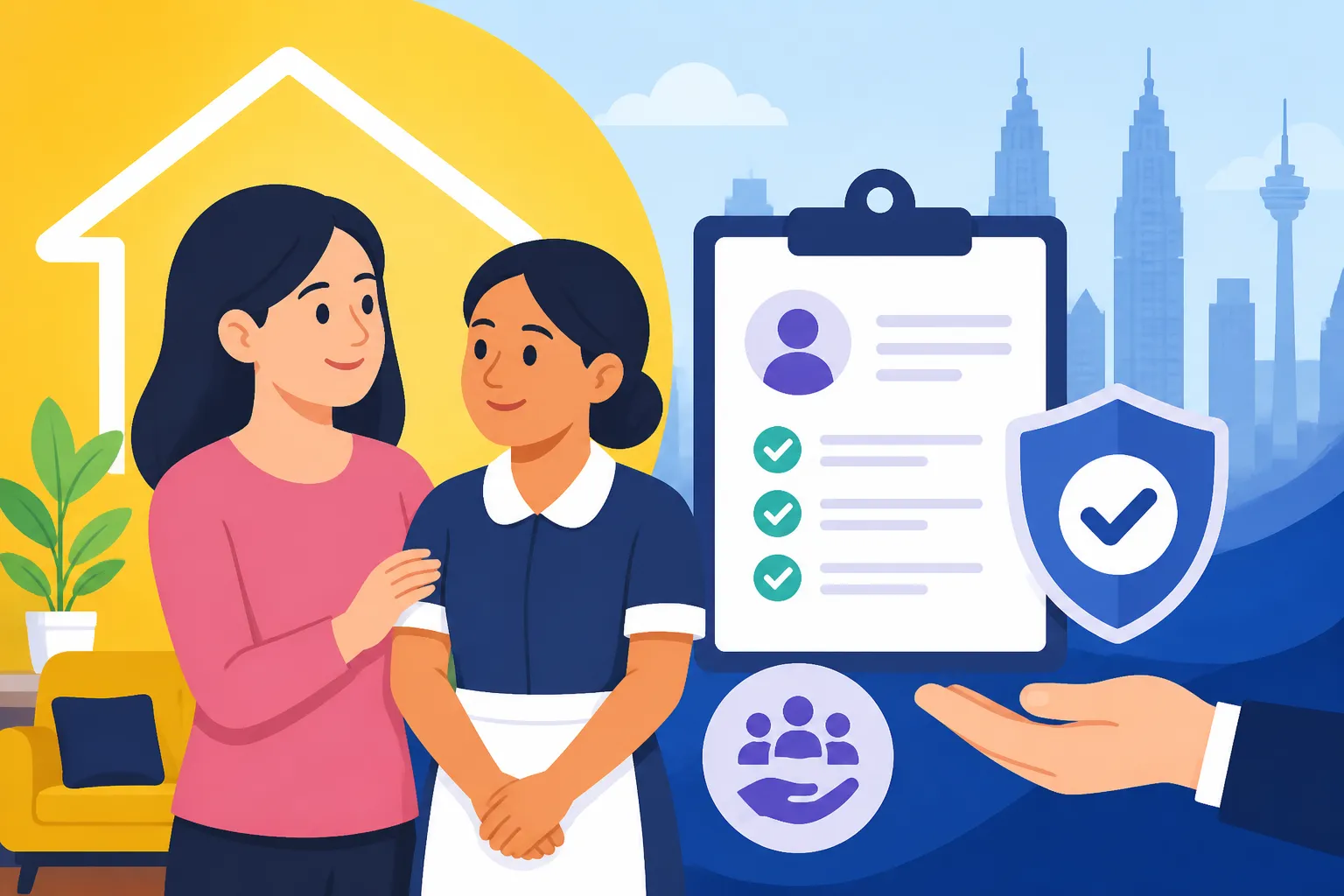
A foreign domestic helper in Malaysia typically lives with the employing family. Their duties usually encompass a broad range of household tasks, including cooking, cleaning, laundry, and often, critically, childcare. It's vital to have a clear understanding of what a domestic helper's role entails and, just as importantly, what it doesn't. They are not meant to be exploited, nor are they indentured servants. They are employees, with rights and responsibilities.
When we talk about responsibilities, we mean the day-to-day running of your home. They might manage grocery shopping, prepare meals, ensure the house is tidy, and assist with children's routines – from school drop-offs (if driving is permitted and arranged) to playtime and bedtime. However, it’s crucial to understand that their employment is specifically for domestic work. Asking them to run a business, perform commercial duties, or work for other households is strictly prohibited and can lead to severe legal penalties for the employer. Cultural differences also play a big part here; what might be considered a standard task in one culture could be seen as inappropriate in another. Open communication and clear expectations from the outset are paramount to a harmonious working relationship.
Key Regulations and Bodies Governing FDHs
The sponsorship of foreign domestic helpers in Malaysia is primarily governed by the Immigration Department of Malaysia (Jabatan Imigresen Malaysia) and the Ministry of Human Resources. Unlike professional expat visas, which often go through the Expatriate Services Division (ESD), domestic helper applications typically go directly through the Immigration Department. This means you'll be dealing with specific branches and processes that are distinct from those for employment passes.
The Foreign Workers Division within the Immigration Department is your main point of contact. They dictate the rules regarding helper nationalities, employer eligibility, application procedures, and work permit renewals. Additionally, the Ministry of Human Resources sets guidelines for wages, working conditions, and dispute resolution. Understanding the nuances of these regulations is crucial to avoid common pitfalls. For instance, specific nationalities are typically approved for domestic helper visas, mainly from countries like Indonesia, the Philippines, Cambodia, Vietnam, Laos, Sri Lanka, India, and Thailand. Policies can shift, so always verify the latest requirements. Agencies often play a significant intermediary role, handling much of the paperwork and communication with these government bodies, but ultimately, the employer bears the legal responsibility.
Eligibility Criteria for Employers and Helpers
The journey to sponsoring a foreign domestic helper is fraught with specific requirements designed to ensure both the employer's capacity to provide a suitable environment and the helper's suitability for the role. These aren't just arbitrary rules; they're in place to safeguard the welfare of the helper and ensure legal compliance.
Who Can Sponsor a Foreign Domestic Helper?
Sponsoring an FDH isn't a right; it's a privilege granted based on a set of strict criteria, primarily revolving around the employer's financial stability and family situation. Generally, expatriates holding a valid How to Get an Employment Pass in Malaysia (2027) are eligible. You typically need to demonstrate a certain level of income, often a gross monthly salary of RM10,000 or more, though this can vary by state and individual circumstances. For example, some sources indicate a minimum of RM5,000 for single parents or those with elderly dependents, while a couple without children might need RM10,000. These figures are subject to change, so always double-check the latest directives from the Immigration Department.
Beyond income, your family structure also plays a crucial role. Priority is usually given to:
- Families with young children (under 12 years old).
- Families with elderly parents or disabled family members requiring care.
- Single parents.
- Couples where both are working professionals.
If you’re a single individual without dependents, or a couple without children, securing approval can be significantly harder, as the perceived "need" for a helper might not meet the strict government guidelines. This often comes as a surprise to new expats who expect the process to be purely transactional. Furthermore, your nationality might also come into play; while there isn't outright discrimination, certain nationalities may face more scrutiny during the application process.
Who Qualifies as a Foreign Domestic Helper?
Just as employers have criteria, so too do the helpers themselves. Malaysia typically sources FDHs from specific countries, primarily Indonesia and the Philippines, due to bilateral agreements and established recruitment channels. Other nationalities like those from Vietnam, Cambodia, Laos, Sri Lanka, India, and Thailand may also be considered, but the former two are most common.
The helper must meet age requirements, typically being between 21 and 45 years old upon application. They must also pass a stringent medical examination, often referred to as FOMEMA (Foreign Workers Medical Examination Monitoring Agency) tests, both in their home country and upon arrival in Malaysia. This is crucial for public health and worker welfare. Any pre-existing conditions or failure to pass these medical tests can lead to rejection or repatriation. Helpers are also generally required to have a certain level of education (often primary or secondary schooling) and may be expected to have some prior experience in domestic work, though this isn't always a hard and fast rule, especially for first-time helpers. Their visa category is specific to domestic work, distinct from other The Complete Guide to Malaysian Visas for Expats (2027) options.
Understanding the One-Helper-Per-Household Rule
A significant regulation to be aware of is the "one foreign domestic helper per household" rule. The Malaysian government generally adheres to this principle, meaning most families are only permitted to sponsor a single FDH. This policy aims to regulate the influx of foreign workers and ensure that sponsorship is primarily for genuine need rather than luxury.
However, like most rules, there can be exceptions. Families with a large number of young children (e.g., more than three children under the age of 12), families caring for multiple elderly dependents, or those with family members requiring special needs assistance might be able to apply for a second helper. This requires very specific justification, comprehensive documentation, and is subject to stringent approval by the Immigration Department. Don't expect it to be easy; you'll need to demonstrate an undeniable necessity for additional help beyond what one person can realistically manage. It's not uncommon for these applications to face extended processing times and additional interviews to verify the claims.
The Step-by-Step Application Process for Sponsoring an FDH
Sponsoring a foreign domestic helper is less like ordering a pizza and more like navigating a multi-stage bureaucratic obstacle course. Patience is your most valuable virtue here, alongside meticulous attention to detail.
Finding Your Helper: Agency vs. Direct Hiring
Your first major decision is how you'll find your helper.
The most common route for expats is through a licensed maid agency. These agencies act as intermediaries, handling everything from recruitment in the helper's home country to initial medical checks, visa processing, and often transportation.
- Pros of using an agency: They simplify the paperwork, vet candidates (to some extent), and handle the complexities of cross-border recruitment and visa application. They can also offer a degree of support in case of disputes or if a helper absconds (though terms vary). Many expats find this convenience invaluable when they're new to Malaysia.
- Cons of using an agency: It's significantly more expensive due to agency fees, which can run into thousands of Ringgit. The quality of vetting can be inconsistent, and sometimes, helpers arrive with expectations or skills that don't match the agency's description. You also have less direct control over the selection process initially. Some agencies might also charge helpers exorbitant recruitment fees, creating debt bondage, which is an ethical concern you should research before committing.
Direct hiring, while seemingly more cost-effective, is far more complex and generally only feasible if you already know a helper, perhaps one working for a friend who is leaving Malaysia, or if you are seeking a transfer helper.
- Pros of direct hiring: Lower upfront costs, direct communication with the helper, and potentially a more transparent hiring process.
- Cons of direct hiring: You bear the full burden of all paperwork, understanding the legal requirements in both Malaysia and the helper's home country, and arranging all logistics. This route is typically only available for helpers already in Malaysia on a valid pass or for transfer cases. Initiating a direct hire from a foreign country without an agency is almost impossible due to strict recruitment regulations. Regardless of your choice, be ethical in your approach. Resources like those from the International Labour Organization (ILO) offer guidance on fair recruitment practices.
Document Preparation and Initial Submissions
Once you've identified a potential helper, the real paperwork begins. This stage is critical, and any missing or incorrect documents can cause significant delays. You'll need an array of documents from both the employer and the helper.
For the Employer (You):
- Copy of your passport (valid for at least 18 months).
- Copy of your Malaysian Employment Pass or other long-term visa. How to Get an Employment Pass in Malaysia (2027) might detail the pass requirements.
- Copy of your Marriage Certificate (if applicable).
- Copies of children's birth certificates (if applicable).
- Utility bills (e.g., electricity from TNB, water, or internet from Unifi) as proof of residence.
- Latest payslips (typically 3 months) or income tax returns to prove financial capability. This is where your annual tax filings come into play; understanding How Much Income Tax Will I Pay as an Employee in Malaysia in 2026? and Filing Your Annual Tax Return with LHDN in Malaysia: The Complete Walkthrough (2027) will be useful for demonstrating your financial standing.
- Employer's Letter of Undertaking and Indemnity.
- Application forms from the Immigration Department.
For the Helper:
- Original passport (valid for at least 18 months).
- Original medical certificate from their home country (pre-departure check).
- Original education certificates.
- Passport-sized photographs.
- Letter of Consent from the helper's local government agency (e.g., from Indonesia's BNP2MI or the Philippines' POEA/OWWA). This is a crucial step often handled by agencies.
All documents must be in English or officially translated. You’ll submit these to the Immigration Department (or through your agency) for initial approval. Expect questions, requests for additional documents, and potentially interviews.
Immigration Department Approvals and Visa Issuance
This is the phase where patience is truly a virtue. After submitting your documents, the Immigration Department will review your application. This includes:
- Quota Approval: The Immigration Department assesses if your family meets the criteria for sponsoring an FDH and if there's an available "quota" for foreign workers in that category.
- Calling Visa (VDR) Issuance: If approved, a "Calling Visa" or Visa with Reference (VDR) will be issued. This document allows the helper to enter Malaysia for employment. This VDR is sent to the Malaysian embassy or consulate in the helper's home country.
- Visa Endorsement: The helper then travels to their home country's Malaysian embassy/consulate with the VDR to get their actual visa stamped in their passport. This is the official permission for them to travel to Malaysia for work.
Waiting times can vary wildly, from a few weeks to several months, depending on the helper's nationality, the caseload at the Immigration Department, and any policy changes. It's not uncommon for expats to experience frustration during this stage, as there's often little transparency or ability to track progress. Keep copies of everything, and maintain regular contact with your agency if you're using one. Be prepared for potential rejections based on minor discrepancies or changes in policy, requiring you to re-submit or provide further clarification.
Post-Arrival Procedures and Ongoing Responsibilities
Your helper has arrived! Congratulations, but the journey isn’t over. There are critical post-arrival steps to ensure legal compliance and the helper's well-being.
Medical Examinations and Biometrics
Within a short period (usually 30 days) of arrival in Malaysia, your helper must undergo a mandatory medical examination by a FOMEMA-approved clinic. This is a comprehensive health check to ensure they are fit for work and free from communicable diseases. The tests typically include chest X-rays, blood tests (for HIV, Hepatitis B, Syphilis), urine tests (for drug use), and a physical examination.
It is absolutely crucial that your helper passes this FOMEMA medical examination. If they fail, they will be deemed unfit for employment, and you will be obligated to arrange for their repatriation to their home country, incurring additional costs. This is a non-negotiable step and highlights why initial medical checks in the helper’s home country are so important, though FOMEMA is the final word. During this period, the helper will also need to complete their biometric registration at the Immigration Department, which involves fingerprinting and photographing, cementing their identity in the Malaysian system.
Work Permit Endorsement and IKAD Issuance
Once the FOMEMA medical is passed and biometrics are done, the final step in legalising your helper's stay is the endorsement of their work permit (often referred to as a "Pas Lawatan (Kerja Sementara)" or PLKS) in their passport. This is typically valid for one year and needs annual renewal. This endorsement confirms their legal right to work as a domestic helper for your household.
In addition to the passport endorsement, your helper will also be issued an i-KAD, which is a physical identification card. This card serves as a convenient form of identification and proof of legal employment, especially useful when their passport is not readily available. It contains their photo, personal details, and employer's information. It's important for your helper to carry this i-KAD with them at all times. Remember, this work permit strictly ties them to your employment; they cannot legally work for anyone else. Any changes in employment require a new application process.
Employer's Legal and Ethical Obligations
Being an employer of a foreign domestic helper comes with significant legal and ethical responsibilities that extend far beyond simply paying their salary. You are responsible for their welfare, safety, and adherence to Malaysian labour laws.
Key Obligations Include:
- Salary and Days Off: You must pay the agreed-upon monthly salary (typically around RM1,200 to RM1,500, though this varies by nationality and experience) on time. While there's no legally mandated weekly day off for FDHs in Malaysia, it is strongly encouraged and is an ethical best practice. Many expat employers provide at least one day off per week, usually Sunday.
- Accommodation: As a live-in helper, you must provide suitable and safe accommodation within your home.
- Food and Basic Necessities: You are responsible for providing adequate food or a food allowance, as well as essential toiletries.
- Medical Care: Beyond the initial FOMEMA check, you are responsible for their routine and emergency medical care. This typically involves registering them with a GP and covering costs. Consider how this fits into The Complete Guide to Healthcare in Malaysia for Expats (2027) and Understanding Emergency Medical Care in Malaysia: What Every Expat Needs to Know.
- Insurance: It is mandatory for employers to purchase an insurance policy for their FDH, covering medical expenses, personal accident, and repatriation. We'll delve deeper into this.
- Repatriation: Should the employment cease, you are legally responsible for the cost of repatriating your helper to their home country.
- Respect and Dignity: Beyond legalities, fostering a respectful and safe working environment is an ethical imperative. Treat your helper with dignity, respect their culture, and ensure fair working hours. This includes understanding entitlements like Understanding Medical Certificates (MC) and Sick Leave in Malaysia.
It's a serious commitment, and failure to uphold these obligations can lead to severe penalties, including fines, imprisonment, and even blacklisting from sponsoring future helpers.
Costs and Financial Considerations
One of the main reasons expats consider hiring an FDH in Malaysia is the relative affordability compared to their home countries. However, "affordable" doesn't mean "free." There's a comprehensive breakdown of costs you need to factor into your budget.
Breakdown of Application Fees and Levies
The initial costs associated with sponsoring an FDH can be substantial, especially if you go through an agency. These fees cover various administrative processes, both in Malaysia and the helper's home country.
| Item | Estimated Cost (RM) | Notes |
|---|---|---|
| Maid Agency Fee (Employer Side) | 8,000 – 20,000+ | Highly variable, covers recruitment, initial processing, travel. Can be much higher for specific nationalities. |
| Foreign Worker Levy (PLKS Levy) | 1,200 – 1,800 per year | Paid annually to the Malaysian government. Subject to change. |
| Visa Processing Fee (Immigration) | 100 – 500 | Government fee for visa application. |
| FOMEMA Medical Check | 200 – 300 | Mandatory post-arrival medical examination. |
| Security Bond/Bank Guarantee | 250 – 2,000+ | Varies by helper's nationality. Refundable upon helper's repatriation. |
| Mandatory Insurance Premiums | 80 – 200 per year | Varies by provider and coverage (e.g., FWCS, SPIKPA). |
| Repatriation Cost (Flight Ticket) | 500 – 1,500 | Employer's responsibility, typically paid at the end of employment. |
| Document Stamping/Verification Fees | 50 – 200 | For employment contracts and other legal documents. |
Note: These figures are estimates and can vary significantly based on current government policies, agency fees, the helper's nationality, and individual circumstances. Always verify the latest costs.
The agency fee, in particular, is a major upfront expense. This typically covers the helper's recruitment fees, training, initial medical tests in their home country, flight tickets, and the agency's profit margin. Make sure to get a detailed breakdown from your chosen agency. The Security Bond is also important; it's a sum of money (or bank guarantee) deposited with the Immigration Department, which is returned to you upon the successful repatriation of your helper at the end of their contract. This bond serves as a deterrent against employers failing to send their helper home.
Helper's Salary and Benefits
Beyond the initial setup costs, the helper's monthly salary and benefits represent the ongoing financial commitment. There isn't a universally mandated minimum wage specifically for foreign domestic helpers in Malaysia, unlike other sectors. However, there are general expectations and guidelines based on bilateral agreements with source countries.
- Average Monthly Salary: Typically ranges from RM1,200 to RM1,500. For Filipino helpers, the Philippine government often mandates a higher minimum salary (e.g., USD400 or RM1,800+), which you must adhere to. Indonesian helpers generally fall within the RM1,200-RM1,500 range. This is a significant factor in The Complete Guide to Cost of Living in Malaysia for Expats (2026).
- Days Off: While not strictly mandated by Malaysian law, ethical employers generally provide at least one day off per week. If the helper works on their day off, an agreed-upon additional payment should be made.
- Annual Leave: Helpers are typically entitled to annual leave, often 7-14 days per year, as specified in their contract.
- Sick Leave: Similar to other employees, helpers are entitled to paid sick leave, provided they have a valid Understanding Medical Certificates (MC) and Sick Leave in Malaysia from a registered medical practitioner.
- Public Holidays: While not always required to observe all Malaysian public holidays, it's a common practice to give them off or provide compensatory pay if they work.
It's crucial to have a clear, written employment contract detailing the salary, working hours, duties, days off, and other benefits. This protects both you and your helper and helps prevent misunderstandings down the line.
Insurance Requirements for FDHs
Insurance is a mandatory component of sponsoring a foreign domestic helper in Malaysia, designed to protect both the helper and the employer.
There are primarily two types of mandatory insurance:
- Foreign Worker Compensation Scheme (FWCS): This policy provides coverage for accidents, permanent disability, or death due to work-related injuries, similar to SOCSO for other employees. It's a basic form of protection.
- Skim Perlindungan Insurans Pekerja Asing (SPIKPA) / Foreign Worker Hospitalisation and Surgical Scheme (FWHS): This scheme provides coverage for hospitalisation and surgical expenses up to a certain limit (e.g., RM20,000 per year). It helps employers manage the financial burden of a helper's medical emergencies or serious illnesses. This is vital, as Health Insurance in Malaysia: Local, International and Employer Options Explained for locals often doesn't extend to FDHs in the same way.
The cost of these policies is relatively low, usually under RM200 per year, and is the employer's responsibility. While these mandatory schemes provide basic coverage, some employers opt for more comprehensive private health insurance for their helpers, especially if they want to ensure access to private hospitals or cover a broader range of medical services. Companies like Cigna Global offer international health insurance plans that could potentially be extended to domestic helpers, though you would need to specifically inquire about their expat and domestic staff coverage options. This additional coverage, though not mandatory, can offer greater peace of mind and access to better healthcare facilities beyond the basic public hospital provisions.
Common Challenges and Troubleshooting for Expat Employers
Even with the best intentions and meticulous planning, issues can arise when employing a foreign domestic helper. Being prepared for common challenges can save you a lot of stress and potential legal trouble.
Navigating Agency Issues and Helper Transitions
Working with maid agencies can sometimes be a mixed bag. While they offer convenience, disputes or dissatisfaction can occur.
- Mismatched Expectations: Sometimes, the helper's skills or personality don't align with what was promised or what your family needs. If this happens early in the contract, most reputable agencies have a probationary period (often 3-6 months) during which they might offer a replacement helper, though this can come with additional fees or only a partial refund.
- Abscondment: In unfortunate cases, a helper might abscond (run away). This is a serious issue. You must immediately report it to the Immigration Department and the police. Failure to do so can result in you being liable for the helper's actions or even facing penalties yourself for not reporting their disappearance.
- Contractual Disputes: Disagreements over duties, working hours, or salary should first be addressed through open communication. If unresolved, your agency might mediate. For more serious disputes, the Ministry of Human Resources has channels for complaint resolution, but it's often a lengthy process.
When a helper's contract ends, or if you mutually agree to terminate it, ensure a proper transition. You are responsible for providing their final salary, any outstanding annual leave pay, and crucially, arranging and paying for their flight back to their home country. Always get a signed acknowledgment of receipt for these payments and for their safe departure.
Understanding Visa Renewals and Extensions
Work permits for FDHs are typically valid for one year and require annual renewal. This is not an automatic process and must be initiated well in advance of the expiry date to avoid fines for overstaying.
The renewal process involves:
- New FOMEMA Check: Your helper will need to undergo another medical examination through FOMEMA to ensure they remain fit for work.
- Insurance Renewal: The mandatory FWCS and SPIKPA policies must be renewed.
- Immigration Application: You'll need to submit an application to the Immigration Department with updated documents, including passports, renewed insurance, and the FOMEMA fitness certificate.
It’s crucial to start this process at least two to three months before the expiry date, as processing times can be unpredictable. Any delay could mean your helper's visa expires, making their stay illegal and leading to potential penalties for both of you. Common reasons for renewal refusal include failure to pass the FOMEMA medical, outstanding issues with the employer, or changes in government policy regarding FDH nationality quotas. Ensure your helper's passport is valid for at least six months beyond the intended renewal period.
Addressing Welfare Concerns and Conflict Resolution
The welfare of your helper is paramount. Expats often come from cultures where live-in domestic help is rare, so understanding cultural sensitivities and potential communication barriers is key.
- Communication: English proficiency varies greatly among helpers. Be patient, use simple language, and consider visual aids or translation apps. Regular check-ins on their well-being, beyond just work performance, can foster a positive relationship.
- Cultural Differences: Be mindful of cultural norms regarding food, religion, personal space, and communication styles. What might seem normal to you could be offensive or confusing to them, and vice versa. Educating yourself on their culture (e.g., from Indonesia or the Philippines) can go a long way.
- Conflict Resolution: If conflicts arise, address them calmly and respectfully. Avoid shouting or aggressive language. If it's a serious issue, and direct communication doesn't help, consider seeking advice from your agency or even a labour NGO that specialises in foreign worker rights. Exploitation, abuse, or withholding of wages are serious offences, and any helper experiencing this has legal recourse through the Ministry of Human Resources. As an employer, ensuring fair treatment is not just ethical; it's a legal obligation.
Remember, you are bringing someone into your home and making them part of your daily life. A healthy, respectful relationship with your helper contributes significantly to a stable and happy household for everyone involved.
Disclaimer
The information provided in this guide is for general informational purposes only and does not constitute legal advice. While we strive to provide accurate and up-to-date information, immigration laws and policies in Malaysia are subject to frequent changes. It is highly recommended that you consult with the Immigration Department of Malaysia directly, or a reputable, licensed maid agency, for the most current and specific advice pertaining to your individual circumstances. The author and publisher of this guide will not be held responsible for any loss or damage incurred as a result of relying on this information.