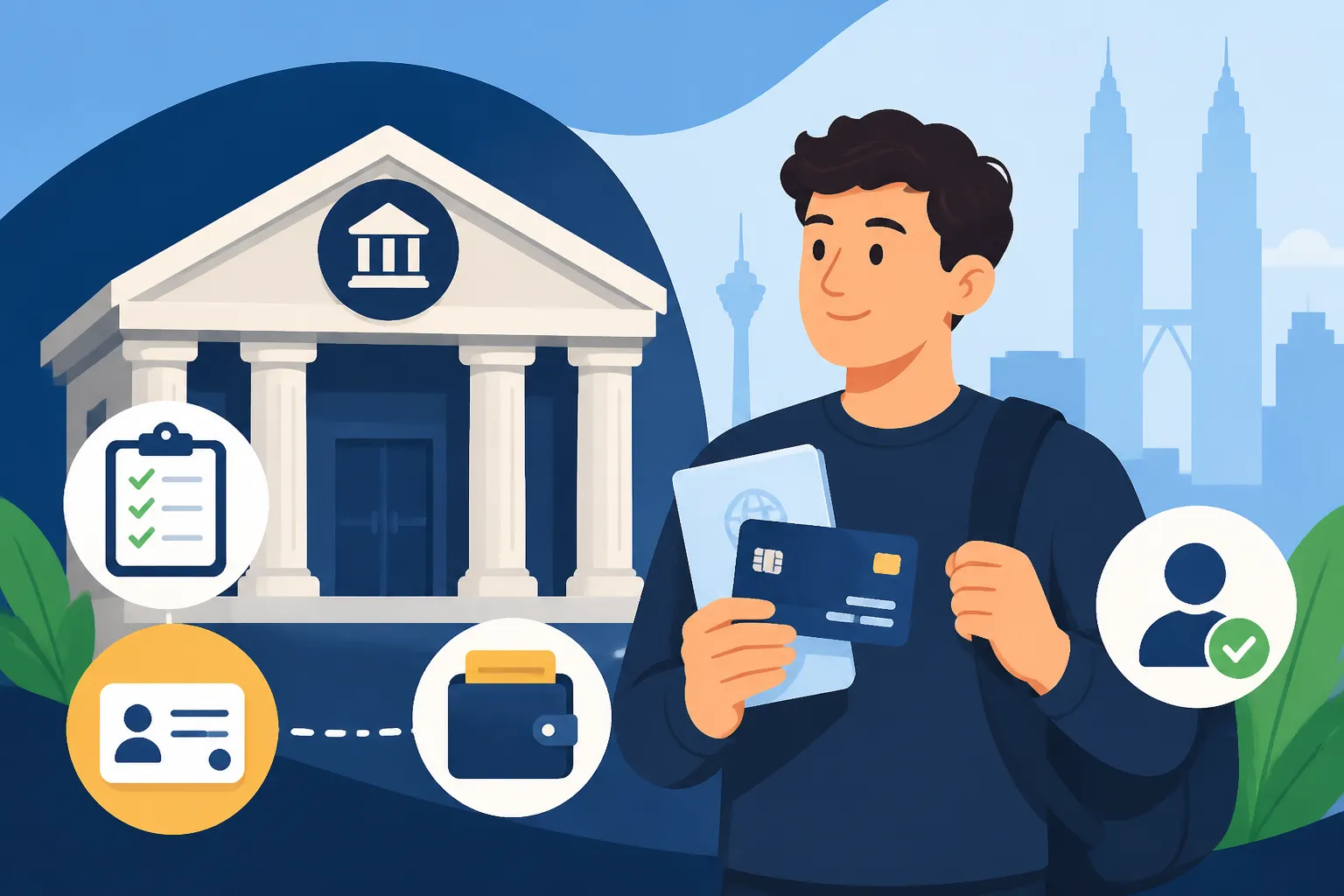
How to Open a Bank Account at a Malaysian Bank as a Foreigner
Ah, opening a bank account in Malaysia as a foreigner. Just hearing that phrase probably sends shivers down your spine, doesn't it? It’s a rite of passage for every expat, a challenge that can feel akin to navigating the dense jungles of Borneo blindfolded. Many of us have been there, armed with a pile of documents, only to be told we're missing just one more thing. This guide is here to demystify that process, offering a realistic, step-by-step walkthrough so you can finally get your finances sorted without tearing your hair out.
The Initial Hurdles: Why Opening a Bank Account in Malaysia Feels Like an Olympic Sport
Let’s be honest, the moment you decide to set up roots in a new country, you expect a few administrative headaches. But banking in Malaysia often feels like it's designed specifically to test your patience and resolve. It’s not about being unhelpful, it's just a system with its own unique set of rules and interpretations that can differ wildly from what you're used to back home. You're trying to integrate, and yet, this essential step often feels like the biggest barrier.
Understanding the "Catch-22" of Residency and Documentation
One of the most maddening aspects of opening a bank account in Malaysia, particularly when you're fresh off the plane, is the infamous "Catch-22." You need a Malaysian address to open a bank account, but sometimes you need a bank account to prove you have a stable presence, which helps secure a rental agreement for that address! It's enough to make you want to throw your hands up in exasperation. Banks are, understandably, quite strict about verifying your identity and your legitimate ties to the country, mainly to comply with anti-money laundering (AML) and counter-financing of terrorism (CFT) regulations. This means they need concrete proof that you're not just passing through, and that your financial activities will be above board.
For example, imagine you’ve just landed with an Employment Pass and found a temporary serviced apartment. You approach a bank, excited to get your finances in order, only to be asked for a utility bill in your name at a Malaysian address. But how can you have one when you’ve just arrived and haven't even signed a long-term tenancy yet? This is a common scenario that frustrates many newcomers. They might accept a tenancy agreement or a letter from your employer, but even those have to meet specific criteria. The key here is understanding that their stringent requirements are a necessary evil in today's financial landscape, even if it feels overly burdensome at the individual level.
The Bureaucratic Maze and Bank-Specific Requirements
Adding another layer of complexity is the fact that while the overarching regulations come from Bank Negara Malaysia (BNM), the central bank, each commercial bank has its own internal policies and interpretations. What's perfectly acceptable at Maybank might be rejected by CIMB, and what one branch manager approves, another might scrutinise heavily. This inconsistency is where the real bureaucratic maze begins. You might spend an hour at one bank, filling out forms and gathering documents, only to be told you need a different type of letter or an additional proof of address that their competitor across the street doesn't even ask for.
This can be incredibly frustrating. I've known expats who've visited three or four different branches of the same bank before finally finding a helpful officer willing to guide them through the process. Some banks might be more accustomed to dealing with expatriates, especially those located in central business districts or areas with a high expat population like Mont Kiara or Bangsar in Kuala Lumpur. They might have dedicated expat desks or more flexible interpretations of the "proof of address" rule. It’s not unheard of to walk into a bank in a smaller town and face blank stares when you mention an Employment Pass, simply because they don't encounter it often enough. So, understanding that this isn't a one-size-fits-all process is your first step to managing expectations and keeping your sanity intact.
Essential Documents You Absolutely Need (and How to Get Them)
Alright, let's get down to brass tacks. While the specific documents can vary slightly between banks and even branches, there's a core set that you absolutely must have in hand. Think of this as your banking survival kit. Without these, you're pretty much guaranteed to hit a roadblock, so prepare them meticulously. It’s always better to over-prepare than to under-prepare.
Your Passport and Valid Malaysian Visa or Pass
This is non-negotiable. Your valid passport, with at least six months' validity remaining, is your primary identification. More crucially, you'll need a valid Malaysian visa or pass that grants you long-term stay. Tourist visas, unfortunately, simply won't cut it for opening a full-fledged bank account. The banks are looking for proof of your legal residency and your intent to stay in Malaysia for an extended period.
The most common passes accepted include:
- Employment Pass (EP): For those working in Malaysia. This is generally the most straightforward path. You're employed, you have a salary, and the government has already vetted you for work.
- Malaysia My Second Home (MM2H) Visa: For retirees and long-term residents. Holders of this visa are typically very welcome at banks, as their financial stability is already a prerequisite for the programme. If you're considering the MM2H, it's a great pathway to a smooth banking experience. You can find more details in articles like The Expat Guide to Malaysia My Second Home (MM2H) (2027).
- Student Pass: For international students enrolled in Malaysian educational institutions. Banks are used to dealing with students, and universities often have liaison officers who can assist with the process or provide necessary supporting letters.
- Dependant Pass: For spouses and children of Employment Pass or MM2H holders. While the main pass holder usually opens the primary account, dependants can often open their own accounts with the main pass holder's sponsorship and supporting documents.
- Long-Term Social Visit Pass: In specific circumstances, such as for spouses of Malaysian citizens.
Make sure you have both your original passport and several clear photocopies of the main page, your visa/pass page, and any entry stamps. Some banks might even ask for copies of previous visas if you’ve had them. The key is demonstrating a legal and sufficiently long-term presence in the country. Without a valid, long-term visa, you simply won't get past the first hurdle.
Proof of Malaysian Address and Why It Matters
This is often the trickiest document for new arrivals. Banks need to verify that you actually live where you say you live within Malaysia. This isn't just a formality; it's a critical part of their "Know Your Customer" (KYC) process to prevent fraud and ensure financial security. They want to ensure you're traceable.
Accepted documents typically include:
- Utility Bill: An electricity bill from Tenaga Nasional Berhad (TNB), water bill, or internet bill (e.g., Unifi, Maxis Fibre) in your name, dated within the last three months. This is gold standard. If you’re living in a shared accommodation or a serviced apartment where utilities aren’t in your name, this becomes a major headache. For tips on how to handle setting up these utilities, you might want to read The Expat Guide to Setting Up Utilities in Malaysia.
- Tenancy Agreement: A legally stamped tenancy agreement for your rented property, bearing your name and the Malaysian address. Ensure it's stamped by the Inland Revenue Board (LHDN) as unstamped agreements hold less weight.
- Letter from Employer/University: A formal letter on company or university letterhead, stating your full name, passport number, and confirming your Malaysian residential address. This is often a lifesaver for fresh expats.
- Bank Statement from Your Home Country: Sometimes, a bank statement from your overseas account showing your Malaysian residential address (if you’ve already updated it with your home bank) can be accepted, though this is less common and might depend on the bank.
If you don't have any of these, don't despair immediately. Try to get a letter from your employer or university first. Some banks in expat-heavy areas are more flexible and might accept a confirmation letter from a reputable hotel if you're staying there for an extended period, or even a letter from your embassy. However, these are exceptions rather than the norm, so always aim for the utility bill or stamped tenancy agreement if possible. The rationale is simple: they want a verifiable paper trail that ties you directly to a physical location in Malaysia.
Income Verification and Employer Letters
Banks are primarily in the business of managing money, and they need to know you have a legitimate source of it. This isn't just about ensuring you can maintain a minimum balance; it's another layer of their regulatory compliance to prevent illicit funds from entering the system. They want assurance that your income is stable and verifiable.
For those on an Employment Pass, this usually means providing:
- Employment Letter: A formal letter from your Malaysian employer, on company letterhead, clearly stating your position, your monthly or annual salary, and the duration of your employment. It should also ideally confirm your full name and passport number.
- Latest Salary Slips: Usually the last one to three months' worth. This directly substantiates the salary mentioned in your employment letter.
- Employment Contract: Some banks may even ask for a copy of your full employment contract.
If you're self-employed or a freelancer, this can get a bit trickier, but it’s still manageable. You'll likely need:
- Business Registration Documents: Proof that your business is legally registered in Malaysia, such as a SSM (Companies Commission of Malaysia) certificate for a sole proprietorship or Sdn Bhd.
- Latest Tax Returns or Assessment: Documents proving your income declarations, which ties into understanding How the Inland Revenue Board (LHDN) Works in Malaysia and filing your Annual Tax Return with LHDN in Malaysia: The Complete Walkthrough (2026).
- Bank Statements: Personal or business bank statements, usually from your home country or previous bank, showing a consistent income flow over the last 6-12 months. This is where a conversation about your Taxes for Expats might come up, as they verify your tax residency.
- Reference Letter from Home Bank: A letter from your previous bank confirming your banking relationship and good standing can sometimes help, especially if you're self-employed.
The general rule of thumb here is: the more proof you can offer that your income is legitimate, stable, and comes from a verifiable source, the smoother the process will be. Banks are cautious, and robust income verification helps them mitigate their risks, especially with foreign applicants who might not have a credit history in Malaysia yet.
Navigating the Bank Landscape: Choosing the Right Bank for Expats
Once you've got your documents in order (or at least a clear idea of what you need), the next step is deciding which bank to approach. Malaysia has a robust banking sector, with a mix of large local players and several international banks. Each has its pros and cons, and what works best for one expat might not be ideal for another.
Local Giants vs. International Players
This is often the first big decision. Do you go with a bank that has a massive local presence, or one that feels more familiar due to its international roots?
Local Giants (e.g., Maybank, CIMB, Public Bank, RHB, Hong Leong Bank):
- Pros:
- Extensive Branch Network: These banks are everywhere. Seriously, you'll find a Maybank or CIMB branch in almost every town and shopping mall, making physical transactions, getting new debit cards, or resolving issues incredibly convenient. Their ATM networks are equally vast.
- Local Expertise: They are deeply entrenched in the Malaysian financial system, meaning they're often the first to adapt to local payment innovations like DuitNow, and their staff are generally well-versed in local regulations.
- Lower Fees/Minimums: Generally, local banks tend to have lower minimum balance requirements for savings accounts and often more competitive local transaction fees compared to some international counterparts.
- Online Banking & Apps: They have invested heavily in user-friendly mobile apps (e.g., Maybank's MAE app, CIMB Clicks) that handle everything from bill payments to DuitNow transfers.
- Cons:
- Bureaucracy: While generally efficient, dealing with complex issues can sometimes feel more bureaucratic, and English proficiency might vary, especially in branches outside major cities.
- Less Expat-Specific Focus: While they serve expats, their core customer base is local, so you might not find as many tailored expat services as with international banks.
International Players (e.g., HSBC, Standard Chartered, UOB, OCBC):
- Pros:
- Familiarity: If you've banked with these institutions in your home country, the names, and sometimes even the online interfaces, might feel more familiar and comforting.
- Expat-Centric Services: They often have dedicated expat banking divisions, staff accustomed to foreign documentation, and potentially more flexible approaches to things like proof of address or international transfers. HSBC, for instance, offers global accounts and easier transfers between HSBC accounts worldwide.
- Global Transfer Capabilities: Their international presence can make cross-border money transfers smoother, especially if you're regularly moving funds between countries.
- English-Speaking Staff: Generally, a higher proportion of English-speaking staff, particularly in major city branches.
- Cons:
- Fewer Branches/ATMs: Their physical footprint in Malaysia is much smaller than local banks, which can be inconvenient for cash withdrawals or in-person service.
- Higher Minimum Balances/Fees: Some international banks might have higher minimum deposit requirements or charge slightly higher fees for certain services.
- Slightly Slower Local Adaption: While they do adopt local payment systems, sometimes their integration or adoption might lag slightly behind the local giants.
For most expats, a local bank like Maybank or CIMB often strikes the best balance due to their widespread accessibility and comprehensive digital services. However, if you have complex international financial needs or prefer a familiar brand, an international bank could be a better fit.
Account Types and Features for Foreigners
When you walk into a Malaysian bank, you'll generally be offered a few core account types. Understanding these will help you choose what best suits your daily financial needs.
- Savings Account (Akaun Simpanan): This is your basic, everyday account. It's great for keeping your money safe and accessible. You'll get a debit card linked to it, allowing you to withdraw cash from ATMs, make cashless payments at shops, and conduct online transactions. Most expats start here. Savings accounts typically have very low interest rates, but some banks offer higher rates if you meet certain conditions (e.g., specific number of transactions, maintaining a certain balance).
- Current Account (Akaun Semasa): This account typically comes with a chequebook and is more geared towards businesses or individuals who need to write cheques for payments like rent deposits or large purchases. While cheques are becoming less common for daily use, some landlords or government agencies might still prefer them. Current accounts usually require a slightly higher initial deposit and might have monthly service fees if the balance falls below a certain threshold. It’s also often easier to get a credit card linked to a current account once you’ve established a banking relationship.
- Foreign Currency Account (FCA): Some banks, particularly the international ones and the larger local banks like Maybank and CIMB, offer FCAs. These allow you to hold funds in major foreign currencies (USD, GBP, AUD, SGD, EUR, JPY) within Malaysia. This can be incredibly useful if you receive payments in foreign currency or want to manage currency exchange risks. You can easily transfer money between your ringgit account and your FCA, or receive international transfers directly into your FCA without immediate conversion. This can be a smart move, especially if you're paid in a foreign currency or plan to repatriate funds later.
Beyond the basic account types, consider features like:
- Online Banking & Mobile Apps: Crucial for managing your money on the go, paying bills, and making local transfers. Test out the user interface if possible; some are more intuitive than others.
- Debit Card Features: Look for a debit card that is widely accepted (Visa or Mastercard) and ideally offers contactless payments (PayWave/PayPass). Some debit cards might also have cashback or rewards programmes.
- Credit Card Eligibility: As a new expat, getting a credit card can be challenging due to no local credit history. Some banks might offer a secured credit card (where you put down a deposit equal to your credit limit) or offer one after you've maintained a good banking relationship for 6-12 months and demonstrate a stable income.
- Minimum Deposit and Fees: Always ask about the initial deposit required to open an account and any monthly or annual fees, including dormancy fees if the account isn't used for a long time. These can vary significantly.
To help you visualise the differences, here’s a quick comparison of popular banks for expats:
| Feature/Bank | Maybank (Local Giant) | CIMB (Local Giant) | HSBC (International Player) | Standard Chartered (International Player) |
|---|---|---|---|---|
| Typical Expats | All, especially those prioritizing convenience | All, strong digital presence | High-net-worth, global movers | High-net-worth, good international transfer |
| Branch Network | Extensive nationwide | Extensive nationwide | Limited to major cities | Limited to major cities |
| Initial Deposit | RM20 (Savings), RM1,000 (Current) | RM20 (Savings), RM1,000 (Current) | RM500 – RM3,000+ (depending on account tier) | RM500 – RM3,000+ (depending on account tier) |
| Foreign Currency Account | Yes, multiple currencies available | Yes, multiple currencies available | Excellent, integrated with global services | Good, typically for major currencies |
| Expat Services | General support, good English in city branches | General support, strong digital customer service | Dedicated expat desks, global transfer benefits | Dedicated expat services, good international banking |
| Online Banking | Maybank2u, MAE app (very popular, comprehensive) | CIMB Clicks (popular, comprehensive) | Robust, integrated with global HSBC platforms | Robust, good for international transfers |
| ATM Access | Widest network | Very wide network | Limited to own ATMs, but MEPS network accessible | Limited to own ATMs, but MEPS network accessible |
| Key Advantage | Ubiquitous, comprehensive digital ecosystem | Strong digital offerings, good for daily banking | Seamless global banking, expat-friendly | International transfers, premium services |
Note: Initial deposit amounts and specific features are subject to change by the banks. Always check their official websites or speak to a representative for the most current information.
The Application Process: Step-by-Step (and What to Expect)
You've gathered your documents, you've picked your bank – now for the main event: the application itself. This is where patience truly becomes a virtue. While it might not be a quick in-and-out process, knowing what to expect can significantly ease the stress.
Pre-Application Checklist and Branch Visit
Before you even step foot into a bank, take a deep breath and perform a final check.
- Originals and Photocopies: Have all your original documents (passport, visa, employer letter, utility bill, etc.) AND at least two sets of photocopies. Banks always ask for copies, and some branches might not have a copier readily available or charge for the service.
- Confirmation: If possible, call the specific branch you plan to visit a day or two beforehand. Ask them about their specific requirements for foreigners opening an account, especially for your particular visa type. This can save you a wasted trip if their internal policies have recently changed or differ from other branches.
- Choose Your Branch Wisely: For your first banking foray, I highly recommend choosing a branch in a major city center or a known expat neighbourhood. Think Kuala Lumpur (KLCC, Bangsar, Mont Kiara), Penang (Georgetown), or Johor Bahru (City Square area). These branches are far more likely to have experienced staff who regularly deal with expats and are proficient in English. A smaller, suburban branch might not have the same level of experience, leading to more questions and potential delays.
- Timing: Avoid peak hours like lunch breaks (12 PM – 2 PM) or right after work (5 PM onwards). Go early in the morning when the branch opens, or in the mid-afternoon, to ensure you get ample time with a customer service officer.
Once you arrive, take a number for "New Accounts" or "Customer Service." Be prepared for a wait, especially if it’s a popular branch. Use this time to mentally prepare and organise your documents in a logical order.
Filling Out Forms and the Interview Process
This is where the real work begins. You'll be handed a stack of forms to fill out, usually encompassing personal details, contact information, employment details, and declarations about your tax residency. Take your time, fill everything out clearly, and don't hesitate to ask for clarification if a question is unclear. Misinformation or incomplete forms are common reasons for delays or rejections.
Expect a brief "interview" with the bank officer. They're not trying to interrogate you, but they are obligated to comply with regulatory requirements. Common questions you might be asked include:
- Purpose of Account: Why do you want to open this account? (e.g., "For salary deposit and daily living expenses.")
- Source of Funds: Where will your initial deposit and ongoing funds come from? (e.g., "My salary from [Employer Name]" or "Transferred from my account in [Home Country] bank.")
- Expected Transactions: What kind of transactions do you anticipate making? (e.g., "Receiving salary, paying rent, daily spending.")
- Tax Residency: Where are you considered a tax resident? This is a crucial question, especially with global efforts to combat tax evasion. You'll likely need to declare your tax residency and potentially provide your Tax Identification Number (TIN) from your home country. This directly ties into your obligations as an expat regarding Understanding Income Tax in Malaysia: The Full Expat Guide (2027). If you're a tax resident in another country, they'll need that information for compliance with international reporting standards like CRS (Common Reporting Standard).
Be honest and straightforward in your answers. The officers are simply doing their job, following procedures. If something seems unclear, ask them to explain it in simpler terms. It's better to clarify than to guess. This interaction might seem daunting, but it’s a standard part of the process for all new account openings, especially for foreigners.
Account Activation, Debit Cards, and Online Banking Setup
Once all the forms are completed, submitted, and approved (which might happen on the spot or take a day or two), you'll proceed to the final steps.
- Initial Deposit: You'll be asked to make an initial deposit to activate your account. This can be cash or sometimes a transfer from another Malaysian bank account if you have one. Ensure you have the required minimum amount (check the table above for general figures, but confirm with the bank).
- Debit Card Issuance: In most cases, you'll receive a temporary debit card immediately, or they'll tell you your personalised card will be ready for collection or mailed to your address within 7-14 business days. Make sure the name on the card is correct and activate it as per the instructions (usually via ATM or phone banking).
- Online Banking & Mobile App Setup: This is a vital step for any expat. The bank officer will guide you through registering for their online banking portal (e.g., Maybank2u, CIMB Clicks) and their mobile app. You'll set up your username, password, and security questions. Make sure you fully complete this process at the bank or immediately after, as it's how you'll manage most of your day-to-day transactions. You'll typically need your new account number and perhaps a temporary PIN to register.
- DuitNow ID: Most banks will encourage you to set up a DuitNow ID. This is Malaysia's instant payment system, allowing you to send and receive money using just your mobile number, NRIC (for locals), or passport number. It's incredibly convenient for splitting bills or paying friends. Make sure to link your passport number or mobile number to your DuitNow ID for easy transfers.
Congratulations, you're now officially banked in Malaysia! While the initial process can be a bit of a marathon, the freedom and convenience of having a local account make it entirely worthwhile.
Managing Your Malaysian Bank Account and International Transfers
Now that you've successfully opened your account, it's time to get comfortable with the Malaysian banking ecosystem. It's generally efficient and digitally driven, making day-to-day transactions quite smooth. However, when it comes to international transfers, there are nuances to understand.
Making Deposits, Withdrawals, and Local Payments
For your daily financial needs, Malaysian banks offer a comprehensive suite of services that are largely comparable to what you'd find in most developed nations.
- Deposits: You can deposit cash or cheques at any branch during banking hours. Most banks also have cash deposit machines (CDMs) that allow you to deposit cash 24/7, which is incredibly convenient. For cheques, many banks have cheque deposit boxes, or you can use the CDM if it supports cheque deposits.
- Withdrawals: Your debit card will give you access to a vast network of ATMs. Each bank has its own ATMs, but you can also use ATMs under the MEPS network (Malaysian Electronic Payment System) across different banks. There might be a small interbank transaction fee for using another bank's ATM, usually around RM1. Remember to use ATMs in well-lit, secure locations, especially at night.
- Local Payments: This is where Malaysian banking truly shines.
- Online Banking & Mobile Apps: Your primary tools for bill payments (utilities, internet, credit cards), interbank transfers (IBG – Interbank Giro, which takes a few hours to a day, or DuitNow for instant transfers), and even mobile top-ups. Most apps are very intuitive.
- DuitNow: As mentioned, this is a game-changer. You can transfer money instantly to anyone with a DuitNow ID (linked to their phone number, NRIC, or passport number) regardless of their bank. It's fast, free, and incredibly popular.
- JomPAY: A centralised bill payment system that allows you to pay various bills (utilities, insurance, education fees, etc.) through online banking or ATMs using a unique Biller Code and Reference Number. This consolidates many different payment options into one easy-to-use platform.
- Debit Card Payments: Your Visa or Mastercard debit card is accepted almost everywhere, including supermarkets, restaurants, and online stores. Contactless payments (PayWave/PayPass) are widely available and extremely convenient.
Compared to some other countries, cheques are less commonly used for everyday transactions by individuals, but they still exist for things like rental deposits or certain official payments. Overall, the digital payment ecosystem in Malaysia is highly advanced and user-friendly, making local financial management very efficient for expats.
Sending and Receiving Money Internationally
This is often a key concern for expats, whether it's sending money back home, receiving salary from an overseas employer, or funding your Malaysian lifestyle.
-
Traditional Bank Wire Transfers (SWIFT): All Malaysian banks offer international wire transfers. You can initiate these through online banking or by visiting a branch.
- Pros: Secure and reliable.
- Cons: Can be expensive due to multiple bank fees (sender's bank, intermediary banks, recipient's bank). Exchange rates offered by banks might not be the most favourable, often including a hidden markup. Transfers can take 2-5 business days, sometimes longer, depending on the recipient country and intermediary banks involved.
- Regulatory Limits: Be aware that Bank Negara Malaysia (BNM) has regulations regarding large international transfers, especially those exceeding certain thresholds. For significant sums, you might be asked to provide documentation on the source and purpose of funds. Understanding Foreign Exchange and Currency Rules (BNM) in Malaysia is crucial here.
-
Third-Party Money Transfer Services (e.g., Wise): This is where digital platforms have revolutionised international money transfers. Services like Wise (formerly TransferWise) offer a compelling alternative to traditional banks.
- How it Works: Instead of a direct SWIFT transfer, Wise uses a local bank transfer in your sending country and a local bank transfer in the recipient country. Your money never actually crosses borders in the traditional sense, but is instead matched with other transfers.
- Pros:
- Lower Fees: Significantly cheaper than traditional banks, with transparent, upfront fees.
- Mid-Market Exchange Rate: Wise uses the real, mid-market exchange rate (the one you see on Google) without hidden markups, saving you a substantial amount on currency conversion.
- Speed: Transfers are often much faster, with many arriving within hours or even minutes, depending on the currencies and banks involved.
- Convenience: Entirely online or via their mobile app, making it incredibly easy to manage.
- Cons: While widely available, there might be specific country limitations or individual transaction limits.
- Recommendation: For most expats in Malaysia who regularly send or receive money internationally, especially smaller to medium amounts, Wise is usually the superior option due to its cost-effectiveness and speed. It has become an essential tool for many of us trying to manage our finances across borders without being fleeced by traditional banking fees and unfavourable exchange rates.
When making international transfers, always double-check the recipient's bank details (account number, SWIFT/BIC code, bank name) to avoid delays or lost funds. For large transfers, especially when you first arrive or are leaving, consider doing a small test transfer first to ensure everything works smoothly.
Common Pitfalls and Troubleshooting for Expat Bankers
Even with the best preparation, hiccups can occur. The key is to know how to react and what steps to take when things don't go according to plan. Having a local bank account can also be a prerequisite for bigger financial steps, such as getting How to Get a Home Loan (Mortgage) as a Foreigner in Malaysia, so sorting out any issues quickly is important.
Rejected Applications and What to Do Next
It's a disheartening experience, walking out of a bank with a rejected application form. But don't let it get you down; it happens.
- Common Reasons for Rejection:
- Incomplete/Incorrect Documents: This is by far the most frequent reason. You might have missed a signature, a photocopy, or an endorsement.
- Invalid Visa/Pass: Your pass might have insufficient remaining validity, or it might not be a type generally accepted for account opening (e.g., a short-term professional visit pass).
- Insufficient Proof of Address/Income: The documents provided might not meet the bank's internal criteria, or they might seem inconsistent.
- Bank Policy: Sometimes, a bank might have a strict internal policy against opening accounts for certain visa types or nationalities, or a specific branch might simply be less willing to process complex foreign applications.
- What to Do:
- Ask for Clear Reasons: Immediately ask the bank officer for the exact reason for the rejection. Don't leave until you understand what went wrong.
- Rectify the Issue: If it's a documentation issue, go back, get the correct document, and re-apply. For example, if your employer letter wasn't specific enough, ask your HR to issue a revised one.
- Try Another Branch/Bank: If you suspect it's a branch-specific issue (e.g., the officer seemed inexperienced) or a bank policy, don't be afraid to try another branch of the same bank, or even a completely different bank. As mentioned, policies can vary. Often, simply going to a more expat-friendly branch can make all the difference.
- Seek Employer/University Help: If you're on an Employment Pass or Student Pass, your employer's HR department or university international office often has experience dealing with these issues and might be able to intervene or provide additional supporting letters.
Remember, a rejection isn't a permanent "no" to banking in Malaysia. It's usually just a "not yet" or "not this way."
Account Freezes, Closures, and Security
Having your bank account frozen is a nightmare scenario, but understanding why it happens can help you prevent it.
- Reasons for Account Freezes/Closures:
- Expired Visa/Pass: If your visa or pass expires and you haven't updated your bank with a new one, your account might be frozen. Banks are obligated to ensure you are legally residing in Malaysia.
- Suspicious Activity: Large, unexplained transactions, frequent transfers to high-risk countries, or unusual spending patterns can flag your account for suspicious activity, leading to a temporary freeze while the bank investigates.
- Dormancy: If your account remains unused (no transactions) for a long period (e.g., 6-12 months, depending on the bank), it might become dormant and incur fees, or even be frozen/closed.
- Identity Verification Issues: If the bank has doubts about your identity or the legitimacy of your funds, they might freeze the account.
- What to Do:
- Keep Documents Updated: Always provide your bank with copies of your new visa/pass as soon as you receive it.
- Inform the Bank of Large Transactions: If you anticipate a large incoming or outgoing transfer, especially from an unusual source, inform your bank beforehand. This proactive step can prevent flags.
- Maintain Regular Activity: Even a small, regular transaction (like paying a monthly bill) can keep your account active.
- Contact Bank Immediately: If your account is frozen, contact your bank's customer service or visit a branch immediately to understand the reason and the steps required to unfreeze it.
- Security:
- Online Banking Safety: Use strong, unique passwords. Enable two-factor authentication (2FA) wherever possible. Be wary of phishing scams (emails/SMS asking for your login details). Banks will never ask for your password via email or SMS.
- ATM Safety: Be aware of your surroundings, especially when using ATMs at night. Avoid revealing your PIN to anyone.
- Report Lost/Stolen Cards Immediately: If your debit or credit card is lost or stolen, report it to your bank immediately to prevent unauthorised transactions.
Changing Your Visa Status or Leaving Malaysia
Life as an expat is dynamic, and your visa status can change, or you might eventually leave the country. Your bank needs to be kept in the loop.
- Visa Status Changes: If you transition from a Student Pass to an Employment Pass, or your Dependant Pass becomes an Employment Pass, update your bank with your new visa details. This ensures continuity of service and avoids potential account freezes. They might ask for new employment letters or updated income verification. This is another area where consulting a guide like The Complete Guide to Malaysian Visas for Expats (2027) can offer clarity on different pass types.
- Leaving Malaysia Permanently: When it's time to move on, you have a few options for your bank account:
- Keep it Open (with caution): You can keep a Malaysian bank account open, especially if you plan to return or need to manage ongoing financial commitments (e.g., property payments, passive income). However, ensure you have online banking access, understand potential dormancy fees, and inform the bank of your overseas contact details. They might ask you to convert it to a non-resident account. You will also need to consider your tax obligations and whether you need a How Do I Get a Tax Clearance Letter Before Leaving Malaysia? from LHDN.
- Close the Account: The simplest option. Visit your branch (ideally a few weeks before you leave) with your passport, debit card, and any remaining balance. You can usually transfer the remaining funds to an international account (using services like Wise for better rates) or withdraw it in cash. Ensure all direct debits and standing instructions are cancelled. Get a confirmation letter that your account has been closed.
- EPF Withdrawal: If you've been contributing to Malaysia's Employees Provident Fund (EPF), you'll need to follow specific procedures to withdraw your savings when you leave the country permanently. This is a separate process from closing your bank account, but often linked. For more details, look up How to Withdraw Your EPF Savings When Leaving Malaysia.
Being proactive with your bank throughout your expat journey will save you a lot of grief. They are there to facilitate your financial life, but they also need your cooperation to meet their regulatory requirements.
Disclaimer
The information provided in this article is intended for general guidance only and does not constitute financial, legal, or professional advice. Banking regulations, requirements, and fees in Malaysia can change, and individual circumstances may vary. It is highly recommended to verify all information directly with the relevant Malaysian banks and authorities, or consult with a qualified financial advisor, before making any financial decisions. The author and publisher are not liable for any actions taken based on the information presented herein.