How to Use DuitNow and Local Payment Systems in Malaysia
Moving to a new country like Malaysia often means grappling with an entirely new way of handling your money. Gone are the days of simple cash transactions for everything, but the dizzying array of local payment systems can feel like a labyrinth, leaving many expats scratching their heads about which app to use for what. This guide will cut through the confusion, offering a clear, empathetic roadmap to navigating DuitNow and Malaysia's other essential local payment methods, ensuring your daily financial life here is as smooth as possible.
Understanding the Malaysian Payment Landscape for Expats
When you first arrive in Malaysia, especially if you're coming from a country with a more uniform digital payment system, the sheer variety of options can be a bit overwhelming. You'll see QR codes everywhere, hear people talk about DuitNow, GrabPay, and Touch 'n Go, and wonder if you still need cash. It’s a definite cultural shift, and it’s okay to feel a little lost at first. The truth is, Malaysia has rapidly embraced digital payments, but it has done so with a vibrant, multi-layered ecosystem that takes some getting used to.
The Cash-Dominant Past and Digital Future
Not too long ago, Malaysia was very much a cash-driven society. Wet markets, hawker stalls, and even many smaller retail shops operated almost exclusively on Ringgit notes and coins. While cash certainly hasn't disappeared – you'll still need it for some roadside vendors or older shops – the tide has dramatically turned. The convenience of digital payments has captured the nation, with many urban areas and even smaller towns seeing widespread adoption. You'll notice this change the moment you try to pay for your morning nasi lemak or your ride home.
This rapid digital transformation means that as an expat, you're expected to adapt. Relying solely on your international credit card or cash will severely limit your ability to transact efficiently, especially for everyday expenses. You'll miss out on the speed, convenience, and often, the rewards that come with using local digital options. For instance, paying for parking, topping up your mobile, or even splitting a bill with friends becomes infinitely easier once you've embraced the local systems. It’s no longer about if you should use digital payments, but how and which ones.
Initial Hurdles and the Need for Local Solutions
One of the biggest frustrations expats face is the initial setup. Most of Malaysia's popular digital payment systems require a local bank account and often a Malaysian phone number. This means you can't just arrive and immediately download all the apps. You first need to get your basic financial infrastructure in place, which, as any expat knows, is rarely a quick or straightforward process. Remember the paperwork for your Employment Pass? Expect a similar level of "fun" when trying to open your bank account. If you're wondering how to open a bank account at a Malaysian bank as a foreigner, it’s a critical first step for accessing these payment systems.
Moreover, while some international payment apps might work here, they often come with foreign transaction fees or less favourable exchange rates. The local systems are designed for the local economy, offering direct connections to Malaysian banks, instant transfers, and sometimes even exclusive discounts or loyalty points that international cards simply can't match. Having local solutions also helps you manage your daily budget more effectively, keeping local expenses separate from your home country finances. This separation can be crucial when you're also trying to wrap your head around your new tax obligations and filing your annual tax return with LHDN in Malaysia.
DuitNow: Your Gateway to Seamless Local Transactions
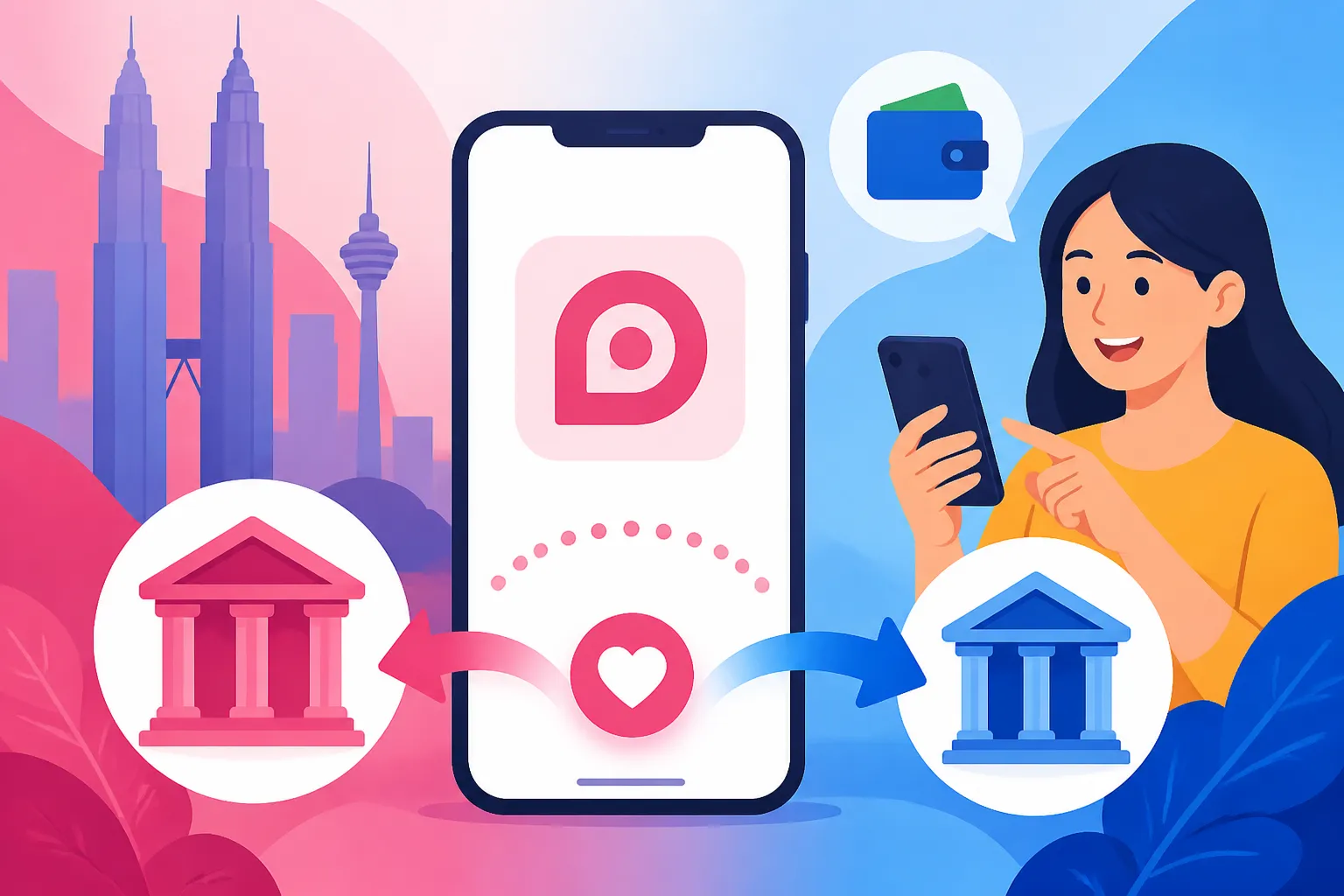
DuitNow is arguably the most fundamental local payment system for anyone living in Malaysia. Think of it as Malaysia's answer to instant bank transfers, simplifying how you send and receive money directly between bank accounts. It's not an e-wallet in itself; rather, it's a payment infrastructure that many banks and e-wallets tap into, making interbank transactions lightning fast and incredibly convenient. Once you get your head around DuitNow, a significant chunk of your payment worries will disappear.
What Exactly is DuitNow and How Does It Work?
At its core, DuitNow allows you to send and receive money using identifiers other than a bank account number. The most common identifiers are your mobile phone number, your NRIC (for Malaysians) or passport number (for foreigners), and your business registration number. This means instead of fumbling for bank account details, you can simply ask for someone's mobile number, and if they've registered it with DuitNow, you can send them money instantly from your own DuitNow-enabled bank account. It’s incredibly efficient and usually free for individual transactions.
The system is operated by Payments Network Malaysia (PayNet) and is supported by almost all major banks in Malaysia, including Maybank, CIMB, Public Bank, Hong Leong Bank, and RHB Bank. This widespread adoption is what makes it so powerful. You don't need to worry if your bank is different from the recipient's bank; as long as both banks support DuitNow and both parties have registered their IDs, the transfer is seamless. It’s a game-changer for everything from splitting restaurant bills with friends to paying your landlord rent. For more details on which banks are expat-friendly, you might want to look into how to choose the best bank for expats in Malaysia.
Registering and Linking Your Accounts for DuitNow
Getting set up with DuitNow is surprisingly straightforward once you have a Malaysian bank account. You typically register through your bank's online banking portal or mobile app. During registration, you'll link your DuitNow ID (usually your mobile number or passport number) to your preferred bank account. Many banks will prompt you to do this when you first set up your online banking.
Here’s a general step-by-step for linking your DuitNow ID:
- Log in to your online banking: Access your bank's website or mobile app. If you're struggling with this, refer to our guide on how to set up online banking with a Malaysian bank.
- Look for the DuitNow registration option: This is often found under "Payments," "Transfers," or a dedicated "DuitNow" section.
- Choose your DuitNow ID: Select your mobile number or passport number as your identifier. For foreigners, the passport number is usually the most stable option, especially if you plan to change your local mobile number down the line.
- Link to your account: Select which of your bank accounts you want to link your DuitNow ID to. This is the account from which money will be debited or credited.
- Verify: You'll typically receive an SMS OTP (One-Time Password) to verify your registration.
Once registered, you can immediately start using DuitNow. Remember, you can only link one DuitNow ID (e.g., your mobile number) to one bank account at a time. If you have multiple bank accounts, you might choose to link your passport number to one and your mobile number to another, or simply manage it all through your primary account.
Common Scenarios for Using DuitNow for Expats
As an expat, DuitNow will quickly become your go-to for many transactions:
- Paying Rent or Utilities: Many landlords prefer DuitNow transfers because they are instant and free. You can also use DuitNow to top up your prepaid electricity meter or pay other recurring bills if the service provider supports it. This is a common method alongside using online banking to pay your utility bills online in Malaysia.
- Splitting Bills with Friends: This is where DuitNow truly shines. No more awkward "I'll pay you back later" moments. Simply request your friend's mobile number, and the money is transferred instantly, even if you bank with different institutions.
- Paying for Goods and Services: While less common than e-wallets for small retail, many small businesses, hawker stalls, and home-based businesses now accept DuitNow via QR code (DuitNow QR). You simply scan their QR code with your banking app, enter the amount, and confirm. This is particularly useful in places where credit card machines aren't available, or where they might charge an extra fee.
- Receiving Money: If family members or friends in Malaysia need to send you money, they can do so using your registered DuitNow ID, simplifying the process immensely. It's often much faster than traditional interbank GIRO transfers.
DuitNow really removes a layer of friction in daily financial interactions. It's a foundational tool that every expat in Malaysia should master for managing personal finances.
Other Prominent Local E-Wallet and QR Payment Systems
While DuitNow handles the direct bank-to-bank transfers, Malaysia's digital payment landscape is also heavily populated by a vibrant ecosystem of e-wallets and QR payment solutions. These operate a bit differently – usually involving a stored value in an app rather than direct bank access – but they are equally essential for daily life, offering convenience, rewards, and often specific functionalities that DuitNow doesn't cover.
Navigating the E-Wallet Ecosystem: GrabPay and Touch 'n Go
The two giants in the Malaysian e-wallet space are undoubtedly GrabPay and Touch 'n Go eWallet. Most expats will find themselves using at least one, if not both, on a regular basis.
GrabPay is integrated directly into the Grab super app, which many expats already use for ride-hailing and food delivery. This integration is its key strength. You can top up your GrabPay wallet from your bank account (often via DuitNow or JomPAY), and then use that balance to pay for your Grab rides, GrabFood orders, GrabMart groceries, and even at thousands of offline merchants that accept GrabPay QR codes. The rewards system, GrabRewards, is also quite popular, allowing you to earn points for every transaction and redeem them for discounts or vouchers. For an expat, this means a single app can handle transport, food, and various retail payments, streamlining daily errands significantly.
Touch 'n Go eWallet is another behemoth, particularly well-known because the physical Touch 'n Go card has been indispensable for highway tolls and public transport for years. The eWallet extends this convenience digitally. You can use it for tolls (via PayDirect or RFID), public transport (on selected lines), parking (many municipal car parks accept it), and a vast network of retail outlets, including petrol stations, pharmacies, and supermarkets. Its integration with RFID for tolls makes highway driving a breeze, as you just drive through without stopping. Similar to GrabPay, you can top it up via online banking, DuitNow, or even at physical kiosks. The Go+ feature also allows users to earn returns on their eWallet balance by investing in a money market fund, a small but neat perk.
Both GrabPay and Touch 'n Go eWallet offer similar core functionalities – mobile payments via QR code, bill payments, and sometimes even peer-to-peer transfers within the app. The choice often comes down to personal preference, the specific merchants you frequent, and which loyalty programs you find more appealing. Many expats end up using both, leveraging the strengths of each.
QR Code Payments Beyond DuitNow
Beyond DuitNow, GrabPay, and Touch 'n Go eWallet, you'll encounter a myriad of other QR code payment systems. The beauty (and sometimes frustration) is that many of these are interconnected through the DuitNow QR standard. This means a single DuitNow QR code displayed by a merchant can often be scanned by any participating banking app or e-wallet app that supports DuitNow QR. This interoperability is a huge relief, as it prevents you from needing a different app for every single merchant.
However, some e-wallets still maintain their proprietary QR codes or have specific partnerships. For example, ShopeePay (integrated into the Shopee e-commerce app) is popular for online shopping and at partner offline merchants, often offering exclusive cashback. Boost is another prominent e-wallet that gained traction for its bill payment features and rewards. Maybank's MAE app (a digital bank account and e-wallet within the Maybank ecosystem) also has its own QR payment functions that integrate seamlessly with DuitNow QR.
The key takeaway for expats is not to try and download every single e-wallet. Start with your bank's app (for DuitNow functionality), then consider GrabPay for its super app convenience, and Touch 'n Go eWallet for tolls and parking. As you settle in and discover your routines, you might find a specific merchant offering a great deal with a lesser-known e-wallet, and then you can consider adding that to your digital arsenal. It's about finding what works best for your lifestyle.
Traditional Banking and Online Transfers in Malaysia
While the digital payment apps get all the buzz, the bedrock of your financial life in Malaysia will still be your traditional bank account and its associated services. Understanding how internet banking, interbank transfers, and ATM networks operate is crucial, especially for larger transactions, bill payments, and managing your core funds.
Internet Banking and Interbank GIRO (IBG)
Once you've managed to open a bank account at a Malaysian bank as a foreigner, your internet banking portal will become your financial command center. Almost every major bank offers a robust online platform and mobile app for managing your accounts. Here, you can check balances, view transaction history, pay bills, set up recurring payments, and, of course, make transfers.
For transferring money between different banks in Malaysia, you'll primarily use either DuitNow (for instant, typically free transfers using an ID) or Interbank GIRO (IBG). IBG is a batch-based electronic funds transfer system. It's reliable and secure, but generally not instant. Funds transferred via IBG usually take a few hours to a business day to clear, depending on the time of the transfer. For example, if you make an IBG transfer after the cut-off time (often 3 PM or 5 PM), the funds might only arrive the next business day. While DuitNow has largely supplanted IBG for person-to-person and small business transfers due to its speed, IBG is still commonly used for larger transfers, certain types of bill payments, and by businesses.
Many recurring payments, like utility bills, phone bills, or insurance premiums, can be set up through your internet banking portal via JomPAY or direct debit. JomPAY is a national bill payment scheme that allows you to pay almost any bill using a unique biller code and reference number, all from your online banking. This is incredibly convenient and a good way to stay on top of your recurring expenses, alongside knowing how to set up recurring bill payments in Malaysia.
ATM Networks and Cash Access
Despite the digital surge, cash still plays a role, and ATMs are readily available throughout Malaysia. You'll find them in shopping malls, petrol stations, convenience stores, and outside bank branches. Most Malaysian ATMs are interconnected through networks like MEPS (Malaysian Electronic Payment System) and CIRRUS/Plus (for international cards).
Using your Malaysian debit card at an ATM within your bank's network is typically free. If you use an ATM from a different bank within the MEPS network, there's usually a small fee (around RM1 to RM4, but often waived by some banks for small withdrawals). For expats, it's important to know that most foreign debit or credit cards can also be used at Malaysian ATMs, but this will almost certainly incur fees from both your home bank and the local ATM operator, and you'll be subject to the exchange rate applied by your card issuer. For larger international transfers, services like Wise offer a much better deal than traditional bank wire transfers, especially when you consider exchange rates.
While cash is less critical than it once was, it’s always wise to have some on hand for small purchases at markets, for street food vendors, or in rural areas where digital payment adoption might be slower. The prevalence of ATMs means you're rarely far from access to cash when you need it.
Managing Your Finances: Tips for Expats with Local Payment Systems
Navigating a new country's financial landscape is a big part of settling in. For expats in Malaysia, truly embracing and understanding the local payment systems goes a long way in making daily life smoother, more affordable, and less stressful. It's not just about convenience; it's about integration into the local economy and ensuring financial security.
Security Best Practices and Avoiding Scams
With great digital convenience comes the great responsibility of digital security. Expats, often unfamiliar with local scam tactics, can be particularly vulnerable. Here are some critical best practices:
- Strong Passwords and Two-Factor Authentication (2FA): Always use strong, unique passwords for your banking apps and e-wallets. Enable 2FA (like SMS OTP or biometric authentication) for all transactions and logins. Never share your OTP with anyone, ever.
- Beware of Phishing: Be highly suspicious of unsolicited emails, SMS messages, or calls asking for your personal banking details, passwords, or OTPs. Banks and legitimate payment providers will never ask for these details. Always double-check sender information.
- Secure Wi-Fi: Avoid conducting financial transactions over public or unsecured Wi-Fi networks. Stick to your home Wi-Fi or mobile data.
- Regular Monitoring: Routinely check your bank statements and e-wallet transaction history for any suspicious activity. Report anything unusual to your bank immediately.
- App Downloads: Only download banking and e-wallet apps from official app stores (Google Play Store, Apple App Store). Be wary of third-party links.
- Physical Card Security: When using physical debit/credit cards, never let them out of your sight. Cover the PIN pad when entering your number at ATMs or POS terminals.
Malaysian banks and payment providers are generally robust with their security, but a proactive approach on your part is your best defence.
Integrating Local Payments with Your Expat Financial Planning
Your local payment systems in Malaysia aren't isolated tools; they're an integral part of your overall financial strategy as an expat.
- Budgeting and Tracking: Using digital payment methods creates a clear digital trail of your spending. Many banking and e-wallet apps offer expenditure breakdowns, which can be invaluable for budgeting. This digital record also becomes crucial when you're managing your overall finances, especially if you're dealing with different currencies and considering your Malaysian tax obligations. Services like Taxes for Expats can help you understand how these local transactions might impact your tax residency and overall income declarations, particularly if you are self-employed and wondering how much tax freelancers pay in Malaysia.
- Linking Local and International Funds: For moving money into or out of Malaysia, traditional bank transfers can be costly and slow. This is where services like Wise (formerly TransferWise) come into play. They often offer more competitive exchange rates and lower fees for international money transfers, allowing you to top up your Malaysian bank account or e-wallets efficiently from your home country funds. You can explore how to transfer money into and out of Malaysia as an expat to find the most cost-effective methods.
- Utility and Bill Payments: Leveraging DuitNow, JomPAY, and direct debits via internet banking for your rent, utilities, and other regular bills ensures you never miss a payment. This consistency helps maintain a good financial standing and reduces stress. Think about how to pay your utility bills online in Malaysia to streamline these processes.
By thoughtfully integrating these local systems into your financial routine, you build a more robust and responsive financial life in Malaysia, giving you more time to enjoy your expat journey.
Comparing Local Payment Methods: A Handy Table
To help you get a clearer picture, here’s a quick comparison of the main local payment systems you’ll encounter:
| Feature | DuitNow (via Banking App) | GrabPay E-Wallet | Touch 'n Go E-Wallet |
|---|---|---|---|
| Primary Function | Instant Bank-to-Bank transfers | Integrated super app payments (rides, food, retail) | Tolls, parking, public transport, retail |
| Requires MY Bank Account | Yes | Yes (for top-up) | Yes (for top-up) |
| Setup | Link ID (mobile/passport) via bank app | Download Grab app, register, top-up | Download TNG eWallet app, register, top-up |
| Transaction Fees (Avg.) | Free for individuals | Generally free (some merchant fees may apply) | Generally free (some merchant fees may apply) |
| Common Use Cases | Splitting bills, paying landlords, small business payments | Rides, food delivery, grocery, retail purchases | Tolls, parking, public transport, retail purchases |
| Loyalty/Rewards | Bank-specific rewards | GrabRewards points | TNG GO+ (investments), discounts |
| Interoperability | DuitNow QR allows scanning by other DuitNow-enabled apps | Scan DuitNow QR & GrabPay QR | Scan DuitNow QR & TNG eWallet QR |
Remember, this is a general overview, and features can evolve. The best approach is to start with your bank's DuitNow functionality and one or two major e-wallets, then expand as your needs dictate.
Disclaimer
The information provided in this guide is for general informational purposes only and does not constitute financial, legal, or professional advice. While we strive to keep the information up-to-date and accurate, regulations and procedures in Malaysia can change. Expats are encouraged to consult with relevant financial institutions, tax advisors, or immigration authorities for personalized advice based on their specific circumstances.