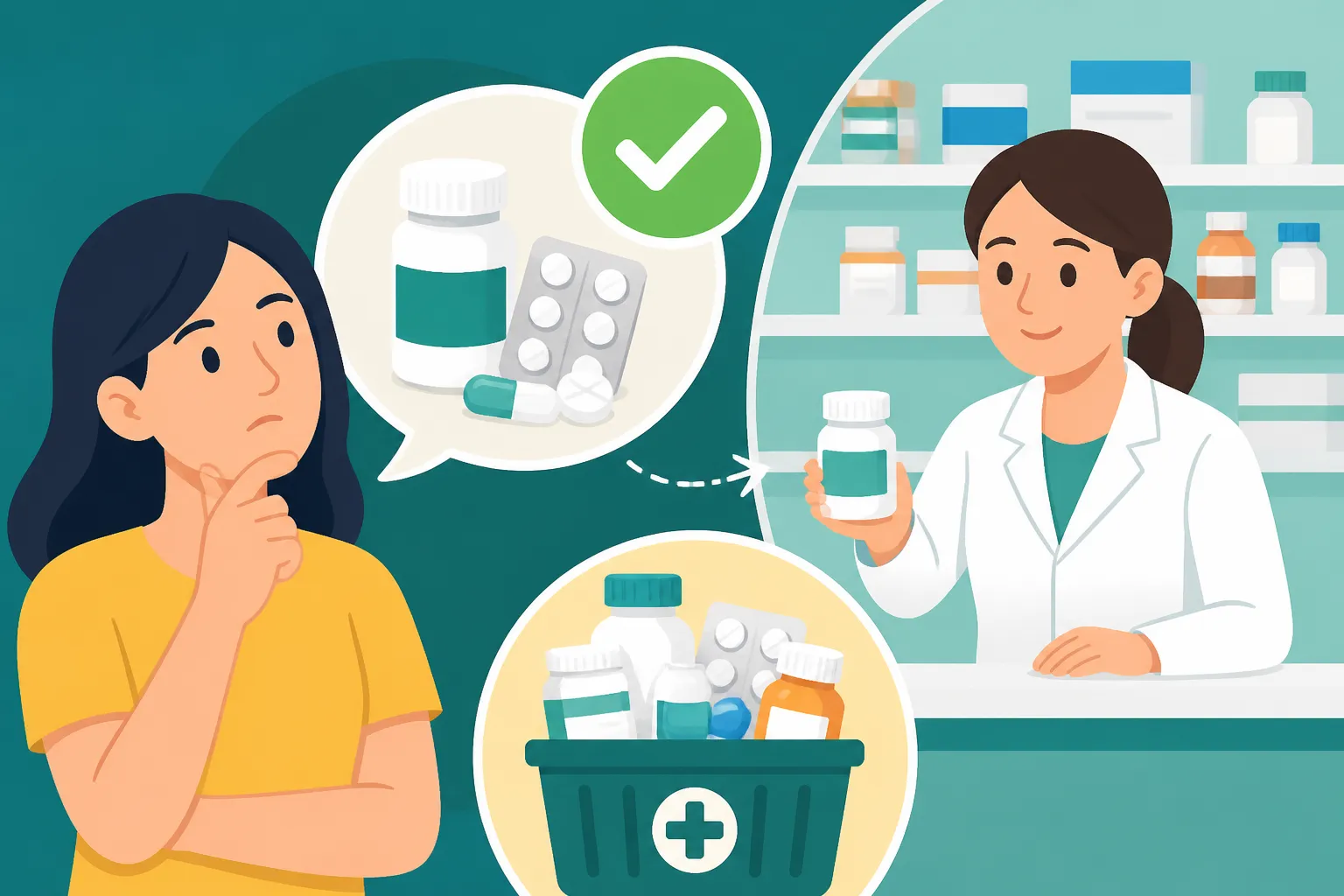
Are Generic Medicines Available in Malaysian Pharmacies?
One of the most common anxieties for expats moving to Malaysia is the fear of losing access to affordable, reliable medication. You might be used to specific brand names from back home and worry that the local alternatives in Kuala Lumpur or Penang won't meet the same safety standards. This guide provides clarity on the availability, regulation, and quality of generic medicines in Malaysia to ensure your health remains a priority without draining your wallet.
Understanding the Landscape of Generic Medicines in Malaysia
When you walk into a bright, air-conditioned pharmacy in a mall like Mid Valley Megamall or Gurney Plaza, you are met with rows of familiar and unfamiliar boxes. In Malaysia, the pharmaceutical market is robust, and generic medicines are not just available—they are the backbone of both the public and private healthcare systems. For many of us living here, transitioning from expensive "innovator" brands (the original patented drugs) to generics is a standard part of managing the cost of living.
What Qualifies as a Generic Medicine in Malaysia
A generic medicine in Malaysia is defined as a pharmaceutical product that is intended to be interchangeable with an innovator product. It is manufactured without a license from the innovator company and is usually marketed after the expiry of the patent or other exclusivity rights. To be sold legally in a Malaysian pharmacy, these generics must contain the same active ingredients in the same strength and dosage form as the original brand.
I remember my first visit to a local GP when I needed a common antihistamine. I was prepared to pay a premium for the brand I knew from the UK, but the doctor gently suggested a local generic. He explained that these are meticulously tested for "bioequivalence." This means the rate and extent to which the active ingredient is absorbed into your body must be essentially the same as the brand-name drug. Whether you are looking for Prescription Medications and Pharmacies in Malaysia: The Complete Guide or just a simple over-the-counter fix, the generic options are scientifically validated to do the job.
The Role of the National Pharmaceutical Regulatory Agency (NPRA)
The safety of medication in Malaysia is governed by the National Pharmaceutical Regulatory Agency (NPRA), under the Ministry of Health. Every single medicine, whether a high-end innovator brand or a local generic, must be registered with the NPRA before it can be sold to the public. This is a rigorous process that involves evaluating the manufacturing site’s compliance with Good Manufacturing Practice (GMP) standards.
As an expat, you can verify the legitimacy of any generic medicine by looking for two things: the MAL registration number and the Meditag hologram. The MAL number (e.g., MAL12345678A) is a unique identifier. If you ever feel unsure about a product offered in a smaller, independent pharmacy, you can actually cross-reference this number on the NPRA’s public Quest3+ database. This level of transparency is incredibly reassuring when you are Navigating the Malaysian Healthcare System: An Expat's Roadmap (2027) and trying to ensure you aren't being sold counterfeit products.
Where and How to Buy Generic Medicines
Finding generics in Malaysia is quite straightforward, but the experience can differ depending on where you shop. The country has a high density of pharmacies, ranging from massive international chains to small, family-run establishments in traditional shophouses.
Major Pharmacy Chains vs. Independent Shops
For most expats, the first point of contact will be major chains like Guardian, Watsons, Caring Pharmacy, BIG Pharmacy, or Alpro Pharmacy. These outlets are ubiquitous in urban centers like the Klang Valley and Johor Bahru. They carry an extensive range of both innovator brands and generic alternatives. BIG Pharmacy and Alpro, in particular, are often favored by locals and veterans for having a wider selection of generic "house brands" and competitive pricing on chronic medications.
Independent pharmacies can be found in almost every neighborhood. While they might not have the flashy loyalty programs of Watsons, they often provide more personalized service. The pharmacist in a local "taman" (neighborhood) pharmacy often becomes a trusted advisor. If they don’t have a specific generic in stock, they are usually happy to order it for you within 24 to 48 hours. This is particularly helpful if you are trying to understand How to Find and Register with a General Practitioner (GP) in Malaysia and need a pharmacy that works closely with local clinics.
Understanding Prescription Requirements
In Malaysia, medicines are categorized into different "Schedules" under the Poisons Act 1952. Group B poisons require a prescription from a registered doctor, while Group C poisons can be dispensed by a licensed pharmacist without a doctor’s prescription, provided they record the sale in a "Poisons Book."
Many expats are surprised to find that certain medications that require a doctor's visit in their home country can be obtained directly from a pharmacist here. For example, some asthma inhalers or mild blood pressure medications might be available after a consultation with the pharmacist on duty. However, for most chronic conditions, the pharmacist will ask for a valid prescription. If you are using international coverage like SafetyWing for your outpatient needs, ensuring you have the right documentation is vital for any potential claims. SafetyWing can be a great safety net for expats who want that extra layer of security while exploring local medical options.
Comparing Costs: Brand Name vs. Generic
The primary reason to opt for generics is, of course, the price. In Malaysia, the price difference can be staggering. Unlike some countries where drug prices are strictly capped, Malaysia currently operates on a free-market system for medicine pricing in the private sector, though there have been ongoing discussions about implementing price controls.
The Price Gap in the Private Sector
In a private hospital or a high-end clinic, you might be charged significantly more for an innovator brand. Private hospitals often have higher markups on medication to cover their operational costs. If you are concerned about The Cost of Healthcare in Malaysia: A Complete Breakdown for Foreigners (2026), asking for the generic version at the hospital pharmacy—or taking your prescription to an external retail pharmacy—can save you anywhere from 30% to 80%.
Most pharmacists are very open about the price differences. If you ask, "Do you have a generic version of this?" they will often present you with two or three options. Some will be "branded generics" from reputable international companies like Teva or Sandoz, while others might be local Malaysian brands like Hovid or Kotra Pharma. All are regulated, but the local brands are almost always the most affordable.
Price Comparison Table for Common Medications
To give you a clearer idea of the savings, here is a comparison of estimated prices for 2026 (subject to change based on market fluctuations and specific pharmacy markups). Prices are in Malaysian Ringgit (RM).
| Medication Type | Common Brand Name | Estimated Brand Price (30 days) | Estimated Generic Price (30 days) | Potential Savings |
|---|---|---|---|---|
| Cholesterol (Atorvastatin) | Lipitor | RM 120 – 150 | RM 25 – 40 | ~75% |
| Hypertension (Amlodipine) | Norvasc | RM 80 – 100 | RM 15 – 30 | ~80% |
| Diabetes (Metformin) | Glucophage | RM 40 – 60 | RM 10 – 20 | ~65% |
| Acid Reflux (Omeprazole) | Losec | RM 90 – 110 | RM 20 – 35 | ~70% |
| Pain Relief (Celecoxib) | Celebrex | RM 140 – 180 | RM 40 – 60 | ~70% |
As you can see, the cumulative savings over a year are substantial. For those managing chronic conditions, this makes Understanding the Malaysian Pharmacy System and Controlled Medicines an essential skill for long-term residency.
Common Challenges and Tips for Expats
While the system is efficient, there are nuances to navigating Malaysian pharmacies that can be frustrating if you aren't prepared. Cultural differences in communication and specific administrative quirks can sometimes lead to misunderstandings at the counter.
Communicating with Malaysian Pharmacists
English is widely spoken in Malaysian pharmacies, especially in urban areas. However, the name of your medication back home might not be the name used here. It is always best to know the "active ingredient" or the "generic name" of your medicine. Instead of asking for "Advil," ask for "Ibuprofen." Instead of "Panadol," ask for "Paracetamol."
I once spent twenty minutes trying to find a specific brand of cough suppressant only to realize that the pharmacist knew it perfectly well by its chemical name. Having your old prescription bottles or a photo of the box helps immensely. If you're feeling unwell and need more than just a refill, knowing How to Find an English-Speaking Doctor in Malaysia can provide that extra layer of comfort before you even head to the pharmacy.
Panel Clinics and Insurance Constraints
If you are working in Malaysia, your employer might provide "panel clinic" benefits. These are specific clinics where your consultations and medications are covered. However, panel clinics often have a limited "formulary" (a list of approved drugs). They will almost exclusively dispense generics to keep costs within the employer's budget.
If you insist on a brand-name drug at a panel clinic, you might have to pay the difference out of pocket, or they may not stock it at all. In these cases, you can ask for a written prescription and buy the brand-name drug at a retail pharmacy. Just keep in mind that many local insurance plans may not reimburse the full cost if a generic was available. This is where having a flexible plan like SafetyWing can be beneficial, as it often provides a broader perspective on how you manage your health expenses. SafetyWing is designed with the global traveler and expat in mind, offering a level of support that traditional local panels might lack.
Dealing with Out-of-Stock Situations
Occasionally, a specific generic might be out of stock due to global supply chain issues or local distribution delays. If this happens, don't panic. Because the NPRA ensures bioequivalence across all registered generics, you can usually switch to another generic brand containing the same active ingredient without any issues.
The pharmacist will guide you through this. They might say, "We don't have the Hovid brand of Metformin, but we have the Apo-Metformin from Canada." These are interchangeable. However, if you are on "narrow therapeutic index" drugs (like certain anti-seizure medications or blood thinners), you should consult your doctor before switching between different generic manufacturers, just to be safe. Staying informed through The Expat Guide to Choosing a Private Hospital in Malaysia (2027) can help you find specialists who can advise on these specific switches.
Safety and Quality Concerns
A common question among the expat community is: "Are the local Malaysian generics as good as the ones from Germany or the US?" The short answer is yes. Malaysia is a member of the Pharmaceutical Inspection Co-operation Scheme (PIC/S), an international instrument between countries and pharmaceutical inspection authorities that provide together active and constructive cooperation in the field of GMP.
Local Manufacturing Excellence
Many Malaysian pharmaceutical companies, such as Pharmaniaga and Duopharma, are massive entities that export their products globally. They operate state-of-the-art facilities that are regularly audited by international bodies. When you buy a generic made in Malaysia, you are supporting a sophisticated local industry that meets global benchmarks.
If you are ever in doubt, remember that the wealthy locals and the doctors themselves use these generics. In the public healthcare system, which serves millions, generics are the standard of care. If you are Understanding Foreigner Medical Fees at Malaysian Government Hospitals, you will find that the government utilizes these high-quality generics to keep the system sustainable.
The Importance of Proper Storage
One thing to keep in mind is the Malaysian climate. The heat and humidity can degrade medication faster than in temperate climates. Always check that the pharmacy stores its medications in a temperature-controlled environment. Most reputable pharmacies keep the air conditioning running 24/7. When you take your generics home, avoid keeping them in the kitchen or bathroom. A cool, dry cupboard is best.
For those who travel frequently within the region, having a reliable insurance partner is crucial. SafetyWing offers travel medical insurance that can cover you if you face health issues while away from your primary Malaysian pharmacy. It's a sensible addition to your expat toolkit, especially when you are still Understanding the Difference Between GP Clinics and Hospitals in Malaysia and figuring out your long-term healthcare strategy.
Final Thoughts on Generic Medicine Availability
Malaysia is a "pharmacy-friendly" country. The availability of generic medicines is excellent, the regulation is world-class, and the cost savings are a major perk of living here. By embracing generics, you can significantly reduce your monthly expenses without compromising on the quality of your healthcare.
Whether you are here on an Employment Pass, an MM2H visa, or as a digital nomad, knowing that you can find affordable versions of your essential medications provides significant peace of mind. Don't be afraid to have an open conversation with your pharmacist—they are often the most underutilized resource in the Malaysian healthcare system. They are there to help you find the best balance between efficacy and economy.
Disclaimer
The information provided in this guide is for informational purposes only and does not constitute medical or legal advice. While we strive to keep the information up to date, pharmaceutical regulations and prices in Malaysia can change. Always consult with a qualified healthcare professional or a licensed pharmacist before starting, stopping, or changing any medication. The mention of specific brands or pharmacies does not imply an endorsement. Expats are encouraged to verify all medical requirements and insurance coverage details with their respective providers.