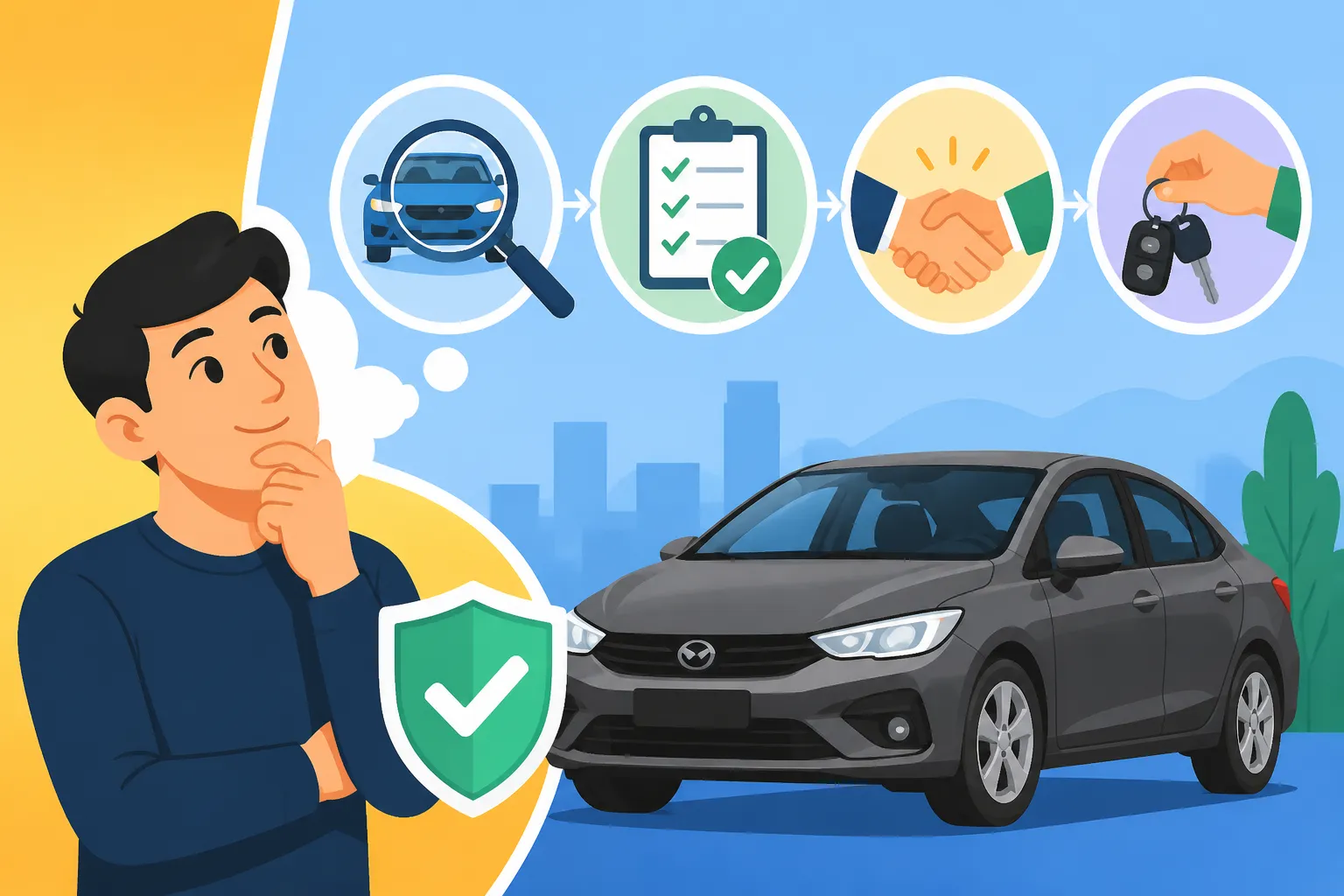
How Do I Buy a Used Car in Malaysia?
So, you've landed in Malaysia, soaked in the culture, maybe even settled into a place, and now you're eyeing that next big step for true independence: getting your own set of wheels. Buying a used car here as an expat, I won't lie, can feel like navigating a maze blindfolded. The paperwork, the unfamiliar processes, the worry about getting a lemon – it’s a legitimate concern. But fear not, my friend, because this guide is here to demystify the entire process, sharing the ins and outs from someone who's been through it, helping you confidently drive off with your perfect pre-loved vehicle.
Understanding the Lay of the Land: Eligibility and Initial Checks
Before you even start dreaming about cruising down the North-South Expressway, you need to understand the fundamental requirements and financial realities of buying a used car in Malaysia as a foreigner. It's not just about picking a car you like; it’s about navigating the local rules and ensuring you're financially prepared for the whole package. Trust me, overlooking these initial steps can lead to headaches and unexpected costs down the line.
Who Can Buy a Car as an Expat?
Good news: foreigners can buy and register vehicles in their name in Malaysia. However, you absolutely need a valid long-term visa or pass. This isn't like popping over on a tourist visa and buying a car for a road trip – that’s a definite no-go. Typically, this means you'll need an Employment Pass, a MM2H visa, or a Dependant Pass. Your visa status dictates your eligibility, and the authorities at the Road Transport Department (JPJ) will scrutinize this carefully during the ownership transfer process.
If you’re on an Employment Pass, ensure it has sufficient validity remaining, as this will be a key document. Similarly, The Complete Guide to Malaysian Visas for Expats (2027) clarifies that different visas come with different privileges, and car ownership is one of the big ones. Always double-check your specific visa conditions. Also, be aware that some banks might have stricter lending criteria for expats based on their visa type and remaining duration, so it’s wise to clarify this early on if you plan to finance your purchase.
Budgeting Beyond the Sticker Price
It’s easy to get fixated on the listed price of a car, but my dear expat friend, that’s just the beginning. Buying a used car in Malaysia involves several additional costs that can quickly add up. Beyond the vehicle’s purchase price, you need to factor in transfer fees, Puspakom inspection fees, stamp duty, insurance, and road tax. Then there’s the immediate post-purchase maintenance – because, let's face it, a used car will likely need some TLC.
Think about a contingency fund for unexpected repairs, too. A car might look great on the lot, but a week later, a hidden issue could emerge. This foresight is crucial, especially when you’re already managing The Complete Guide to Cost of Living in Malaysia for Expats (2026). Don't forget that a local bank account, like those discussed in The Expat Guide to Opening a Bank Account in Malaysia, will be essential for payments and setting up recurring insurance/road tax.
Essential Documents You'll Need
Get your paperwork in order from day one. This is Malaysia, and bureaucracy is a national sport, especially when it comes to official documents. For a used car purchase, you’ll definitely need:
- Your passport with a valid long-term visa/pass.
- Your Malaysian driving licence (or a valid international driving permit and the process started for converting your foreign licence, as detailed in How to Convert a Foreign Driving Licence in Malaysia).
- Proof of address (utility bill, tenancy agreement).
- Letter of employment or support from your employer (especially if financing, or if your visa is tied to employment).
- Relevant forms from JPJ (K3 and K7 forms, often provided by the seller or agent).
Make multiple copies of everything. Seriously. It’s better to have too many than too few when dealing with government departments. Ensure all your documents are current and match the details on your visa. Any discrepancies can cause frustrating delays.
Hunting for Your Ride: Where and How to Search
Now for the fun part – finding the actual car! Just like anywhere else, Malaysia offers a few different avenues for buying used cars, each with its own set of pros and cons. Knowing where to look and what to scrutinize will save you a lot of time, money, and potential heartbreak. And as you’ll be making calls and checking listings, having reliable mobile data is key – something an eSIM like Airalo can be a lifesaver for, ensuring you stay connected without expensive roaming charges.
Dealerships: Reputable vs. Smaller Lots
Buying from a used car dealership can offer a layer of convenience and peace of mind. Reputable, larger dealerships (often associated with brand names or well-established chains) usually offer cars that have undergone some level of inspection, and sometimes even come with a limited warranty. They handle most of the paperwork, making the process smoother for expats. Dealers like Carlist.my Certified or Motorway are examples of those that often have more rigorous checks.
However, this convenience comes at a price – cars from these dealerships are typically more expensive than private sales. Smaller, independent lots might offer lower prices, but the quality assurance can be a mixed bag. Be vigilant: check reviews, ask for detailed service histories, and always, always get an independent inspection, even if the dealer claims it's been "fully checked." My personal experience has taught me never to take anything at face value, especially when dealing with smaller, less transparent operations.
Online Platforms and Direct Sellers: A Double-Edged Sword
Online platforms are incredibly popular in Malaysia, with Mudah.my being the undisputed champion for used car listings. You'll find a vast selection, often at more competitive prices than dealerships. Facebook Marketplace and specific car enthusiast groups are also burgeoning spaces for private sales. The main advantage here is direct negotiation with the seller, potentially netting you a better deal.
The downside? It's the wild west out there. You're dealing directly with individuals, which means varying levels of transparency, honesty, and mechanical knowledge. Scams are not unheard of, and "as-is" sales offer little recourse if something goes wrong. When browsing, make sure you have reliable connectivity to quickly research sellers and listings, perhaps using your Airalo connection to run quick checks on the fly. You need to be prepared to do all the heavy lifting in terms of inspection, paperwork, and ensuring the legality of the sale. This option is best for those who are confident in their car knowledge or have a trusted local friend or mechanic to assist them.
The Art of Inspection and Test Drives
Never, ever buy a used car without a thorough inspection and a proper test drive. For the inspection, if you're not mechanically inclined (and even if you are, a second opinion is invaluable), hire an independent mechanic to check the vehicle. They can spot red flags that might be hidden from the untrained eye – think rust, chassis damage, engine issues, or previous accident repairs. This small investment can save you thousands later.
During the test drive, pay attention to everything: the sound of the engine, how the brakes feel, the smoothness of the gear changes (especially for automatics), any unusual vibrations, and the functionality of all electronics (lights, wipers, air-con, power windows). Drive on different road types, including some inclines if possible. Don’t rush it. This is your chance to feel the car out and ensure it meets your expectations for comfort and performance. You'll be using this car for your daily Driving in Malaysia: Licences, Registration and Rules for Expats (2027), so make sure it feels right.
| Feature | Dealership (Reputable) | Online/Private Seller (Mudah.my) |
|---|---|---|
| Pros | – Convenience, paperwork handled | – Potentially lower prices |
| – Some warranty/inspection assurances | – Wider selection | |
| – Easier financing options | – Direct negotiation with seller | |
| Cons | – Higher prices | – More risk of scams or hidden defects |
| – Less room for negotiation | – All paperwork/inspections are your responsibility | |
| – Limited inventory compared to online | – Less recourse if problems arise | |
| Suitability | – Expats seeking ease and peace of mind | – Expats with mechanical knowledge or trusted local help |
| – Willing to pay a premium for assurance | – Comfortable with managing bureaucracy |
Navigating the Purchase and Ownership Transfer
So, you’ve found the perfect car! Congratulations! Now comes the real test of patience: the actual purchase and legal transfer of ownership. This process involves a few key steps, each with its own potential pitfalls for the unwary expat. This is where the rubber meets the road, quite literally, and where meticulous attention to detail is paramount.
The Sales Agreement and Payment Process
Once you agree on a price, a sales agreement needs to be drafted. This document is crucial, regardless of whether you’re buying from a dealer or a private seller. It should clearly state the vehicle details (make, model, year, chassis number, engine number, registration number), the agreed-upon price, the terms of sale, and the responsibilities of both the buyer and seller. For private sales, it’s advisable to use a standard sales agreement template from JPJ or have one professionally drafted to protect both parties.
For payment, never hand over a large sum of cash, especially for private sales. Bank transfers are safer as they provide a clear transaction record. If you're financing, your bank will handle the payment to the seller. Ensure all payments are clearly documented. This helps protect you in case of any future disputes, which, while rare, can be a monumental headache to resolve.
The Crucial Puspakom Inspection
Before ownership can be transferred, the used vehicle must undergo a mandatory inspection at Puspakom, Malaysia's only appointed vehicle inspection company. This inspection, specifically the B5 inspection (for ownership transfer), checks the vehicle's identity (chassis and engine numbers) and structural integrity to ensure it's roadworthy and not a cut-and-paste job from stolen parts.
The seller is typically responsible for arranging and paying for this initial inspection, but as the buyer, you should accompany them. This allows you to witness the process and directly receive the inspection report, which is valid for 60 days. No Puspakom report, no ownership transfer at JPJ. Understanding the Puspakom Vehicle Inspection in Malaysia goes into more detail, but suffice to say, this step is non-negotiable.
Transferring Ownership at JPJ: The Bureaucracy Dance
This is often the most daunting part for expats. The ownership transfer takes place at any Road Transport Department (JPJ) office. Both the buyer and seller must be present with all their original documents – passports, visas, driving licences, the Puspakom report, and the signed sales agreement. If either party cannot be present, a properly attested power of attorney is required, but this adds another layer of complexity.
At JPJ, you'll submit the relevant forms (K3 and K7), pay the transfer fees and stamp duty. The fees vary based on the vehicle type and engine capacity. The JPJ officer will verify all documents and fingerprint both parties (electronic fingerprint scanning is standard now). Once approved, the vehicle's registration card (VC or V5) will be updated with your name as the new owner. It’s a tedious process, often involving long waits, but once done, the car is legally yours! For a detailed rundown, check out How to Register and Transfer a Vehicle (JPJ) in Malaysia.
Life After Purchase: Insurance, Road Tax, and Upkeep
Congratulations, you're officially a car owner in Malaysia! But the journey doesn't end there. To legally drive your new (to you) vehicle, you need to sort out insurance and road tax immediately. Plus, taking good care of your car will ensure it serves you well during your time here.
Getting Comprehensive Car Insurance
Car insurance is mandatory in Malaysia, and you cannot renew your road tax without it. While third-party insurance is the minimum legal requirement, as an expat, I strongly recommend opting for comprehensive coverage. This protects your vehicle against theft, fire, and damage, not just damage to other parties. Malaysia’s roads can be… spirited, shall we say, and accidents can happen.
You can get insurance quotes from various providers like Etiqa, Allianz, or Takaful Malaysia. Premiums depend on the car’s make, model, age, engine capacity, and your driving history. Some insurers might offer expat-specific packages or require slightly different documentation. Compare quotes online and understand the policy’s inclusions and exclusions thoroughly. Don't forget to read up on How Much Is Car Insurance in Malaysia? to get a better idea of the costs involved.
Understanding Road Tax and Its Renewal
Once your insurance is sorted, you'll need to pay for road tax. This is an annual fee determined by your vehicle’s engine capacity and type (private or commercial, sedan or SUV). You can pay for road tax at JPJ offices, post offices, or online via MyEG Services. The road tax sticker must be displayed prominently on your car's windshield.
It’s crucial to keep track of your road tax expiry date. Driving with an expired road tax (or insurance) is a serious offense that can lead to fines and even vehicle impoundment. Many insurance companies offer reminders for renewal, but it’s best to note it down. For a comprehensive guide on this, refer to Understanding Road Tax and Insurance Renewal in Malaysia. Remember, you can't renew one without the other!
Maintaining Your Used Car in Malaysia
Finally, maintenance. A used car, by its very nature, will require more attention than a brand-new one. Establish a relationship with a trusted mechanic or workshop. Ask other expats for recommendations – word-of-mouth is gold in this regard. Regular servicing, oil changes, tire rotations, and checking fluid levels are not just good practice, they are essential to prolonging your car’s life and ensuring your safety on Malaysian roads.
Be proactive with any unusual sounds or sensations from the car. Don’t wait until a small issue becomes a major, expensive problem. Genuine spare parts are generally available, but be wary of counterfeits at smaller shops. If you're new to the country, settling in takes a lot of effort – from organizing your belongings with services like Sirelo to navigating daily life. Keeping your car well-maintained removes one major stressor from your expat experience.
Disclaimer
The information provided in this guide is for general informational purposes only and does not constitute legal, financial, or professional advice. While we strive to keep the information up-to-date and correct, processes and regulations in Malaysia can change without prior notice. Always consult with official government bodies (like JPJ, Puspakom, or the Immigration Department), licensed professionals, or legal advisors for the most current and accurate information pertaining to your specific situation. Reliance on any information in this guide is solely at your own risk.