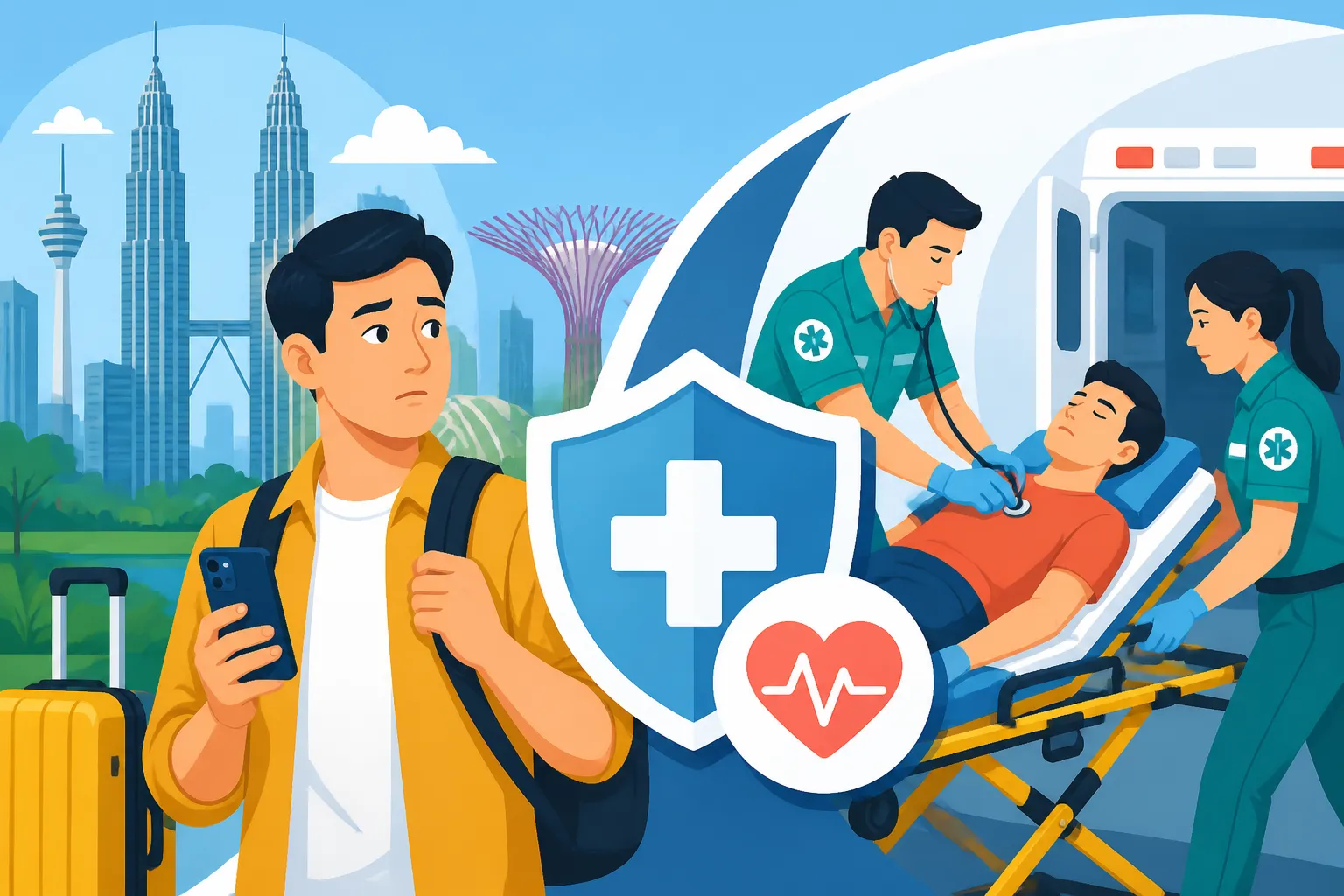
How to Handle a Medical Emergency Abroad with Malaysian Insurance
Imagine you are enjoying a well-deserved holiday in Thailand or visiting family back in Europe, and suddenly, a medical crisis strikes. The initial shock is frightening enough, but for those of us living in Malaysia, the secondary panic often involves our insurance policy. This guide provides a step-by-step roadmap for managing medical emergencies abroad when your primary coverage is a Malaysian-based policy.
Understanding Global Coverage in Malaysian Health Policies
When you first signed up for your medical card in Kuala Lumpur, the agent likely mentioned "worldwide coverage." However, as many of us have learned the hard way, "coverage" and "cashless convenience" are two very different things. Most local Malaysian plans from providers like AIA, Great Eastern, or Prudential do offer international emergency benefits, but they are often restricted by the duration of your trip and the nature of the illness.
Regional vs. International Limits
Standard Malaysian medical cards often have different tiers for overseas treatment. Some policies only cover you for emergencies that occur within a specific timeframe, usually the first 90 days of your departure from Malaysia. If you have been out of the country longer than that, the insurer may argue that you are no longer a resident for the purposes of that trip, potentially voiding your emergency claim. Furthermore, the definition of an "emergency" is strictly interpreted. If you visit a GP in Singapore for a persistent cough, it likely won't be covered. If you are rushed to the ER for a fractured limb, it will be. It is vital to understand Health Insurance in Malaysia: Local, International and Employer Options Explained to see where your specific policy falls on this spectrum.
The Residency Clause and Travel Duration
Malaysian insurance products are designed for people living and working within the country. If you are an expat on an Employment Pass, your policy is tied to your residency. If you have left Malaysia permanently but kept the policy active, you might find that claims are rejected because you no longer hold a valid visa. Always check the fine print regarding "Continuous Residence." For those who travel frequently or work remotely, using a secondary global option like SafetyWing can provide a much-needed safety net that doesn't rely on your Malaysian residency status for every single claim.
Immediate Steps During an Overseas Medical Emergency
In the heat of a medical crisis, your first instinct is to get to the hospital. Once stabilized, the administrative heavy lifting begins. Unlike at home, where you might simply flash your medical card at a Pantai or Gleneagles hospital, overseas hospitals usually have no direct link to Malaysian insurance databases.
Contacting Your Insurer's 24-Hour Hotline
Every Malaysian medical card has an international emergency assistance number printed on the back. This is not the same as your agent's WhatsApp number. You or a family member must call this hotline immediately. These services are often managed by third-party administrators (TPAs) like International SOS or Asia Assistance. They are the ones who will coordinate with the foreign hospital. Failing to notify them within 24 to 48 hours can result in a significant reduction in your claimable amount or a total rejection. They need to open a case file before the hospital starts billing in earnest.
Guarantee of Payment (GOP) vs. Pay-and-Claim
This is the biggest hurdle for expats. In Malaysia, we are spoiled by "cashless" hospital admission. Overseas, most Malaysian insurers will operate on a "pay-and-claim" basis for smaller emergencies or outpatient visits. For major surgeries or long-term inpatient stays, you can request a Guarantee of Payment (GOP). However, getting a Malaysian insurer to issue a GOP to a hospital in London or New York is notoriously difficult and slow. You should be prepared to pay a deposit upfront. To understand how this compares to the local experience, see Understanding Hospital Admission and Deposit Requirements in Malaysia. Having a dedicated travel-friendly plan like SafetyWing can sometimes bridge this gap, as they are often more accustomed to dealing with international billing than a strictly local Malaysian firm.
Managing Documentation and Paperwork Abroad
The success of your reimbursement depends entirely on the paper trail you create while you are still in the hospital. Once you fly back to Malaysia, getting a doctor in a foreign country to amend a medical report is nearly impossible.
Essential Medical Records for Future Claims
You must collect every scrap of paper. This includes the initial ER admission notes, detailed diagnostic reports (like X-ray or MRI findings), and a comprehensive discharge summary. The discharge summary must clearly state the diagnosis, the treatment given, and the doctor's opinion that the condition was an emergency. Without the word "emergency" or a clear description of an acute onset, the Malaysian claims department might categorize the visit as "elective" or "chronic," neither of which are usually covered abroad. This is a common pitfall we see when expats try to navigate Understanding Outpatient vs Inpatient Care and Billing in Malaysia for overseas incidents.
Translation Requirements for Non-English Reports
If your emergency happens in a country where English is not the primary language (like Japan or much of South America), you have an extra layer of complexity. Malaysian insurers generally require medical reports to be in English or Bahasa Malaysia. If the hospital provides reports in the local language, you may be responsible for the cost of a certified translation. Always ask the hospital's international patient department if they can provide an English version of the discharge summary. It will save you weeks of back-and-forth with the Inland Revenue or your insurance adjuster later.
| Document Type | Requirement for Malaysian Insurance | Tip for Expats |
|---|---|---|
| Discharge Summary | Mandatory, must be in English | Ensure it specifies "Emergency Treatment" |
| Itemized Bill | Mandatory, must show every single charge | "Miscellaneous charges" will often be rejected |
| Diagnostic Reports | Required for surgery or major illness | Keep the original films or digital copies |
| Proof of Travel | Passport stamps or boarding passes | Required to prove you were on a temporary trip |
Comparing Local Malaysian Plans with International Expat Insurance
Many foreigners arriving in Malaysia opt for local "medical cards" because they are affordable and integrated with local hospital networks. However, the limitations of these plans become glaringly obvious the moment you cross the border at Johor Bahru or fly out of KLIA.
Why Some Local Plans Fail Overseas
Local plans are priced based on Malaysian healthcare costs. If you have an accident in a country with significantly higher medical inflation—like the United States or Switzerland—your Malaysian policy's "Annual Limit" might be sufficient, but the "Reasonable and Customary" (R&C) charges clause will bite you. The insurer might only pay what that procedure would cost at a private hospital in Kuala Lumpur, leaving you to pay the massive difference out of pocket. This is why many veteran expats supplement their local coverage with a global travel or nomad policy. SafetyWing, for instance, is designed for this exact scenario, providing global coverage that isn't tethered to the local price benchmarks of a single country.
The Role of Digital Nomad and Global Travel Insurance
If you are someone who frequently moves between countries or spends several months a year outside of Malaysia, relying solely on a local medical card is a high-risk strategy. Global plans are designed with international portability in mind. They understand that a "cashless" experience is a priority and have larger networks of international hospitals. For those currently exploring their options, it is worth reading Health Insurance in Malaysia: Local, International and Employer Options Explained to see if a hybrid approach works best for your lifestyle. SafetyWing is often a top choice for the "gap" because it can be started even if you are already traveling, unlike most local Malaysian travel insurance products.
Financial Implications and Cashless Facilities
The financial stress of a foreign medical bill can be as taxing as the illness itself. Understanding the mechanics of how money moves between your insurer and a foreign hospital will help you manage your expectations and your credit card limits.
Navigating Hospital Deposits and Admission Fees
Even if your insurer promises to pay, the hospital will almost certainly demand a credit card authorization or a cash deposit upon arrival. This can range from a few hundred dollars to several thousand. In Malaysia, we are used to relatively low deposits at places like Prince Court, but internationally, these fees are much steeper. Make sure you have at least one credit card with a high limit reserved specifically for emergencies. If you are worried about the underlying costs of care, referencing The Cost of Healthcare in Malaysia: A Complete Breakdown for Foreigners (2026) can give you a baseline for just how much more expensive overseas care can be.
Understanding Medical Evacuation and Repatriation
The most expensive part of a medical emergency isn't always the hospital bed; it's the cost of getting you back to Malaysia if you are unfit to fly on a commercial airline. Most local Malaysian medical cards have a very low limit for "Emergency Medical Evacuation," often capped at a specific dollar amount that wouldn't even cover a private medevac flight from Indonesia, let alone Europe. This is a critical area where specialized international insurance shines. A plan like SafetyWing typically includes robust evacuation coverage, ensuring that if you need to be flown back to Kuala Lumpur for specialized care, the six-figure bill doesn't fall on your shoulders. You can find more details on how local services operate in our guide on Understanding Emergency Numbers (999) and Ambulance Services in Malaysia.
Practical Tips for Smooth Claims Processing
If you end up having to "pay and claim," the process can take anywhere from 30 to 90 days. Malaysian insurers are meticulous (some might say "difficult") when it comes to reimbursing foreign currency expenses.
Timing and Deadlines for Notification
You must submit your claim as soon as possible. Most policies have a 30-day window from the date of discharge to submit the initial claim form. If you wait until you are fully recovered and back in your routine in Mont Kiara, you might miss the deadline. Use your insurer's mobile app to upload photos of the receipts immediately. This starts the digital clock and makes it harder for them to claim late notification. If you are unsure of the steps, How to Claim Reimbursement from Your Health Insurer in Malaysia provides a deeper look into the specific forms and signatures required by most local firms.
Avoiding Common Claim Rejection Pitfalls
The number one reason for claim rejection abroad is the "Pre-existing Condition" clause. Malaysian insurers are notorious for digging through your local medical history to find any link between a current emergency and a past illness. If you are treated for a heart issue in Singapore, they will check your records at every clinic you've visited in Malaysia for the last five years. To protect yourself, always ensure you have a clean record of your visits and understand How to Access My Medical Records in Malaysia. Another pitfall is the "Alcohol and Sports" exclusion. If your emergency happened while you were under the influence or participating in "dangerous" activities like scuba diving or trekking (without the specific rider), the claim will likely be denied. This is where reading the fine print of your policy becomes more than just a boring chore—it becomes a financial necessity.
Important Disclaimer
This guide is for informational purposes only and does not constitute legal or financial advice. Insurance policies in Malaysia are subject to frequent regulatory changes and individual company terms. Always consult with your insurance provider or a licensed financial advisor to verify the specific coverage and limitations of your policy before traveling. The author is an expat sharing personal experiences and research, not a licensed insurance agent.