Understanding the LRT, MRT and Monorail Systems in Kuala Lumpur
Stepping off the plane in Kuala Lumpur, one of the first things that hits many expats and tourists is the sheer scale of the city and its seemingly complex transport system. Getting around can feel daunting, especially when faced with a mix of abbreviations like LRT, MRT, and Monorail. This comprehensive guide will demystify Kuala Lumpur's extensive rail network, providing you with the local insights needed to navigate the city like a seasoned resident.
The Heart of KL's Commute: An Overview of the Rail Network
Kuala Lumpur's public transportation system is, frankly, a godsend, especially when you consider the notorious traffic jams. Forget white-knuckling it in a car during rush hour; the rail network is often the fastest, most economical, and certainly the least stressful way to get from point A to point B. It’s a testament to urban planning that has slowly but surely integrated various lines and modes of transport, making the city surprisingly accessible, even for newcomers. However, the sheer number of lines and operators can be a bit overwhelming at first glance, like trying to untangle a bowl of noodles when you just want one strand.
LRT: The Light Rail Transit System
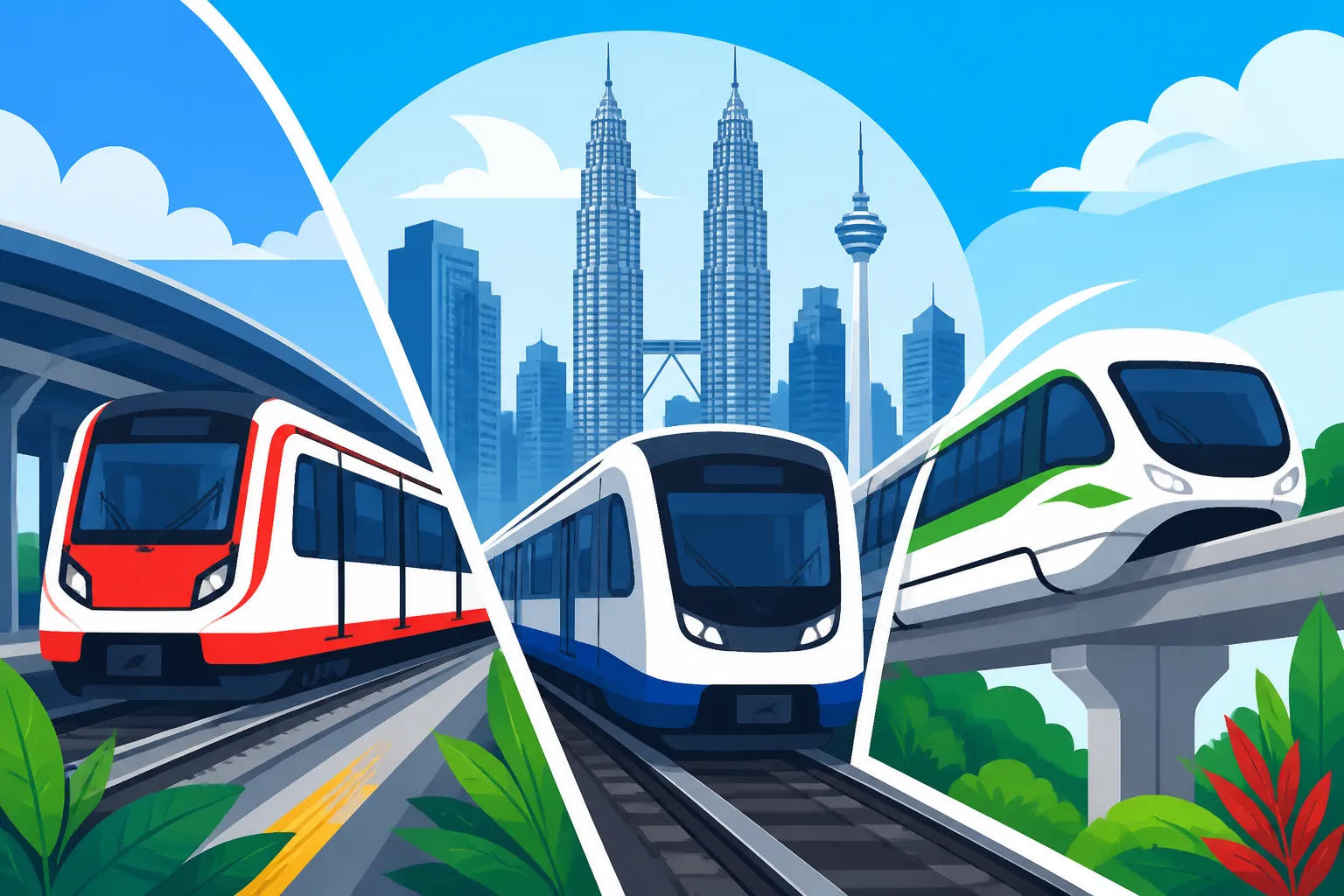
The Light Rail Transit, or LRT, was one of the earliest major players in KL's modern public transport game. It's essentially the backbone for many residential areas, connecting vast suburban stretches directly to the city centre. Over the years, the LRT has expanded significantly, serving millions of commuters daily. It’s a crucial artery for anyone living slightly outside the immediate downtown core but still needing a direct, efficient route into places like KLCC or Masjid Jamek.
Initially, the LRT consisted of two separate systems: the Putra LRT and the STAR LRT. These have since been integrated and rebranded, making transfers much smoother. Today, you'll mainly hear about the Kelana Jaya Line and the Ampang/Sri Petaling Line. These lines are particularly vital for connecting residential hubs like Subang Jaya, Kelana Jaya, and Ampang directly to key commercial and tourist areas. The trains are air-conditioned, mostly automated, and generally punctual, which is a huge plus when you're trying to make an appointment or catch a flight from KL Sentral.
MRT: The Mass Rapid Transit System
The Mass Rapid Transit, or MRT, is the newer, shinier sibling in KL's rail family, designed to provide even greater connectivity to high-density areas and ease the burden on existing transport infrastructure. The MRT lines are a game-changer, especially the Kajang Line (MRT1) and the Putrajaya Line (MRT2), which have opened up previously harder-to-reach parts of the city and its surrounding districts. Think of the MRT as extending the reach, creating a web that complements the existing LRT system.
When the Kajang Line first launched, it was revolutionary, cutting through bustling commercial districts like Bukit Bintang, bringing commuters directly to places like Tun Razak Exchange (TRX) and Muzium Negara. The Putrajaya Line has further expanded this, linking the northern suburbs like Kwasa Damansara all the way down to the administrative capital of Putrajaya and even Cyberjaya. These lines are characterised by their spacious, modern trains and well-designed stations, many of which are integrated into shopping malls or office complexes, making your journey from train to destination seamless. They are built to handle massive passenger volumes, which is evident during peak hours, but even then, they tend to maintain their efficiency.
Monorail: The Elevated City Shuttle
The KL Monorail is perhaps the most unique of the three systems, offering a more compact, elevated route primarily focused on the central business district and major tourist hotspots. While it doesn't cover as much ground as the LRT or MRT, its strategic placement makes it incredibly useful for navigating the golden triangle area of Kuala Lumpur. Imagine needing to hop from Bukit Bintang's shopping haven to the bustling Chow Kit market without getting stuck in a traffic jam – that's where the Monorail truly shines.
The Monorail runs on a single track, high above the streets, offering some fantastic views of the city as you glide by. Its stations are often integrated with pedestrian walkways and bridges, making it easy to transfer to other lines or simply reach your destination on foot. While the trains are smaller and can get very crowded during peak times, particularly around popular stops like Imbi or Bukit Bintang, its convenience for short inner-city trips is unmatched. It fills a very specific niche, providing quick access to malls, hotels, and entertainment venues right in the heart of KL, proving that sometimes, smaller and focused is better.
Navigating the Network: Tickets, Fares, and Etiquette
Once you understand the different systems, the next step is mastering how to actually use them. Thankfully, Kuala Lumpur has made significant strides in streamlining its ticketing and payment methods, largely thanks to the ubiquitous Touch 'n Go card. This handy little card will become your best friend in Malaysia, not just for public transport but for tolls, parking, and even some retail purchases.
Using the Touch 'n Go Card
The Touch 'n Go card is by far the most convenient way to pay for your rides on the LRT, MRT, and Monorail systems. You simply tap your card at the entry gate, and tap it again at the exit gate, and the fare is automatically deducted. The system calculates the fare based on the distance travelled, and it's generally cheaper than buying single-journey tokens. These cards can be purchased at most LRT, MRT, and Monorail stations, as well as at convenience stores like 7-Eleven and petrol stations. You can top them up at ticket counters, self-service machines at stations, or via the Touch 'n Go eWallet app. I can’t stress enough how much easier your life will be with one of these cards; it avoids fumbling for exact change and speeds up your entry and exit from stations, especially during rush hour when queues can build up quickly. This kind of seamless transaction makes life so much easier when you’re figuring out other aspects of moving, like setting up your utilities or finding your first apartment. For more on managing your finances here, you might want to read our guide on The Complete Guide to Cost of Living in Malaysia for Expats (2026).
Single Journey Tokens and Fares
If you're only in KL for a short visit or just planning a single trip on the rail network, you can opt for single-journey tokens. These can be purchased from automated vending machines at every station. Simply select your destination, pay the displayed fare (cash or card accepted at most machines), and collect your token. The token is a small plastic disc that you tap at the entry gate and then insert into a slot at the exit gate, where it's collected by the machine. While perfectly functional, this method can be slightly slower and might cost a few sen more per trip compared to the Touch 'n Go card.
Fares across the LRT, MRT, and Monorail are generally quite affordable, especially when compared to taxi or ride-hailing services for longer distances. A short hop might cost you as little as RM1.20, while a longer journey across multiple lines could still be under RM5-7. This makes public transport a fantastic option for daily commutes, helping you manage your The Complete Guide to Cost of Living in Malaysia for Expats (2026) effectively. It’s a significant factor when deciding on The Best Places to Live in Malaysia for Expats: A Complete Guide (2027), as proximity to a rail station can greatly impact your daily routine and expenses.
Rail Etiquette and What to Expect
Like any public transport system, there's an unspoken etiquette to observe in KL. Firstly, always stand on the left on escalators if you're not moving, leaving the right side clear for those in a hurry. When waiting for a train, allow passengers to alight first before attempting to board. You'll often see marked areas on the platform indicating where to wait, ensuring a smooth flow of traffic.
Inside the train, keep your voice down, especially during peak hours. Eating and drinking are generally discouraged, and there are often signs prohibiting it. Priority seats are designated for the elderly, pregnant women, and those with disabilities – always be mindful and offer your seat if someone needs it more. While generally safe, always keep an eye on your belongings, particularly in crowded carriages or at busy interchange stations like KL Sentral. And remember, personal space can be a luxury during peak hours, so be prepared for some close encounters!
Connecting Kuala Lumpur: Interchanges and Beyond
The true genius of KL's rail network lies in its interconnectedness. While the systems might operate under different names, their integration has been a continuous project, designed to make transfers as smooth as possible. Understanding these key interchanges is crucial for maximizing your efficiency and minimizing your travel time.
KL Sentral: The Grand Central Station
KL Sentral is not just a station; it's a behemoth, a bustling multimodal transport hub that serves as the nexus for almost all of KL's rail lines and even regional services. This is where the LRT (Kelana Jaya Line), MRT (Kajang Line), Monorail (via a connected pedestrian walkway), KTM Komuter, ETS (Electric Train Service), and the KLIA Ekspres/Transit lines all converge. It's truly the gateway to and from the city, handling hundreds of thousands of passengers daily.
Navigating KL Sentral can be a bit overwhelming at first due to its size and the sheer volume of people. It’s multi-layered, with different lines departing from various levels. My advice? Don't be afraid to ask for directions if you're lost, or simply follow the clear signage. Give yourself extra time for transfers, especially if you're unfamiliar with the layout. Besides transport, KL Sentral also houses a shopping mall (Nu Sentral), numerous dining options, and connects to several major hotels, making it a destination in itself. It's often your first point of entry into the city for those flying in, so mastering it is a rite of passage for any expat. You'll likely pass through it often, whether you're heading to the airport or exploring other parts of the city.
Key Interchange Stations
Beyond KL Sentral, several other stations act as crucial interchange points, allowing you to seamlessly switch between the LRT, MRT, and Monorail without exiting the paid area (in most cases).
- Masjid Jamek (LRT): A major interchange for the Kelana Jaya Line and the Ampang/Sri Petaling Line. It's right in the historical heart of KL, making it a popular spot for tourists heading to Merdeka Square or Central Market.
- Maluri (MRT & LRT): This station allows transfers between the MRT Kajang Line and the LRT Ampang/Sri Petaling Line. It's an important hub for residents in Cheras.
- Tun Razak Exchange (TRX) (MRT): A dual MRT line interchange, connecting the Kajang Line and the Putrajaya Line. It’s a modern, sprawling station beneath the TRX financial district.
- Bukit Bintang (MRT & Monorail): This is a critical interchange for accessing the city's premier shopping and entertainment district. While the Monorail station and MRT station are technically separate, they are connected by a convenient pedestrian walkway, allowing for relatively easy transfers. This area is a bustling hub for both locals and tourists alike, and the connectivity here is stellar.
- Titiwangsa (LRT & Monorail): An interchange for the Ampang/Sri Petaling LRT Line and the Monorail. It's also a major bus hub, extending your reach even further.
These integrated stations are designed for efficiency. Pay attention to the signage within the stations, which clearly indicates directions to different lines. Most transfers are straightforward, often involving a walk through a dedicated, air-conditioned linkway. This connectivity means that even if you live a bit further out, a well-planned rail journey can get you to almost any major point in KL without too much hassle.
Connecting to Other Transport Modes
The rail network doesn't exist in isolation. It's often your starting point for connecting to other modes of transport to reach your final destination.
- Buses: Many rail stations have integrated bus hubs, allowing you to catch local Rapid KL buses that serve smaller neighborhoods. Rapid KL buses operate on an integrated fare system with the rail network if you use a Touch 'n Go card.
- Grab and Ride-Hailing: For areas not directly served by rail or bus, ride-hailing apps like Grab are incredibly popular and efficient. It's common practice to take a train close to your destination and then book a Grab for the "last mile" journey. This hybrid approach is often the fastest way to get around the city. Our guide on How to Use Grab and Ride-Hailing Apps in Malaysia offers more detailed tips.
- Walking: Don't underestimate walking, especially in central KL. Many stations in the city centre are connected by elevated pedestrian walkways, like the famous Pavilion-KLCC Bridge, allowing you to traverse significant distances comfortably and safely, away from traffic.
Practical Tips for Expats and Tourists
After years of living here and navigating these systems, I've picked up a few tricks. These aren't in any official manual, but they'll definitely make your life easier and your travels smoother.
Utilizing Navigation Apps
For newcomers, having a good navigation app on your phone is non-negotiable. Google Maps is excellent for public transport directions in Kuala Lumpur, as it integrates all the LRT, MRT, and Monorail lines, showing you the fastest routes, transfer points, and estimated travel times. Moovit is another fantastic app specifically designed for public transport, offering real-time updates and detailed step-by-step guidance. Using these apps will alleviate a lot of the initial stress of figuring out your route.
While you're figuring out the routes and checking schedules on these apps, make sure your phone has a good data plan. Services like Airalo can be a lifesaver for getting an eSIM quickly and ensuring you have reliable internet access on the go, especially when you're reliant on apps for navigation and communication. Having consistent connectivity is key to feeling confident and in control when exploring a new city. Our article on How to Choose a Mobile and Internet Provider in Malaysia can also give you more options for staying connected.
Avoiding Peak Hours
Just like any major metropolitan city, Kuala Lumpur's public transport experiences peak hours. These are typically from 7:00 AM to 9:30 AM and 5:00 PM to 7:30 PM on weekdays. During these times, trains and stations can be incredibly crowded, and you might find yourself waiting for a second or even third train before you can squeeze in. If your schedule allows, try to travel outside these windows. It makes for a much more comfortable and less stressful journey. If you must travel during peak times, be prepared for close quarters and longer queues for tickets or top-ups.
Safety and Security
Kuala Lumpur's rail system is generally very safe. Stations are usually well-lit, and CCTV cameras are prevalent. However, as with any urban environment, it's wise to be aware of your surroundings. Keep an eye on your belongings, especially your wallet and phone, particularly in crowded areas. Avoid displaying expensive items openly. While incidents are rare, petty theft can occur. Female passengers might find the dedicated women-only carriages (usually marked with pink stickers) on some LRT and MRT lines to be a more comfortable option, offering an added layer of privacy and space. These small measures can go a long way in ensuring your peace of mind while commuting.
Accessibility and Luggage Considerations
Most modern MRT and LRT stations are designed with accessibility in mind, featuring elevators and ramps for wheelchair users and those with strollers. However, some older LRT stations and particularly Monorail stations might have more limited facilities, sometimes only offering escalators or stairs. If you’re traveling with heavy luggage, this is something to consider.
Speaking of luggage, while there are no strict restrictions on baggage size, trying to navigate a crowded train with multiple large suitcases can be a nightmare for you and fellow passengers. If you're arriving from or heading to the airport with a lot of luggage, consider taking the KLIA Ekspres/Transit directly to KL Sentral, and then a Grab or taxi from there to your final destination, rather than trying to transfer onto local rail lines. If you're doing a big move to Malaysia, companies listed on platforms like Sirelo can assist with the logistics of getting your larger belongings to your new home, ensuring you don't have to haul everything on public transport. For those just starting their journey in Malaysia, our guide on The Complete Guide to Moving to Malaysia: Your First 90 Days (2027) has more relocation insights.
General Cleanliness and Maintenance
You'll generally find the stations and trains to be remarkably clean, a testament to the maintenance efforts by the operating companies. Littering is strictly prohibited and violators can face fines. The air conditioning is usually powerful, which is a welcome relief from KL's tropical heat and humidity, but sometimes it can be quite chilly inside the trains, so a light jacket or scarf might not be a bad idea, especially if you're prone to feeling cold. Respecting the facilities helps keep the system pleasant for everyone.
By understanding these nuances, you’ll not only navigate Kuala Lumpur with ease but also appreciate the convenience and efficiency of its extensive public transport network. Whether you’re a tourist exploring the city’s many attractions or an expat settling into daily life, these rail systems are an indispensable part of the KL experience.
| Feature | LRT (Light Rail Transit) | MRT (Mass Rapid Transit) | Monorail |
|---|---|---|---|
| Primary Lines | Kelana Jaya Line, Ampang Line, Sri Petaling Line | Kajang Line (MRT1), Putrajaya Line (MRT2) | KL Monorail Line |
| Coverage | Major suburbs to city centre, extensive network | High-density areas, city centre, new growth corridors, farther suburbs | Central business district, tourist hotspots (Golden Triangle) |
| Operating Hours | Approx. 6:00 AM – 12:00 AM (varies by station/day) | Approx. 6:00 AM – 12:00 AM (varies by station/day) | Approx. 6:00 AM – 12:00 AM (varies by station/day) |
| Payment Methods | Touch 'n Go Card, Single Journey Token | Touch 'n Go Card, Single Journey Token | Touch 'n Go Card, Single Journey Token |
| Train Type | Automated, driverless (Kelana Jaya), manual (Ampang/Sri Petaling) | Modern, spacious, automated, driverless | Smaller, elevated, manual driver |
| Key Interchanges | KL Sentral, Masjid Jamek, Putra Heights (with other LRT) | KL Sentral, Tun Razak Exchange (TRX), Maluri, Muzium Negara | KL Sentral (via walkway), Bukit Bintang (via walkway), Titiwangsa |
| Typical Frequency | 3-5 mins (peak), 8-15 mins (off-peak) | 3-5 mins (peak), 7-15 mins (off-peak) | 5-10 mins (peak), 10-15 mins (off-peak) |
| Experience | Reliable, reaches many residential areas | Modern, comfortable, expanding reach | Scenic, convenient for short inner-city hops |
Disclaimer
The information provided in this guide is intended for general informational purposes only and may be subject to change. While we strive to provide accurate and up-to-date information, transport schedules, fares, and policies can be updated by the operating authorities. Always refer to official sources like Rapid KL's website or station announcements for the most current details.