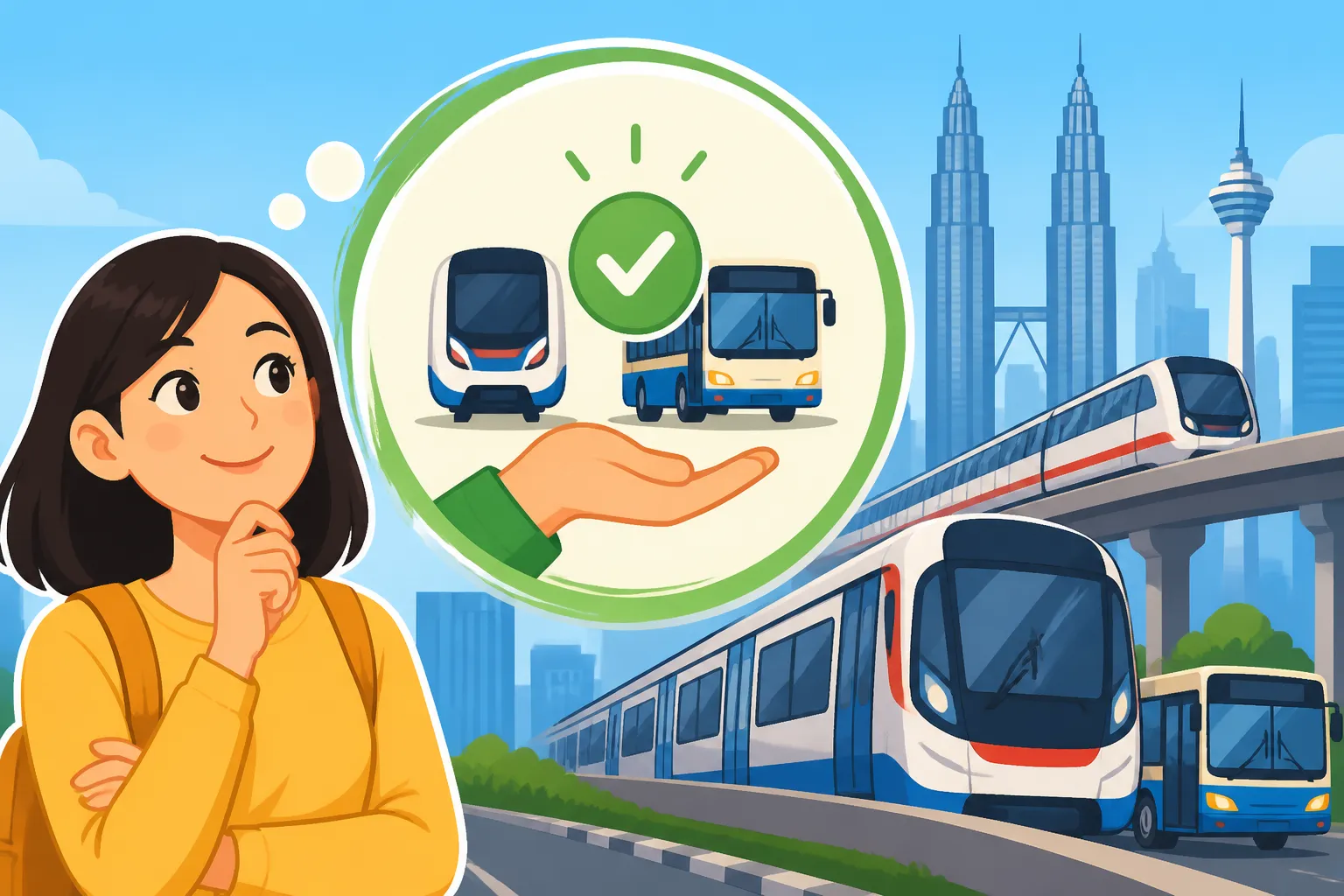
What Is the Cheapest Way to Commute in Kuala Lumpur?
Navigating Kuala Lumpur's bustling streets and notorious traffic can be a real headache, especially when you're an expat trying to stick to a budget. The costs of getting around can quickly add up, turning what should be a simple journey into a significant drain on your wallet. This comprehensive guide is here to shed light on the most budget-friendly ways to commute in Kuala Lumpur, helping you save your hard-earned ringgit while still getting where you need to go efficiently.
Understanding Kuala Lumpur's Extensive Public Transport Network
Kuala Lumpur boasts a surprisingly comprehensive public transport network, a stark contrast to many other cities in the region. For new expats, or even seasoned residents who've just defaulted to Grab, understanding how these systems integrate and where they go is the first step to unlocking significant savings. The key is often to embrace the rails and the dedicated bus lanes.
The LRT, MRT, and Monorail Systems
Let's talk about the backbone of KL's public transport: the Light Rail Transit (LRT), Mass Rapid Transit (MRT), and the Monorail. These three systems are your best friends for getting around the city center and its immediate outskirts without getting stuck in gridlock. They are surprisingly efficient, generally clean, and – crucially for us budget-conscious folks – incredibly affordable.
The LRT, with its Kelana Jaya and Ampang/Sri Petaling lines, connects many residential areas to key business and commercial hubs like KLCC, Masjid Jamek, and Bandar Tasik Selatan. The MRT Sungai Buloh-Kajang (SBK) and Putrajaya lines have dramatically expanded coverage, reaching areas like Bukit Bintang, Muzium Negara, and even more suburban neighbourhoods further out. And while the Monorail might seem a bit of an anomaly, snaking through popular tourist and shopping districts, it connects important spots like Bukit Bintang, Imbi, and KL Sentral.
What makes them cheap? The fares are distance-based, but even for decent stretches across the city, you'll find yourself paying just a few ringgit. Think of it: a ride from Ara Damansara to KLCC on the LRT costs significantly less than a Grab car during peak hour, and you'll get there faster too, avoiding all that glorious KL traffic. Seriously, once you get the hang of it, you'll wonder why you ever bothered with anything else. If you're looking to dive deeper into how these systems operate, you might find our guide on Understanding the LRT, MRT and Monorail Systems in Kuala Lumpur incredibly useful.
KTM Komuter and ETS Trains
Beyond the rapid transit lines, you'll also encounter the KTM Komuter and Electric Train Service (ETS). While not typically for short intra-city commutes within the immediate downtown area, they are vital for connecting Kuala Lumpur to its wider Klang Valley suburbs and other states. The KTM Komuter is essentially a suburban rail network, extending much further than the LRT or MRT.
For instance, if you live in areas like Rawang, Seremban, or Port Klang – which are considerably further out but offer potentially cheaper rent – the KTM Komuter becomes your primary, budget-friendly lifeline into the city. The fares are incredibly low for the distances covered, making it an excellent choice for those willing to commute from further afield for cost savings. The ETS, on the other hand, is a long-distance intercity service, perfect for weekend trips to places like Ipoh or Penang, but not really for your daily commute unless you're living in a completely different state and flying into KL every day (which I hope you're not doing on a budget!). It's good to know it exists, though, for when you want to explore Malaysia without breaking the bank.
Maximising Savings with Integrated Transport Passes and Strategies
Just knowing about the public transport network isn't enough; to truly unlock the cheapest way to commute in Kuala Lumpur, you need to be smart about how you pay and plan your journeys. Malaysia's public transport system, particularly in KL, offers some excellent options for regular commuters that can slash your costs dramatically.
The Power of the Touch 'n Go Card and MyRapid Unlimited Passes
Forget fumbling for cash or constantly buying single-journey tokens. The Touch 'n Go (TNG) card is your indispensable companion for cashless travel on virtually all public transport in Malaysia, including LRT, MRT, Monorail, KTM Komuter, and even most buses. You simply tap in and tap out. The real magic, however, lies in the MyRapid Unlimited Passes.
For just RM50 a month, the My50 pass gives you unlimited rides on all LRT, MRT, Monorail, BRT (Bus Rapid Transit), and Rapid KL buses within the Klang Valley. Yes, you read that right: unlimited rides for a flat RM50! If you commute daily, even just a few trips a week, this pass pays for itself very quickly. Imagine going from your apartment in Cheras to your office in KL Sentral, then meeting friends in Bukit Bintang, and heading home to Subang Jaya – all on public transport, all covered by that RM50. It’s an absolute game-changer for budgeting expats. There used to be a My30 pass, but as of now, the My50 is the primary unlimited pass for Klang Valley. This kind of unified pass system makes The Expat Guide to Public Transport in Malaysia an essential read for anyone living here.
To get one, you'll need a TNG card, which you can purchase at any LRT, MRT, or Monorail station customer service counter, or even at convenience stores like 7-Eleven. Once you have the card, you can activate and load the My50 pass onto it at the customer service counters. Keep it topped up, and you're good to go. This pass makes your daily commuting predictable and incredibly cheap, a huge relief when you're managing other living expenses. When you're considering How Much Does It Cost to Live in Kuala Lumpur per Month?, your transport budget will look much healthier with a My50 pass.
Strategic Commuting and Off-Peak Travel
While the My50 pass handles the cost, strategic commuting is about making your journey smoother and sometimes, quicker. Kuala Lumpur's rush hours, typically from 7:00 AM to 9:00 AM and 5:00 PM to 7:00 PM on weekdays, can still mean crowded trains and buses. While public transport largely avoids the road traffic, standing in a packed train carriage isn't anyone's idea of fun.
If your work schedule allows, try to travel slightly outside these peak windows. You'll find trains and buses much emptier, making for a more comfortable ride. Another strategy is to combine modes of transport. For example, many residential areas have feeder buses (often Rapid KL buses, also covered by My50) that connect directly to an LRT or MRT station. Using these short bus rides to get to the main rail network can save you from a long walk or a short, expensive Grab trip.
For those living in areas further from a station, consider a short ride-hailing trip to the nearest station and then switch to public transport. This hybrid approach often works out cheaper and faster than a full end-to-end Grab trip during busy times. It’s all about finding the optimal transfer points that make sense for your specific route.
Beyond Public Transport: Other Budget-Friendly Options
While public transport with an unlimited pass is undeniably the cheapest option for daily, regular commutes in Kuala Lumpur, there are other modes of transport that can be budget-friendly depending on the situation. It’s about knowing when to use them effectively to complement your main commuting strategy.
Ride-Hailing vs. Taxis: When to Use Them
For those times when public transport simply isn't an option – perhaps you're carrying groceries, it's late at night, or you're heading somewhere not well-served by trains and buses – ride-hailing services are your next best bet. In Malaysia, Grab is the undisputed king. It's pervasive, usually reliable, and generally more affordable and transparent than traditional taxis.
While a single Grab ride is more expensive than a public transport journey, it can be cost-effective in specific scenarios:
- Short Distances: For very short trips where walking isn't feasible and public transport requires multiple changes, a Grab ride might be more efficient.
- Group Travel: If you're travelling with two or three other people, splitting the Grab fare can sometimes make it comparable or even cheaper than individual public transport tickets, especially if you're avoiding peak hour surge pricing.
- Luggage/Errands: When you have heavy bags, a Grab car is invaluable.
- Late Nights: After public transport hours, Grab is often the safest and most convenient option.
Be mindful of surge pricing, which happens during peak hours or bad weather. This can significantly inflate the cost, so always check the estimated fare before confirming. Compared to traditional taxis, Grab often offers fixed fares upfront, which prevents any unpleasant surprises. Understanding How to Use Grab and Ride-Hailing Apps in Malaysia can help you navigate these options more effectively.
Carpooling, Cycling, and Walking
These options are highly dependent on your specific location, destination, and personal preference, but they are undeniably the absolute cheapest ways to commute – often free!
- Walking: For short distances, especially within well-connected urban hubs like KLCC, Bukit Bintang, or even around your neighbourhood, walking is a great way to save money and get some exercise. Kuala Lumpur has invested in some fantastic covered pedestrian walkways and bridges, particularly in the Golden Triangle area, making it surprisingly pleasant to walk between malls and key attractions. Always check the weather though; a sudden downpour can make walking less appealing!
- Cycling: While KL isn't renowned as a cycling-friendly city due to its aggressive traffic and hilly terrain in some areas, efforts are being made. Some parks, like KLCC Park or Perdana Botanical Garden, offer lovely cycling paths. For very short commutes in specific, less congested residential areas or dedicated cycling lanes (which are few and far between, I'll admit), it could be an option. However, for most expats, relying on a bicycle for daily, cross-city commuting is challenging and potentially unsafe.
- Carpooling: This is a fantastic, often overlooked option, particularly if you have colleagues who live nearby or work for the same company. While formal carpooling apps might not be as prevalent as Grab, informal arrangements with friends or colleagues can be a lifesaver. You can split petrol costs and toll charges, making it significantly cheaper than driving alone and potentially comparable to public transport, with the added comfort of a private vehicle.
Considering Rental Cars for Specific Needs
Owning a car in Kuala Lumpur is, by almost every measure, not the cheapest way to commute. The costs quickly add up: car payments, insurance, road tax, fuel, parking, and maintenance. If you're interested in a full breakdown, check out How Much Does It Cost to Run a Car in Malaysia per Month?.
However, for specific, infrequent needs, a rental car can be a surprisingly budget-friendly solution compared to daily car ownership. For example, if you only need a car for a weekend trip out of the city, or to run a series of errands that would be impractical via public transport, renting a car for a day or two can be far cheaper than the cumulative monthly costs of owning one.
Several car rental companies operate in KL, offering a range of vehicles at different price points. Compare prices, look for promotions, and factor in fuel and tolls. It's about being strategic – don't buy a car for the 5% of the time you really need one; rent one instead. This approach contributes to a leaner overall cost of living, letting you put more money towards savings or experiences.
Practical Tips for the Frugal Expat Commuter
Being a savvy commuter in Kuala Lumpur goes beyond just knowing the routes and payment options. It involves a bit of preparation and embracing the tech tools available. As an expat, you're already juggling so many new things, so streamlining your commute is key to a less stressful, and ultimately, cheaper daily life.
Essential Apps and Connectivity
Your smartphone will be your best friend when it comes to navigating KL's transport system.
- Google Maps: Indispensable for planning routes, checking public transport options (it integrates LRT, MRT, Monorail, and bus schedules), and estimating journey times.
- Moovit/Pulse: Dedicated public transport apps that provide real-time updates, detailed routes, and estimated arrival times for trains and buses. The "Pulse" app is specifically for Rapid KL services and is often very accurate.
- Grab: For when you need a ride-hailing service. It's essential to have this on your phone.
Having reliable mobile data is absolutely crucial for using these apps on the go. Imagine being lost at a new station, trying to figure out your next connection, only to find your data has run out! For those new to Malaysia, or even just passing through, getting connected quickly and affordably is important. Services like Airalo provide eSIMs that you can activate almost instantly, meaning you don't have to hunt for a physical SIM card or deal with complex registration processes when you first arrive. This ensures you always have access to maps, schedules, and communication, preventing costly detours or missed connections that can arise from being disconnected. Getting your mobile plan sorted efficiently is a vital part of settling in, and you can learn more from our guide on How to Set Up a Mobile Phone Plan in Malaysia?.
Preparing for Your Commute
A little preparation can go a long way in making your daily commute in KL smoother and more cost-effective:
- Comfortable Shoes: Even if you're primarily using public transport, you'll still be doing a fair amount of walking, especially when transferring between stations or getting to and from your final destination. Comfortable footwear is non-negotiable.
- Hydration: It's Malaysia; it's hot and humid! Always carry a water bottle, especially if you have any walking involved. Staying hydrated helps you think clearer and reduces the need to buy overpriced drinks on the go.
- Rain Gear: Tropical downpours can strike at any time. A compact umbrella or a light raincoat stashed in your bag will save you from getting drenched and potentially needing an emergency Grab ride.
- Plan Ahead: Always check your route and estimated travel time before you leave, especially if you have an important appointment. Public transport, while generally reliable, can sometimes face unexpected delays.
- Off-Peak Advantage: As mentioned earlier, if you can, adjust your schedule to travel during off-peak hours. It’s not just about comfort; less stress means a better start and end to your day.
When you first arrive in Malaysia, there’s a lot to sort out, from visas to housing. Getting your transport sorted from day one is part of the bigger picture of setting up an affordable life here. Thinking about the logistics of your move can also impact your initial budget. For example, considering a platform like Sirelo to compare moving companies can ensure you're getting the best rates for shipping your belongings, saving you funds that can then be allocated to your daily living and commuting costs. It’s all interconnected, and starting smart can make a huge difference in your long-term financial comfort. Our guide, The Complete Guide to Moving to Malaysia: Your First 90 Days (2027), has more essential tips for making your transition as smooth and cost-effective as possible.
Remember, the goal is to make your money stretch further without sacrificing too much convenience. By embracing Kuala Lumpur's public transport system, leveraging passes, and being strategic with other options, you can commute cheaply and efficiently, leaving more funds for exploring this incredible country or building your savings.
| Commuting Method | Typical Cost (RM) | Best Use Case | Pros | Cons |
|---|---|---|---|---|
| LRT/MRT/Monorail | 1.50 – 6.00 (single trip) | Daily commutes, city center, avoiding traffic | Very cheap, reliable, avoids traffic, extensive | Can be crowded during peak hours, limited direct access to all areas |
| My50 Unlimited Pass | 50 (monthly) | Frequent daily public transport user | Incredible value for unlimited rides, predictable cost | Only covers Rapid KL services (no KTM) |
| KTM Komuter | 2.00 – 10.00+ (single trip) | Commuting from wider Klang Valley suburbs, longer distances | Very affordable for distance, less congested than roads | Less frequent, slower, less extensive coverage than LRT/MRT in city center |
| Rapid KL Buses | 1.00 – 3.00 (single trip) | Feeder routes to stations, shorter local journeys | Covers many areas, very cheap, integrated with My50 | Slower due to road traffic, can be confusing for new expats |
| Grab Ride-Hailing | 8.00 – 30.00+ (short to medium trip) | Late nights, groups, specific destinations, heavy luggage | Convenient, door-to-door, accessible, fixed fares upfront | More expensive than public transport, surge pricing, contributes to traffic |
| Walking/Cycling | 0 (free) | Very short distances, leisure, specific areas | Free, healthy, eco-friendly | Limited practicality for most daily commutes, weather-dependent, safety concerns |
Disclaimer
The information provided in this guide is intended for general informational purposes only and is subject to change. While we strive to provide accurate and up-to-date information, transport fares, pass availability, and regulations in Malaysia can change without prior notice. Always verify the latest information with official sources such as Rapid KL, KTM, or Grab before making any decisions. This guide does not constitute professional advice, and readers should exercise their own judgment or consult relevant authorities for specific situations.