Can I Get Fibre Internet Anywhere in Malaysia?
One of the first things you worry about when moving to a new country, beyond the big stuff like visas and housing, is often the practicalities – like internet. You're probably wondering, "Can I get fast, reliable fibre internet anywhere in Malaysia?" It's a question that plagues many an expat, especially when you’re used to seamless connectivity for work, entertainment, and staying in touch with loved ones back home. This guide is here to shed some light on Malaysia's internet landscape, help you understand fibre availability, and equip you with the knowledge to make sure you stay connected.
Understanding Malaysia's Fibre Optic Landscape
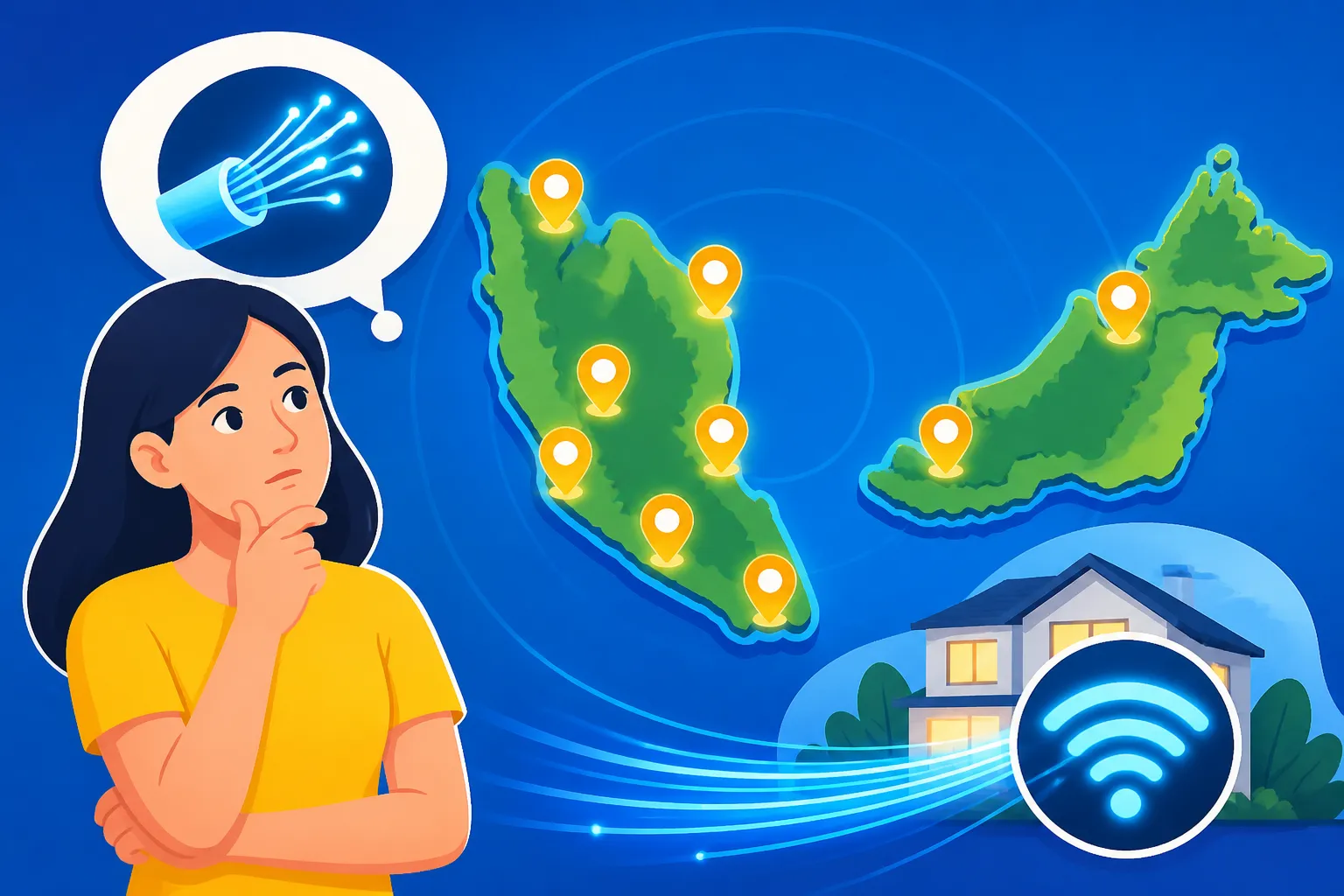
Malaysia has made significant strides in digital infrastructure over the past decade, aiming to become a fully connected nation. The government, through its National Fibreisation and Connectivity Plan (NFCP) and various initiatives, has pushed for widespread fibre optic coverage, especially in urban and suburban areas. This means that if you're settling in major cities like Kuala Lumpur, Penang, Johor Bahru, or even smaller state capitals, your chances of getting fibre internet are remarkably high.
The Major Players in Malaysian Fibre
When you start looking into fibre internet, you'll quickly come across a few dominant names in Malaysia. These providers are the backbone of the nation's high-speed internet. Understanding who they are and their general coverage can give you a head start.
- Telekom Malaysia (TM) UniFi: This is arguably the most ubiquitous fibre provider. As the incumbent telecommunications company, TM has the widest reach, especially in residential areas. UniFi offers a range of plans, often bundled with TV and voice services, making it a common choice for expat families. Their infrastructure often dictates where fibre is available, as other providers sometimes lease access from TM.
- Maxis Fibre: Known for its strong mobile network, Maxis also offers competitive fibre broadband services. They often leverage TM's infrastructure but have their own fibre rollout in certain areas, particularly newer developments and high-rise buildings. Maxis is often praised for its customer service and competitive packages, sometimes appealing more to those seeking a premium experience.
- TIME dotCom (TIME Fibre): If you live in a high-rise condominium or apartment building, especially in Klang Valley, Penang, or Johor Bahru, TIME Fibre is often considered the speed king. They have their own dedicated fibre network that runs directly into buildings, offering incredibly fast and stable speeds at competitive prices. The catch? Their coverage is generally limited to specific buildings and developments. If your building has TIME, you're usually in for a treat!
- CelcomDigi Fibre: With the recent merger of Celcom and Digi, this entity is increasingly expanding its home fibre offerings. While they have a strong presence in the mobile space, their fibre network is growing, providing another option for many households, often with attractive bundles if you're already a mobile customer.
The competition among these providers has been a real boon for consumers, driving down prices and increasing speeds. Most plans now start from 100 Mbps and go up to 1 Gbps or even 2 Gbps, offering more than enough bandwidth for multiple users, streaming, gaming, and remote work.
General Coverage Areas and Limitations
While fibre internet is widespread, it's not truly "everywhere." Think of it this way: if you're in a bustling city centre, a well-established residential neighbourhood in Selangor, or a modern township, you're almost certainly covered. These areas have seen massive investment in fibre infrastructure.
However, if you're venturing into more rural parts of Malaysia, very isolated villages, or older, smaller towns that haven't been part of the major rollout phases, you might encounter limitations. Similarly, some older housing estates might not have had fibre infrastructure laid right to the doorstep, or the building management hasn't approved the necessary upgrades. This is where the frustration can really set in, as you might find yourself in an otherwise perfect home, only to discover your internet options are a bit… retro. This kind of situation really highlights the need to do your homework before you commit to a property, which we'll get into shortly.
Factors Affecting Fibre Availability at Your Potential Home
It might seem straightforward – you live in a city, so you should have fibre, right? Not always. The reality on the ground in Malaysia can be a little more nuanced, with several key factors determining whether that precious fibre optic cable reaches your front door. It’s like a treasure hunt, and sometimes the treasure map is a bit out of date.
Type of Property and Building Infrastructure
The kind of property you're looking at plays a huge role. Generally, newer developments, especially high-rise condominiums, gated communities, and modern landed property estates, are built with fibre readiness in mind. Developers often work directly with providers like TM, Maxis, or TIME to lay the necessary infrastructure during construction. This means that once you move in, activating your fibre connection is often a relatively smooth process.
However, older properties, especially those built before the big fibre push, might not have the same setup. Imagine charming, older terrace houses in established neighbourhoods or some of the older apartment blocks. They might require significant civil works to bring fibre directly to the unit, which can be costly and time-consuming. Sometimes, the issue isn't even the street infrastructure but the internal wiring of the building itself, known as in-building fibre. If your apartment building has never been "fibred up," getting it done usually requires a collective decision from the building management and often a minimum number of interested residents. This can drag on for ages, leaving you in a digital desert.
Geographic Location and Urban vs. Rural Divide
As mentioned, the urban-rural divide is a significant factor. Kuala Lumpur, Penang, Johor Bahru, and other major cities boast excellent fibre coverage. Even secondary cities like Ipoh, Melaka, Kuantan, and Kuching have seen substantial fibre rollouts. These are areas with high population density and economic activity, making it commercially viable for providers to invest in infrastructure. You'll usually find that most addresses within these city limits are well within a fibre-ready zone.
However, once you start moving further out, especially into smaller towns or truly rural areas, the chances of finding fibre significantly decrease. Here, the cost of laying and maintaining fibre optic cables for a scattered population simply doesn't make commercial sense for providers. It’s a bitter pill to swallow if you've dreamt of a quiet life surrounded by nature, only to realise your internet speed will take you back to the dial-up days. For those considering a move to such areas, it's paramount to understand that you might be relying on alternative, less stable internet solutions.
Provider Investment and Capacity
Each internet service provider (ISP) makes strategic decisions about where to invest its resources. While TM UniFi has the widest overall coverage, other players like Maxis Fibre and TIME dotCom strategically target specific areas, often focusing on high-density residential or commercial hubs where they can capture a significant market share. For example, TIME Fibre is a gem if your building is covered, but it's not a universal solution across all properties.
It's not uncommon to find that one provider offers fibre to your building, but another does not, even if they share some underlying infrastructure. This can be due to a multitude of reasons, from commercial agreements to the specific type of fibre technology deployed. So, even if your neighbour across the street has fibre, it doesn't automatically mean you will too, especially if you're in a different type of dwelling or served by a different junction box. This means it’s not just about if fibre is available, but which providers are available, which then impacts your choice of plans and speeds. This is why thorough checking is so important, especially as you navigate all the other details of setting up your new home, like figuring out how to set up electricity (TNB) in your Malaysian home.
How to Check for Fibre Internet at Your Potential Home
Navigating the internet setup in a new country can feel like a maze, but there are definite steps you can take to ensure you land in a property that meets your connectivity needs. Trust me, finding out you have sluggish internet after you've signed the tenancy agreement is a special kind of expat agony. So, do your homework!
Online Availability Checkers: Your First Port of Call
Before you even step foot in a potential rental property, you can do some preliminary checks online. Most major ISPs in Malaysia have online coverage checkers on their websites. This is your first, easiest step.
Here's how it generally works:
- Visit the Provider's Website: Go to the official websites of TM UniFi, Maxis Fibre, CelcomDigi Fibre, and TIME dotCom.
- Locate the Coverage Checker: Look for sections like "Check Coverage," "Fibre Availability," or "Sign Up." You'll typically find a search bar where you can input an address.
- Enter the Full Address: Be as precise as possible. Include the building name, unit number (if applicable), street name, post code, and state. For condominiums, sometimes just the building name is enough.
- Review Results: The system will usually tell you if fibre is available at that specific address and, if so, which packages are offered. Sometimes it might say "coming soon" or "no coverage."
A word of caution: these online checkers are generally accurate for broad availability, but sometimes they might miss specific nuances, especially for very new developments or older properties where the data might not be perfectly updated. Always use it as a first step, not the final word. It's a great tool to narrow down your options as you're browsing properties online, saving you time and potential disappointment.
Inquiring with Property Agents and Landlords
Once you've shortlisted a few properties, your property agent or the landlord themselves becomes an invaluable resource. They should have direct knowledge about the internet situation at the property, especially if it's been rented out before or if they manage multiple units in the same building.
When speaking with them:
- Ask Directly About Fibre Availability: Be specific. Don't just ask "Is there internet?" but "Is fibre optic internet available from providers like UniFi, Maxis, or TIME?"
- Request Proof if Possible: If they say yes, you can politely ask if they know which provider is available or if previous tenants had fibre. Sometimes, they might even have the old bill or a contact number for the building's designated fibre technician.
- Inquire About Building Management (for condos): For strata properties, fibre installation often involves the building management. Ask if the building is "fibre-ready" and if there are any restrictions or specific procedures for new installations. Some condos even have preferred providers.
- Check Existing Wiring: When viewing the property, look for fibre termination units (usually a small box on the wall near the TV point or main entrance) or any visible fibre cables. This is a good indicator, though not a guarantee, of prior installation.
A good agent will be able to answer these questions directly or find out for you. If they seem vague or unsure, take it as a red flag and push for more definitive answers, or consider that property might come with internet headaches. This is one of the crucial questions to ask when you're looking to sign a tenancy agreement in Malaysia, alongside understanding all the clauses and responsibilities.
Direct Contact with Internet Service Providers
For the most accurate and up-to-date information, a direct call to the ISP's customer service line is often the best bet. This is especially true if the online checker gives an ambiguous result or if you want to confirm specific packages or installation times.
When you call:
- Have the Full Address Ready: Again, precision is key.
- State Your Intention: Clearly explain that you are moving to this address and want to confirm fibre availability.
- Ask About Installation Process and Timeframes: If fibre is available, ask about the typical installation period. It can sometimes take 1-2 weeks, so factor that into your moving schedule. Remember that setting up utilities in Malaysia, including water, gas and internet, is a process that requires some planning.
- Inquire About Promotions and Bundles: While on the phone, you can also ask about any ongoing promotions for new customers.
It's worth making calls to all the major providers (TM, Maxis, TIME, CelcomDigi) to get a full picture of your options. This approach ensures you get the most reliable information directly from the source and can compare plans effectively. Don't underestimate the power of a quick phone call – it can save you a lot of grief down the line.
Alternatives to Fibre Internet in Malaysia
So, what happens if, after all your diligent checking, you find out your dream home in Malaysia isn't graced with fibre optic internet? Don't despair entirely. While it might not be the ultra-fast, rock-solid connection you hoped for, Malaysia offers several viable alternatives to keep you connected. You might need to adjust your expectations slightly, but you won't be completely offline.
4G and 5G Home Wireless Broadband
The most common and often best alternative to fibre is home wireless broadband, leveraging Malaysia's extensive 4G and rapidly expanding 5G networks. Major mobile operators like Maxis, CelcomDigi, and U Mobile offer dedicated home wireless broadband plans.
Here's how it generally works:
- Dedicated Home Router: You get a special modem/router that uses a SIM card, similar to your mobile phone, to connect to the cellular network.
- Plug-and-Play: These devices are typically plug-and-play, meaning you just plug them into a power socket, and they're ready to go. No messy fibre installations or extensive wiring needed.
- Speed and Stability: Speeds can vary significantly depending on your exact location, the signal strength, and network congestion. In areas with good 4G/5G coverage, you might get speeds comparable to basic fibre plans (e.g., 30-100 Mbps). However, it can be less stable than a wired fibre connection, especially during peak hours or bad weather.
- Data Caps: Be mindful of data caps. While many plans offer "unlimited" data, there might be a Fair Usage Policy (FUP) that throttles your speed after you've consumed a certain amount of data (e.g., 300GB-1TB). For heavy users, this can be a limitation.
This option is particularly good if you live in an area with strong mobile signal but no fibre, or if you need a flexible internet solution that you can move around with relative ease. It's often the go-to for many expats who find themselves just outside the fibre zone.
Mobile Hotspots and Personal Wi-Fi Devices
For those who need internet on the go, or as a temporary solution while waiting for a more permanent setup, mobile hotspots are incredibly useful. Your smartphone can act as a personal hotspot, sharing its cellular data connection with your laptop or other devices. Dedicated portable Wi-Fi devices (often called MiFi) are also available from telcos.
- Convenience: The biggest advantage is portability. You have internet wherever your phone or MiFi device has signal. This is fantastic for tourists or expats who travel frequently within Malaysia or need immediate connectivity upon arrival before anything else is set up.
- Cost: Using your smartphone as a hotspot can quickly drain your mobile data allowance, so ensure you have a generous plan. Purchasing a MiFi device and a separate data SIM might be more cost-effective for prolonged use.
- Speed and Battery Life: Speeds depend on your mobile network's coverage and the device's capabilities. Battery life can be a concern for MiFi devices, requiring regular charging.
- Data for Travellers: If you're fresh off the plane, or plan on travelling around Malaysia, using an eSIM from providers like Airalo can be a lifesaver. You can quickly get mobile data plans without needing a physical SIM card, turning your phone into an instant hotspot for immediate connectivity. It's a handy trick for those first few days or for exploring beyond the main cities.
While mobile hotspots offer great flexibility, they are generally not recommended as a primary, long-term home internet solution due to potential data caps, lower stability compared to home broadband, and the hassle of managing device battery life. They are best as a backup or for temporary needs.
Satellite Internet (Limited Availability and High Cost)
For those in truly remote and rural locations where even 4G/5G signal is scarce, satellite internet is an option, but it comes with significant caveats. Companies like Measat (through partners) offer satellite internet.
- Coverage: It can theoretically cover almost anywhere, making it a last resort for extremely isolated areas.
- Cost and Performance: However, satellite internet is typically much more expensive, offers slower speeds, and suffers from higher latency (delay) compared to fibre or even cellular broadband. This high latency makes it unsuitable for real-time applications like online gaming or video conferencing, which can be particularly frustrating for remote workers.
- Installation: Installation requires specialist equipment (a satellite dish) and professional setup.
For most expats moving to Malaysia, satellite internet will not be a practical or necessary consideration unless you're truly off the beaten path and need any form of internet, no matter the cost or performance trade-offs. For the vast majority, the home wireless broadband options will be a far more sensible and cost-effective alternative if fibre is unavailable. As you plan your move, remember that managing your logistics effectively with services like Sirelo can help coordinate these technical considerations with your overall relocation plan, ensuring you don't overlook any crucial steps.
Comparative Overview of Internet Options in Malaysia
To help you visualise the trade-offs, here's a quick comparison of the main internet types available to you in Malaysia:
| Feature | Fibre Optic Broadband (e.g., UniFi, Maxis, TIME) | 4G/5G Home Wireless Broadband (e.g., Maxis, CelcomDigi) | Mobile Hotspot (Smartphone/MiFi) | Satellite Internet (e.g., Measat partners) |
|---|---|---|---|---|
| Speed | Very High (100 Mbps – 2 Gbps) | Moderate to High (30 Mbps – 300 Mbps, varies) | Moderate (20 Mbps – 100 Mbps, varies) | Low to Moderate (10 Mbps – 50 Mbps) |
| Stability | Excellent, highly reliable | Good, but can fluctuate with signal and congestion | Variable, depends on signal | Fair, but high latency |
| Latency | Very Low | Low | Low | Very High |
| Data Caps | Generally truly unlimited | Often has Fair Usage Policy (FUP) with soft caps | Usually tied to mobile plan limits | Often strict data caps |
| Cost | Moderate (RM89 – RM250+/month) | Moderate (RM70 – RM150+/month) | Varies with mobile plan/device | High (RM200 – RM500+/month) |
| Installation | Professional installation (1-2 weeks) | Plug-and-play (router only) | Instant activation (SIM/eSIM) | Professional dish installation |
| Ideal For | Permanent homes, heavy usage, multiple users | Homes without fibre, moderate usage | Temporary use, travel, backup | Extremely remote, no other options |
Ultimately, while fibre internet is becoming increasingly accessible across Malaysia, it's essential to be realistic and thorough in your checks. The digital landscape is always evolving, and with a bit of planning and research, you can ensure you stay well-connected, no matter where your Malaysian adventure takes you. Remember, a reliable internet connection is almost as vital as knowing how to find an English-speaking doctor in Malaysia or understanding the ins and outs of the local public transport in Malaysia.
Disclaimer
The information provided in this guide is for general informational purposes only and does not constitute professional advice. While efforts have been made to ensure accuracy and provide up-to-date information, the telecommunications landscape in Malaysia is subject to change. Internet service providers, plans, coverage areas, and regulations can be updated without prior notice. Always verify information directly with the service providers or relevant authorities before making any decisions. We are not responsible for any inaccuracies or omissions, or for any actions taken based on the information provided herein.