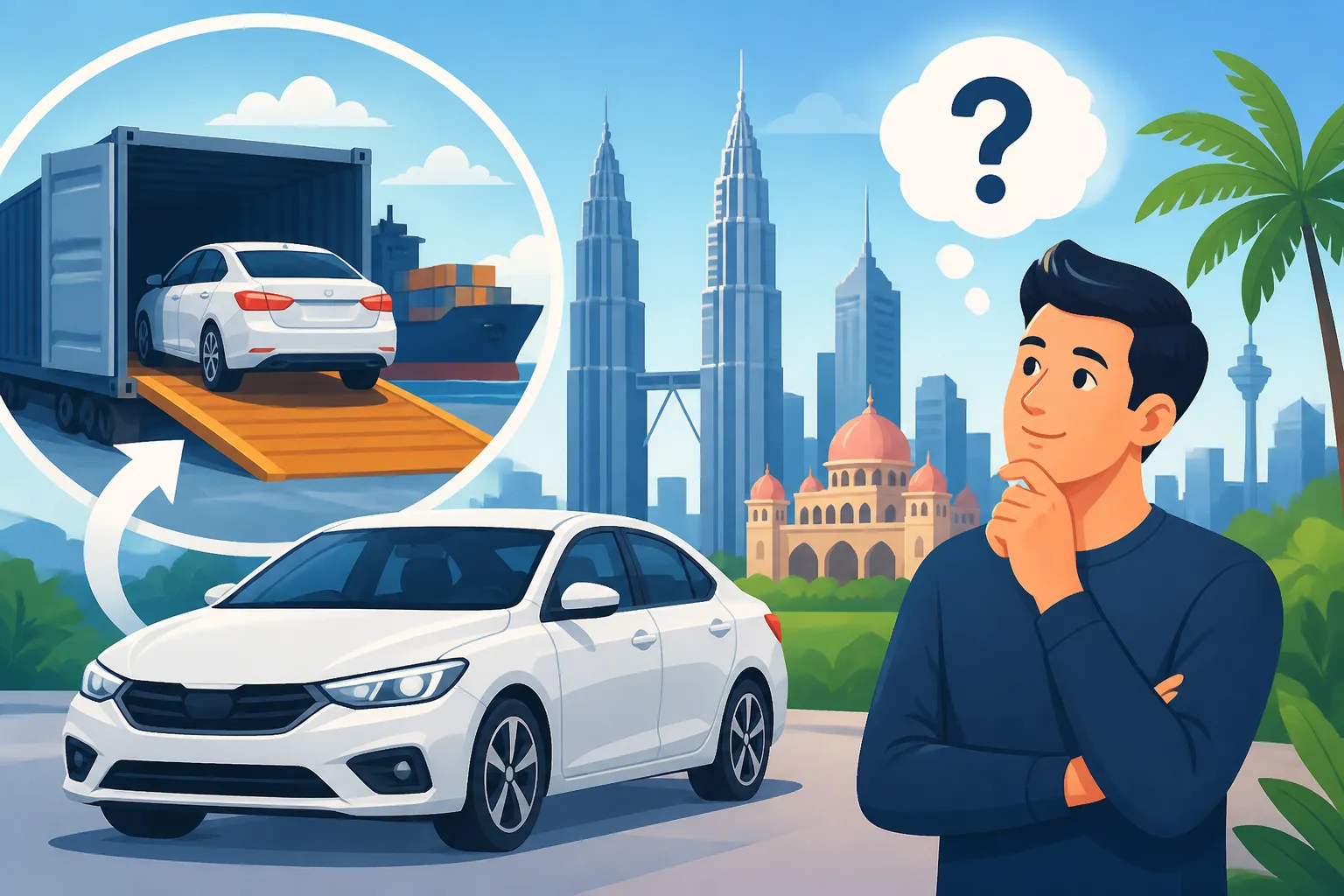
Can I Bring My Car to Malaysia as an Expat?
One of the first questions many of us expats ask when we’re dreaming of moving to Malaysia, or even once we’ve landed and are navigating the sometimes-bewildering transport system, is about our cars. That trusty vehicle, often an extension of our identity back home, feels like a piece of stability we'd love to bring with us. But let me tell you, the romantic idea of cruising Malaysian roads in your familiar car often collides head-on with a wall of bureaucracy and exorbitant costs. This guide will meticulously break down whether bringing your car to Malaysia is a viable option for you, and what the real costs and alternatives look like.
The Initial Hurdles: Can You Even Do It?
Alright, let's get straight to the point: bringing your personal vehicle into Malaysia as a standard expat isn't impossible, but it's incredibly difficult and usually not financially sensible. The Malaysian government has strict policies on imported vehicles, primarily designed to protect the local automotive industry and manage traffic flow. You’re not just shipping a car; you’re entering a complex administrative maze.
Import Duty and Taxes: The Elephant in the Room
This is where most expats hit their first, and often final, roadblock. Malaysia imposes some of the highest import duties and excise taxes on foreign-manufactured cars in the world. We're talking percentages that can easily double, or even triple, the original value of your car. It’s not just a flat fee; it’s a tiered system based on engine capacity, country of origin, and vehicle type. For example, a car imported from Europe or Japan might face different rates than one from a free trade agreement partner, but even then, the numbers are substantial.
Imagine spending RM100,000 on a car in your home country, only to find you'd need to pay another RM150,000 or more just in duties and taxes to get it legally registered here. That's a gut punch, right? These duties are meant to make locally assembled or nationally branded cars more attractive. For most of us, this alone makes importing a standard family car a non-starter.
Eligibility and Conditions for Importation
While the general rule is "don't bother," there are specific, highly restricted categories of individuals who can import their vehicles under certain conditions. These exemptions are rare and come with a stack of paperwork longer than your arm.
- Malaysia My Second Home (MM2H) Programme Holders: This used to be a golden ticket, allowing MM2H participants to import one car tax-free or purchase a locally assembled car tax-free. However, the MM2H program has seen several revisions, and the current iteration has tightened these benefits significantly. While there might still be some concessions, they are less generous and subject to stringent conditions like minimum fixed deposit amounts and income requirements. You'll need to check the most current regulations directly with the Ministry of Tourism, Arts and Culture (MOTAC) or the Immigration Department if you’re considering the MM2H route specifically for this benefit.
- Diplomats and Foreign Government Officials: Unsurprisingly, diplomats accredited to Malaysia can import their personal vehicles free of duty and tax. This is a standard international protocol, but obviously, it applies to a very niche group of people.
- Returning Malaysians: If you are a Malaysian citizen who has been residing abroad for a certain period (usually more than one year) and are returning to make Malaysia your home, you might be eligible for certain tax exemptions on one imported vehicle. This is also subject to strict conditions regarding ownership duration abroad and the vehicle's age.
- Special Circumstances/High-Value Imports: For extremely high-value or rare vehicles, some individuals might choose to absorb the taxes, viewing it as a cost for exclusivity. This is certainly not for the average expat.
The key takeaway here is that if you don't fall into one of these very specific categories, and often even if you do, the process is laden with obstacles.
The Documentation Nightmare: A Bureaucratic Marathon
Even if you do qualify, prepare for a bureaucratic marathon. You'll be dealing with multiple government agencies, each with its own set of requirements, forms, and processing times. The main players you'll encounter include:
- Ministry of International Trade and Industry (MITI): You'll likely need an Approved Permit (AP) from MITI for your vehicle import. This permit dictates whether your vehicle is allowed into the country. Obtaining an AP isn't a simple task; it often involves justifying the need and proving your eligibility.
- Royal Malaysian Customs Department (Jabatan Kastam Diraja Malaysia): These are the folks who will assess and collect all those hefty duties and taxes. They'll scrutinize your vehicle's value, age, and specifications. Be prepared for them to use their own valuation methods, which might differ from what you expect.
- Road Transport Department (Jabatan Pengangkutan Jalan – JPJ): Once your car clears customs, JPJ is responsible for registering your vehicle, issuing a number plate, and ensuring it meets Malaysian road safety standards. This involves inspections and various fees.
- Puspakom: All imported vehicles, whether new or used, must undergo a mandatory inspection by Puspakom, Malaysia’s only authorized vehicle inspection company. They check everything from chassis numbers to safety features, ensuring the vehicle is roadworthy and complies with local regulations.
Each step involves detailed forms, original documents, multiple copies, and sometimes a fair bit of waiting. Missing a single document or filling out a form incorrectly can set you back weeks or even months. It’s an exercise in patience and precision, something many of us expats are familiar with when dealing with local administration.
Understanding the Cost Equation: Is It Worth It?
Let's dive deeper into the financial aspect because, for most, this is the ultimate deal-breaker. When you bring your car to Malaysia, you're not just paying for shipping. You're entering a realm of duties and taxes that can be truly astounding.
A Detailed Breakdown of Fees
To give you a clearer picture, here are the main categories of fees you'd be looking at:
- Import Duty: This is a tariff on goods imported into the country. For cars, it can range from 0% (for ASEAN-sourced cars under specific agreements) to 30% or more for cars from other regions, calculated on the cost, insurance, and freight (CIF) value of the car.
- Excise Duty: This is where things get really expensive. Excise duty is levied on certain goods manufactured or produced in Malaysia, and it also applies to imported vehicles. Rates are very high, often between 60% and 105% of the car's value after import duty has been applied. So, it's a tax on a tax, essentially. This percentage often depends on the engine capacity and vehicle type.
- Sales Tax: Currently at 10% for most goods and services, this will be applied to the combined value of the car, plus the import duty, plus the excise duty. Yes, another tax on taxes.
- Service Tax: While not directly on the car itself, you’ll pay this on services rendered by agents, transporters, etc.
Let's consider a hypothetical scenario: You have a car worth RM100,000 (CIF value).
- Import Duty (e.g., 30%): RM30,000
- New value for excise duty: RM100,000 + RM30,000 = RM130,000
- Excise Duty (e.g., 80%): RM104,000
- New value for sales tax: RM130,000 + RM104,000 = RM234,000
- Sales Tax (10%): RM23,400
- Total Duties & Taxes: RM30,000 + RM104,000 + RM23,400 = RM157,400
So, your RM100,000 car now effectively costs you RM257,400 before it even hits the road. See what I mean about the "gut punch"?
Valuation Methods and Depreciation
Malaysian Customs typically uses its own valuation methods, which might not align with what you believe your car is worth. They consider the market value of a similar vehicle in Malaysia, the condition of your vehicle, and often apply a depreciation schedule. However, even with depreciation, the base value for applying these high duties can remain substantial. They are quite adept at figuring out the true worth, so don't expect to sneak a deal past them.
The Swirl of Hidden Costs
Beyond the eye-watering duties, a host of other expenses can quickly inflate the total cost:
- Shipping Costs: Depending on where you're shipping from, this can easily run into thousands of ringgit. Factor in insurance for transit. Services like Sirelo can help you find reputable international movers and compare quotes for this complex process.
- Port Handling Fees: Once your car arrives, there are charges for unloading, storage, and moving it through the port.
- Customs Agent Fees: Navigating customs is complex. Most people hire a customs agent or freight forwarder to handle the paperwork, inspections, and liaison with various departments. Their fees can be significant but are often worth it to avoid costly mistakes.
- Puspakom Inspection Fees: There's a fee for this mandatory inspection.
- Local Modifications: Your car might need modifications to comply with Malaysian road regulations (e.g., tinting limits, sometimes even minor adjustments to lights).
- Road Tax and Insurance: Once registered, you'll pay annual road tax, which is based on engine capacity, and car insurance, which can be surprisingly expensive in Malaysia, especially for older or imported models where parts might be harder to source. For more on this, you might find "How Much Is Car Insurance in Malaysia?" helpful.
The Practicalities of Driving Your Imported Car
So, you've jumped through all the hoops, paid all the fees, and your car is finally in Malaysia. What's next?
Vehicle Registration and Licensing
After clearing customs and passing the Puspakom inspection, your next stop is JPJ. Here’s what you’ll need to do:
- Submit Documents: Provide all your customs clearance papers, the Puspakom inspection report, your identification (passport, visa), and proof of ownership.
- Get a Number Plate: You'll choose or be assigned a Malaysian number plate.
- Pay Road Tax: This is an annual fee based on your car's engine capacity. Generally, the higher the engine capacity, the higher the road tax. You can find detailed information on this in "How Much Is Road Tax for a Car in Malaysia?".
- Secure Insurance: Before you can register your vehicle, you must have valid motor insurance. This is mandatory, and you won’t get a road tax sticker without it.
- Get Driving License: Don't forget, you'll need a valid Malaysian driving license or an international driving permit with your home country's license. If you're staying long-term, converting your foreign license is usually required. You can learn more about this process by checking out "How to Convert a Foreign Driving Licence in Malaysia".
The entire process of "How to Register and Transfer a Vehicle (JPJ) in Malaysia" can be quite detailed, so be prepared for some back and forth.
Maintenance and Spare Parts
Here's another often-overlooked practical challenge: maintenance. If your car is a model not commonly sold in Malaysia, finding spare parts can be a real headache and expensive. Local mechanics might not be familiar with your specific make and model, leading to longer repair times and potentially incorrect fixes. This can be a source of constant frustration, especially for European or less common American models. Even finding suitable tires or specialized fluids might require special ordering, adding to both cost and inconvenience.
Comparing Costs: Importing vs. Buying Local
To really highlight the difference, let’s look at a simple comparison.
| Feature | Importing Your Own Car (Typical Expats) | Buying a Local Used Car (Common Expat Choice) |
|---|---|---|
| Initial Car Value | Whatever your car is worth + shipping | Local market price |
| Import Duties/Taxes | Very High (often 100-200% of car value) | None |
| Paperwork/Bureaucracy | Extremely complex (MITI, Customs, JPJ, Puspakom, APs) | Relatively simple (JPJ transfer, insurance) |
| Shipping Costs | Significant (thousands of RM) | None |
| Customs Agent Fees | Likely necessary (thousands of RM) | None |
| Puspakom Inspection | Mandatory for imported vehicles | Mandatory for all vehicle transfers, but generally less complex |
| Local Compliance | Potential need for modifications (e.g., tinting, lighting) | Generally compliant |
| Maintenance & Parts | Difficult & expensive for non-local models; mechanics unfamiliar | Easy & affordable for common local models; readily available parts |
| Resale Value | Very low, due to initial high costs and niche market | Strong for popular models, easier to sell |
| Overall Cost | Exorbitantly high, rarely justified | Much more financially sensible and less hassle |
This table clearly illustrates why most expats eventually decide against bringing their car. The financial burden and logistical nightmare rarely outweigh the sentimental value or perceived convenience.
Alternatives to Importing Your Car
Given the significant hurdles and costs involved, most expats find it far more practical and economical to explore local transportation options. Trust me, I’ve been there – clinging to the idea of my old car, only to realize the local options are much saner.
Buying a Used Car Locally
This is by far the most popular choice for expats who want to drive their own vehicle. Malaysia has a robust used car market, and you can find a wide range of reliable vehicles at various price points.
- Variety and Affordability: From Perodua and Proton (local brands known for affordability and easy maintenance) to Japanese models like Honda and Toyota (highly popular and reliable) and even European brands, there’s something for every budget. Prices for used cars are generally reasonable.
- Ease of Ownership: When you buy a local car, you avoid all the import duties and bureaucratic nightmares. The transfer of ownership process is straightforward, requiring a Puspakom inspection and a visit to JPJ. You can usually get this done with the help of the dealer or a trusted agent. For more details on this, look up "How to Buy a Car as a Foreigner in Malaysia".
- Maintenance and Parts: For popular local models, spare parts are readily available and affordable. Mechanics are well-versed in servicing these vehicles, making maintenance a breeze.
Leasing a Car
For those who don't want the commitment of ownership or are only in Malaysia for a shorter stint, leasing is an excellent option.
- Flexibility: Car leasing companies offer various terms, from short-term rentals to long-term leases (1-3 years). This is perfect if you’re unsure how long you’ll be staying or prefer to have a newer car every few years without the hassle of selling.
- Convenience: Maintenance, insurance, and road tax are often included in your monthly lease payment, taking away many of the typical car ownership headaches. You just pay and drive.
- Cost-Effective for Short Stays: While long-term, it can be more expensive than buying, for periods under two years, it often works out cheaper and certainly less hassle than buying and then trying to sell a vehicle.
Public Transport and Ride-Hailing
Especially in major urban centres like Kuala Lumpur, Penang, and Johor Bahru, relying on public transport and ride-hailing services is incredibly convenient and often surprisingly affordable.
- Extensive Public Transport: Kuala Lumpur boasts an extensive network of LRT (Light Rail Transit), MRT (Mass Rapid Transit), Monorail, and commuter trains (KTM Komuter). These systems are efficient, clean, and connect most key areas. Buses also fill in the gaps. For a deeper dive, check out "The Expat Guide to Public Transport in Malaysia".
- Grab (Ride-Hailing): Grab is king here. It’s ubiquitous, reliable, and very reasonably priced. Whether it’s a quick trip to the grocery store or a late-night run, Grab cars are almost always just a few minutes away. Having a reliable data plan, perhaps even an eSIM from Airalo when you first arrive, makes navigating and calling Grab seamless. It’s an absolute lifesaver for getting around without needing to worry about parking or navigating unfamiliar streets.
- Cost Savings: When you consider the cost of car payments, fuel, insurance, road tax, parking fees, and maintenance, relying on public transport and Grab can lead to significant savings, freeing up your budget for other expat adventures. If you're trying to figure out your overall expenses, "The Complete Guide to Cost of Living in Malaysia for Expats (2026)" can give you a good overview.
Ultimately, while the emotional attachment to your car from home is understandable, the practical and financial realities of bringing it to Malaysia for most expats are simply not worth the trouble. Embracing local options, whether it’s a locally purchased used car or the excellent public and ride-hailing transport, is almost always the smarter and less stressful path to getting around your new home.
Disclaimer
The information provided in this guide is for general informational purposes only and does not constitute legal, tax, or professional advice. Laws and regulations regarding vehicle importation, duties, and taxes in Malaysia are subject to change without prior notice. Expats are strongly advised to consult with the Royal Malaysian Customs Department, the Road Transport Department (JPJ), and other relevant government agencies or professional immigration and moving consultants for the most current and accurate information pertaining to their specific circumstances.