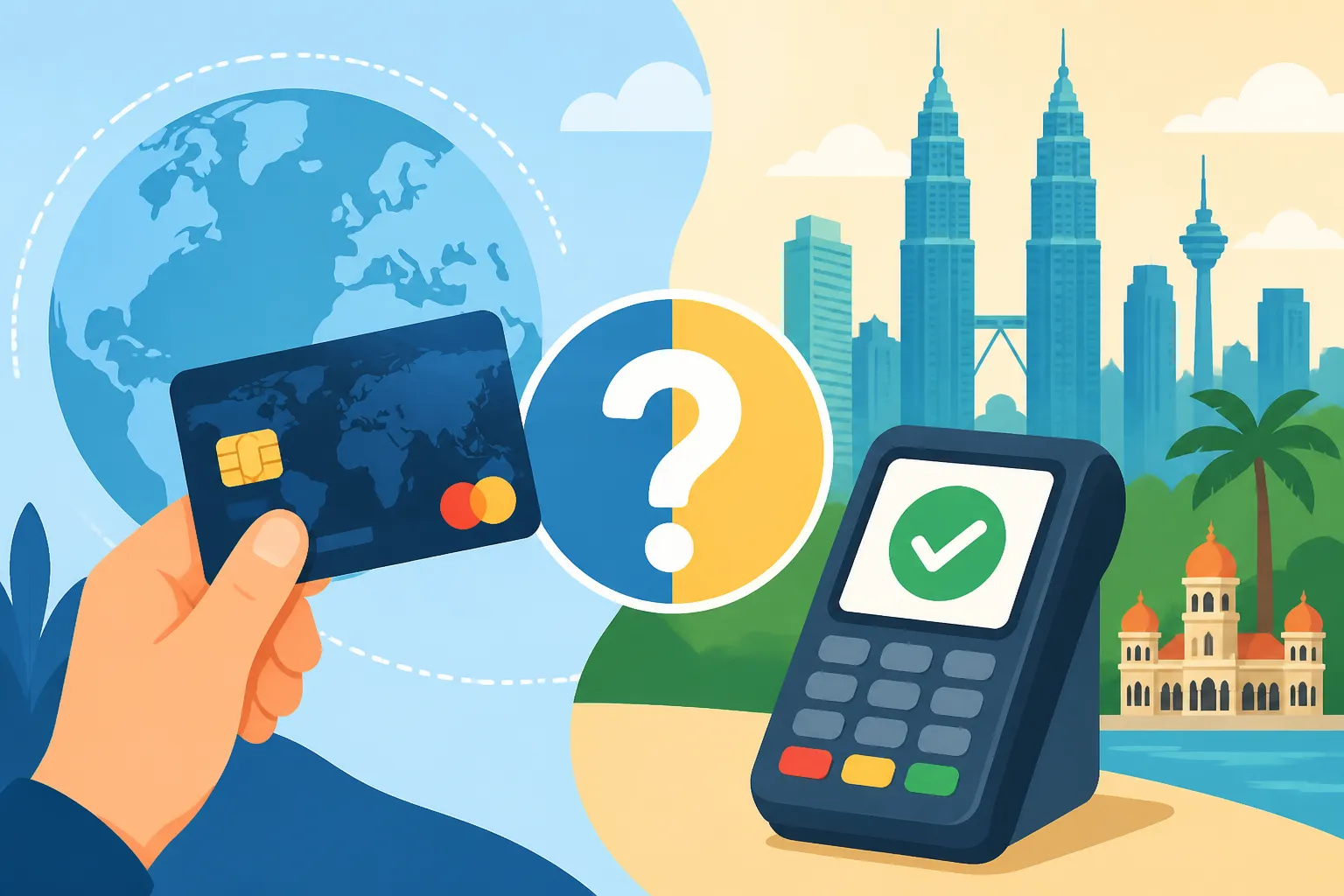
Can I Use My Foreign Bank Card in Malaysia?
You’ve just landed in Malaysia, bags in hand, excitement buzzing. You pull out your familiar foreign bank card, expecting the seamless ease of home, only to be met with a confused cashier, a non-responsive ATM, or a perplexing charge on your bank statement later. Trust me, we’ve all been there. This comprehensive guide will peel back the layers of using your international debit or credit card here, helping you avoid frustrating surprises and truly understand how to manage your money in Malaysia.
The Reality of Relying on Your Foreign Bank Card in Malaysia
When you first arrive, it’s natural to want to stick with what you know. Your foreign bank card feels like a lifeline, a familiar piece of home in a new land. But Malaysia's financial landscape, while increasingly modern, still has its quirks for international cards. You might find some places accept your card without a hitch, while others look at you like you’ve handed them a blank piece of plastic. It’s a bit of a mixed bag, and understanding the nuances is key to avoiding unnecessary stress and fees. Don't assume that because it works in other countries, it'll be universally accepted and free of charge here. The banking system here operates on its own set of rules, and a little foreknowledge goes a very long way.
Debit vs. Credit Card Acceptance: A Nuanced Landscape
Generally speaking, you’ll find that credit cards, especially those bearing the Visa or Mastercard logos, are more widely accepted at larger establishments in Malaysia. Think major supermarkets like AEON and Lotus's (formerly Tesco), international hotel chains, upscale restaurants, and department stores in big cities like Kuala Lumpur or Penang. They're often processed quickly, and you might even enjoy better fraud protection. However, smaller businesses, local eateries, hawker stalls, and independent shops might not have the terminals, or they might prefer cash. Some might even impose a small surcharge for credit card transactions, which isn't always clearly advertised.
Debit cards, while also carrying Visa or Mastercard branding, can sometimes be a trickier beast. While they generally work at the same places credit cards do, some older point-of-sale (POS) systems or smaller merchants might not process them smoothly, or their system might default to treating them like a credit card (which can sometimes lead to different fees). The biggest frustration with debit cards often comes down to ATM withdrawals, which we’ll delve into shortly. The direct link to your bank account means every transaction is scrutinised, and your bank back home might be extra cautious, leading to temporary freezes or declines if they detect unusual activity. Always inform your home bank of your travel plans to mitigate this.
ATM Withdrawals: The Fees and the Frustration
Ah, the ATM. Your go-to for quick cash, right? Well, in Malaysia, it can be a source of constant low-level irritation. Most major Malaysian banks – think Maybank, CIMB, Public Bank, Hong Leong Bank – have ATMs that will accept foreign Visa and Mastercard debit and credit cards. You'll find them almost everywhere, from shopping malls to standalone kiosks. However, prepare for the inevitable: fees.
Every time you withdraw cash from an ATM in Malaysia using a foreign card, you're likely to incur at least two types of charges:
- Your home bank's foreign transaction fee: This is typically a percentage of the amount withdrawn, often around 1-3%, plus a flat fee per transaction.
- The Malaysian bank's ATM fee: Many Malaysian banks now charge a flat fee for foreign card withdrawals. This usually hovers around RM10 to RM12 per transaction. While it might not sound like much, if you're taking out small amounts frequently, it adds up quickly.
Imagine withdrawing RM200 for daily expenses. Your bank might charge you a RM5 flat fee plus 1% (RM2), and the local ATM tacks on another RM12. Suddenly, your RM200 has cost you RM19 in fees! That’s nearly 10% just to get your own money. The machine will usually notify you of the Malaysian bank's fee before you complete the transaction, but your home bank's fee often remains a mystery until you check your statement. This makes it incredibly frustrating to budget and track your actual spending. To combat this, try to withdraw larger sums less frequently, but always be mindful of carrying too much cash.
Understanding the Hidden Costs: Fees and Exchange Rates
The fees and exchange rates associated with using foreign bank cards are probably the biggest headache for expats in Malaysia. It's not just about the explicit charges; it's also about the subtle ways your money gets eroded. This opaque system can make you feel like you're constantly losing out, and honestly, you often are.
The Dreaded Dynamic Currency Conversion DCC
This is one of the sneakiest ways you can lose money. Dynamic Currency Conversion (DCC) occurs when you’re presented with an option at a POS terminal or ATM to pay in your home currency (e.g., USD, GBP, EUR) instead of the local currency (Malaysian Ringgit, RM). It sounds convenient, right? "See the cost in your own currency!" But it's almost always a bad deal.
When you choose to pay in your home currency, the merchant or ATM operator applies their own exchange rate, which is notoriously worse than your card network’s (Visa/Mastercard) interbank rate. They also often add their own markup. You're effectively being charged a hidden, inflated exchange rate. Always, always choose to be charged in the local currency (RM). Let your bank or card network handle the conversion – even with their fees, it's typically better than DCC. It’s a common pitfall, and one that even seasoned travellers can fall victim to if they’re not paying close attention. This is especially true at popular tourist spots or larger chains.
Your Bank's Fees vs. Malaysian Bank Fees
As mentioned, you’re often hit with a double whammy of fees: those from your home bank and those from the Malaysian ATM operator. But it's not just ATMs. When using your foreign credit card for purchases, your home bank will almost certainly charge a foreign transaction fee. This is usually a percentage (e.g., 2-3%) on every single purchase. If you use your card frequently, these small percentages accumulate into a significant chunk of change over time.
For example, a US-issued credit card might charge a 3% foreign transaction fee. A RM100 meal (around $21 USD) will cost you an extra $0.63. A RM1000 shopping spree ($210 USD) will add $6.30 in fees. These might seem small individually, but imagine a month of daily expenses. This can quickly run into hundreds of Ringgit that simply vanish. It’s a constant battle, and one of the primary reasons why expats eventually look into opening a local bank account or finding more cost-effective solutions for money transfers, which we'll discuss later.
Here's a quick comparison of potential fees:
| Transaction Type | Home Bank Fee (Typical) | Malaysian Bank/Merchant Fee (Typical) | Total Impact |
|---|---|---|---|
| ATM Withdrawal | 1-3% + flat fee ($3-$5 USD) | RM10-RM12 | High, especially for frequent small withdrawals |
| POS Purchase (Credit/Debit) | 1-3% of transaction value | 0-1% surcharge (rare, but happens) | Moderate, adds up over many transactions |
| Online Purchase (RM) | 1-3% of transaction value | None directly | Moderate, subject to home bank's foreign transaction fee |
| DCC (ATM or POS) | Varies (often none explicit) | Inflated exchange rate + markup | Very High, hidden cost, always avoid |
Where Your Foreign Card Will (and Won't) Work
Navigating the payment ecosystem in Malaysia can be a bit of an adventure. One minute your card sails through, the next you're scrambling for cash. It’s important to know the landscape to minimise awkward moments at the till.
Retailers and Restaurants
In major urban centres like Kuala Lumpur, Johor Bahru, and Penang, especially at larger retail chains, shopping malls, and mid-to-high-end restaurants, foreign credit and debit cards are generally well-accepted. You’ll see the Visa, Mastercard, and sometimes even American Express logos proudly displayed. Contactless payment (tap-and-go) is also increasingly common, which is a blessing.
However, venture into local hawker centres, pasar malams (night markets), smaller mom-and-pop shops, roadside stalls, or even some local eateries, and cash is king. Many of these places simply don't have card terminals due to transaction fees or the preference for immediate cash flow. It’s always a good idea to carry a decent amount of Malaysian Ringgit for these situations. You don't want to be caught short after enjoying a delicious plate of nasi lemak! Knowing that some places are cash-only is a part of the local charm, but it can be a hassle if you're unprepared.
Online Transactions and E-Wallets
Online payments for things like utilities, flight tickets, e-commerce sites (Lazada, Shopee), and food delivery apps (GrabFood, FoodPanda) are usually straightforward with foreign credit or debit cards. The payment gateways are often robust and handle international cards well. Just remember to select Ringgit Malaysia as the currency to avoid DCC.
Where it gets interesting is with local e-wallets like Touch 'n Go eWallet, GrabPay, DuitNow, and Boost. These have become incredibly popular in Malaysia, used for everything from public transport (Touch 'n Go cards are ubiquitous) to paying at thousands of merchants, including many smaller ones that don't accept foreign cards. Unfortunately, directly linking a foreign bank account or card to most of these Malaysian e-wallets is often not possible or highly restrictive. They generally require a Malaysian bank account or a locally issued card for top-ups. This means you can't rely on your foreign card to seamlessly integrate into the daily digital payment culture that locals enjoy. This gap is a significant point of friction for newcomers, highlighting the need for a local financial solution. Understanding DuitNow and Local Payment Systems in Malaysia will give you a deeper insight into these crucial local payment methods.
Smart Strategies for Expats: Making Your Money Go Further
The good news is that while using foreign bank cards has its drawbacks, there are smart strategies you can employ to minimize costs and maximize convenience in Malaysia. You don't have to be perpetually caught in the cycle of fees and bad exchange rates.
The Power of Local Bank Accounts
This is, hands down, the best long-term solution for managing your finances in Malaysia. Once you have a valid long-term visa (like an Employment Pass or MM2H), getting a local bank account becomes much easier. Banks like Maybank, CIMB, and Public Bank offer a range of options, and having a local account allows you to:
- Avoid foreign transaction fees: All your local purchases and ATM withdrawals will be in RM, eliminating those pesky percentage charges from your home bank.
- Access local e-wallets: You can easily top up your Touch 'n Go, GrabPay, and other e-wallets, fully immersing yourself in Malaysia's digital payment ecosystem.
- Pay bills easily: Set up direct debits for rent, utilities, and other recurring expenses without hassle.
- Receive local salaries: If you're working, your salary can be paid directly into a local account, simplifying income management.
The process to The Expat Guide to Opening a Bank Account in Malaysia might seem a bit daunting at first, requiring specific documents like your passport, visa, and often a letter from your employer or proof of address. However, it's a critical step that will save you a tremendous amount of money and headache in the long run. Banks here are generally expat-friendly, and you can even look into options like multi-currency accounts offered by some local institutions, as detailed in Banking in Malaysia: A Complete Guide for Foreigners (2027).
Embracing Digital Transfer Services and Travel Cards
Before you get a local bank account, or for managing money between your home country and Malaysia, digital transfer services are your best friend. Forget expensive wire transfers through traditional banks that come with terrible exchange rates and high flat fees. Companies like Wise (formerly TransferWise) have revolutionised international money transfers.
Wise, for example, offers:
- Transparent exchange rates: They use the real mid-market exchange rate, with a small, upfront fee that is significantly lower than traditional banks.
- Fast transfers: Money often arrives in Malaysian Ringgit within hours or a day.
- Multi-currency accounts and debit cards: You can hold balances in multiple currencies, including MYR, and spend directly from your Wise account using their debit card, often at very competitive rates and lower fees than your traditional foreign bank card for ATM withdrawals.
This can be a fantastic stop-gap or even a permanent solution for managing international funds. You can transfer a lump sum from your home bank to your Wise account, convert it to MYR when the rate is favourable, and then spend or withdraw as needed. This bypasses many of the hidden fees and poor exchange rates associated with direct foreign card usage. When it comes to understanding How to Transfer Money Into and Out of Malaysia as an Expat, these services are indispensable.
Beyond specific services, considering a dedicated travel money card from your home country, if available, can also be beneficial. These are pre-loaded cards designed for international travel, often offering better exchange rates and lower fees than standard bank cards. Just be sure to check the specific fees for ATM withdrawals and foreign transactions for the Malaysian market.
Ultimately, while your foreign bank card is a necessary companion for your initial days and emergencies in Malaysia, relying on it solely will cost you. By understanding the fees, embracing local banking solutions, and leveraging modern digital transfer services like Wise, you can ensure your hard-earned money stays where it belongs – in your pocket, enjoying your new life in Malaysia. And don't forget that managing your finances also ties into bigger picture financial planning, including understanding your tax obligations. Resources like Taxes for Expats can help you navigate the broader financial landscape, ensuring you're making the most of your income and avoiding any unwelcome surprises down the line. Keep an eye on your expenses, and always consider how each transaction impacts your overall financial standing in this vibrant country.
Disclaimer
The information provided in this guide is for general informational purposes only and does not constitute financial, legal, or professional advice. While we strive to keep the information accurate and up-to-date, banking policies, fees, and regulations in Malaysia and your home country can change. Always consult with your respective banks, financial advisors, or legal professionals for advice tailored to your specific situation. We are not responsible for any financial decisions made based on this information.