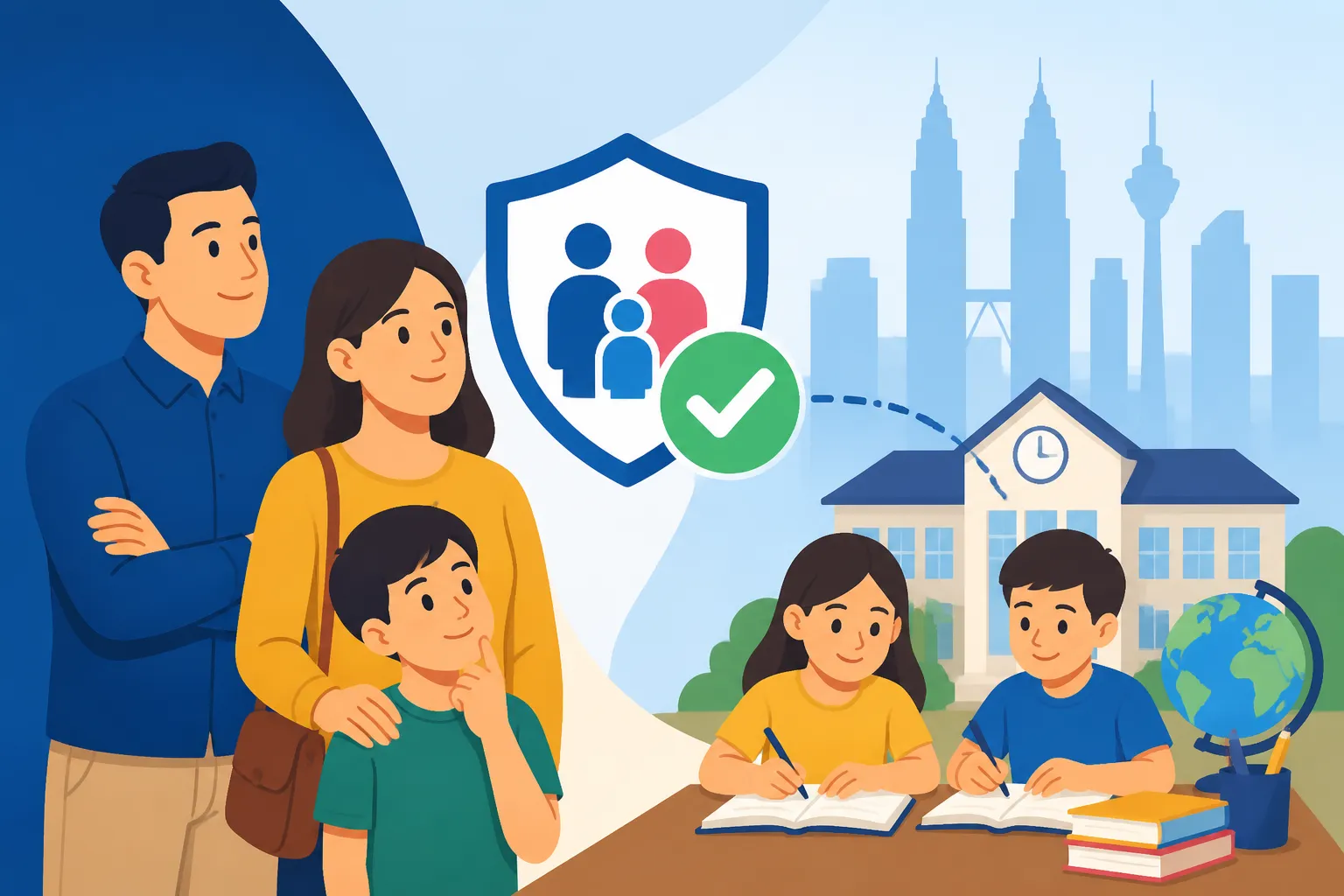
Can My Children Study in Malaysia on a Dependant Pass?
Navigating the labyrinth of Malaysian immigration and schooling can feel like a full-time job, especially when you’re trying to figure out the best path for your kids. One of the most common worries expat parents have is whether their children, living here on a Dependant Pass, can actually access education. This guide is here to untangle that knot for you, offering a clear, empathetic roadmap to ensure your children's educational journey in Malaysia is as smooth as possible.
Understanding the Dependant Pass for Children in Malaysia
Let's cut right to the chase: yes, your children can absolutely study in Malaysia while holding a Dependant Pass. This pass is specifically designed to allow family members of Employment Pass holders to reside legally in the country, and a crucial aspect of that residency often includes access to education. However, it's not a free pass into any school; there are procedures to follow, and it helps to understand what the Dependant Pass is and isn't.
Eligibility and Application Process for Dependant Passes
The Dependant Pass is typically issued to the spouse and unmarried children (under 21 years old) of an expatriate who holds a valid Employment Pass (EP) in Malaysia. For children with disabilities, this age limit can sometimes be extended, but you’ll need to provide specific medical documentation to the immigration authorities. The application for a Dependant Pass is almost always initiated and managed by the main Employment Pass holder's employer, through the Expatriate Services Division (ESD) of the Malaysian Immigration Department.
When your employer applies for your Employment Pass, they usually apply for the Dependant Passes for your family members concurrently. The documents typically required include copies of passports, birth certificates (to prove relationship), marriage certificates (for spouses), passport-sized photos, and sometimes medical examination reports. It's a meticulous process, and your employer's HR or an immigration agent will handle most of the heavy lifting. The key takeaway here is that your child's legal right to reside in Malaysia comes first, and the Dependant Pass is that critical document. You can learn more about this by reading our comprehensive guide on Family and Dependant Visas in Malaysia: A Complete Guide for Expats.
The Dependant Pass and Education Rights
Once your child has their Dependant Pass, they are legally permitted to live in Malaysia. This legal status is what allows them to then apply for enrolment in educational institutions. It’s crucial to understand that the Dependant Pass itself isn't a student visa; it's a residency visa that grants the flexibility for educational pursuit without needing a separate student pass. This is a significant relief for many expat families, simplifying the immigration aspect of schooling considerably.
However, the Dependant Pass doesn't dictate which schools they can attend, nor does it guarantee automatic acceptance. That's where the school's specific admission policies come into play. Generally, expat children on Dependant Passes are most commonly enrolled in international or private schools, though public schools can sometimes be an option under very specific circumstances. The Malaysian government recognises the need for expatriate families to provide suitable education for their children, and the Dependant Pass facilitates this by removing immigration barriers to school applications.
Navigating School Enrollment for Dependant Pass Holders
So, you have the Dependant Pass sorted – fantastic! Now comes the exciting, and sometimes overwhelming, part: choosing and enrolling your child in a school. This is where the real legwork often begins, as Malaysia offers a diverse range of educational environments.
International and Private Schools: The Most Common Path
For most expat families, international and private schools are the go-to choices, and for good reason. They typically offer curricula that are internationally recognised (like the British IGCSE, American, International Baccalaureate (IB), or Australian curricula), often have English as the primary language of instruction, and are well-equipped to cater to a multicultural student body. These schools are generally very familiar with the Dependant Pass system and the needs of expat children. If you're weighing your options, our guide on Understanding the International School System in Malaysia can be incredibly helpful.
The application process for international and private schools usually involves:
- Application Form and Fees: Submitting a detailed application form along with a non-refundable application fee.
- Required Documents: This is where your Dependant Pass comes in handy. You'll need copies of your child's passport, Dependant Pass, birth certificate, academic records from previous schools, and sometimes a letter of recommendation. Most schools also require a medical check-up report. For these medical needs, having robust international health insurance like that offered by Cigna Global can be incredibly beneficial, as it can cover many of the pre-enrollment health screenings and ongoing medical needs.
- Assessments: Many schools conduct entrance exams or interviews to assess your child's academic level and English proficiency.
- Offer and Enrollment: Once accepted, you'll pay a registration fee, tuition fees, and potentially other charges like uniforms, textbooks, and extracurriculars.
The timelines for application can vary greatly, with popular international schools often having waiting lists. It's always best to start your research and application process well in advance, even before you physically move to Malaysia. This proactive approach can save you a lot of stress down the line. To get a head start, you might find our guide on The Expat Guide to Choosing a Private Hospital in Malaysia (2027) useful, especially when looking for reliable clinics for those required medical check-ups.
Public Schools: A Less Common but Possible Option
While theoretically possible, enrolling a foreign child on a Dependant Pass into a Malaysian public (government) school is significantly less common and often more challenging for expat families. The primary reasons for this are:
- Language Barrier: The medium of instruction in Malaysian public schools is predominantly Bahasa Malaysia (Malay), particularly in primary and secondary levels, with English taught as a subject. Unless your child is already fluent in Bahasa Malaysia, adapting to the curriculum would be extremely difficult.
- Curriculum Differences: The Malaysian national curriculum is different from most international curricula, focusing on local history, culture, and specific academic requirements that might not align with your child's previous schooling or future academic plans abroad.
- Approval Process: Foreign children typically require special approval from the Ministry of Education (Kementerian Pendidikan Malaysia) to enrol in public schools. This process can be lengthy and complex, requiring multiple layers of administrative steps and approvals that can be daunting for someone unfamiliar with the local system.
For these reasons, most expat families tend to opt for international or private schools. However, if you are a long-term resident, or perhaps one parent is Malaysian, then exploring public school options might be more viable. Our article, How to Enrol Your Child in a Malaysian Public or Private School, delves deeper into this often-misunderstood route.
Home Schooling and Other Alternatives
Beyond traditional schooling, some expat families consider home schooling their children while in Malaysia. The regulations around home schooling for expatriates can be somewhat grey, but generally, if you are conducting the education entirely within your home and not seeking local accreditation, it is often seen as a private arrangement. However, it’s advisable to check with local education authorities or experienced expat communities for the most current advice, as regulations can change.
Another alternative, especially for younger children, might be pre-schools or kindergartens. These are generally easier to enroll in, and many international kindergartens are excellent for providing a soft landing into a new country, focusing on play-based learning and English immersion before formal schooling begins.
Practical Considerations for Expat Parents
Moving your family and settling into a new country is a huge undertaking, and schooling is just one piece of that intricate puzzle. Here are some practical considerations that often come up for expat parents once the Dependant Pass and school enrollment are on track.
Choosing the Right School and Location
When selecting a school, beyond the curriculum, think about what truly matters to your family. Do you prefer a school with extensive sports facilities, a strong arts program, or a particular religious affiliation?
Consider the school's location relative to your home and workplace. Kuala Lumpur, for instance, has several popular expat areas like Mont Kiara, Bangsar, or Damansara Heights, which are often chosen for their proximity to good international schools. Commute times in KL can be notoriously long, so picking a school that doesn't add hours to your child's day is vital. Services like Sirelo can assist with the logistics of moving your household belongings, allowing you to focus on these crucial family decisions.
Here's a quick comparison of factors to consider:
| Factor | International Schools | Private Local Schools | Public (Government) Schools |
|---|---|---|---|
| Curriculum | IB, IGCSE, American, British, Australian | Malaysian National Curriculum, sometimes adapted | Malaysian National Curriculum |
| Language | Primarily English | English and/or Bahasa Malaysia | Primarily Bahasa Malaysia |
| Fees | High (RM 20,000 – RM 100,000+ per year) | Moderate (RM 5,000 – RM 20,000 per year) | Very Low (Subsidised by government) |
| Admissions | Assessments, interviews, Dependant Pass required | Entrance exams, Dependant Pass required | MoE approval, Dependant Pass, language criteria |
| Diversity | Highly multicultural | Predominantly local, some foreign students | Predominantly local |
| Facilities | Often state-of-the-art | Varies widely | Basic to good, depending on location |
| Teacher Ratio | Generally lower (more individual attention) | Varies | Higher (larger class sizes) |
| Expat Suitability | High, caters specifically to expat needs | Moderate, may require local language knowledge | Low, significant language and cultural barrier |
This table provides a general overview, but each school is unique. Visiting schools, talking to current parents, and checking reviews are indispensable steps.
Costs Associated with Education and Living
Let's not sugarcoat it: international school fees in Malaysia can be substantial. They typically include tuition, registration fees, building fund contributions, uniforms, textbooks, exam fees, and often charges for extracurricular activities or school trips. These costs can range from RM 20,000 to well over RM 100,000 per year per child, depending on the school's reputation, facilities, and the child's grade level. When thinking about The Cost of Healthcare in Malaysia: A Complete Breakdown for Foreigners (2026), don't forget to factor in health insurance for your children, which can help with medical check-ups and unexpected illnesses while they're at school.
It’s crucial to factor these into your overall budget, alongside your living expenses. While The Complete Guide to Cost of Living in Malaysia for Expats (2026) will give you a broader picture, be prepared for education to be one of your most significant expenditures. Many employers offer education allowances as part of their expat packages, so make sure to clarify what yours includes.
Common Challenges and Tips for Success
Even with a Dependant Pass in hand, the journey isn't always perfectly smooth. There can be bumps along the way, but with a bit of foresight and preparation, you can navigate them effectively.
Visa and School Application Synergy
The biggest challenge often lies in the timing and coordination between your Dependant Pass application and the school admission process. Schools might issue conditional offers awaiting the Dependant Pass, but they won't fully admit a child without proof of valid immigration status. This means any delays in getting the Dependant Pass approved can, in turn, delay your child's start date at school.
Tips:
- Start Early: Begin your Dependant Pass application as soon as your own Employment Pass is confirmed. Simultaneously, research and apply to schools.
- Communicate: Keep both your employer's HR department (or your immigration agent) and the school's admissions office informed of your progress. They can often provide guidance or expedite processes where possible.
- Buffer Time: Allow for contingencies. Malaysian immigration processing times, while generally efficient, can sometimes experience unforeseen delays. Avoid booking flights or making non-refundable deposits until both the Dependant Pass and school admission are confirmed. For insights into the wider process, consider checking out How to Apply for an Employment Pass (EP) in Malaysia, as your child's pass is tied to yours.
Cultural Adjustments and Support Systems
Moving to a new country and starting a new school can be a significant cultural shock for children, regardless of their age. They might face new academic systems, different social norms, and the challenge of making new friends in an unfamiliar environment.
Tips:
- Open Communication: Talk to your children openly about the move and what to expect. Involve them in the school selection process where appropriate.
- School Support: Most international schools have dedicated pastoral care or counselling services to help new students adjust. Utilise these resources.
- Expat Communities: Connect with other expat parents through online forums or local groups. They can offer invaluable advice, share experiences, and provide a ready-made support network. Platforms like Facebook groups for "Expats in Kuala Lumpur" are fantastic for this. Our guide, The Complete Guide to Moving to Malaysia: Your First 90 Days (2027), also includes advice on settling in and finding your community.
- Maintain Connections: Encourage your children to stay in touch with friends and family back home. Video calls and occasional visits can ease feelings of homesickness.
- Embrace Local Culture: Encourage your children to try local foods, learn a few Bahasa Malaysia phrases, and participate in local festivals. This helps them feel more integrated and builds a deeper appreciation for their new home.
While the Dependant Pass smooths the immigration path for your children's education in Malaysia, the real work for parents lies in careful planning, thorough research, and a supportive approach to ensure your children thrive in their new academic and social environment. It's a journey, but one that countless expat families have successfully navigated, and you can too.
Disclaimer
The information provided in this guide is for general informational purposes only and does not constitute legal, immigration, or professional educational advice. While we strive to provide accurate and up-to-date information, rules and regulations in Malaysia, particularly concerning immigration and education, can change frequently. It is always recommended to consult with the relevant Malaysian authorities, your employer's HR department, or qualified immigration and education consultants for advice tailored to your specific situation. We are not liable for any loss or damage arising from reliance on the information contained herein.