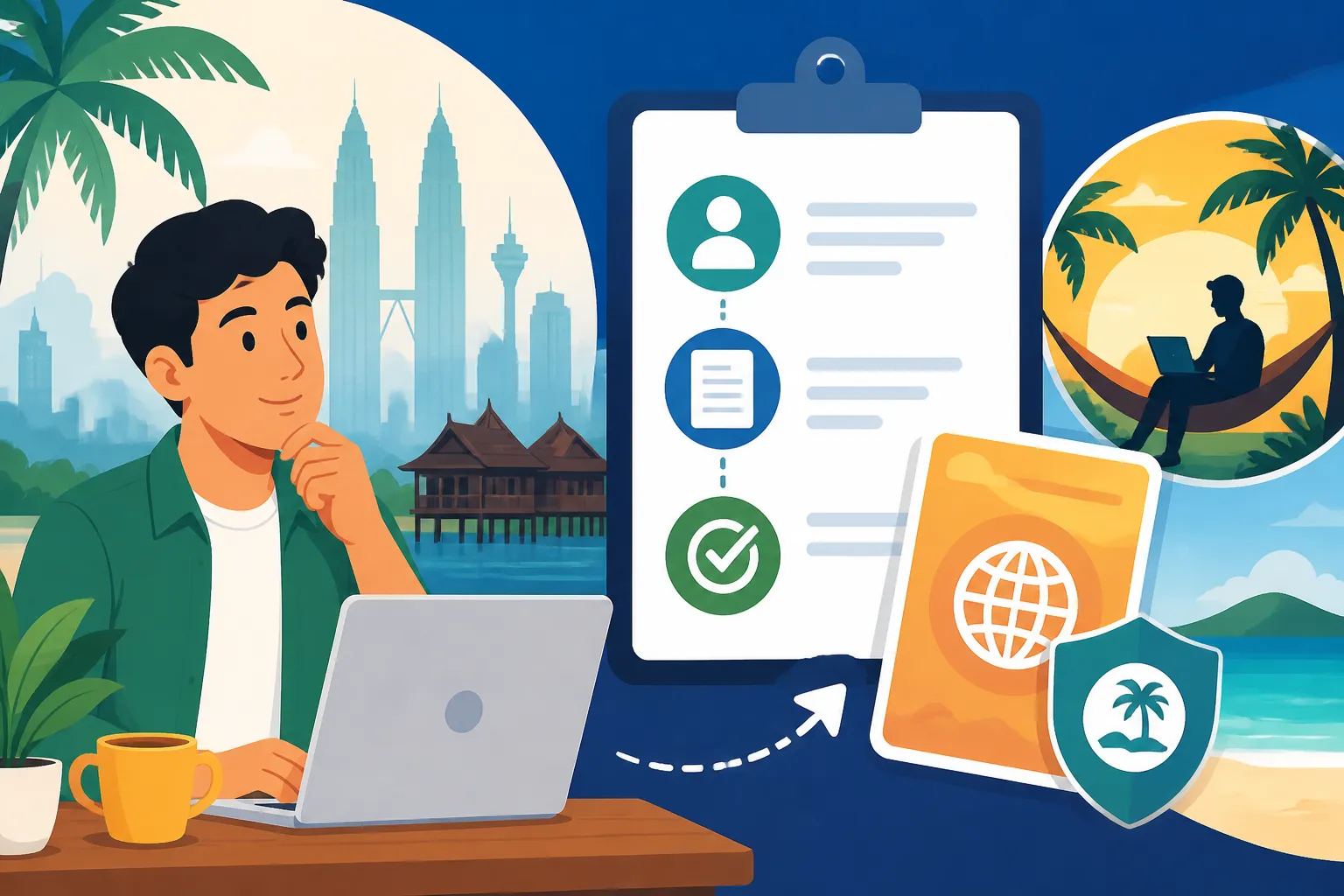
How Do I Apply for the DE Rantau Digital Nomad Pass?
Let's be honest, the thought of becoming a digital nomad in Malaysia sounds like a dream – stunning beaches, vibrant cities, incredible food, and a cost of living that makes your bank account breathe a sigh of relief. But then reality sets in, and you remember: visas. The dread of navigating yet another country's immigration system can quickly turn that dream into a bureaucratic nightmare. If you're eyeing Malaysia as your next remote work haven, specifically with the DE Rantau Digital Nomad Pass in mind, you're in the right place. This isn't just a guide; it's a veteran expat's walkthrough of exactly how to apply for the DE Rantau Digital Nomad Pass, cutting through the confusion and helping you get your slice of paradise without the usual visa headache.
Understanding What the DE Rantau Pass Really Is and Isn't
When Malaysia first announced the DE Rantau program, many of us who've been here for years, slogging through traditional work permits and visa renewals, let out a collective cheer. Finally, a visa specifically designed for the modern remote worker! But like anything government-related, it's essential to understand the fine print. This isn't just a fancy tourist visa extension; it's a legitimate pathway for digital professionals to live and work remotely from Malaysia.
The Vision Behind DE Rantau and Why It Matters
The Malaysia Digital Economy Corporation (MDEC) launched DE Rantau with a pretty clear goal: to attract digital nomads and remote workers from all corners of the globe to make Malaysia their base. They recognised that the global workforce was changing, and they wanted a piece of that talent pie, along with the economic boost that comes from people living and spending locally. For us expats already here, and for those looking to join, it felt like a significant step forward. It means less ambiguity, a clearer legal status for remote work, and an official nod that your laptop-and-coffee-shop lifestyle is valued.
It's about fostering a vibrant digital ecosystem, not just having warm bodies in tourist hotspots. MDEC wants to create communities, co-working spaces, and networking opportunities that genuinely support the digital nomad lifestyle. Think of it as Malaysia rolling out a dedicated welcome mat, specifically for folks like you who earn their crust online, regardless of where their clients or employers are physically located. This is a game-changer compared to the old days when you might have been unofficially "working remotely" on a social visit pass, which, let's just say, wasn't exactly by the book.
Key Benefits and Limitations for Digital Nomads
So, what does this golden ticket actually get you? The DE Rantau Pass is initially issued for 12 months, which is a fantastic starting point, and here's the best part: it's renewable for another 12 months. That means you get a solid two years, potentially, to immerse yourself in Malaysian life, explore the country, and build your remote career here without constant visa worries.
One of the most significant benefits is the ability to bring your family. If you're moving with your spouse and children, they can apply for a Dependant Pass, ensuring you all stay together. This is a huge relief for many, as family visas can often be the most complicated part of any relocation. Imagine setting up your home here, enrolling your kids in one of the many excellent international schools, and truly establishing roots, all while keeping your global career on track.
Another practical advantage is the ease of opening a bank account. As a DE Rantau pass holder, you have official residency status, which significantly smooths over the usual hurdles foreigners face when trying to set up local banking. Trust me, trying to navigate banking in Malaysia without proper documentation can be a real headache, so this is a huge win. If you're interested, you might want to read more on The Expat Guide to Opening a Bank Account in Malaysia.
Now, for the limitations, because every visa has them. The most crucial one is that this pass is strictly for remote work where your income originates from outside Malaysia. You cannot use the DE Rantau Pass to be formally employed by a Malaysian company. If your career path involves working for a local employer, you'll need to explore options like the How to Apply for an Employment Pass (EP) in Malaysia. The DE Rantau is designed for those who work for foreign clients or a foreign-based company. So, if your plan is to eventually find a job in Kuala Lumpur, this might not be the long-term solution you're looking for.
Also, while the pass makes your life easier, it doesn't automatically grant you permanent residence or a path to citizenship. It's a temporary pass, albeit a generous one. Understanding these distinctions from the outset will save you a lot of confusion down the road.
Eligibility: Are You the Right Fit for DE Rantau?
Before you even think about gathering documents, you need to make sure you tick all the boxes for eligibility. MDEC has specific criteria, and they're pretty strict about them. Don't waste your time (and application fee) if you don't meet the core requirements.
General Requirements: Who Qualifies?
First off, you need to be a digital professional. This isn't a pass for anyone who wants to work remotely, but specifically those whose skills are in the digital realm. This includes folks in areas like:
- Software development
- Digital marketing and SEO
- Content creation (writers, graphic designers, video editors)
- Cybersecurity
- UI/UX design
- Data science and analytics
- Project management for digital projects
- And many other tech-related and digitally-focused roles.
You'll need a valid passport with at least six months' validity remaining. This is standard for almost any visa application, but sometimes overlooked in the excitement.
The big one, and often the trickiest for aspiring nomads, is the income requirement. MDEC requires you to demonstrate a minimum annual income of USD 24,000. This isn't pocket change, but it's a realistic figure for many established digital professionals. This translates to roughly RM 108,000 per year or about RM 9,000 per month, though it's best to stick to the USD figure for clarity with MDEC. The point is, they want to see that you're financially self-sufficient and won't be a burden on the local economy.
Finally, and perhaps obviously, you need to be an individual with a clean record. No criminal history, folks. Malaysia takes its security seriously, and a background check will be part of the process.
Proving Your "Digital Nomad" Status and Income
This is where the rubber meets the road. It's not enough to say you're a digital nomad; you need to prove it with solid, verifiable documentation. MDEC wants assurance that your work is genuinely remote and that your income comes from outside Malaysia.
For remote employees, this means providing a valid employment contract from your non-Malaysian company. This contract should clearly state your role, your salary, and ideally, that your position allows for remote work. They'll also want to see recent payslips (usually the last 3-6 months) and bank statements showing consistent salary deposits from your foreign employer.
If you're a freelancer or independent contractor, this can be a bit more complex, but entirely achievable. You'll need to provide client contracts, letters of engagement, or service agreements with non-Malaysian companies. It's best to have a few of these, showing ongoing or recent projects. Alongside these, you'll need to present bank statements (again, typically 3-6 months) that clearly show income from these foreign clients. A strong portfolio, testimonials, and a well-updated LinkedIn profile can also bolster your application, demonstrating your professional standing.
The key here is consistency and clarity. Make sure your documents clearly show:
- Your work is digital and can be performed remotely.
- Your clients/employers are outside Malaysia.
- You meet the minimum income threshold consistently.
They're not trying to trip you up, but they are looking for genuine digital professionals who can contribute positively. Prepare these documents meticulously, as any ambiguity can lead to delays or outright rejection.
Navigating the DE Rantau Application Process
Once you've confirmed your eligibility, it's time to dive into the application itself. Like many things administrative in Malaysia, it's primarily an online process, which is a blessing, but it still requires attention to detail.
Step-by-Step: From Gathering Documents to Submission
The entire application for the DE Rantau Pass is managed through the MDEC online portal. This is your first stop. You'll need to create an account, which is straightforward enough, but then comes the actual form filling and document uploading.
Here's a general rundown of the documents you'll need to prepare:
| Document Type | Specifics Required |
|---|---|
| Passport | Scanned copy of your passport bio-data page (valid for >6 months) |
| Passport-sized Photo | Recent digital photo with a white background (specific dimensions usually required) |
| Resume/CV | Up-to-date, highlighting your digital skills and remote work experience |
| Academic Certificates | Copies of your highest educational qualifications |
| Proof of Income | Bank statements (last 3-6 months) showing consistent income > USD 24,000/year |
| Proof of Employment/Contract | For Remote Employees: Employment contract from foreign company, payslips (3-6 months). For Freelancers: Multiple client contracts from foreign companies, service agreements, invoices. |
| Health Insurance | Proof of valid health insurance coverage for your stay in Malaysia (more on this below). |
| Proof of Accommodation (Optional but recommended) | Rental agreement or booking confirmation for your initial stay. |
| Visa/Travel History | If you've travelled to Malaysia before, details of previous visas/stamps. |
Pro Tip: Digitize everything early and organize it into clearly labelled folders. PDF is usually the preferred format for uploads.
Once all your documents are ready and uploaded, you'll submit your application and pay the processing fee. As of my last check, the application fee for the principal applicant is RM1,000, with an additional RM500 for each dependant. This fee is non-refundable, so ensure everything is in order before hitting that submit button.
After submission, it's a waiting game. MDEC will review your application, and they may reach out for additional information or clarification. Be responsive and provide whatever they ask for promptly. There isn't typically a formal interview process for the initial application, but clarity in your documents is paramount to avoid back-and-forth emails.
Common Pitfalls and How to Avoid Them
Many expats get tripped up by seemingly small details during visa applications, and the DE Rantau is no exception.
The most common pitfall is incomplete or unclear documentation. Don't assume MDEC knows what you mean. If your bank statements aren't clearly labelled with the source of income, or your contract doesn't explicitly state your remote status, they will question it. A common mistake for freelancers is submitting only one or two small client contracts – MDEC wants to see a consistent income stream, not just a one-off project.
Not meeting the financial threshold is another obvious, but unfortunately frequent, reason for rejection. Make sure your bank statements and income proofs consistently show you meet or exceed the USD 24,000 annual income. If your income fluctuates, try to provide a longer period of statements (e.g., 6-12 months) to show an average that meets the requirement.
Processing delays are almost inevitable in any bureaucratic process. The best way to "avoid" this is patience and proactive follow-up, but not to the point of harassment. If you haven't heard back within a reasonable timeframe (which MDEC usually communicates on their website or during application), a polite email to their support channel is fine.
Finally, ensuring your health insurance is in order is vital. While MDEC simply requires proof of valid health insurance, it’s in your best interest to have comprehensive coverage. Don't skimp here. A good international health insurance plan, like those offered by Cigna Global, can cover you not just in Malaysia but globally, which is ideal for a true digital nomad. Having a robust plan ready to go from day one will give you peace of mind. Without it, even a minor illness could become a major financial setback. If you're pondering Health Insurance in Malaysia: Local, International and Employer Options Explained, this is a crucial step.
Life After Approval: What to Expect in Malaysia
Congratulations! You’ve received that glorious email – your DE Rantau Pass application has been approved. But the journey isn't quite over. There are still a few essential steps to take and things to consider as you prepare to fully embrace your new life as a digital nomad in Malaysia.
The Endorsement Process and Your First Steps
Once MDEC approves your application, they will issue you an Approval Letter. This is gold! You'll need to present this letter, along with your passport and sometimes other supporting documents, at the Immigration Department of Malaysia to get your DE Rantau Pass physically endorsed in your passport. This is typically done at the Expatriate Services Division (ESD) in Putrajaya or a designated immigration office. Make sure to schedule an appointment if required and arrive prepared. This final step is crucial as it officially stamps your status as a legitimate digital nomad in Malaysia.
Upon getting your passport endorsed, you're officially good to go! Your first practical steps should focus on settling in. As I mentioned before, opening a local bank account becomes much smoother with your DE Rantau Pass. This is essential for day-to-day transactions, paying bills, and managing your finances. Local banks like Maybank, CIMB, and Public Bank are popular choices, offering various services that cater to expats. You can explore How to Open a Bank Account at a Malaysian Bank as a Foreigner for detailed guidance.
Next, finding suitable accommodation is paramount. Whether you prefer the bustling city life of Kuala Lumpur, the charm of Penang, or the more relaxed vibe of Johor Bahru, Malaysia offers a diverse range of living options. Renting a condominium is a popular choice among expats, offering amenities like gyms and swimming pools. I'd highly recommend reading The Complete Guide to Renting an Apartment in Malaysia (2027) to get a grasp of the rental market, tenancy agreements, and deposit requirements. Once you have a place, setting up utilities like electricity (TNB), water, and internet is your next priority. Providers like Unifi and Maxis offer reliable internet services, crucial for your remote work.
Essential Considerations for Your Malaysian Nomad Life
Moving to a new country, even with a smooth visa process, involves a lot more than just getting your documents in order. Think about the practicalities that make daily life comfortable and secure.
Health Insurance: This cannot be stressed enough. While it's an eligibility requirement, continuously maintaining comprehensive health insurance is non-negotiable. The Malaysian healthcare system is excellent, particularly the private hospitals, but costs can quickly add up if you're not covered. Having a plan that covers emergencies, routine check-ups, and specialist visits will save you a world of worry. Explore options like Cigna Global or other international providers that cater specifically to expats and digital nomads. It’s peace of mind, pure and simple.
Tax Implications: As a DE Rantau pass holder, you are legally residing and working in Malaysia (albeit remotely for foreign entities). This means you will have tax obligations here, depending on your tax residency status. While the pass facilitates your stay, it doesn't exempt you from Malaysian income tax laws. It's crucial to understand The Complete Guide to Taxes in Malaysia for Expats (2027) and even consult with a local tax advisor to ensure compliance. You certainly don't want any surprises from the Inland Revenue Board (LHDN) down the line.
Moving Your Belongings: If you're not just arriving with a backpack but planning to move a substantial amount of your possessions, consider professional moving services. Platforms like Sirelo can connect you with reputable international movers who can handle everything from packing to customs clearance, making your transition much smoother. Having your creature comforts around you can significantly help you settle into your new environment.
Community and Networking: One of the best parts of being a digital nomad in Malaysia is the thriving expat and local community. Don't isolate yourself! Join expat groups on social media, attend networking events, and explore co-working spaces. Places like Common Ground, WeWork, or specific nomad meetups are fantastic for connecting with like-minded individuals, sharing experiences, and even finding new collaborators. Building a support network makes all the difference when you're far from home.
Malaysia offers an incredible experience for digital nomads, blending modern infrastructure with rich culture and natural beauty. With the DE Rantau pass, you have a legitimate, clear path to making this beautiful country your temporary home and office. Embrace the journey, be prepared, and you'll find Malaysia to be an incredibly welcoming and rewarding place to live and work.
Disclaimer
The information provided in this guide is for general informational purposes only and does not constitute professional advice. While we strive to keep the information accurate and up-to-date, immigration policies, requirements, and regulations in Malaysia can change frequently. It is highly recommended to consult the official Malaysia Digital Economy Corporation (MDEC) website, the Immigration Department of Malaysia, or a qualified immigration consultant for the most current and specific advice regarding your individual circumstances before making any decisions related to your visa application or relocation. We shall not be held responsible for any errors or omissions, or for any actions taken based on the information provided herein.