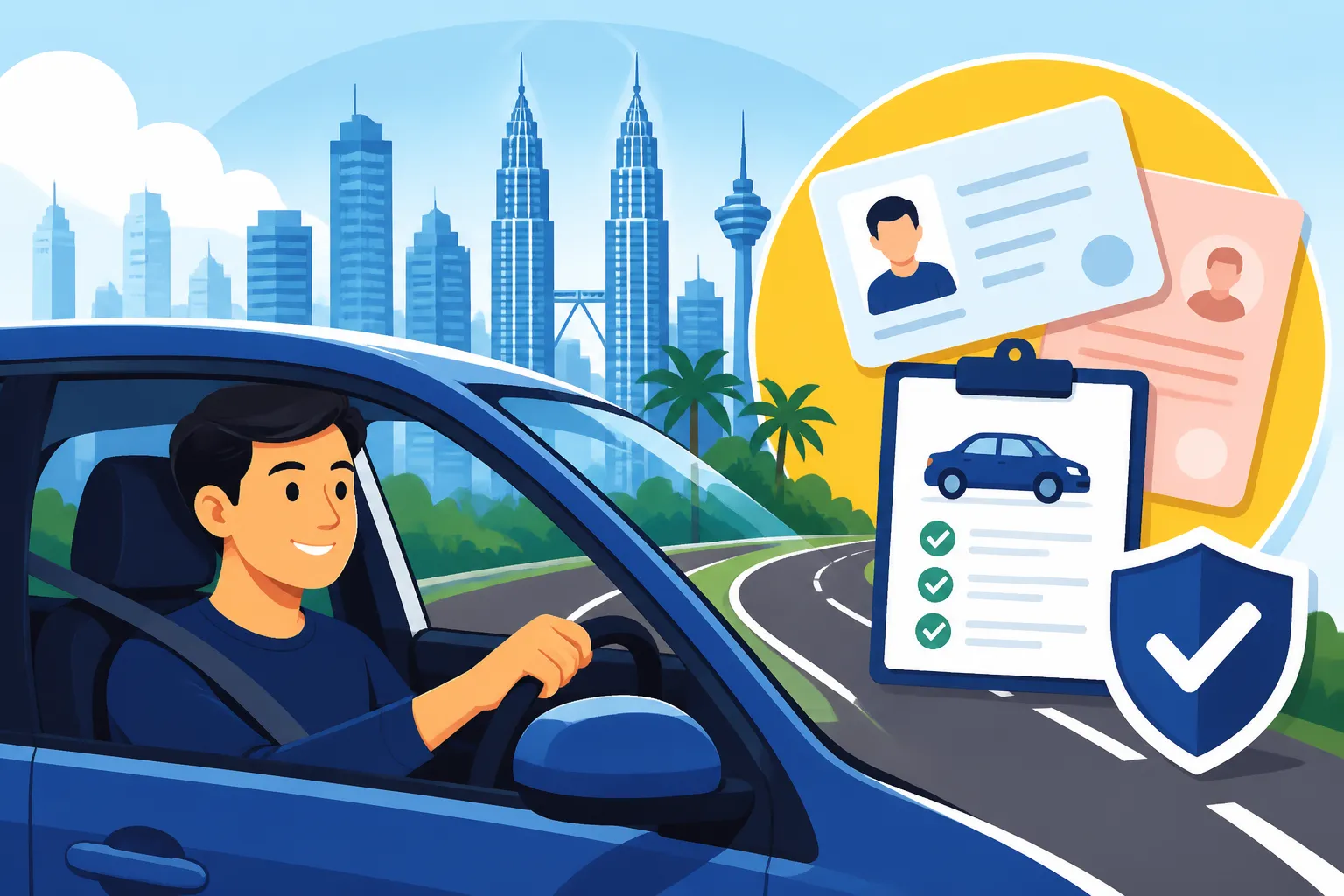
Driving in Malaysia: Licences, Registration and Rules for Expats (2027)
Ah, the open road in Malaysia! Or, as many of us expats quickly learn, the not-so-open road, often filled with surprises, unwritten rules, and a driving culture that can feel like a baptism by fire. If you’re anything like I was when I first arrived, the thought of navigating the traffic, figuring out licences, and understanding vehicle registration might feel like an administrative Everest. But don't you worry, this comprehensive guide is here to unravel the complexities of driving in Malaysia, ensuring you hit the road with confidence and clarity, no matter how daunting it seems right now.
Understanding the Malaysian Driving Landscape
Before you even think about getting behind the wheel, it’s crucial to understand the environment you'll be driving in. Malaysia offers a stark contrast between its well-maintained highways and bustling urban roads, and driving here is definitely an experience in itself. It’s not just about knowing the rules; it’s about understanding the rhythm and flow of local traffic.
The Unique Challenges of Driving Here
Let’s be honest, driving in Malaysia, especially in major cities like Kuala Lumpur or Penang, can be quite the adventure. The traffic can be relentless, particularly during peak hours, and drivers often exhibit a certain… assertiveness. You’ll find motorcycles weaving in and out of lanes, cars making sudden stops or turns without clear signals, and the occasional pedestrian attempting to cross busy roads at will. It’s a dynamic environment that demands constant vigilance and a thick skin.
One of the biggest frustrations for newcomers is the perceived lack of adherence to lane discipline. While there are clear markings, it’s not uncommon to see vehicles straddling two lanes or suddenly cutting across multiple lanes to make an exit. Rain can also dramatically change driving conditions, turning already challenging roads into slick, visibility-impaired obstacle courses. This isn't to scare you, but to prepare you for the reality of what you'll encounter day-to-day. You’ll need to adapt quickly and anticipate unexpected movements from other road users.
Another aspect that often catches expats off guard is parking. In dense urban areas, finding a legal and safe parking spot can be a monumental task, often leading to creative (and sometimes illegal) parking manoeuvres. This often means paying for parking in dedicated lots or using street parking where available, often requiring payment through apps or scratch-and-display coupons. Factor in the time and effort it takes to find parking, especially when visiting popular shopping malls or busy food areas.
Road Rules and Driving Culture: A Culture Shock?
Yes, for many, it absolutely is a culture shock! Malaysia drives on the left-hand side of the road, just like in the UK, Australia, or Singapore. This is a significant adjustment if you come from a right-hand drive country. Beyond that, while official road rules exist and are displayed, the actual driving culture on the ground can sometimes feel like an unwritten code. You'll observe that indicators are often used sparingly, and a quick horn honk isn't necessarily aggressive but can be a warning or a "hello."
Drivers here often display a "flow with traffic" mentality. This means merging quickly, even if it feels like there isn't quite enough space, and sometimes taking liberties with right-of-way. Being overly polite or hesitant can actually make you a hazard, as others expect you to move. It’s a tricky balance of being assertive without being reckless. Understanding this local nuance is key; you need to be confident but always defensive.
Speed limits are generally 110 km/h on expressways, 90 km/h on federal and state roads, and 60 km/h in urban areas. However, these are often treated more as guidelines, particularly on open roads. Traffic enforcement does happen, with speed cameras (AES cameras) and police checkpoints (Ops Sikap) being common, especially during festive seasons. Always buckle up, ensure your passengers do too, and avoid using your phone while driving – these are non-negotiable and strictly enforced.
Types of Roads and Highway System
Malaysia boasts an impressive network of roads, ranging from multi-lane expressways to narrow kampong (village) lanes. The North-South Expressway (PLUS highway) is the backbone, connecting major cities from Johor Bahru in the south to Bukit Kayu Hitam at the Thai border. These highways are generally well-maintained and are toll roads, so you'll need a Touch 'n Go card or an RFID tag to pay. Cash is almost never accepted at highway tolls anymore, so make sure your card is topped up!
Outside the major expressways, you have federal and state roads, which are often single-carriageway and pass through towns and villages. These are where you’ll encounter more local traffic, intersections, and sometimes slower-moving vehicles like lorries or buses. In urban centres, you’ll find a mix of multi-lane roads, flyovers, and complicated interchanges. Navigating these requires a good GPS and a keen eye.
The road quality varies. While highways are smooth, some older federal roads or less-traveled routes might have potholes or uneven surfaces, especially after heavy rains. It’s always a good idea to drive cautiously, particularly at night, as lighting can be inconsistent and unexpected obstacles (like animals or unlit vehicles) can appear out of nowhere. Familiarizing yourself with these road types will help you anticipate driving conditions and plan your routes effectively.
Your Foreign Driving Licence: What You Need to Know
One of the first hurdles for any expat wanting to drive in Malaysia is figuring out the licence situation. It’s not as straightforward as in some other countries, and the rules can sometimes feel a bit murky, depending on who you ask at the local Road Transport Department (JPJ).
Driving on an International Driving Permit (IDP) or Foreign Licence
The good news is, for many foreigners, you can drive in Malaysia using your valid foreign driving licence for a certain period, provided it's in English or Malay. If it's in another language, you’ll need an International Driving Permit (IDP) along with your original licence. The IDP essentially acts as a certified translation of your existing licence and is recognised internationally.
Initially, many expats arrive and drive on their foreign licence or IDP. However, there's often confusion about how long this is legally permissible. While tourist visas typically allow use for short periods, for those on long-term passes like an Employment Pass or Malaysia My Second Home (MM2H) visa, the advice often varies. Officially, the Malaysian Road Transport Department (JPJ) states that long-term pass holders should convert their licence. Driving solely on a foreign licence for an extended period, especially if you reside here permanently, might leave you in a grey area, particularly if you're involved in an accident. Always carry your original licence, your IDP (if applicable), and your passport with your valid visa.
The immediate problem isn't usually getting stopped by the police, but rather how insurance companies might view your eligibility in the event of a claim. Some insurance policies might have clauses that require you to hold a valid Malaysian driving licence if you are a resident, or they might impose stricter conditions if you're only using a foreign one. This could lead to significant complications and potentially voided claims, which is a headache you absolutely want to avoid. Therefore, while technically allowed for a while, it’s always safer to plan for conversion, especially if you intend to stay long-term.
When and Why to Convert Your Foreign Licence
Converting your foreign driving licence isn't just a suggestion; it’s a necessary step for long-term residents and expats. The primary reason, as mentioned, is legal clarity and peace of mind. A Malaysian driving licence removes any ambiguity about your legal right to drive on the roads and simplifies interactions with authorities, particularly the police or JPJ officials. It streamlines things significantly.
Beyond the legal aspect, having a Malaysian driving licence can also be a useful form of identification, especially for local transactions. It’s often requested when setting up certain services or accounts. While your passport is the ultimate ID, a local driving licence is more convenient for everyday use and less risky to carry around than your passport. Moreover, if you plan to Buy a Car as a Foreigner in Malaysia, you’ll find the process much smoother with a local licence already in hand, as some dealerships or financing companies might prefer it.
Many expats I know procrastinated on this, only to regret it later when they needed to make an insurance claim or faced an unexpected roadblock situation. The conversion process itself, while requiring some paperwork, is a small price to pay for the security and convenience it provides. Trust me, avoiding future headaches is worth a bit of upfront effort.
The Legal Requirements for Different Visa Holders
The requirements for driving and converting your licence can slightly differ based on your visa status. For instance, tourists with short-stay visas are generally fine with their foreign licence and an IDP. However, if you hold an Employment Pass, a Dependant Pass, or are under the MM2H (Malaysia My Second Home) programme, the expectation for licence conversion becomes much stronger, as you are considered a resident.
Foreigners on Employment Passes or other long-term work permits are generally expected to convert their driving licence within a certain period of becoming a resident. While there isn't a universally enforced deadline that I've seen, getting it done sooner rather than later is advisable. For MM2H visa holders, the rules often permit driving with a valid foreign licence or IDP, but even here, many choose to convert for the reasons mentioned above. Some countries have bilateral agreements with Malaysia that simplify the conversion process, so it's worth checking if your home country is one of them.
It’s always best to check the latest guidelines directly from the official JPJ website or by visiting a JPJ office, as rules can sometimes be updated. The key takeaway is: if you intend to live and drive in Malaysia for more than a few months, make licence conversion a priority on your administrative to-do list.
Converting Your Foreign Driving Licence to a Malaysian One
Now, for the nitty-gritty: getting that Malaysian licence. This process, while seemingly bureaucratic, is quite manageable if you go in prepared. It involves a visit to the Road Transport Department (Jabatan Pengangkutan Jalan, or JPJ), and knowing what to expect can save you a lot of time and frustration.
Eligibility and Required Documents for Conversion
Before you even step foot into a JPJ office, you need to ensure you meet the eligibility criteria and have all your documents in order. Generally, you must be a holder of a valid long-term pass (e.g., Employment Pass, Dependant Pass, MM2H, Student Pass) that is valid for at least six months from the date of application. Your foreign driving licence must also be current and valid, and it needs to have been issued by a country that is a signatory to the 1949 Geneva Convention on Road Traffic or has a bilateral agreement with Malaysia. Most Western countries and many Asian nations fall into this category.
The list of documents can feel a bit like a scavenger hunt, but it’s crucial to have every single item. You'll typically need:
- Your original, valid foreign driving licence.
- A certified translation of your foreign driving licence (if not in English or Malay). This usually needs to be done by your embassy, consulate, or the Malaysian National Institute of Translation.
- Your original passport and a photocopy of your passport (all pages showing your photo, personal details, visa, and entry stamps).
- Your original and photocopy of your valid Malaysian visa/pass (e.g., Employment Pass, MM2H).
- Three passport-sized photographs (with a white background).
- A completed JPJ L1 form (application for driving licence), which you can usually get at the JPJ office.
- Proof of address in Malaysia (e.g., a utility bill like a TNB electricity bill).
- The required fee for the conversion and for the new Malaysian licence itself.
Some JPJ branches might also ask for a letter of verification from your home country's embassy or high commission, confirming the authenticity of your driving licence. It's always a good idea to call your nearest JPJ office beforehand or check their website for the most current and specific requirements, as they can sometimes vary slightly by state or evolve over time. This preparation will significantly streamline your visit.
The Step-by-Step Application Process at JPJ
Once you have all your documents ready, the actual application process at JPJ is as follows:
- Visit Your Nearest JPJ Office: Head to a JPJ branch that handles driving licence services. It’s often advisable to go early in the morning, shortly after they open, to avoid the longest queues. Weekdays are generally better than Saturdays if the branch is open then.
- Take a Queue Number: Upon arrival, you’ll typically need to take a queue number for the "Driving Licence" or "Lesen Memandu" counter.
- Document Verification: When your number is called, present all your original and photocopied documents to the JPJ officer. They will verify everything, cross-referencing your passport and visa details. This is where having all translations and original documents ready is key. Any missing item will send you back to square one.
- Fingerprinting and Photo: After successful verification, you'll usually be asked to provide fingerprints and sometimes have your photo taken digitally (even if you brought your own, they might take another one).
- Payment: You’ll then be directed to the cashier to pay the conversion fee and the fee for your new Malaysian driving licence. The cost is usually very reasonable, typically under RM100 for a few years' validity.
- Collection: In most cases, if all goes smoothly, you might receive your temporary driving licence (often just a printed slip) on the same day. The physical card for your Malaysian driving licence will usually be available for collection within a week or two, sometimes even mailed to you, but often you'll be asked to return to the same JPJ branch.
The entire process, from getting a queue number to leaving with your temporary licence, can take anywhere from an hour to half a day, depending on the branch's efficiency and how busy it is. Be patient, bring a book, and keep your phone charged (and ensure you have enough data – perhaps with an eSIM like Airalo for easy connectivity) as waiting is often part of the experience.
Potential Roadblocks and How to Overcome Them
Despite best intentions, converting your licence might hit a few snags. One common roadblock is incomplete or incorrect documentation. This often happens with translations or when an embassy verification letter is unexpectedly required. My advice? Double-check everything before you go, and if possible, try to confirm the specific requirements with the exact JPJ branch you plan to visit. If they ask for something you don't have, ask precisely where and how to obtain it.
Another challenge can be language barriers. While many JPJ officers speak English, especially in major cities, some might have limited proficiency. Be patient, speak clearly, and if you’re struggling, try to find another officer or someone who can help translate. Bringing a local friend who speaks Bahasa Malaysia can be incredibly helpful, not just for translation but also for navigating the local protocols.
Sometimes, the validity of your foreign licence or the country of issuance can be an issue if it's not part of the recognised conventions or agreements. In rare cases, if your licence is from a country not recognised for direct conversion, you might be required to undertake driving lessons and pass the Malaysian driving test from scratch, which is a much longer and more involved process. This is less common for expats from major countries but worth being aware of. Don't be discouraged if you face a minor hiccup; it's often solvable with a bit of persistence and the right information.
Getting Your Own Vehicle: Buying, Renting, and Importing
Once you have your shiny new Malaysian driving licence, the next big question is: how do you actually get a car? The options range from renting for short-term needs to buying new or used, or even importing your beloved vehicle from home. Each comes with its own set of advantages and challenges.
Buying a New or Used Car: The Expat Experience
Deciding whether to buy a new or used car in Malaysia involves weighing several factors, especially for expats. New cars come with warranties, the latest features, and no prior history, but they depreciate quickly and can be quite expensive due to import duties and taxes on foreign makes. Local brands like Proton and Perodua offer more affordable options, but you might miss certain features or designs you're accustomed to. Dealerships for new cars are generally straightforward, offering financing options (though foreigners might face higher interest rates or stricter eligibility criteria).
Used cars offer significant cost savings. The second-hand market in Malaysia is vast, with many options available through online portals, used car dealerships, or even direct from owners. Websites like Carlist.my or Mudah.my are popular starting points. When buying used, vigilance is key. Always insist on a thorough inspection by an independent mechanic to check for hidden damage, engine issues, or accident history. Be wary of deals that seem too good to be true. Remember, for a truly deep dive into this, you can always check out How to Buy a Car as a Foreigner in Malaysia.
Expats often face challenges with financing for car purchases. Without a long credit history in Malaysia, getting a bank loan can be difficult, sometimes requiring a larger down payment or a Malaysian guarantor. This is where building a good relationship with a local bank through your salary account can help. The process of buying, whether new or used, will involve a lot of paperwork, including the Sales and Purchase Agreement (SPA) and registration with JPJ.
Registering a Vehicle in Your Name (JPJ Process)
Registering a vehicle in Malaysia, especially as a foreigner, is primarily done through the Road Transport Department (JPJ). If you buy a new car from a dealership, they will usually handle the entire registration process for you, which is a huge relief. However, if you buy a used car, you'll be more involved. The key steps involve the transfer of ownership at JPJ.
The seller and buyer usually need to appear together at a JPJ office to complete the ownership transfer. You’ll need your original passport, visa, and Malaysian driving licence, along with the original vehicle registration card (geran). The vehicle will also need to undergo an inspection by Puspakom, Malaysia’s vehicle inspection company, to ensure it’s roadworthy and to verify its identity. This inspection is mandatory for ownership transfer for older vehicles.
Once the Puspakom inspection is cleared and all documents are verified at JPJ, the vehicle can be officially transferred into your name. There will be transfer fees and stamp duties to pay. It’s a process that can take a few hours to a full day, depending on how busy the JPJ office is. This process is detailed in guides like How to Register and Transfer a Vehicle (JPJ) in Malaysia, which can be incredibly helpful for a step-by-step walkthrough.
Understanding Road Tax and Vehicle Insurance
Owning a car in Malaysia comes with two mandatory annual expenses: road tax and vehicle insurance. Both must be renewed yearly, and you cannot renew one without the other.
Vehicle Insurance: You must have valid car insurance. At a minimum, this must be third-party insurance, which covers damages to another vehicle or property if you are at fault in an accident. However, for peace of mind, especially with a newer or more expensive car, comprehensive insurance is highly recommended. This covers damages to your own vehicle in addition to third-party liabilities. Insurance premiums are influenced by factors like your car's engine capacity, age, your driving history, and your No-Claim Discount (NCD). Expats might initially pay slightly higher premiums if they don't have a local NCD history, but this usually balances out over time. To get a better grasp of the costs, you might want to look at How Much Is Car Insurance in Malaysia?.
Road Tax: This is a levy based primarily on your car’s engine capacity (cc). The higher the engine capacity, the higher the road tax. It’s significantly more expensive for larger engines. You'll receive a physical road tax sticker that needs to be displayed on your car's windshield. Renewal can be done online through platforms like MyEG, or at post offices and JPJ branches. You'll need valid insurance to renew your road tax. This annual dance is a routine part of car ownership in Malaysia, and comprehensive guides like Understanding Road Tax and Insurance Renewal in Malaysia can help you stay on top of it.
Importing Your Own Car: Is It Worth It?
For many expats, especially those with cherished vehicles from home, the idea of importing a car is appealing. However, this is almost always a complex and expensive endeavour in Malaysia. The country has high import duties and excise taxes, particularly on foreign-made vehicles, designed to protect local automotive industries. This means the cost of importing your car can often exceed its market value in Malaysia, sometimes by a significant margin.
There are specific schemes, such as those for MM2H visa holders or diplomats, that offer exemptions or reductions on these duties, but eligibility is strict and conditions apply. For the average expat on an Employment Pass, importing a vehicle is generally not financially viable. The process involves numerous approvals from different government bodies, extensive paperwork, shipping costs, and a lengthy waiting period.
While companies that specialise in international removals, and sometimes platforms like Sirelo which aggregate moving services, can provide guidance on shipping vehicles as part of a larger relocation, their primary focus is usually on household goods. Even with their assistance, the tax implications remain the biggest hurdle. Unless you qualify for an exemption, most expats find it far more practical and economical to sell their car in their home country and purchase a new or used vehicle once settled in Malaysia.
Essential Driving Rules and Regulations in Malaysia
Driving in Malaysia goes beyond just having the right licence and a car; it's about understanding and adhering to the local rules and regulations. Some are universally familiar, while others might be unique to the Malaysian context.
Traffic Laws and Common Fines to Avoid
Familiarity with Malaysia's core traffic laws can save you from unnecessary fines and ensure your safety. Here are some critical ones:
- Speed Limits: As mentioned, 110 km/h on expressways, 90 km/h on federal/state roads, and 60 km/h in urban areas. Speed cameras are common.
- Seatbelts: Mandatory for both front and rear passengers. Enforcement is strict.
- Mobile Phones: Using a handheld mobile phone while driving is illegal. Use a hands-free device if you need to take calls.
- Drinking and Driving: Malaysia has strict drink-driving laws. The legal blood alcohol limit is 0.08%, but it's always safest to have zero alcohol if you're driving. Penalties are severe, including hefty fines, imprisonment, and licence suspension.
- Motorcycle Lanes: On some major roads and highways, there are dedicated lanes for motorcycles. Cars are not permitted to use these. However, motorcycles often use the car lanes, so always be aware.
- Traffic Lights: Red means stop, and green means go. Be cautious when approaching intersections, as some drivers might try to run the amber or even red light.
- U-Turns: Only permitted where explicitly indicated by signs. Never make an illegal U-turn; enforcement officers often target these.
Fines for traffic offences (saman) are issued by the police (PDRM) or JPJ. You can check for outstanding summonses online via the MyEG portal or by visiting a police station. Paying your fines promptly can sometimes result in a discount, but delaying payment can lead to complications, including being blacklisted from renewing your road tax or even being arrested during roadblocks.
Parking Regulations and Enforcement
Parking in Malaysia, particularly in congested city centres, requires attention to local rules.
- Street Parking: In most urban areas, street parking is paid. This usually involves purchasing parking coupons from convenience stores (like 7-Eleven or petrol stations) and displaying them on your dashboard, or using a mobile parking app (like Flexi Parking or Smart Selangor Parking, depending on the state/city). Make sure you understand the operating hours and rates, as parking wardens are diligent.
- No-Parking Zones: Look out for yellow lines (double or single), which indicate no-parking zones. Parking illegally will almost certainly lead to a fine, and sometimes even towing in critical areas.
- Private Parking Lots: Shopping malls, office buildings, and many commercial areas have dedicated parking lots, which are usually paid, either by the hour or a flat rate. These are generally safer and more convenient.
- Double Parking: While a common sight in some areas, double parking is illegal and can lead to fines and obstruct traffic flow. Avoid it unless absolutely necessary and for the briefest of moments, with someone staying with the car.
Parking fines can quickly add up, and repeat offenders might find their vehicles clamped or towed. Always prioritise legal and safe parking options, even if it means walking a bit further.
Dealing with Accidents and Emergencies on the Road
Nobody wants to think about accidents, but knowing what to do in an emergency can make a huge difference.
- Stay Calm and Assess the Situation: First and foremost, ensure everyone’s safety. Move your vehicle to the side of the road if it’s minor and safe to do so. Turn on your hazard lights.
- Call Emergency Services: The emergency phone number in Malaysia for police and ambulance is What Is the Emergency Phone Number in Malaysia?. Dial 999. Inform them of your location, the nature of the accident, and if there are any injuries.
- Exchange Information: Get the other party’s name, contact number, vehicle registration number, and insurance details. Take photos of the accident scene from various angles, including damage to both vehicles and surrounding landmarks.
- Do NOT Admit Fault: Even if you think you’re at fault, avoid admitting it at the scene. Let the police and insurance companies determine liability.
- File a Police Report: In Malaysia, you must file a police report for any accident, regardless of severity, typically within 24 hours. Failure to do so can complicate insurance claims. Head to the nearest police station to lodge your report.
- Contact Your Insurance Company: Inform your insurance provider as soon as possible. They will guide you through the claims process. Many insurance companies have 24-hour helplines and offer roadside assistance as part of their package.
It’s advisable to have a dashcam installed in your car. This can be invaluable evidence in case of an accident. Always keep your vehicle’s insurance policy details, emergency contact numbers, and a first-aid kit handy.
Navigation, Safety, and Driving Tips for Expats
Driving in Malaysia can be a smooth experience if you're prepared. Beyond the legalities, there are practical tips that can enhance your safety and enjoyment on the roads.
Best Navigation Apps and Staying Connected
For navigation, Google Maps and Waze are by far the most popular and reliable choices in Malaysia. Both offer real-time traffic updates, estimated travel times, and can help you avoid congestion. Waze, in particular, has a strong community of users who report incidents, speed traps, and traffic jams, making it highly effective for avoiding snarls in urban areas like the Klang Valley. Make sure your phone is securely mounted in your car; using it handheld is illegal and dangerous.
Staying connected is crucial for navigation and emergencies. Getting a local SIM card with a generous data plan from providers like Maxis, Celcom, or Digi is highly recommended. For those first few days or if you travel frequently across borders, an eSIM service like Airalo can provide instant data connectivity upon arrival, allowing you to use your navigation apps without hunting for a local SIM immediately. This ensures you're never lost, even before you've sorted out your long-term mobile plan. Remember that having reliable internet is also key if you want to Choose a Mobile and Internet Provider in Malaysia.
Always keep your phone charged, or better yet, invest in a good car charger. Consider having an offline map downloaded for areas with patchy signal, though this is becoming less common in populated parts of Malaysia.
Safety Precautions and Defensive Driving
The most important tip for driving in Malaysia is to practice defensive driving. Assume other drivers might not see you, might suddenly change lanes, or might not signal. Always maintain a safe following distance, especially in wet weather.
Here are some specific safety tips:
- Be Aware of Motorcycles: Motorcycles are ubiquitous and often weave through traffic. Always check your blind spots twice before changing lanes or turning.
- Night Driving: Exercise extra caution at night. Many roads, especially outside major cities, are poorly lit. Watch out for unlit vehicles, pedestrians, and animals.
- Heavy Rain: Tropical downpours can severely reduce visibility and create slippery roads. Slow down, turn on your headlights (not just parking lights), and increase your following distance. Hydroplaning is a real risk.
- Roadblocks and Checkpoints: Police roadblocks are common, especially on weekends or during festive periods. Always stop when instructed, present your documents (licence, registration, insurance), and be polite. Ensure you have your passport and visa handy too.
- Car Maintenance: Regular car maintenance is vital. Ensure your tires, brakes, lights, and wipers are in good working order. The hot and humid climate can be tough on vehicles.
Never leave valuables visible in your car, especially when parked. Break-ins can occur, so always secure your belongings.
Dealing with Roadside Assistance and Breakdowns
Breakdowns happen, and it's always stressful, especially in a foreign country. Most comprehensive car insurance policies in Malaysia include 24-hour roadside assistance. This typically covers minor repairs, towing to a workshop, and sometimes even jump-starting your battery or changing a flat tire. Make sure you have your insurance provider’s emergency hotline number saved in your phone.
If your vehicle breaks down on a highway, try to move it to the emergency shoulder. Turn on your hazard lights and place a warning triangle a safe distance behind your car if you have one. Stay inside your vehicle, especially on busy highways, and wait for assistance. If you are on an expressway, highway patrol (often PLUS Ronda for PLUS highways) might also stop to assist.
For minor issues, there are many workshops and mechanics available. If you don't have a trusted mechanic yet, ask for recommendations from fellow expats or local friends. Knowing a reliable workshop beforehand can save you a lot of hassle when you're in a pinch. It’s always good to be prepared for the unexpected on Malaysian roads.
Public Transport and Alternatives: When to Leave the Car at Home
While having your own car offers immense freedom, Malaysia's public transport system, particularly in the Klang Valley, is becoming increasingly efficient. Sometimes, leaving the car at home is not just an option but the smartest choice.
The Pros and Cons of Owning a Car vs. Public Transport
Owning a car in Malaysia, like anywhere, has its distinct advantages. It provides unparalleled flexibility, especially if you live outside a major city's public transport network, have children, or need to transport goods. You can explore hidden gems, visit remote beaches, or simply run errands without being constrained by timetables. For many expats, it's about comfort and control. However, the costs are substantial: purchase price, road tax, insurance (The Complete Guide to Cost of Living in Malaysia for Expats (2026) delves into this deeper), fuel (How Much Is Petrol per Litre in Malaysia in 2026?), maintenance, and parking fees.
On the flip side, public transport, especially in Kuala Lumpur, is often more economical and less stressful. The LRT, MRT, and Monorail lines are modern, air-conditioned, and cover many key areas. Using them means avoiding traffic jams, searching for parking, and the general wear and tear of driving. This network is continuously expanding and improving, making it a viable alternative for daily commutes within the city. You can learn more about this by checking out Understanding the LRT, MRT and Monorail Systems in Kuala Lumpur.
For many expats, a hybrid approach works best: owning a car for weekend trips and longer journeys, but relying on public transport or ride-hailing for daily commutes within the city. This balances the freedom of personal transport with the convenience and cost-effectiveness of shared services.
Utilizing Ride-Hailing and Taxis
Ride-hailing services have revolutionised transport in Malaysia, making it incredibly easy to get around without owning a car. Grab is the dominant player here, offering a range of services from standard car rides (GrabCar) to premium options, carpooling, and even food delivery (GrabFood). The app is user-friendly, shows upfront pricing, and allows for cashless payments, making it very convenient for expats. It’s a fantastic alternative for those times you don't want to drive or need a lift after a night out. More insights can be found in How to Use Grab and Ride-Hailing Apps in Malaysia.
Taxis are also widely available, especially in tourist areas and outside major transport hubs. However, they can be a mixed bag. Always insist that the driver uses the meter, or agree on a price beforehand to avoid inflated fares. Grab often provides a more consistent and transparent pricing experience compared to traditional taxis. For many, Grab has largely replaced taxis as the go-to choice for convenience and reliability.
These services offer a fantastic safety net and a viable primary transport option for those living within urban areas well-serviced by public transport, significantly reducing the need for a private vehicle.
When Driving is Essential (and When it's Not)
Deciding when to drive your own car and when to opt for alternatives depends heavily on your lifestyle, location, and destination.
Driving is often essential if:
- You live in suburban or rural areas with limited public transport access.
- You have young children and need to transport car seats, prams, and other gear regularly.
- Your job requires frequent travel to different locations or carrying equipment.
- You enjoy spontaneous weekend getaways to places not easily reachable by public transport, like Cameron Highlands or various beaches.
- You commute long distances daily that are not efficiently covered by public transport.
Leaving the car at home (or not owning one) is preferable if:
- You live and work within Kuala Lumpur's city centre or other well-connected urban areas.
- Your commute involves routes well-covered by the MRT, LRT, or Monorail.
- You primarily use your vehicle only for short, infrequent trips.
- You want to avoid the stress of traffic, parking, and vehicle maintenance.
- You're conscious of your carbon footprint and prefer more eco-friendly travel options.
Ultimately, the best approach is a personal decision, often influenced by your visa type, where you live, and your financial situation. Many expats choose to rent a car for a month or two upon arrival to gauge their needs before committing to a purchase. This allows you to truly experience the Malaysian roads and decide what works best for your specific circumstances. For a broader overview of transport options, refer to The Expat Guide to Public Transport in Malaysia.
Disclaimer
Please note that the information provided in this guide is intended for general informational purposes only and is subject to change. While every effort has been made to ensure accuracy and reflect current regulations in Malaysia as of 2026, rules and procedures regarding driving licences, vehicle registration, and traffic laws can be updated by the relevant Malaysian authorities (JPJ, PDRM, etc.) without prior notice. It is always recommended to verify the latest requirements directly with official government sources or seek professional advice before making any decisions related to driving or vehicle ownership in Malaysia.