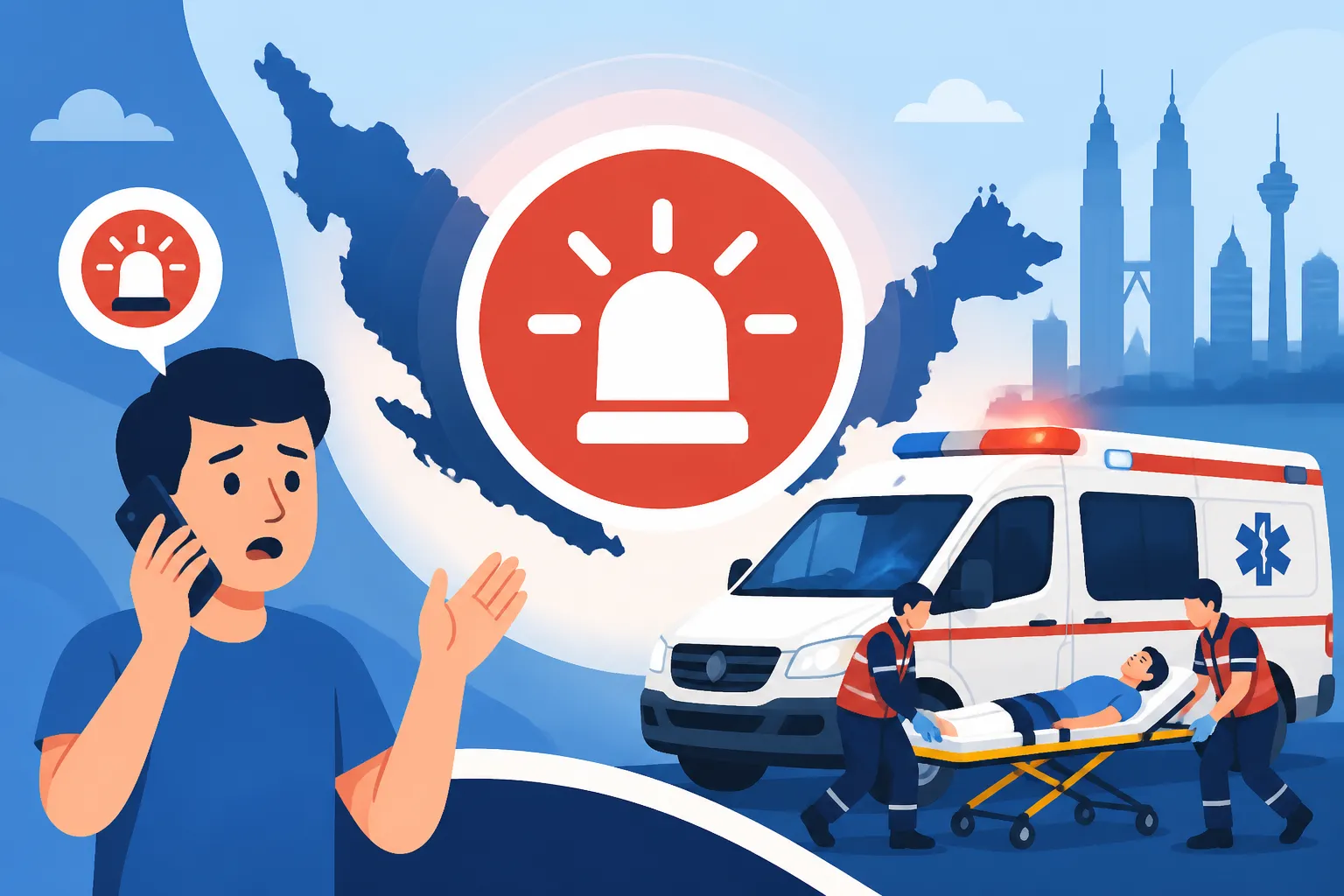
Understanding Emergency Numbers (999) and Ambulance Services in Malaysia
In the middle of a humid Malaysian night, the last thing you want to face is the paralyzing realization that you do not know how to call for help. Navigating a medical crisis in a foreign country is fundamentally different from back home, and in Malaysia, the nuances of the 999 system and ambulance dispatch can mean the difference between timely intervention and a frustrating delay. This guide meticulously breaks down the emergency response infrastructure to ensure you are prepared before a crisis hits.
The Unified Emergency Number: How to Use 999 in Malaysia
When you first arrive in Kuala Lumpur, Penang, or Johor Bahru, you might be tempted to look for separate numbers for the police, the fire department, or medical services. However, Malaysia utilizes a centralized system known as MERS 999 (Malaysian Emergency Response Services). This is a unified system that integrates five major emergency providers: the Royal Malaysia Police (PDRM), the Fire and Rescue Department (Bomba), the Ministry of Health (KKM), the Civil Defence Force (APM), and the Malaysian Maritime Enforcement Agency (MMEA).
Understanding the MERS 999 Dispatch Process
When you dial 999 from a local landline or a mobile phone, your call is first routed to a regional MERS 999 center. There are several of these centers across the country, including in Kuala Lumpur, Malacca, and Sarawak. The initial operator who answers your call is a generalist. Their primary job is to identify the nature of your emergency and your location. Once they determine that you require medical assistance, they will patch you through to a medical dispatcher from the Ministry of Health.
This two-stage process can sometimes feel redundant to an expat in a panic. You might find yourself repeating your location or the patient's condition. It is vital to stay calm during this transition. The system is designed this way to ensure that the correct agency is notified. For instance, if there is a road accident, the operator may need to dispatch both an ambulance and the police. If you are a digital nomad or a frequent traveler using a plan like SafetyWing, you should keep your policy details accessible even during this initial call, though the 999 operator will not ask for insurance information; they focus strictly on the medical necessity.
Challenges for Foreigners Using the 999 System
One of the most common hurdles for expats is the language barrier. While many 999 operators speak English, the level of proficiency can vary depending on the region and the time of day. It is highly recommended to learn basic Malay phrases for emergencies, such as "Kecemasan" (Emergency), "Ambulans" (Ambulance), and "Sakit" (Pain/Sick).
Another significant challenge is explaining your location. Malaysia’s address system, especially in newer housing developments or sprawling condominium complexes, can be confusing. If you are in a high-rise, the dispatcher needs the building name, the block, the floor, and the unit number. Providing a nearby landmark, such as a specific shopping mall, a "Mamak" stall, or a petrol station, can drastically improve the response time. To understand more about the broader context of these services, you should refer to Emergency Medical Care in Malaysia: What Every Expat Needs to Know.
Direct Lines and Secondary Emergency Options
While 999 is the gold standard, some veterans in the expat community keep the direct lines of the nearest police station (Balai Polis) or fire station (Bomba) programmed into their phones. In some cases, if the 999 system is experiencing high volume, calling a local station can yield a faster response, though this is rare. For medical issues, however, always stick to 999 or the direct emergency line of a private hospital if you prefer private care. Understanding What Should I Do in a Medical Emergency in Kuala Lumpur? is essential for those living in the capital where traffic can heavily impact these direct-response times.
Ambulance Services: Public vs. Private Options
In Malaysia, there is a clear distinction between government-run ambulances and those operated by private hospitals or NGOs. Knowing which one to call—and how they differ—is a crucial part of your medical contingency plan.
Government Hospital Ambulances (KKM)
The Ministry of Health (KKM) manages the vast majority of ambulances triggered by the 999 system. These ambulances are staffed by trained paramedics and are linked to the nearest government hospital. The primary advantage of a KKM ambulance is that they are integrated with the 999 system and generally have the right of way in heavy traffic.
However, the destination of a KKM ambulance is almost always the nearest government hospital. You cannot usually request to be taken to a specific private hospital like Gleneagles or Sunway Medical Centre unless the patient is already under their specialized care and the public hospital is full. To get a better sense of how these facilities operate, see How Malaysia’s Health System Works: Public vs Private Explained (2027). While public healthcare in Malaysia is of high quality, the wait times in the emergency department can be significantly longer than in the private sector.
Private Hospital Ambulance Services
Most major private hospital groups in Malaysia, such as Pantai, Gleneagles, and Columbia Asia, operate their own dedicated ambulance fleets. These are not typically dispatched via 999. To use these services, you must call the hospital's emergency hotline directly.
The main benefit here is that you are taken directly to the private facility of your choice, where the intake process is usually faster and the amenities are more aligned with international standards. However, these services are not free and can be quite expensive for those without comprehensive coverage. This is where having a reliable international provider like SafetyWing becomes invaluable, especially for expats who haven't yet settled into a local corporate insurance plan. You can learn more about these choices in Health Insurance in Malaysia: Local, International and Employer Options Explained.
NGO and Volunteer Services: St. John and Red Crescent
In many parts of Malaysia, especially during major public events or in specific urban corridors, the St. John Ambulance of Malaysia (SJAM) and the Malaysian Red Crescent Society (MRCS) play a vital role. These are non-governmental organizations that provide emergency medical services. They often supplement the KKM fleet during peak hours. If a St. John ambulance arrives after you dial 999, do not be alarmed; they are highly trained and work in coordination with the national health system.
Navigating the Cost of Emergency Medical Transport
One of the biggest shocks for foreigners in Malaysia can be the billing structure for emergency services. While citizens pay nominal fees, foreigners are subject to a different rate schedule at public facilities.
Typical Fees for Foreigners at Government Facilities
If you are transported by a government ambulance to a public hospital, you will be required to pay "Foreigner Rates." This includes a fee for the ambulance transport itself and a separate deposit for emergency room treatment. Unlike locals who might pay RM1 for a visit, a foreigner might face an ambulance fee ranging from RM100 to RM300, and an emergency department deposit that can exceed RM500.
It is critical to understand the nuances of Understanding Foreigner Medical Fees at Malaysian Government Hospitals to avoid billing surprises. Most public hospitals require payment upfront or a significant deposit before admission. If you do not have a local guarantee letter (GL) from an employer, you will need to provide a credit card or cash immediately.
The Role of Private Insurance and Reimbursement
For those using private ambulance services, the costs are higher. A private ambulance trip within Kuala Lumpur can cost anywhere from RM300 to RM800 depending on the distance and the level of life support required during transit.
If you are covered by an international plan like SafetyWing, you will typically pay these costs out-of-pocket and then file for a reimbursement. Make sure to collect a detailed itemized receipt and a medical report from the attending physician. This documentation is essential for your insurer to process the claim. Understanding Outpatient vs Inpatient Care and Billing in Malaysia will help you navigate the complexities of how these costs escalate once you move from the ambulance into the hospital ward.
| Service Type | Dispatch Method | Typical Cost (Foreigner) | Destination |
|---|---|---|---|
| Public (KKM) | Dial 999 | RM100 – RM400 | Nearest Government Hospital |
| Private Hospital | Direct Call to Hospital | RM300 – RM900+ | The Specific Private Hospital |
| NGO (St. John) | 999 or Direct | Variable / Donation Based | Usually Government Hospital |
| Civil Defence (APM) | Dial 999 | Low / Variable | Government Hospital |
Practical Steps During a Medical Crisis
When the adrenaline is pumping, it is easy to forget the basics. Following a specific protocol can help the dispatcher and the paramedics provide the best care possible.
What Information to Provide to the Dispatcher
When you are connected to the medical dispatcher, be prepared to answer the following questions clearly:
- The exact location: Mention the street name, building name, and any landmarks.
- The phone number you are calling from: In case the call drops.
- The nature of the emergency: Is the patient breathing? Are they conscious? Is there heavy bleeding?
- The age and gender of the patient.
- Current medications or known allergies: This is vital for the paramedics who will arrive on the scene.
If you are in a location that is difficult to find, send someone to wait at the main road or the lobby of the apartment building to flag down the ambulance. Seconds matter, and an ambulance circling the block because of a missing unit number is a situation you want to avoid. For more on what to expect upon arrival, read about How Do I Register as a Patient at a Hospital in Kuala Lumpur?.
Preparing Your Home for an Emergency Arrival
While waiting for the ambulance, there are several things you can do to facilitate the process. Turn on all the lights in your house or apartment so the paramedics can see clearly. If you have pets, lock them in a separate room to prevent them from interfering with the medical team.
Gather all necessary documents: the patient's passport (or a clear copy), any local ID (like an i-Kad), and insurance cards. If you have a pre-existing condition, have your latest medical reports or prescriptions ready. This is particularly important if you need to know What Health Insurance Covers Pre-Existing Conditions in Malaysia? before you reach the hospital.
Managing Language Barriers with Emergency Staff
While the medical staff in Malaysia are generally proficient in English, the paramedics on the ground may have varying levels of fluency. Use simple, direct sentences. Instead of saying, "He seems to be experiencing a significant amount of discomfort in his thoracic region," say, "He has chest pain."
If you are alone and struggling to communicate, use a translation app or call a local friend who can speak Malay to act as an interpreter over the phone. Most paramedics are incredibly resourceful and will use gestures or simple English to communicate, but being prepared with basic terms helps. You might also want to look into How to Find an English-Speaking Doctor in Malaysia for your local area to have a go-to contact for non-emergency follow-ups.
Specialized Emergency Scenarios for Foreigners
Not every emergency is a straightforward medical collapse. Expats often face specific scenarios that require a different approach to the 999 system.
Road Accidents and Insurance Protocols
If you are involved in a car accident, the 999 dispatcher will likely send both an ambulance and the police. In Malaysia, it is a legal requirement to report any accident involving a government vehicle or significant property damage within 24 hours. From a medical perspective, even if you feel fine, it is often wise to let the paramedics check you over. Internal injuries from a collision on the Federal Highway or the LDP can be masked by adrenaline.
If you are using a rental car or have your own vehicle, your local motor insurance may have its own "Roadside Assistance" number which includes an ambulance service. However, for serious injuries, always stick to the 999 system. For those traveling across borders, understanding How to Handle a Medical Emergency Abroad with Malaysian Insurance is critical if an accident occurs while you are on a weekend trip to Thailand or Singapore.
Mental Health Emergencies and Crisis Support
Malaysia has been making strides in mental health awareness, but the emergency response for psychiatric crises is still largely handled by the police and government hospitals. If a person is a danger to themselves or others, 999 will dispatch the police along with an ambulance.
The patient will typically be taken to the psychiatric ward of a government hospital (such as Hospital Bahagia or the psychiatric unit at HKL). For non-life-threatening mental health crises, there are NGOs like Befrienders Malaysia that offer 24/7 support. It is worth knowing how Befrienders Malaysia works if you or a loved one needs immediate but non-physical intervention.
Dengue Fever and Urgent Admissions
Dengue is a reality of living in the tropics. If a fever spikes and you see signs of dehydration or a drop in blood pressure, this constitutes a medical emergency. You should not wait for a GP appointment. Many expats choose to go directly to the emergency room of a private hospital. If you choose this route, be aware of the deposit required for admission, which can be several thousand Ringgit for foreigners if you do not have a local guarantee letter.
Safety Measures and Preparation for Expats
Preparation is the best antidote to panic. Editors recommend taking these proactive steps long before you ever need to dial those three digits.
Building a Digital and Physical Emergency Contact List
Do not rely solely on your phone's contact list. If your phone dies or is damaged in an accident, you need a backup. Keep a printed "Emergency Sheet" on your refrigerator and in your wallet that includes:
- The 999 number (obviously).
- The direct emergency number for the two nearest private hospitals.
- Your blood type and any major allergies.
- The contact info for your nearest embassy or consulate.
- The policy number for your insurance (e.g., SafetyWing).
- A local friend’s number who can speak both English and Malay.
The Importance of International Health Coverage
While many expats are covered by their employers, there are often gaps—such as during the first month of arrival or if you decide to go freelance. Digital nomads on the DE Rantau pass often overlook the need for robust emergency coverage. SafetyWing is a popular choice because it is designed for this demographic, providing a safety net for unexpected hospitalizations and emergency transports.
Without such coverage, an emergency in Malaysia can quickly drain your savings. Private hospitals will provide life-saving stabilization regardless of your ability to pay, but they will not hesitate to transfer you to a government facility once you are stable if the funds are not available. Make sure you understand Understanding Private Hospital Networks and Panel Clinics in Malaysia to ensure you are choosing a facility that aligns with your insurance provider's "panel" or reimbursement rules.
Regular Drills and Location Awareness
Finally, do a "dry run." If you live in a complex condo like those in Mont Kiara or KLCC, look at where the ambulance access point is. Some condos have specific "Emergency Lifts" that only the management can operate. Knowing how to call your building's security to prepare these lifts can save precious minutes. Stay informed about Nearest Government Hospital so you know exactly where the ambulance will be taking you if you go the public route.
Disclaimer
The information provided in this guide is for informational purposes only and does not constitute legal or medical advice. Emergency protocols and fees in Malaysia are subject to change by the Ministry of Health and relevant authorities. Always verify current emergency numbers and hospital policies upon your arrival in the country. In a life-threatening situation, dial 999 immediately.