Do I Need Health Insurance for a Malaysian Employment Pass?
Moving to Malaysia on an Employment Pass is a whirlwind of paperwork, medical check-ups, and the inevitable "sticker shock" that comes with navigating a new administrative system. One of the most frequent points of confusion for new arrivals is whether health insurance is a formal legal requirement for the visa or just a strong suggestion for personal safety. This guide clarifies the mandatory insurance obligations for expats, the hidden gaps in employer-provided coverage, and how to ensure you aren't left paying thousands out of pocket at a private clinic.
The Legal and Administrative Reality of Health Insurance for Employment Pass Holders
When you are applying for an Employment Pass (EP) through the Expatriate Services Division (ESD) or MDEC, the "requirement" for health insurance is often more nuanced than a simple yes or no. Legally, the Malaysian government requires employers to be responsible for the well-being of their foreign staff. In practice, this means that while you might not always be asked to upload an insurance certificate as part of your initial Stage 1 approval, your employer is mandated to ensure you are covered under some form of medical benefit scheme.
For many professionals, this manifests as a corporate group policy. However, the immigration department has become increasingly strict about ensuring that foreigners do not become a burden on the public healthcare system. If you are a Category III EP holder (usually those with lower salary brackets), the requirements are often more rigid compared to Category I or II. Regardless of the category, having a policy in place is a prerequisite for a stress-free life in the tropics. Transitioning into the local system can take time, which is why many savvy expats use flexible options like SafetyWing to cover their initial months while the corporate HR department drags its feet on activating the local group policy.
The Role of the Employer and SOCSO
It is a common misconception that having an Employment Pass automatically grants you the same healthcare rights as a Malaysian citizen. While you are a legal resident, you are still classified as a "foreigner" in the eyes of the Ministry of Health. In recent years, Malaysia has expanded the Social Security Organisation (SOCSO/PERKESO) coverage to include foreign workers, including those on an Employment Pass. Your employer is legally required to contribute to this, which provides some protection for work-related injuries.
However, SOCSO is not a comprehensive health insurance plan. It is primarily for disability, workplace accidents, and occupational diseases. It will not cover your midnight emergency appendectomy or a chronic condition unrelated to your job. This is where Health Insurance in Malaysia: Local, International and Employer Options Explained becomes a vital read, as it helps you distinguish between what your boss is paying for and what you actually need to survive a medical crisis. Relying solely on SOCSO is a gamble that most veteran expats would strongly advise against.
ESD Requirements and the MDEC Perspective
If you are working in the tech sector under MDEC or a general corporate role under ESD, the authorities expect your sponsoring company to provide at least a basic level of Inpatient and Outpatient care. During the visa endorsement stage (Stage 2), some officers may request proof of medical coverage, especially if the company is small or newly registered.
The reality of the Malaysian "system" is that rules can be interpreted differently depending on the officer handling your file. Having a digital or printed copy of a policy, even an international one like SafetyWing, can act as a vital safety net during these administrative hurdles. It proves to the authorities that you are self-sufficient and have the means to access private care without needing to rely on government subsidies, which are strictly reserved for locals.
Public vs Private: Why Having Your Own Policy Is Non-Negotiable
One of the first things you will notice when visiting a doctor in Kuala Lumpur or Penang is the dual-tier pricing. In the past, foreigners could access government hospitals at a relatively low cost. That has changed significantly. Today, there is a distinct "foreigner rate" for every consultation, lab test, and hospital bed. While the government facilities are world-class in terms of expertise, the wait times and the lack of privacy can be jarring for those used to Western standards.
Without a robust insurance policy, you will find yourself pushed toward the private sector, which is excellent but expensive. Private hospitals like Gleneagles, Pantai, or Prince Court operate much like high-end hotels. They require a significant deposit before admission—sometimes ranging from RM5,000 to RM20,000—unless you have a "Letter of Guarantee" (LOG) from an approved insurance provider. This is why How Malaysia's Health System Works: Public vs Private Explained (2027) is such an important concept to master before you even land at KLIA.
Understanding Foreigner Medical Fees at Malaysian Government Hospitals
If you do choose to use the public system, perhaps for a specialized treatment only available at a government facility, you must be prepared for the cost. As an EP holder, you do not qualify for the RM1 or RM5 fees that locals enjoy. Instead, you will be charged the "Full Paying Patient" or "Foreigner Rate," which can often be 10 to 20 times higher than the local rate.
For instance, a simple outpatient visit that costs a local RM1 could cost a foreigner RM40 to RM100 just for the registration and consultation, excluding medication and tests. You should check Understanding Foreigner Medical Fees at Malaysian Government Hospitals to get a realistic idea of these costs. When you factor in the time lost in the legendary queues of a Klinik Kesihatan, the value of a private insurance policy that allows you to walk into a private GP clinic becomes incredibly clear.
The Problem with Panel Clinics and Group Insurance
Most Malaysian companies provide "Panel Clinic" benefits. This means you can visit a specific list of local GPs and simply show your ID or a digital card to get treatment without paying cash. While this is great for a common cold or a flu shot, these corporate policies often have very low annual limits—sometimes as low as RM10,000 or RM20,000 for the entire year.
In the event of a major accident or a surgical requirement, RM20,000 will be gone in the first 48 hours of a private hospital stay. Veteran expats usually supplement their employer's basic coverage with a personal policy. This ensures that if you lose your job (and thus your Employment Pass and company insurance), you aren't suddenly left with a pre-existing condition that no new insurer will cover. Having a portable, international plan like SafetyWing ensures that your coverage follows you, even if your employment status in Malaysia changes or if you decide to take a month-long "workation" in Bali.
Choosing the Right Coverage: Local vs International Options
Once you realize that the "basic" coverage from your employer isn't enough, you have to decide between a local Malaysian medical card and an international private medical insurance (IPMI) plan. Local plans are generally cheaper and are specifically designed to work with the "cashless" systems of Malaysian private hospitals. They often come with a physical or digital medical card that allows for immediate hospital admission without a cash deposit.
On the other hand, international plans offer much higher limits and cover you when you travel back to your home country or go on holiday. For a digital nomad or an expat on a Category II Employment Pass who travels frequently for work, the flexibility of an international provider is often superior. If you are in the middle of a transition, products like SafetyWing offer a middle ground: affordable, high-limit coverage that satisfies the need for protection without the long-term commitment of a local 20-year medical life insurance policy.
How to Buy Standalone Health Insurance as a Foreigner in Malaysia
If your employer doesn't provide insurance, or if you are self-employed on a specialized pass, you will need to navigate the local market yourself. Buying insurance as a foreigner can be a bit of a maze. Most local insurers will require you to have at least six months remaining on your Employment Pass before they will issue a policy. They will also require a full medical check-up if you are over a certain age or have a history of illness.
To simplify the process, many expats start by researching How to Buy Standalone Health Insurance as a Foreigner in Malaysia. It is important to look for a policy that includes a "Letter of Guarantee" (LOG) facility. This is the golden ticket in the Malaysian healthcare system; it tells the hospital that the insurer will pay the bill directly, so you don't have to swipe your credit card for a RM50,000 bill and wait months for a reimbursement.
Navigating the Hospital Admission Process
Even with insurance, the first time you are admitted to a private hospital in Malaysia can be stressful. You will likely be asked for your passport, your Employment Pass (or a copy of it), and your insurance details. If you have an international plan, the hospital's international desk will need to contact your insurer to verify coverage.
This process can take anywhere from two to six hours. During this "waiting period," the hospital might still ask for a small credit card authorization. This is normal. To better prepare for this, read The Expat Guide to Choosing a Private Hospital in Malaysia (2027) to find a facility that is experienced in dealing with international insurers. Hospitals like Sunway Medical Centre or Gleneagles have dedicated departments just for expats, which can make the process significantly smoother than at smaller, local private facilities.
Practical Steps to Navigating the Malaysian Healthcare System
Having insurance is only half the battle; knowing how to use it in a local context is what separates the seasoned expat from the "newbie." In Malaysia, healthcare is very much "on-demand." You don't usually need a GP referral to see a specialist at a private hospital. You can simply call the hospital, book an appointment with a consultant, and show up. However, your insurance might require a referral to honor a claim, so always check your policy wording first.
It is also worth noting that many small clinics in residential areas like Mont Kiara or Bangsar are highly professional and speak perfect English. You don't always need to rush to a big hospital for minor ailments. For a deeper dive into these local nuances, check out How to Access Care at a Private Hospital Group Like Pantai or Gleneagles to understand the difference between "walk-in" clinics and "specialist suites."
Emergency Services and What to Do in a Crisis
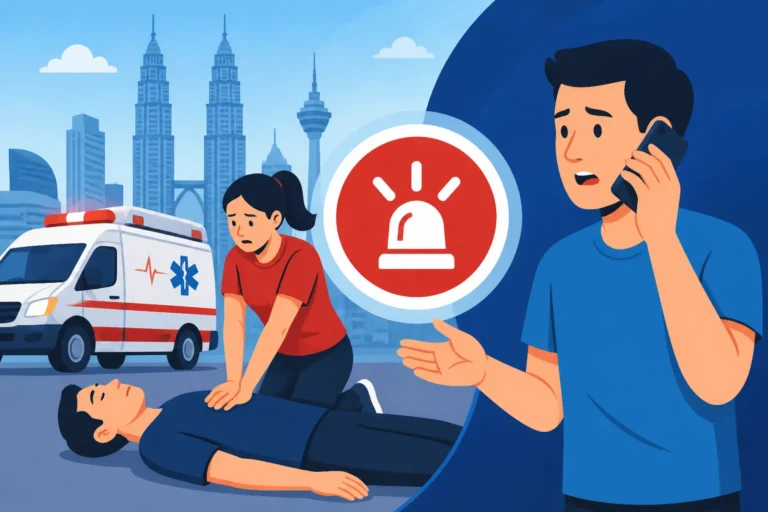
In a real emergency—think a car accident or a sudden heart attack—you need to know the local protocols. The national emergency number is 999, but the response time for public ambulances can vary wildly depending on traffic and location. Many private hospitals have their own ambulance fleets which are often faster but will charge a fee (usually RM200-RM500).
Make sure you have Understanding Emergency Numbers (999) and Ambulance Services in Malaysia bookmarked. In a crisis, if you are conscious, you should tell the paramedics which private hospital you want to be taken to. If you don't specify, they will likely take you to the nearest government hospital, which is great for stabilization but might not be where your insurance coverage is most effective for long-term recovery. This is another area where having a flexible plan like SafetyWing can be a lifesaver, as they are used to handling emergency evacuations and high-stakes claims globally.
Comparing Insurance Options for EP Holders
To help you decide which path to take, the following table breaks down the typical pros and cons of the three main insurance routes for those on an Employment Pass:
| Feature | Employer Group Policy | Local Medical Card | International Plan (e.g. SafetyWing) |
|---|---|---|---|
| Cost | Usually free for the employee | RM150 – RM500 per month | Starts at approx. $45/month |
| Portability | Lost if you change jobs | Stays with you in Malaysia | Follows you globally |
| Hospital Admission | Cashless (at panel hospitals) | Cashless (at panel hospitals) | Reimbursement or LOG |
| Coverage Limits | Often low (RM20k – RM50k) | High (RM100k – RM1mil+) | Very high (Up to $250k+) |
| Pre-existing Conditions | Usually covered after 1 year | Usually excluded | Usually excluded |
Why the 182-Day Rule and Tax Residency Matter for Your Health
While this is a guide about health insurance, your tax status in Malaysia actually impacts your long-term medical planning. In your first year, if you stay in the country for more than 182 days, you become a tax resident. This status is often used by insurers to determine your eligibility for certain "local" rates and long-term policies.
If you are a frequent traveler and fall short of the 182-day mark, you might be classified as a non-resident, which can make it harder to get a local Malaysian medical card. In these scenarios, maintaining an international policy like SafetyWing is almost mandatory, as it doesn't rely on your local tax residency status to remain valid. Furthermore, the mandatory SOCSO contributions mentioned earlier are only effective if your employer has properly registered you as a legal worker, so always check your payslip to ensure the "PERKESO" deduction is being made. You can learn more about these worker protections in Understanding SOCSO Medical Benefits for Foreign Workers in Malaysia.
Ultimately, while the Employment Pass itself might not strictly demand a specific insurance certificate on day one, the realities of Malaysian life make it a functional necessity. Between the high cost of private care for foreigners and the limited scope of government facilities, going uninsured is a risk that simply isn't worth taking. Whether you choose a local giant or a flexible international provider like SafetyWing, make sure you are covered before that first tropical fever or weekend trip to the jungle.
Disclaimer
The information provided in this article is for general informational purposes only and does not constitute legal, financial, or professional medical advice. Immigration rules and healthcare policies in Malaysia are subject to frequent change. Always consult with a qualified insurance broker, your company’s HR department, or the Malaysian Expatriate Services Division (ESD) for the most current requirements regarding your specific visa category. Neither the author nor the publisher is responsible for any consequences arising from the use of this information.