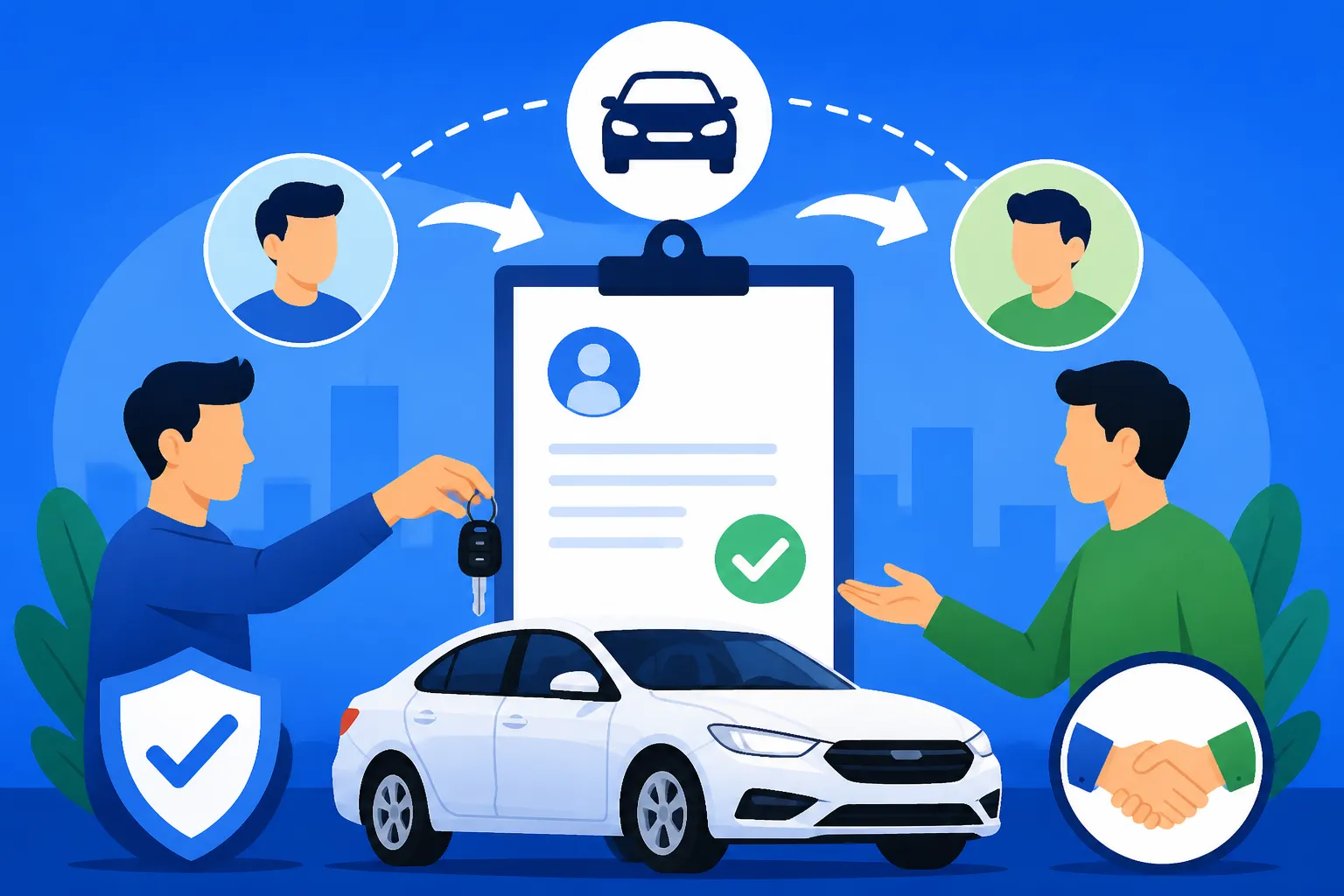
How Do I Transfer a Car Into My Name in Malaysia?
So, you’ve found the perfect set of wheels here in Malaysia – maybe it’s a zippy little Perodua Myvi for navigating the city, or perhaps a more rugged 4×4 for those weekend escapes to the jungle. Congratulations! That’s a huge step towards truly settling into expat life. But then comes the next hurdle, one that often feels like navigating a maze blindfolded: transferring that car into your name. It can be a bureaucratic headache, filled with unfamiliar forms, multiple government agencies, and more than a few moments where you just want to throw your hands up. Trust me, I’ve been there. This guide is going to walk you through the entire process, cutting through the jargon and giving you the real-world steps you need to get that vehicle officially registered under your name.
Understanding the Landscape of Vehicle Ownership Transfer in Malaysia
Before we dive into the nitty-gritty, it's really helpful to understand the ecosystem you're about to enter. Transferring vehicle ownership isn't just a simple signature; it involves several key players and processes, each with its own set of rules and quirks that can feel especially perplexing for a foreigner.
Why the Transfer Process Can Feel Like a Labyrinth
For us expats, administrative processes in Malaysia can often feel like a unique challenge. Unlike some Western countries where a simple online form might suffice, here, you're looking at a multi-stage process that requires physical presence, specific documents, and adherence to protocols that might not always be immediately obvious.
One of the biggest frustrations is the sheer bureaucracy. You'll be dealing with at least two main government bodies, the Road Transport Department (JPJ – Jabatan Pengangkutan Jalan) and Puspakom, Malaysia's vehicle inspection company. Each has its own forms, requirements, and sometimes, varying interpretations of those requirements depending on who you speak to on any given day. Then there's the language barrier, which, while often manageable in major cities, can become a real hurdle when dealing with technical terms or specific procedural questions. You might find yourself staring blankly at a form written in Bahasa Malaysia, trying to decipher what "No. Pendaftaran Kenderaan" (Vehicle Registration Number) means amongst a sea of other fields. It’s not uncommon to be sent away for a missing stamp or a misplaced copy, only to return and face a different hurdle. This isn't because anyone is trying to make your life difficult; it's simply the way the system operates, often built on legacy processes that haven't quite caught up with digital convenience. Validating your frustrations is the first step, so know you're not alone!
Key Players and Their Roles in the Transfer Saga
Let's break down who does what in this whole transfer business. Knowing this will help you understand the flow and anticipate what's coming next.
- The Seller (Previous Owner): This is the person whose name the car is currently registered under. Their cooperation is absolutely vital. They'll need to provide documents, sign forms, and potentially even be present at the JPJ for the biometric verification. Without them, or at least their duly appointed representative, you're essentially stuck. Always ensure you have a clear agreement and communication channel with the seller.
- The Buyer (New Owner – That's You!): You, my friend, are the protagonist of this story. You'll be providing your identity documents, signing everything, arranging insurance, and, of course, paying for the car and the transfer fees. Your role is to be prepared, patient, and persistent.
- Puspakom (Computerised Vehicle Inspection Centre): Think of Puspakom as the gatekeeper for vehicle transfers. Every used vehicle undergoing an ownership transfer must pass a Puspakom inspection. This inspection, primarily the B5 transfer of ownership inspection, is to verify the vehicle's identity (chassis number, engine number) and ensure it's roadworthy. Without their official report, JPJ won't touch the transfer. It's a non-negotiable step. If you're wondering How Do I Get a Puspakom Inspection for My Car in Malaysia?, we’ll delve into that soon.
- Jabatan Pengangkutan Jalan (JPJ – Road Transport Department): This is where the magic (or rather, the official record-keeping) happens. JPJ is the ultimate authority for vehicle registration and ownership transfers. They process the paperwork, perform the crucial biometric thumbprint verification, and issue the new Vehicle Registration Certificate (VRC), formerly known as the Grant. This is the government department you’ll be spending the most time with, so get comfortable with their name!
- Insurance Company: Before JPJ will transfer the car, you absolutely must have a valid car insurance policy under your name. Your insurance company will issue an e-cover note, which is electronically transmitted to JPJ. No insurance, no road tax, no transfer. It's that simple. Understanding How Much Is Car Insurance in Malaysia? is crucial for budgeting.
Step-by-Step Guide to Transferring Car Ownership in Malaysia
Alright, let's roll up our sleeves and get into the practical steps. This is where your patience will be tested, but with a clear roadmap, you can absolutely conquer it.
Stage 1: The Pre-Sale Checklist and Document Gathering
Before you even think about heading to Puspakom or JPJ, there’s some crucial groundwork to lay. This initial stage can save you a world of pain and wasted trips later on.
First and foremost, check for outstanding summonses and blacklists on the vehicle. You definitely don’t want to inherit someone else’s traffic fines! You can usually do this online via MyEG or by checking directly at a JPJ office. Ensure the seller clears any outstanding issues before you proceed. Also, make sure the vehicle’s existing road tax hasn’t expired, or if it has, clarify who will be responsible for renewing it after the transfer but before you drive it. Remember, driving with expired road tax is a definite no-no here.
Next, you need to gather all the necessary documents. This list applies to both you and the seller, and it’s critical that everything is accurate and up-to-date.
For the Seller (Previous Owner):
- Original Vehicle Registration Certificate (VRC) or what used to be called the Grant.
- Original Identification Card (MyKad) or passport for foreign sellers.
- Form JPJ K3A (Borang Pertukaran Hak Milik Kenderaan Motor Selain Daripada Jualan – Transfer of Vehicle Ownership Form Other Than Sale), which needs to be filled and signed. This form is usually available at JPJ offices or can be downloaded from their website.
- If the seller is a company, you'll need the company registration certificate (SSM printout), a company resolution authorising the sale, and an authorised signatory's ID. This can add a layer of complexity, so be prepared for more paperwork.
For You (New Owner – Expat):
- Original Passport.
- Copy of your Malaysian visa or Employment Pass. JPJ will want to see proof of your legal residency status in Malaysia. If you're on a long-term social visit pass, ensure it's valid. This highlights the importance of The Complete Guide to Malaysian Visas for Expats (2027).
- A copy of your driving license. While not strictly required for ownership transfer, it’s always good practice to have it, especially if you plan on How to Convert a Foreign Driving Licence in Malaysia.
- Form JPJ K3 (Borang Pertukaran Hak Milik Kenderaan Motor – Vehicle Ownership Transfer Form) – You will fill out your details on this.
- Proof of residential address in Malaysia (utility bill, tenancy agreement, etc.). While not always explicitly asked for a transfer, it’s wise to have it, as various government agencies can request it.
- Sufficient funds (cash or debit card) for transfer fees, road tax, and insurance. This leads to the question of What Documents Do I Need to Open a Bank Account in Malaysia? to ensure you have local funds accessible.
Important Note on Forms: The JPJ K3 and JPJ K3A forms are critical. Make sure they are correctly filled out, signed, and witnessed if required. Any discrepancies can lead to delays. My advice? Get a copy of the blank forms beforehand and fill them out carefully.
Stage 2: The Mandatory Puspakom Inspection
This is often the first physical hurdle in the car transfer process. Every vehicle, regardless of age, needs to undergo an inspection by Puspakom to ensure it's legitimate and roadworthy.
What is Puspakom and Why Do I Need It?
Puspakom is the sole appointed vehicle inspection company in Malaysia. For ownership transfers, they perform a "B5 (Ownership Transfer)" inspection. This isn't a full-blown safety check like an annual inspection might be, but rather a verification of the vehicle's identity. They meticulously check:
- Chassis Number: To ensure it matches the VRC and hasn't been tampered with.
- Engine Number: Similar to the chassis number, this is a crucial identifier.
- Body Type and Colour: Verification that the vehicle matches its registration details.
- Basic Roadworthiness: They'll do a quick check on things like brakes, lights, and tires to ensure it's not a complete hazard.
Booking an Appointment:
While you can sometimes try for a walk-in, it’s strongly recommended to book an appointment online through the Puspakom website (www.puspakom.com.my). This saves you potentially hours of waiting. Select the "B5 (Ownership Transfer)" inspection type. You'll need the vehicle registration number for booking.
What to Bring to Puspakom:
- The vehicle itself (obviously!).
- Original Vehicle Registration Certificate (VRC) or Grant.
- A copy of the seller's MyKad/passport.
- A copy of your MyKad/passport (as the new owner).
- The Puspakom inspection fee (check their website for current rates, but it's usually around RM30 for a B5 inspection).
At the Puspakom Centre:
Arrive early for your appointment. The process is usually quite efficient once your turn comes. You'll hand over your documents, the car will be driven into the inspection bay, and within 15-30 minutes, they'll issue a report. If the car passes (which most do for a B5, unless there are major discrepancies with its identity), you'll receive a Puspakom B5 Inspection Report, valid for 60 days. This report is essential for JPJ. If it fails for an identity reason, you'll need to rectify it and get a re-inspection.
Stage 3: Insurance and Road Tax Activation
With your Puspakom report in hand, the next critical step is getting your car insured. Without insurance, you simply cannot proceed to the JPJ for the transfer or get your road tax.
Securing Your Car Insurance:
As an expat, you might find that insurance premiums vary slightly depending on your nationality or even your driving history in your home country. It’s always best to get a few quotes. Major insurance providers in Malaysia include Allianz, Etiqa, AXA, Takaful Malaysia, and Zurich, among others. You can contact them directly or use an insurance agent who can shop around for you.
When applying for insurance, you’ll need:
- Your passport and visa/Employment Pass details.
- Your Malaysian driving license (or your foreign license if it’s endorsed by JPJ).
- The car's details (make, model, year, engine capacity, chassis number, registration number).
- The Puspakom B5 inspection report number.
Crucially, ensure the insurance policy is issued in your name as the new owner. The insurance company will then issue an e-cover note. This e-cover note is digitally sent to JPJ, indicating that the vehicle is insured. You won't typically receive a physical policy immediately, but the e-cover note is what matters for the transfer.
Understanding Road Tax:
Once your insurance is active via the e-cover note, you can then purchase or renew the road tax. Road tax in Malaysia is calculated based on the vehicle's engine capacity (cc) and the type of vehicle. For foreigners, the rates are generally higher than for Malaysian citizens. This is a common point of contention for expats, but it's standard practice. You can check How Much Is Road Tax for a Car in Malaysia? for detailed rates.
You can often purchase the road tax directly from your insurance agent, or at a post office, or at the JPJ counter. Since you're already going to JPJ for the transfer, it's often convenient to sort out the road tax there.
Stage 4: The JPJ Transfer – The Grand Finale
This is it – the culmination of your efforts. The JPJ office is where the actual ownership record is officially changed.
Making the Appointment:
While some JPJ branches allow walk-ins, it's highly advisable to book an appointment, especially for transfers involving foreigners, as these can sometimes take longer. Check the specific JPJ branch you plan to visit, as booking methods can vary (some use the MyJPJ portal, others require calling or queuing early).
What to Bring to JPJ (A Complete Checklist):
Double-check everything one last time!
- Original Vehicle Registration Certificate (VRC) / Grant.
- Original Puspakom B5 Inspection Report.
- Original ID (MyKad) of the Seller.
- Original Passport and Malaysian Visa/Employment Pass of the Buyer (You).
- Filled and Signed JPJ K3 and JPJ K3A forms. Ensure all sections for both buyer and seller are completed.
- Proof of Insurance (e-cover note) – While usually transmitted electronically, having a printout of the cover note in case of system glitches is a smart move.
- Cash or Debit Card for JPJ transfer fees and road tax payment. The transfer fee itself is generally quite low (around RM100), but road tax can be significant.
- Letter of authorisation if either the buyer or seller cannot be physically present, along with copies of their IDs. This is complex for biometric verification, discussed below.
The Biometric Verification (Thumbprint):
This is perhaps the most crucial and sometimes trickiest part for expats, especially if the seller isn't available. Both the seller and the buyer must undergo biometric (thumbprint) verification at the JPJ counter.
- If both seller and buyer are present: You both present your IDs, the officer scans your thumbprints against the national database, verifying your identities. This is the smoothest scenario.
- If the seller cannot be present: The seller can pre-authenticate their thumbprint at any JPJ office beforehand. They will usually be given a slip of paper confirming this. This pre-authentication is valid for a certain period (e.g., 7-14 days), during which you, the buyer, can then complete the transfer on your own.
- If you (the buyer) cannot be present: This is generally not advised and can be extremely difficult. You need to be there to prove your identity and ownership.
The Process at JPJ:
- Take a Queue Number: Upon arrival (with your appointment if you made one), get a queue number for "Pendaftaran Kenderaan" or "Urusan Tukar Hak Milik."
- Submit Documents: When your number is called, present all your documents to the JPJ officer. They will meticulously check everything.
- Biometric Verification: This is where you and the seller (or the seller's pre-authentication slip) will provide thumbprints.
- Payment: Once verified, you'll be instructed to pay the transfer fee and your new road tax.
- Receive New VRC: After payment, the officer will process the transfer and issue you a new Vehicle Registration Certificate (VRC) with your name as the registered owner. Congratulations! You've officially done it.
Remember, the entire process of Driving in Malaysia: Licences, Registration and Rules for Expats (2027) begins with getting your car legally registered under your name.
Common Pitfalls and Troubleshooting for Expats
Even with a detailed guide, expect a curveball or two. That’s just the reality of navigating bureaucracy, especially as an expat.
Navigating Language Barriers and Bureaucratic Hurdles
One of the most common challenges is simply understanding what's being asked. While many JPJ and Puspakom officers in major cities like Kuala Lumpur, Penang, or Johor Bahru speak decent English, there's always the chance of encountering someone who doesn't, or who uses technical Bahasa Malaysia terms that leave you scratching your head.
Tips for Success:
- Bring a Malaysian Friend: If possible, ask a trusted Malaysian friend, colleague, or even your spouse to accompany you, especially for the JPJ visit. Their understanding of the language and local customs can be invaluable.
- Be Patient and Polite: This goes a long way. Frustration is understandable, but maintaining a calm and respectful demeanor will yield better results.
- Ask for Clarification: Don't be shy to ask "Boleh tolong jelaskan?" (Can you please explain?) if you don't understand something.
- Have All Documents in Order: A complete set of documents, perfectly organized, is your best defense against being turned away. Create a checklist and tick off each item.
- Check JPJ and Puspakom Websites: Before you go, always check the official websites for the latest requirements and forms, as these can sometimes be updated without much public fanfare.
What If the Previous Owner Isn't Cooperating?
This is a nightmare scenario, but it happens. The smooth transfer process relies heavily on the seller's cooperation.
Scenarios and Solutions:
- Seller is Difficult to Contact/Unresponsive: If you’re buying from a private seller, ensure you have clear communication from the start. A formal Sale and Purchase Agreement (S&P) stating their obligation to assist with the transfer can provide some leverage. If they completely vanish, you might have to engage a lawyer, which is a costly and lengthy process. This is why buying from reputable used car dealerships is often recommended for expats, as they usually handle the transfer process for you.
- Seller Can't Be Present for Biometric: As mentioned, they can pre-authenticate their thumbprint at any JPJ office. Ensure they do this before you initiate the transfer. Get the original slip from them.
- Seller Refuses to Sign Forms: Without their signature on the JPJ K3A, the transfer cannot proceed. If you’ve already paid for the car, this becomes a legal dispute. Again, a comprehensive S&P agreement is your first line of defense.
- Deceased Owner: If the registered owner has passed away, the process becomes significantly more complicated, involving the executor of the estate and potentially court orders. Avoid these situations if possible, or ensure the executor has all the legal documents prepared.
Dealing with Road Tax and Insurance Gaps
Having a gap in your insurance or road tax coverage, even for a day, is illegal and can lead to fines if you're caught driving.
Consequences:
- Driving without valid insurance and road tax can result in significant fines (up to RM2,000 for road tax, and even more for insurance, plus potential jail time).
- In the event of an accident, you will not be covered, leading to massive out-of-pocket expenses.
How to Prevent Gaps:
- Coordinate Closely: Ensure your insurance policy becomes active on the day of the JPJ transfer, or even a day before if you plan to drive the car immediately after.
- Renew in Advance: If the existing road tax is about to expire, factor that into your timeline. You can renew road tax up to two months in advance.
- Don’t Drive an Unregistered Car: Until the car is fully transferred into your name, insured, and road-taxed, do not drive it. Use Grab, taxis, or ask a friend for rides. If you're exploring alternatives to car ownership, you might want to look into How Do I Use Grab Instead of Owning a Car in Kuala Lumpur?.
Transferring a car into your name in Malaysia might seem like a daunting task, full of paperwork, queues, and thumbprints. But thousands of expats do it every year. By understanding the process, being meticulous with your documents, and approaching it with a good dose of patience, you'll soon have your new Malaysian car legally registered and ready for your adventures. Remember, every administrative hurdle you overcome here just makes you a savvier, more integrated expat. Happy driving!
Disclaimer
The information provided in this guide is for general informational purposes only and does not constitute legal, financial, or professional advice. While we strive to provide accurate and up-to-date information, regulations and procedures in Malaysia can change without prior notice. It is highly recommended to verify all information with the relevant Malaysian authorities (JPJ, Puspakom, insurance providers) or consult with a qualified professional before making any decisions related to vehicle ownership transfer or related matters. We accept no liability for any loss or damage arising from reliance on this information.