What Is the Best Way to Get Around Kuala Lumpur Without a Car?
Ah, Kuala Lumpur. The vibrant, bustling heart of Malaysia. One thing is certain: the thought of driving here can be… daunting. Between the unpredictable traffic, the confusing one-way systems, and the relentless quest for parking, it’s enough to make even the most seasoned driver throw up their hands. But fear not, my friend! This guide is here to uncomplicate your life, showing you the absolute best ways to conquer KL’s sprawling landscape without ever needing to touch a steering wheel.
Navigating Kuala Lumpur's Extensive Rail Network
When people ask me how to get around KL without a car, my first answer is always the same: embrace the rails. Kuala Lumpur boasts a surprisingly comprehensive and efficient public rail network that can get you to most major attractions and business districts with relative ease. It’s a lifesaver, truly.
The LRT, MRT, and Monorail: Your City Lifelines
The sheer number of acronyms can be a bit overwhelming at first, but trust me, once you get the hang of it, these systems become your best friends. They are generally clean, air-conditioned, and most importantly, they bypass the notorious KL traffic jams.
The Light Rail Transit (LRT) system, primarily represented by the Kelana Jaya Line and the Ampang/Sri Petaling Line, has long been the backbone of KL’s public transport. The Kelana Jaya Line is particularly popular, connecting major hubs like KL Sentral to popular spots like KLCC (home of the Petronas Twin Towers), Pasar Seni (Central Market), and numerous residential areas. I remember countless times relying on the LRT to whisk me away from a stressful day at work, gazing out at the city lights. It’s affordable and frequent, though sometimes packed like sardines during peak morning and evening commutes.
Then we have the Mass Rapid Transit (MRT). This relatively newer addition has significantly expanded the city’s reach. The MRT Kajang Line and the Putrajaya Line are game-changers, offering direct access to areas previously harder to reach by rail, such as Tun Razak Exchange (TRX), Damansara, and even some parts leading towards Kajang. The MRT stations are often architectural marvels themselves, clean and modern, with seamless connections to other lines and convenient pedestrian walkways. For instance, if you're staying around Bukit Bintang, the MRT provides fantastic access to The Expat Guide to Choosing a Private Hospital in Malaysia (2026) in areas like Damansara or Petaling Jaya without having to deal with traffic.
Finally, there’s the KL Monorail. While perhaps the shortest and least extensive of the three, it’s incredibly useful for traversing the heart of the Golden Triangle – that bustling commercial and shopping district. It connects key areas like KL Sentral (via a covered walkway) to Bukit Bintang and Chow Kit. The Monorail offers elevated views of the city, which is a nice bonus, though it can feel a bit older and more cramped than the LRT or MRT.
To use these systems, you’ll definitely want to get a Touch 'n Go card. It’s a reloadable smart card that allows you to tap in and out of all public transport (and even pay for tolls or parking if you ever do venture into driving). You can buy and reload them at any station or at convenience stores like 7-Eleven. It saves you the hassle of fumbling for small change or buying single-journey tokens, which honestly, is just a waste of time.
How to Master the Integrated System
The beauty of KL’s rail network lies in its increasing integration. Many stations offer direct interchanges, meaning you can easily switch between LRT, MRT, and Monorail lines, often within the same station complex or via short, sheltered walkways. For example, Pasar Seni is a major hub where you can switch between the Kelana Jaya LRT Line and the Kajang MRT Line, making it incredibly easy to get from, say, KLCC to the vibrant heritage streets around Petaling Street.
To master this, a few key tools are invaluable:
- Google Maps: Honestly, Google Maps in KL is surprisingly accurate for public transport. Just enter your destination, select the transit option, and it will lay out your route, showing which lines to take, where to interchange, and estimated travel times.
- Moovit App: This is another fantastic app for public transport navigation. It often provides real-time updates and more detailed instructions, especially helpful if you're trying to figure out bus routes as well.
- Rapid KL App: The official app from the main public transport operator. It’s useful for journey planning and staying updated on service announcements.
While the rail network covers a significant portion of the city, it’s not omnipresent. There will be times when your destination is a bit of a walk from the nearest station, or perhaps in an area not directly served by a train line. This is where other modes of transport come into play.
The Convenience of Ride-Hailing Services in KL
If the rails are your city lifelines, then ride-hailing services are your personal chariots. In Kuala Lumpur, these apps are not just a convenience; they’re an absolute necessity for car-free living, seamlessly bridging the gaps left by the public transport network.
Grab: The Undisputed King of Malaysian Mobility
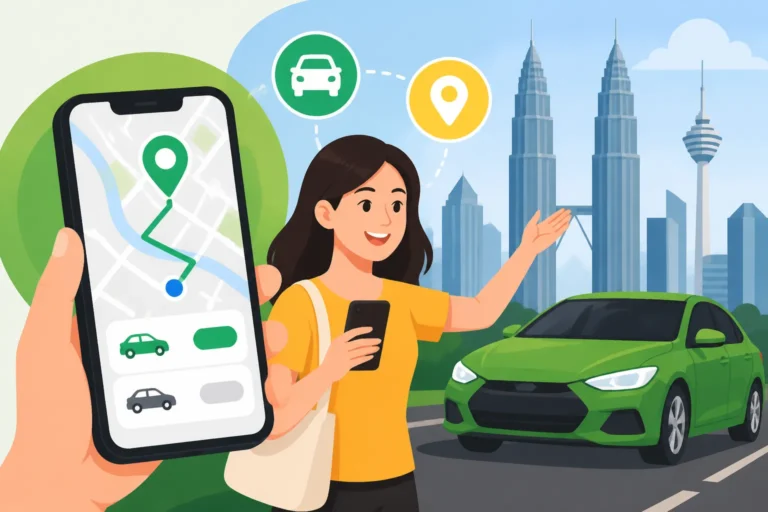
Let’s be honest, when we talk about ride-hailing in Malaysia, we're talking about Grab. It is, without a doubt, the dominant player and an indispensable tool for anyone living or visiting here. From the moment you land at KLIA, you’ll notice Grab cars everywhere. It’s ingrained in Malaysian daily life, and for good reason.
Why is Grab so essential?
- Availability: You can find a Grab almost anywhere, anytime. Whether you’re trying to get a ride from a quiet residential street in Mont Kiara or from a bustling shopping mall in Pavilion, a car is usually just minutes away. This is a huge relief when you’re out late, or need to get to an appointment urgently.
- Pricing: Generally, Grab rides are very affordable, especially compared to taxis in many Western countries. While there is surge pricing during peak hours or heavy rain, it’s still often a reasonable option, particularly if you’re splitting the fare with friends. I’ve had many moments where a short Grab ride saved me from a long, sweaty walk under the Malaysian sun, for just a few ringgit.
- Safety Features: Grab has implemented several safety features, including driver tracking, emergency buttons, and the ability to share your journey details with loved ones. Drivers are typically rated by passengers, fostering a certain level of accountability.
- Seamless Payments: You can link your credit/debit card to the app, making payments cashless and hassle-free. This is particularly convenient when you first arrive and haven't quite mastered the local currency yet.
- Beyond Rides: Grab isn't just for rides anymore. It’s a super-app offering food delivery (GrabFood), grocery delivery (GrabMart), and even parcel delivery. This integration makes it incredibly convenient for daily life. Need to get to the grocery store but it's raining cats and dogs? Grab. Craving your favourite local dish? GrabFood. It truly simplifies expat living.
For example, imagine you’re at KL Sentral, just arrived from the airport, and you need to get to your Airbnb in Bangsar or a specific clinic in the Golden Triangle. While the LRT might take you part of the way, a Grab will take you directly to your doorstep, saving you the hassle of walking with luggage. Similarly, if you're trying to figure out How to Access Specialist Care Through Private Hospitals in Malaysia in an area not directly served by a rail line, Grab is your go-to.
Other Options and Considerations
While Grab reigns supreme, there are a few other ride-hailing options that occasionally pop up or might be preferred by some, such as AirAsia Ride. However, their coverage and availability are usually less extensive than Grab’s. For a seamless experience, especially when you're just settling in or on a tight schedule, sticking with Grab is generally the safest bet.
A few tips for using ride-hailing services:
- Be aware of surge pricing: During rush hour (7-9 AM, 5-7 PM), heavy rain, or major events, prices can increase significantly. If you’re not in a hurry, sometimes waiting 15-20 minutes can bring the price down.
- Confirm your car: Always check the car model and license plate number against what’s displayed in the app before getting in.
- Pinpoint accuracy: Ensure your pick-up and drop-off pins are as accurate as possible, especially in busy areas with multiple entrances. Sometimes dropping a pin on a specific building entrance rather than just the street name can save a lot of confusion.
- Local SIM is key: To use any ride-hailing app effectively, you’ll need a local phone number for drivers to contact you. Consider getting a local SIM card upon arrival. For immediate connectivity, especially upon landing, I’ve found that using an eSIM from providers like Airalo can be a real lifesaver. You can download and activate it before you even land, ensuring you have data right away to call that first Grab.
Exploring Kuala Lumpur on Foot and by Bus
While the trains and ride-hailing apps handle the major journeys, sometimes the best way to truly experience a city like Kuala Lumpur is by slowing down. Walking offers a unique perspective, and the bus system, though challenging, can be incredibly economical for specific routes.
Walking: Discovering Neighbourhoods Up Close
Walking in Kuala Lumpur is a mixed bag, to be honest. On one hand, it's a fantastic way to stumble upon hidden gems, street art, and local eateries you'd never see from a car or train. On the other, you'll contend with the heat, humidity, and sometimes less-than-pedestrian-friendly infrastructure.
- Pedestrian-Friendly Zones: Certain areas of KL are much more walkable than others. The golden triangle, encompassing Bukit Bintang and KLCC, has seen significant improvements in pedestrian walkways. The famous KLCC-Pavilion link bridge is a fantastic example – an air-conditioned, elevated walkway that connects the Petronas Twin Towers area to the heart of Bukit Bintang’s shopping district. I’ve used this bridge countless times to escape a sudden downpour or simply avoid the chaotic street-level traffic. Areas like Brickfields (Little India) are also great for exploring on foot, with vibrant streets, temples, and delicious food stalls just waiting to be discovered.
- The Challenges: Beyond these well-developed zones, pavements can be uneven, disappear entirely, or be obstructed by street vendors or parked motorcycles. Crossing major roads can feel like a high-stakes game of Frogger, so always use pedestrian crossings and keep an eye out. The equatorial climate means it's often hot and humid, and sudden tropical downpours are a daily possibility. Always carry water and an umbrella!
- The Rewards: Despite the challenges, walking lets you connect with the city in a way no other transport mode can. You’ll hear the chatter of different languages, smell the tantalizing aromas from hawker stalls, and truly soak in the city’s multicultural vibe. It's how you find those charming independent cafes or a tiny shop selling unique local crafts. It's definitely part of the adventure of Navigating the Malaysian Healthcare System: An Expat's Roadmap (2026) when you're exploring clinics in different neighborhoods.
Public Buses: The Economical (But Tricky) Choice
Kuala Lumpur has an extensive public bus network, primarily operated by Rapid KL. It's the cheapest way to get around if you’re on a budget and have a bit of patience.
- Rapid KL Buses: These cover a vast area, reaching residential neighborhoods and commercial centers that the rail lines don't. The fares are incredibly low, often just a few ringgit. You'll need your Touch 'n Go card to tap in and out – cash payments are generally not accepted anymore. The challenge? Bus routes can be incredibly complex, schedules aren’t always strictly adhered to (hello, KL traffic!), and deciphering the routes and stops can be a puzzle if you don’t speak Bahasa Malaysia. This is where apps like Moovit become absolutely essential.
- GoKL City Bus: Now, here’s a real gem for tourists and even some expats! The GoKL City Bus offers free bus services on several routes connecting major tourist attractions and shopping areas within the city center. There are different coloured lines (Green, Purple, Blue, Red) that crisscross the city, hitting spots like KLCC, Bukit Bintang, Chinatown, and more. The buses are air-conditioned, comfortable, and a fantastic way to hop between key sights without spending a single sen. They run frequently, usually every 5-15 minutes, but they are subject to traffic, so be prepared for potential delays. Using the GoKL bus to explore a new area is a great way to discover The Expat Guide to Choosing a Private Hospital in Malaysia (2026) nearby.
While the bus system can be a bit of a learning curve, especially if you're new to the city, it offers an authentic local experience and is incredibly cost-effective. Just make sure you have your navigation app ready and your Touch 'n Go card loaded!
Tips and Tricks for Car-Free Living in KL
Living car-free in Kuala Lumpur is not just possible, it's often preferable. You save on the headache of driving, parking, maintenance, and the constant stress of traffic. But like anything, it requires a bit of savvy. Here are some of my go-to tips to make your car-free life in KL as smooth as possible.
Essential Apps and Tools
In this digital age, your smartphone is your ultimate travel companion in KL.
- Navigation: As mentioned, Google Maps and Moovit are non-negotiable. They provide real-time public transport schedules, walking directions, and even Grab estimates. They will tell you which train line to take, where to transfer, and how long it’ll roughly take. Don't leave home without checking them.
- Ride-Hailing: Grab is your primary app here. Download it, set up your payment method, and familiarize yourself with its features. It’s not just for rides; their food and parcel delivery services are incredibly useful for daily living.
- Connectivity: This is crucial. You absolutely need a reliable data connection to use these apps. Get a local prepaid SIM card from providers like Maxis, Celcom, or Digi upon arrival. For those who want to hit the ground running, especially if you're coming from abroad, an eSIM from services like Airalo can be pre-purchased and activated before you even land. This means you have data and can order your first Grab straight from the airport, avoiding any stress about finding a SIM card vendor immediately. Trust me, having data from minute one makes a massive difference.
Strategic Planning and Travel Smart
Being car-free in KL means being a little bit strategic about how and when you travel.
- Avoid Peak Hours if Possible: If your schedule allows, try to avoid the trains and major roads during morning rush hour (roughly 7:30 AM to 9:30 AM) and evening rush hour (5:00 PM to 7:00 PM). Trains will be packed, and Grab rides will face surge pricing and longer travel times due to traffic. If you must travel during these times, opt for the rail network as it bypasses the road traffic.
- Combine Modes of Transport: This is the ultimate hack for getting around KL. Don't be afraid to take an LRT to a certain point, then hop on a GoKL bus for the final leg, or call a Grab for a short distance from the nearest MRT station. Think of it as a multi-modal adventure. For example, if you're heading to a specific government office to sort out your How to Register as a Patient at a Government Hospital in Malaysia, you might take the MRT to the nearest station and then a Grab for the last kilometre or two.
- Dress Comfortably: You’ll be doing a fair bit of walking, even if it's just to and from stations. Wear comfortable shoes, and light, breathable clothing. The weather is perpetually warm, and dressing appropriately will save you a lot of discomfort.
- Stay Hydrated: Always carry a water bottle. The humidity here is no joke, and staying hydrated is key to feeling energetic and comfortable, especially when you're out and about exploring.
- Consider a Backpack: If you’re doing a lot of commuting, a backpack is much more practical than a handbag or shoulder bag. It keeps your hands free for tapping your Touch 'n Go card or holding onto handrails on a crowded train.
- Long-Term Planning: For those making a more permanent move to Malaysia, thinking about how you'll get around is just one piece of the puzzle. Planning your entire relocation, from packing to finding accommodation, can be overwhelming. Services like Sirelo can be helpful in finding reputable international movers, ensuring that when you do arrive, you’re well-settled and ready to tackle KL’s public transport with confidence.
Comparative Look at KL Transport Options
Here's a quick overview to help you weigh your options:
| Transport Type | Cost (Approx. in MYR) | Convenience | Coverage | Best Use Case |
|---|---|---|---|---|
| LRT/MRT | 2 – 7 per trip | High | Extensive | Long distances, avoiding traffic, inter-city travel, peak hours |
| Monorail | 2 – 5 per trip | Medium | Central KL | Short distances within Golden Triangle |
| Grab | 5 – 30+ per trip | Very High | Door-to-door | Off-peak, late night, less accessible areas, heavy luggage, comfort |
| Rapid KL Bus | 1 – 4 per trip | Medium | Very Extensive | Budget travel, reaching specific neighbourhoods, requires planning |
| GoKL City Bus | Free | High | Tourist areas | Sightseeing within city centre, short hops between attractions |
| Walking | Free | Variable | Local area | Exploring specific neighbourhoods, short distances, unique discoveries |
Disclaimer
The information provided in this guide is intended for general informational purposes only and does not constitute professional advice. While we strive to keep the content accurate and up-to-date, public transport routes, fares, and regulations in Malaysia can change. It is always recommended to verify the latest information from official sources or relevant service providers. Individual experiences may vary.