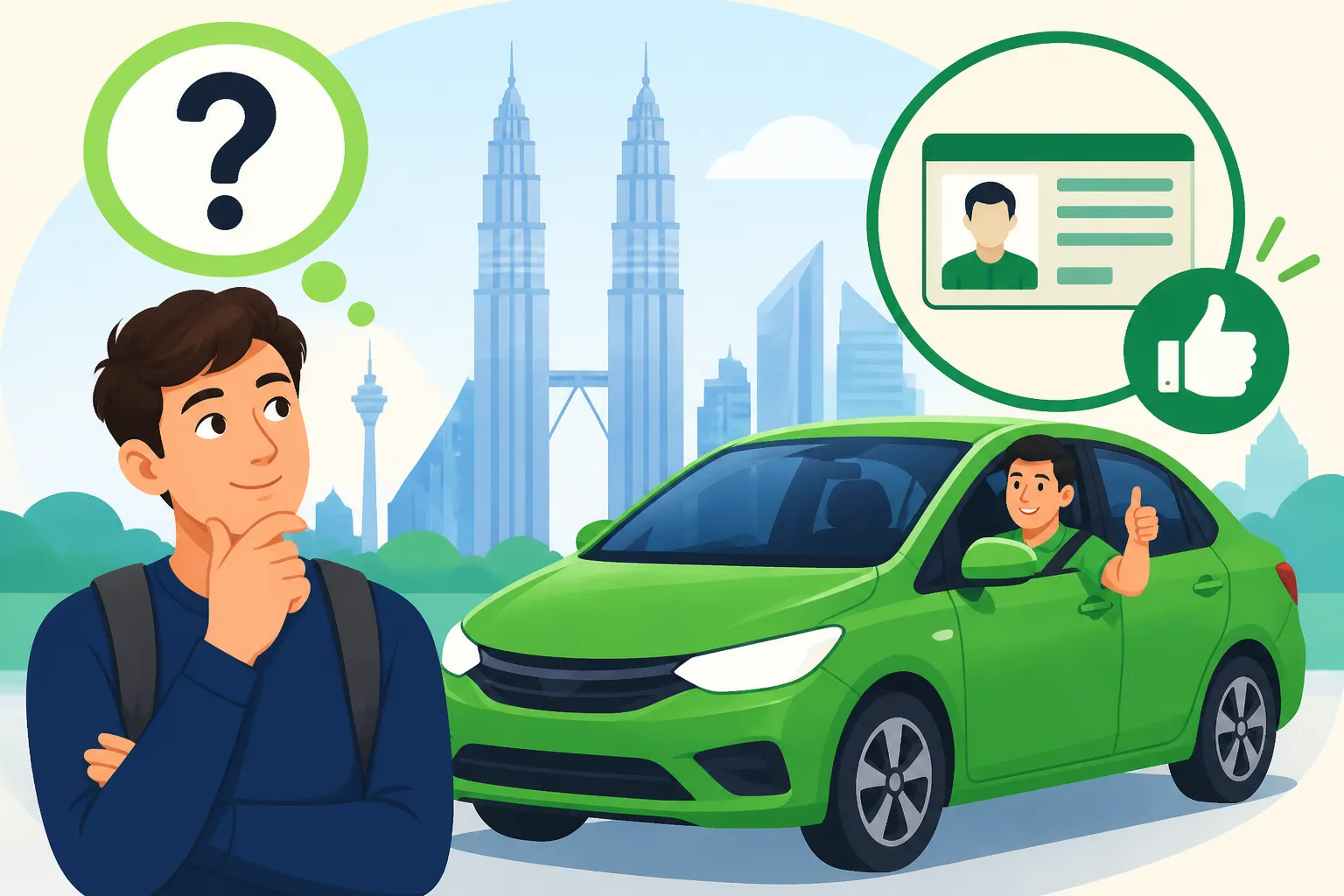
Can I Drive a Grab Car as a Foreigner in Malaysia?
It’s a thought that crosses the mind of many expats new to Malaysia, especially when looking for flexible income or just trying to understand the local gig economy: "Can I drive a Grab car here?" The allure of setting your own hours and earning a decent living in a country where ride-hailing is so pervasive is certainly tempting. However, the reality, as with many administrative matters in Malaysia, is far more complex and, unfortunately, for most foreigners, a non-starter. This guide will walk you through the stringent regulations, immigration rules, and practical hurdles that make commercial driving for services like Grab virtually impossible for non-Malaysian citizens or permanent residents.
Understanding the Legal Landscape for Foreigners Driving for Grab in Malaysia
When you first arrive in Malaysia, it's easy to look at the bustling streets, the constant flow of Grab cars, and think, "Hey, I could do that!" The app economy feels universal, but the underlying regulations are anything but. Malaysia has a very specific and strict legal framework governing who can engage in commercial driving, and it largely excludes foreigners.
The Strict Rules on Employment and Public Service Vehicles
Let's cut right to the chase: driving for Grab, or any e-hailing service in Malaysia, is legally considered a form of employment. It's not just a casual side hustle; it’s a commercial operation that falls under the purview of Malaysian labour and transport laws. This means that to be a Grab driver, you need more than just a car and a driving licence; you need a Public Service Vehicle (PSV) licence.
The PSV licence is a crucial document issued by the Road Transport Department (JPJ) and regulated by the Land Public Transport Agency (APAD). It certifies that a driver is qualified and legally permitted to transport passengers for hire. This isn't something you get by simply converting your foreign driving licence. Obtaining a PSV licence involves mandatory training, passing a theory exam (often conducted in Bahasa Malaysia), and undergoing a medical check-up, among other requirements. The critical barrier here is that, as a rule, PSV licences are typically restricted to Malaysian citizens and permanent residents. This single requirement is the biggest hurdle for any foreigner dreaming of a Grab career. The system is designed to protect local employment and ensure accountability within the public transport sector. It's a frustrating reality for those looking for flexible work, but it's a firm line in the sand drawn by the authorities.
Visa and Immigration Hurdles: Beyond the Tourist Pass
Even if, by some miracle, the PSV licence wasn't an issue, your immigration status would certainly be. Malaysia's visa regulations are very clear about what foreigners can and cannot do during their stay.
- Tourist Visas or Social Visit Passes: If you're here on a tourist visa or a short-term social visit pass (like the common 90-day visa-free entry for many nationalities), you are absolutely not permitted to engage in any form of paid employment or commercial activity. Driving for Grab would be a direct violation of your visa conditions, leading to severe penalties, including fines, detention, and even deportation. The Malaysian Immigration Department takes these violations very seriously.
- Employment Pass (EP): For those working in Malaysia, an Employment Pass (EP) is your golden ticket. However, this pass is tied to a specific employer and a specific job role. It grants you the right to work for that employer in that defined capacity. Driving for Grab independently on the side would constitute working for another entity without the proper authorization, which is also illegal under Malaysian immigration law. Your EP is not a general work permit that allows you to take on any job. For comprehensive details on securing proper work authorization, you might find the guide on How to Get an Employment Pass in Malaysia (2027) particularly useful, but bear in mind it won't pave the way for e-hailing.
- Malaysia My Second Home (MM2H) Visa: While the MM2H programme offers long-term residency, it explicitly states that participants are generally not permitted to work full-time. There are some provisions for part-time work for those over 50 in specific sectors, but it's a highly regulated process and certainly doesn't extend to commercial driving for e-hailing services.
- DE Rantau Digital Nomad Pass: This pass is designed for remote workers and freelancers, but it's specifically for those working for foreign clients or companies from Malaysia. It does not grant permission to engage in local commercial activities like driving for Grab, which would involve providing services to the Malaysian public and earning income from a Malaysian entity. For more about this, explore The Expat Guide to the DE Rantau Digital Nomad Pass in Malaysia (2027).
The key takeaway here is that every visa type in Malaysia has a very specific "intent." Any activity that falls outside that intent, particularly income-generating activity, is prohibited. The dream of supplementing your income by driving for Grab as a foreigner quickly hits an immovable wall of immigration law.
What Foreigners Can and Cannot Do Regarding Ride-Hailing
It's vital to differentiate between personal use of vehicles and commercial operation when you're a foreigner in Malaysia. This distinction is often misunderstood, leading to potential legal troubles.
The Employment Pass and Company-Sponsored Driving Roles
Let's clarify a point of common confusion: while an Employment Pass does allow you to work in Malaysia, it's typically for a professional role with a sponsoring company. For instance, if your company requires you to drive a company car as part of your job – perhaps transporting colleagues or attending client meetings – and this role is explicitly stated in your employment contract and approved by Immigration, then that's perfectly legal. You would be driving for your employer's business, not as an independent commercial operator for a public service.
However, this is vastly different from driving for Grab. Grab operates as a platform connecting independent "driver-partners" with passengers. These driver-partners are essentially self-employed contractors, and this is where the PSV licence and the restrictions on foreign employment become insurmountable. You cannot use your existing Employment Pass, even a high-level one, to moonlight as a Grab driver. Grab itself, in its driver-partner requirements, explicitly lists Malaysian citizenship or permanent residency as a prerequisite, precisely because of these PSV licensing laws and immigration regulations. Trying to circumvent these rules could jeopardise your visa, your employment, and your future in Malaysia. If you're pondering various employment pathways, a broader look at The Complete Guide to Malaysian Work Authorisation for Foreign Workers (2027) might provide more suitable options.
Driving for Personal Use vs. Commercial Operation
The distinction between driving for personal use and engaging in commercial operation is absolute and critical.
- Driving for Personal Use: As a foreigner with a valid converted Malaysian driving licence (which you can obtain by converting your foreign licence after fulfilling certain criteria), you are absolutely allowed to drive your own private vehicle for personal transportation. This includes driving to work, running errands, exploring the country on weekends, or even giving a ride to a friend without payment. This is perfectly legal and commonplace for expats. For details on getting your licence sorted, refer to How to Convert a Foreign Driving Licence in Malaysia.
- Commercial Operation: The moment you accept payment or any form of compensation for transporting another person (who is not your employer or part of your immediate household under a specific, approved arrangement), you are engaging in a commercial operation. This includes driving for Grab, other e-hailing services, traditional taxis, or any similar paid transport service. This immediately triggers the requirement for a PSV licence and, by extension, the Malaysian citizenship/PR requirement. There is no grey area here. The law is designed to ensure that those who provide public transport services are properly vetted, insured, and regulated by Malaysian authorities. Violating this can lead to severe penalties, not just for the driver but also potentially for the passenger and the platform if complicity is proven. It’s simply not worth the risk.
Practical Challenges and Considerations for Foreigners
Even if the legal framework were somehow bypassed (which it won't be), there are numerous practical challenges that would make driving for Grab as a foreigner incredibly difficult, if not impossible.
Licensing, Insurance, and Vehicle Ownership
Beyond the PSV licence, there's a web of logistical requirements that are complex for even locals, let alone expats.
- The PSV Licence Process: As mentioned, obtaining a PSV licence requires attending specific training courses and passing theory and practical exams. These courses and exams are primarily conducted in Bahasa Malaysia, making it a significant linguistic hurdle for many expats. The curriculum covers local road rules, passenger safety, and customer service standards specific to Malaysia. It’s a rigorous process designed for long-term integration into the local transport system, not for temporary foreign residents.
- Vehicle Ownership and Maintenance: To drive for Grab, you typically need to own or lease a vehicle that meets their specific requirements (age, condition, safety features). Buying a car as a foreigner in Malaysia can be a lengthy process involving securing financing, which often requires a stable employment history and a good credit score within Malaysia. Then there's the ongoing cost of maintenance, fuel, and road tax. You'd also need commercial vehicle insurance, which is distinct from private car insurance and more expensive, reflecting the higher risk associated with public transport. Understanding these financial commitments is crucial, and you can get more insights from our guide on How to Buy a Car as a Foreigner in Malaysia.
- Insurance Specifics: Your standard private car insurance policy explicitly excludes commercial use. If you were to drive for Grab without the correct commercial e-hailing insurance, any accident you were involved in would not be covered, leaving you personally liable for damages, injuries, and potentially facing legal action. This is a massive financial and legal risk.
It's a testament to the comprehensive regulatory environment that these practicalities alone would deter most, even if the primary legal barriers weren't in place.
Language Barriers and Local Navigation
While Kuala Lumpur and other major cities are quite English-friendly, driving for Grab requires more than just conversational English. You'll be interacting with a diverse range of passengers, many of whom may prefer or only speak Bahasa Malaysia, or various Chinese dialects, or Tamil.
- Passenger Interaction: Imagine a passenger needing specific instructions in a local language, or a delicate situation arising where clear, nuanced communication is essential. Relying solely on English could lead to misunderstandings, poor ratings, or even conflict.
- Dealing with Authorities: If you're pulled over by JPJ or the police, or involved in an accident, interactions with authorities will often primarily be in Bahasa Malaysia. Navigating these situations without strong local language skills can be incredibly stressful and put you at a disadvantage. While many officers can speak English, the official process often defaults to the national language. Learning some basic phrases can go a long way, and you can begin your journey with Learning Malay (Bahasa Malaysia): A Complete Guide for Expats.
- Navigating Local Roads: Malaysia's road networks, especially in dense urban areas like the Klang Valley, can be incredibly complex. While GPS apps like Waze and Google Maps are indispensable, local knowledge of shortcuts, traffic patterns, and less-known routes is invaluable for efficiency and customer satisfaction. Plus, having a reliable internet connection is paramount for these apps. For general navigation and staying connected, many expats find eSIM providers like Airalo incredibly useful for quick, reliable data, though obviously, this isn't for commercial driving, just for surviving daily life!
The combination of linguistic demands and the need for ingrained local knowledge presents another significant hurdle for foreigners hoping to navigate Malaysia's roads as a commercial driver.
Alternative Ways to Earn Income or Get Around in Malaysia
So, driving for Grab is out of the question for most foreigners. But don't despair! There are legitimate ways to earn a living and efficient methods to get around Malaysia without resorting to illegal commercial driving.
Exploring Other Work Opportunities for Expats
Malaysia has a thriving economy and a demand for skilled foreign talent in various sectors. Instead of eyeing the e-hailing market, focus on industries that legitimately recruit and sponsor Employment Passes for expats.
- Key Industries: Common sectors for expat employment include IT and technology, finance, oil and gas, manufacturing, education (especially international schools and universities), and certain specialised services. Multinational corporations (MNCs) are often the primary employers for foreigners. If your skills align with these areas, you're on a much more viable path. Dive deeper into potential career paths with Working in Malaysia's Tech, Finance and Oil & Gas Sectors: The Expat Guide (2027).
- Freelancing and Remote Work: While freelancing in Malaysia for Malaysian clients as a foreigner is also highly regulated and often requires specific company incorporation or a DE Rantau pass, working remotely for foreign companies from Malaysia is a growing trend. This allows you to earn income without directly engaging in the Malaysian labour market (other than for tax purposes). However, even for this, you need the correct visa, such as the DE Rantau pass. If you're considering this, check out The Complete Guide to Freelancing in Malaysia as an Expat for a comprehensive understanding.
- Job Search: Utilise online job portals like JobStreet, LinkedIn, and specialised recruitment agencies that cater to the expat market. Networking within expat communities and industry-specific groups can also open doors. A great starting point would be The Expat Guide to Finding a Job in Malaysia (2027).
The key is to pursue avenues that are legally compliant with your visa status and Malaysia's labour laws. Attempting to work outside these frameworks carries significant risks.
Efficiently Navigating Malaysia Without Commercial Driving
Malaysia boasts an increasingly efficient and affordable public transport system, especially in major urban centres. There's no need to consider illegal commercial driving when you have so many convenient alternatives for personal movement.
- Ride-Hailing as a Passenger: This is where Grab and its competitors (like AirAsia Ride, Maxim) truly shine for expats! They are incredibly convenient, safe, and often much more affordable than owning and maintaining a car, especially in high-traffic areas. You can get around easily with just a few taps on your phone. To make the most of these services, read our guide on How to Use Grab and Ride-Hailing Apps in Malaysia.
- Public Transportation Networks: Kuala Lumpur, in particular, has an excellent integrated network of LRT (Light Rail Transit), MRT (Mass Rapid Transit), and Monorail lines that cover most key areas of the city. The KTM Komuter train system connects greater Klang Valley. Buses also fill in the gaps. Using a Touch 'n Go card makes payment seamless across these systems. Exploring The Expat Guide to Public Transport in Malaysia can help you master getting around.
- Taxis: While e-hailing has largely replaced traditional taxis for convenience, they are still available and regulated. Ensure you use metered taxis or agree on a price beforehand to avoid inflated fares.
- International Relocation Resources: When you're first planning your big move to Malaysia, understanding all your options for getting around – and generally settling in – is crucial. Resources like Sirelo, which offer comprehensive advice and services for international relocations, can be invaluable in helping you map out everything from transport logistics to housing solutions before you even land. It’s all about informed planning.
While the dream of driving a Grab car in Malaysia might be appealing for foreigners seeking flexible income, the reality is that it's simply not a legally viable option due to stringent immigration and public transport regulations. Focus instead on legitimate employment opportunities and enjoy the convenience of Malaysia's excellent transport options as a passenger.
Disclaimer
The information provided in this guide is intended for general informational purposes only and does not constitute legal or professional advice. While we strive to keep the information accurate and up-to-date, laws and regulations in Malaysia, particularly concerning immigration and employment, can change frequently. Expats are strongly advised to consult with relevant Malaysian government authorities (such as the Immigration Department, Road Transport Department, or Land Public Transport Agency) or seek independent legal counsel for advice tailored to their specific situation before making any decisions or taking action. We cannot be held responsible for any errors or omissions, or for any actions taken based on the information provided herein.