Emergency Medical Care in Malaysia: What Every Expat Needs to Know
Imagine waking up at 3:00 AM with a searing pain in your abdomen or witnessing a loved one slip and fall in your tiled condo. In a foreign country, the panic of a medical emergency is amplified by the confusion of not knowing which number to dial, which hospital to trust, or how much the bill will be. This guide provides a definitive roadmap for navigating emergency medical care in Malaysia, ensuring you stay calm and act effectively when every second counts.
Understanding the Dual Healthcare System in Emergencies
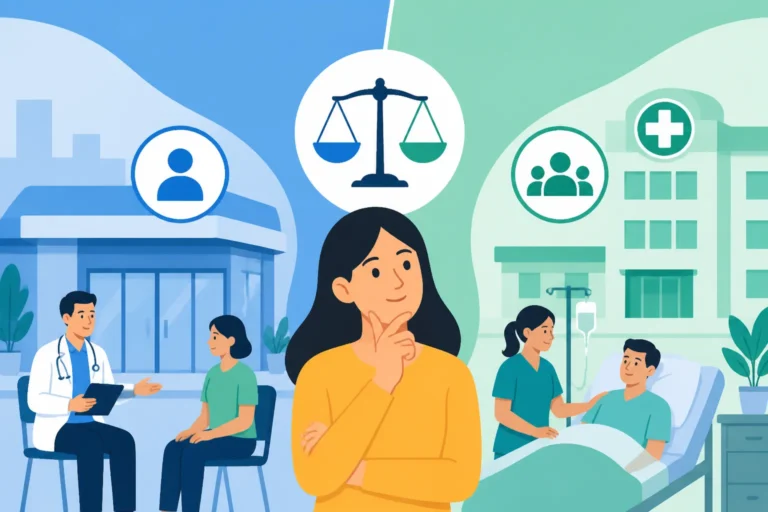
Malaysia operates on a unique two-tier healthcare system that consists of heavily subsidized public facilities and high-end private hospitals. While the quality of care is generally excellent across both sectors, the experience of an expat in an emergency room (ER) can differ wildly depending on where they land. It is vital to understand that "emergency" is a term defined by clinical urgency, and the system is designed to triage patients based on the severity of their condition rather than their ability to pay or their nationality.
Public vs Private Emergency Departments
The public sector, managed by the Ministry of Health (MOH), is the backbone of the nation's trauma care. Government hospitals, such as Hospital Kuala Lumpur (HKL) or Hospital Sultanah Aminah in Johor Bahru, possess some of the most advanced trauma equipment and experienced specialists in the country. However, these facilities are notoriously crowded. In a public ER, you will likely encounter long wait times if your condition is deemed "non-critical" by the triage nurse. For expats, the bureaucratic hurdle often involves a higher fee structure than locals, though it remains significantly cheaper than private options.
On the other hand, private hospitals like those in the Pantai or Gleneagles networks offer a more "concierge" experience. Their emergency departments are usually less crowded, and the facilities feel more like a high-end hotel than a clinical ward. In a private ER, you are paying for speed and comfort. While the clinical outcome for a heart attack might be the same at a top public hospital, the private sector allows for faster bedside attention and better amenities for waiting family members. You can learn more about this in Public vs Private Healthcare in Malaysia: Which Should Expats Choose? to better weigh your options before a crisis strikes.
When to Choose Government Over Private
There are specific scenarios where a government hospital is actually the superior choice, regardless of your insurance coverage. For major trauma—such as a serious high-speed road accident—public hospitals are often better equipped to handle multiple surgeries and long-term intensive care. Furthermore, if you are dealing with a highly specialized infectious disease or a rare condition, the public sector often has the most seasoned consultants who have seen a higher volume of cases.
Another factor is cost. If you are currently between insurance plans or your coverage has a low limit, a private hospital bill for a major emergency can quickly escalate into the hundreds of thousands of Ringgit. In such cases, the public sector provides a safety net that prevents financial ruin while still delivering life-saving care. For a deeper look at the economics of this, see Understanding Foreigner Medical Fees at Malaysian Government Hospitals to avoid "sticker shock" during a crisis.
Location and Accessibility
In Malaysia, your "nearest" hospital might not be your "best" hospital, but in an emergency, proximity is the primary variable. Most expats living in the Klang Valley are within a 15-minute drive of a major private medical center. However, if you are living in more suburban or rural areas, your only option may be a government Klinik Kesihatan or a regional public hospital. It is a good idea to physically drive the route from your home to the nearest ER at least once to familiarize yourself with the entrances and parking situation.
Accessibility also involves understanding traffic patterns. Kuala Lumpur's legendary "flash floods" or peak-hour congestion can turn a 5-kilometer trip into a 45-minute ordeal. In these moments, knowing the location of a secondary hospital or a 24-hour GP clinic can be a life-saver. You might want to check Where Is the Nearest Klinik Kesihatan in Petaling Jaya? if you reside in that area, as these smaller clinics can stabilize a patient before a longer transfer.
Emergency Numbers and Ambulance Services
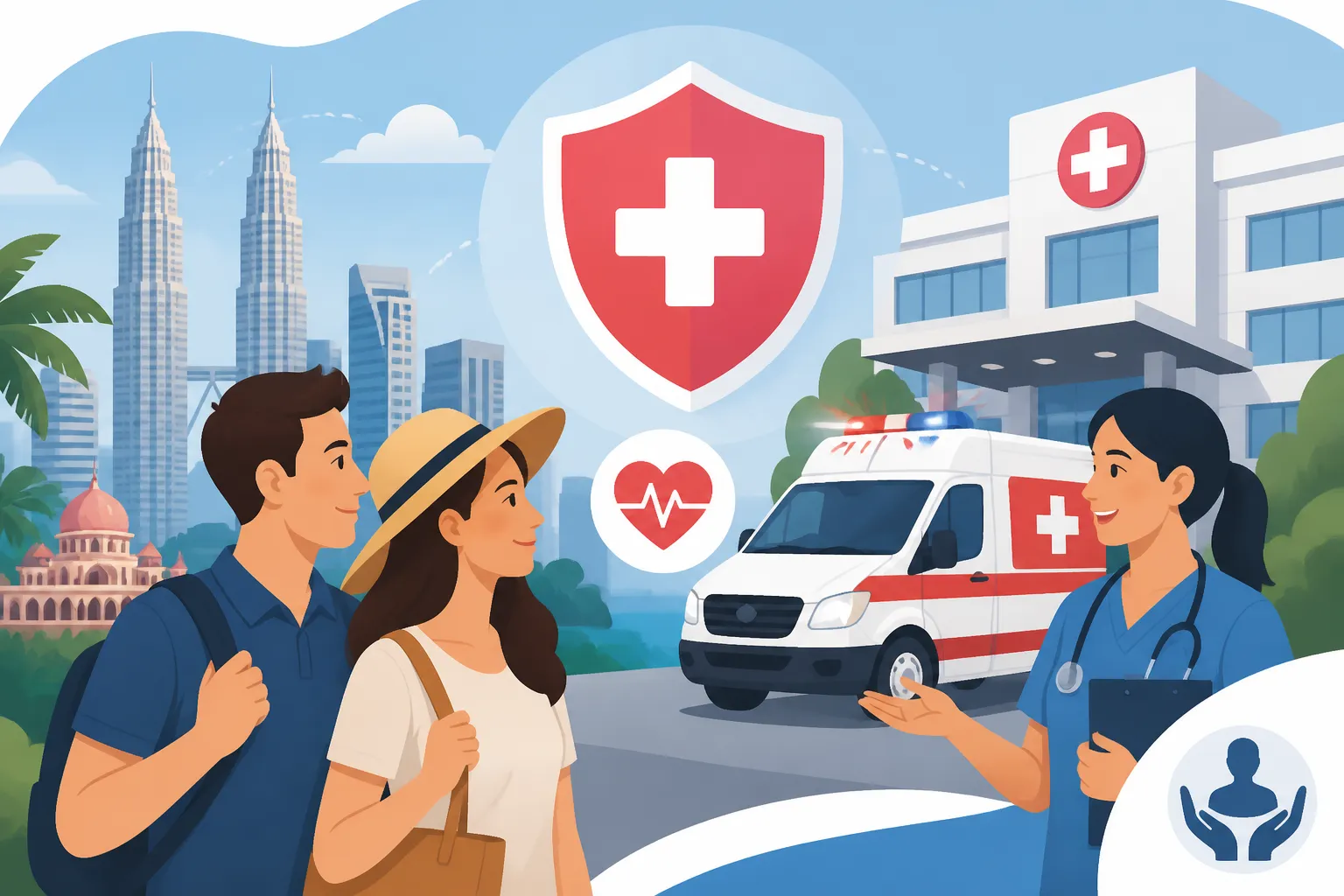
The most critical piece of information for any expat is the national emergency number: 999. Malaysia integrated its emergency services into the Malaysian Emergency Response Services (MERS) 999 system years ago. When you dial this number, you are connected to a central dispatcher who can send police, fire, or medical services. However, the speed and type of ambulance you receive can vary significantly based on your location and the nature of the emergency.
Dialing 999 and the MERS System
When you call 999, you must be prepared to give your location clearly. If you are in a high-rise condominium, provide the floor number and unit number. The dispatcher will ask a series of questions to determine the severity of the case. In Malaysia, 999 ambulances are usually dispatched from the nearest government hospital. While they are very affordable (often free or for a nominal fee for emergency transport), the response time can be delayed by traffic or high demand.
Expats should also be aware that English proficiency among 999 dispatchers is generally good, but speaking slowly and clearly is essential. Do not hang up until the dispatcher tells you to do so. They may provide over-the-phone instructions for CPR or first aid while the ambulance is en route. For more details on the logistics of these calls, refer to Understanding Emergency Numbers (999) and Ambulance Services in Malaysia.
Private Ambulance Services
Many private hospital groups in Malaysia, such as Sunway Medical Centre or Prince Court, operate their own dedicated ambulance fleets. These are often faster and more modern than the public options, but they come at a premium price. You can often call these hospitals directly to request their specific ambulance. This is a preferred route for many expats because the ambulance will take you directly to the private hospital where your records are kept and where your insurance is "on panel."
Beyond hospital-run fleets, there are independent providers like St. John Ambulance or the Red Crescent. These organizations often provide standby services for events but also respond to emergencies. Keeping a list of these direct numbers on your refrigerator or saved in your phone is a veteran expat move. For an overview of these costs, see How Much Does an Ambulance Cost in Malaysia?.
Response Times and Realistic Expectations
It is a hard truth that response times in Malaysia can be unpredictable. Between 7:00 AM and 9:00 AM, and 5:00 PM and 8:00 PM, the roads in cities like KL and Penang are often gridlocked. Motorists are generally good at giving way to sirens, but the physical constraints of the road often make it impossible for an ambulance to weave through. In many cases, if the patient is stable enough to be moved, taking a private vehicle or even a ride-hailing service like Grab can be faster than waiting for an ambulance.
If you choose to drive yourself, use your hazard lights and honk your horn gently to alert other drivers. However, never attempt this if the patient has a suspected spinal injury, is unconscious, or is having difficulty breathing. In those cases, waiting for professional paramedics is the only safe option. To prepare for such high-stress moments, read What Should I Do in a Medical Emergency in Kuala Lumpur? for a step-by-step breakdown.
The Financial Aspect of Emergency Care
Healthcare in Malaysia is not free for foreigners. Even in an emergency, the "business" side of medicine starts moving almost as soon as the clinical side. For many expats, the most stressful part of an ER visit isn't the procedure, but the demand for a deposit or proof of insurance before a patient is admitted to a ward.
Hospital Admissions and Deposits
If an ER doctor decides that you or your family member needs to be admitted for observation or surgery, the hospital's billing department will request a deposit. In private hospitals, this deposit can range from RM 5,000 to RM 20,000 depending on the estimated cost of treatment. They usually accept credit cards, but it is vital to ensure your credit limit is high enough to handle an unexpected surge.
Even if you have insurance, some hospitals may still ask for a deposit while they wait for the "Letter of Guarantee" (LG) from your provider. An LG is a document where the insurance company promises to pay the hospital directly. This process can take anywhere from two to six hours, and during that time, you are financially responsible. To understand the mechanics of this, see How Do I Pay the Deposit for Hospital Admission in Malaysia?.
| Service Type | Estimated Cost (Public) | Estimated Cost (Private) |
|---|---|---|
| ER Consultation | RM 100 – RM 150 | RM 250 – RM 600 |
| Ambulance (City) | RM 10 – RM 100 | RM 300 – RM 800 |
| Ward Deposit | RM 500 – RM 2,000 | RM 5,000 – RM 15,000 |
| X-Ray / Basic Scan | RM 50 – RM 150 | RM 200 – RM 500 |
Treatment Costs for Foreigners
In public hospitals, foreigners are charged at the "International Patient" rate. While this is significantly higher than what a Malaysian citizen pays (who might pay as little as RM 1), it is still much lower than global averages for high-quality care. For example, a basic ER visit with stitches and antibiotics might cost you RM 200 at a government hospital, whereas the same visit at a top-tier private center could easily reach RM 1,200.
For expats, the real cost lies in the "extras"—specialist consultations, advanced imaging like MRIs, and medications. Private hospitals often have a tiered room system (Single, Double, or Four-Bed wards), and your choice of room can affect the price of every other service you receive. You can find a comprehensive breakdown in The Cost of Healthcare in Malaysia: A Complete Breakdown for Foreigners (2026).
Insurance and Direct Billing
The smoothest emergency experience happens when your hospital and your insurance company have a "panel" relationship. This means they have pre-agreed rates and a direct-billing system. Many international expats and digital nomads use flexible plans like SafetyWing to ensure they are covered for sudden accidents or illnesses while living abroad. SafetyWing is particularly popular because it can be purchased even after you have left your home country, providing a crucial safety net for the nomadic community in Malaysia.
When you arrive at the ER, the first thing the registration desk will ask for is your insurance card. If you are using SafetyWing or a similar international provider, the hospital will contact the insurer's 24-hour hotline to verify coverage. It is a good practice to keep a digital copy of your policy and the emergency contact number on your phone. To dive deeper into insurance options, check out Health Insurance in Malaysia: Local, International and Employer Options Explained.
Necessary Documentation for Emergency Visits
In the heat of an emergency, the last thing you want to do is hunt for a birth certificate or a visa scan. However, Malaysian hospitals are administrative-heavy environments. Having a "Go Bag" or a dedicated folder in your phone with these documents can save you hours of frustration.
Passport and Visas
Your passport is your primary ID in Malaysia. Hospitals need it to register you in their system and to verify your legal status for billing purposes. If you are on an Employment Pass, MM2H, or a Student Pass, having a copy of the visa page is also helpful. In a true life-or-death emergency, hospitals will treat you without these, but the administrative "mop up" afterward is much easier if the ID is provided upfront. For those on a work visa, you should know that How to Access Healthcare on an Employment Pass in Malaysia covers specific requirements your employer might have already handled for you.
Insurance Cards and Policy Details
Do not rely on the hospital to "find" your insurance policy. Bring the physical card if you have one, or a printed copy of your policy certificate. This certificate should clearly state the "Inpatient" and "Emergency" limits. If you are a digital nomad using a service like SafetyWing, their portal allows you to download a summary of coverage that is easily understood by hospital administrators.
It is also wise to know if your insurance requires "Pre-Authorization" for certain procedures. While ER visits are usually exempt from pre-authorization, a subsequent surgery might not be. Being able to show your policy details to the hospital’s international patient wing can expedite the issuance of an LG. For more on this, see How to Use Private Medical Insurance at Malaysian Hospitals.
Medical History and Records
If you have pre-existing conditions, allergies (especially to medications like penicillin), or are currently on a prescription regimen, this information is vital for the ER doctor. Since Malaysia’s public and private systems do not always share a centralized digital record for foreigners, you are the custodian of your own medical history.
Keeping a small card in your wallet with your blood type and any chronic conditions is a simple step that can prevent medical errors if you are unconscious. If you have had previous surgeries in Malaysia, knowing which hospital holds those records is useful. You can learn about managing this data in How Do I Access My Medical Records in Malaysia?.
Specialist Care and Referrals During Emergencies
Sometimes an emergency visit is just the beginning of a longer medical journey. You might be stabilized in the ER but told you need to see a cardiologist or a neurologist the following day. Navigating this transition requires an understanding of how referrals work in the Malaysian context.
Navigating Specialist Clinics
In private hospitals, specialists usually run their own clinics within the hospital building. If you are treated in the ER at 11:00 PM, the ER doctor may tell you to visit "Consultant X" at 9:00 AM the next morning. Unlike some western systems where you might wait weeks for a specialist, in Malaysia, you can often walk in or get an appointment within 24 hours.
If you started your journey at a public hospital and wish to move to a private specialist for faster care, you can request a referral letter. This letter is a formal summary of the treatment you received and is essential for the new doctor to understand your case. For a detailed guide on this, read How Specialist Referrals Work in the Malaysian Health System.
Transferring Between Hospitals
There are times when an expat might be taken to a government hospital by a 999 ambulance but prefers to be treated at a private facility like Gleneagles. "Inter-hospital transfers" are common but require coordination. The receiving hospital must confirm they have a bed available, and the "sending" hospital must confirm the patient is stable enough for transport.
These transfers are usually done via private ambulance and can be quite expensive. However, many expats find the cost worth it for the private room and the ability for family to stay overnight. If you are considering this, refer to The Expat Guide to Choosing a Private Hospital in Malaysia (2027) to identify which facility best fits your needs.
Follow-up Care Post-Emergency
The days following an emergency are often filled with pharmacy visits and follow-up scans. In Malaysia, pharmacies are very well-stocked, but "controlled" medicines (like strong painkillers or certain antibiotics) require a fresh prescription from a local doctor. You cannot always use a prescription from your home country to get a refill here.
It is also important to keep every single receipt and "discharge summary" provided by the hospital. You will need these for your insurance claims later. If you are using a plan like SafetyWing, the claim process is usually digital, but they will require clear photos of all medical reports. To understand how to handle your medications, see Prescription Medications and Pharmacies in Malaysia: The Complete Guide.
Specific Health Risks for Expats in Malaysia
Living in the tropics brings a unique set of medical emergencies that you might not have encountered in Europe or North America. Being able to recognize the early signs of these conditions can mean the difference between a quick clinic visit and a week-long hospital stay.
Dengue Fever and Tropical Diseases
Dengue is a constant reality in Malaysia. It is transmitted by the Aedes mosquito and can escalate from "flu-like symptoms" to a life-threatening emergency (Dengue Hemorrhagic Fever) very quickly. If you experience a high fever along with severe pain "behind the eyes" or a sudden rash, you should head to a clinic for a blood test immediately.
Do not wait for the fever to break. In Dengue cases, the "critical phase" often begins just as the fever starts to subside. Hospitals in Malaysia are world experts at managing Dengue, but they need to monitor your platelet count closely. For more on this, check out How Do I Get Dengue Treatment in Malaysia? and be aware that Is Dengue Fever Common in Kuala Lumpur? is a question every new resident asks eventually.
Road Traffic Accidents and Trauma
Traffic accidents are unfortunately common in Malaysia, particularly involving motorcycles. If you are involved in or witness an accident, the priority is to call 999. Do not attempt to move a victim unless there is an immediate danger like a fire, as you could exacerbate a spinal injury.
Malaysian law regarding "Good Samaritans" is generally supportive, but as an expat, it is always best to wait for professional help. If you are the one injured, having your ID and insurance info (like your SafetyWing digital card) easily accessible can help paramedics identify you. Read more about safety on the roads in Driving in Malaysia: Licences, Registration and Rules for Expats (2027).
Food Allergies and Anaphylaxis
Malaysia is a food paradise, but for those with severe allergies to peanuts, shellfish, or shrimp paste (belacan), it can be a minefield. Many local stalls do not have a formal list of ingredients, and cross-contamination is common. If you have a known allergy, always carry an EpiPen.
In the event of an anaphylactic shock, head to the nearest ER immediately. Do not rely on antihistamines alone. Most private hospitals are well-equipped to handle severe allergic reactions, but speed is of the essence. You can learn more about general health risks in What Health Risks Should Expats Be Aware of in Malaysia?.
Managing Family Emergencies
If you are moving to Malaysia with children or elderly parents, your emergency planning needs to be even more robust. Pediatric emergencies, in particular, require specialized facilities that not every neighborhood clinic can provide.
Pediatric Emergency Care
Children are not just "small adults." When a child has a high fever or an injury, you want a hospital that has a dedicated pediatric ward. Hospitals like Pantai Bangsar or Gleneagles KL have excellent pediatric specialists on-call 24/7. It is a good idea to identify a pediatrician early on so that if an emergency happens, the ER can call the doctor who already knows your child's history.
For common childhood issues like HFMD (Hand, Foot, and Mouth Disease), which can sometimes lead to dehydration emergencies, knowing the symptoms is key. You can find more info in How Do I Find a Pediatrician in Johor Bahru? or Understanding Childhood Vaccination Schedules and Requirements in Malaysia to ensure your child's records are up to date.
Caring for Elderly Dependants
For expats bringing retired parents on an MM2H visa, the focus of emergency care often shifts to cardiovascular or orthopedic issues. Malaysia has become a hub for medical tourism because of its high-quality heart centers. If an elderly family member experiences chest pain or sudden weakness, time is muscle/brain.
Ensure your parents’ insurance, such as an international plan or a SafetyWing policy adapted for their needs, is active and the documents are easy for them to find. For more information on the lifestyle and health support for seniors, see Do MM2H Visa Holders Get Access to Malaysian Healthcare?.
Mental Health Crisis Support
Emergency care isn't always about physical trauma. Mental health crises require a different kind of response. While Malaysia’s mental health infrastructure is growing, the ER is still the primary gateway for immediate crisis intervention. If you or a loved one is experiencing a severe mental health episode, heading to a major hospital (public or private) is the safest step.
There are also helplines like Befrienders Malaysia that offer 24/7 support. For a deeper understanding of how the system handles these sensitive cases, refer to How to Access Mental Health Services in Malaysia as an Expat and Is Mental Healthcare Affordable in Malaysia?.
Disclaimer
The information provided in this guide is for educational and informational purposes only. It is not a substitute for professional medical advice, diagnosis, or treatment. Always seek the advice of a qualified healthcare provider with any questions you may have regarding a medical condition. In the event of a medical emergency, dial 999 immediately or proceed to the nearest emergency room. The author and publisher are not responsible for any actions taken based on the content of this article.